Kirjojen hintavertailu. Mukana 11 699 587 kirjaa ja 12 kauppaa.

Kirjahaku

Etsi kirjoja tekijän nimen, kirjan nimen tai ISBN:n perusteella.

2 kirjaa tekijältä Brent Hayes Edwards

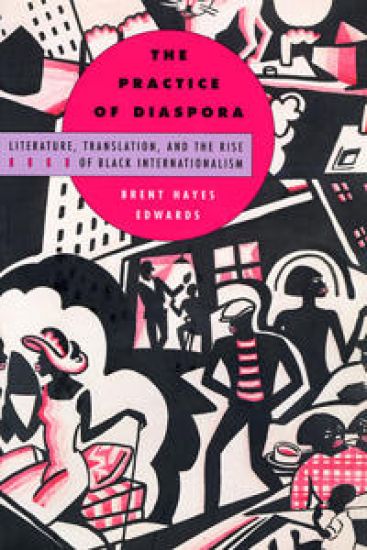
The Practice of Diaspora

The Practice of Diaspora

Brent Hayes Edwards

Harvard University Press
2003
nidottu
A pathbreaking work of scholarship that will reshape our understanding of the Harlem Renaissance, The Practice of Diaspora revisits black transnational culture in the 1920s and 1930s, paying particular attention to links between intellectuals in New York and their Francophone counterparts in Paris. Brent Edwards suggests that diaspora is less a historical condition than a set of practices: the claims, correspondences, and collaborations through which black intellectuals pursue a variety of international alliances.Edwards elucidates the workings of diaspora by tracking the wealth of black transnational print culture between the world wars, exploring the connections and exchanges among New York–based publications (such as Opportunity, The Negro World, and The Crisis) and newspapers in Paris (such as Les Continents, La Voix des Nègres, and L'Etudiant noir). In reading a remarkably diverse archive--the works of writers and editors from Langston Hughes, René Maran, and Claude McKay to Paulette Nardal, Alain Locke, W. E. B. Du Bois, George Padmore, and Tiemoko Garan Kouyaté--The Practice of Diaspora takes account of the highly divergent ways of imagining race beyond the barriers of nation and language. In doing so, it reveals the importance of translation, arguing that the politics of diaspora are legible above all in efforts at negotiating difference among populations of African descent throughout the world.
Epistrophies

Epistrophies

Brent Hayes Edwards

Harvard University Press
2017
sidottu
In 1941 Thelonious Monk and Kenny Clarke copyrighted “Epistrophy,” one of the best-known compositions of the bebop era. The song’s title refers to a literary device—the repetition of a word or phrase at the end of successive clauses—that is echoed in the construction of the melody. Written two decades later, Amiri Baraka’s poem “Epistrophe” alludes slyly to Monk’s tune. Whether it is composers finding formal inspiration in verse or a poet invoking the sound of music, hearing across media is the source of innovation in black art.Epistrophies explores this fertile interface through case studies in jazz literature—both writings informed by music and the surprisingly large body of writing by jazz musicians themselves. From James Weldon Johnson’s vernacular transcriptions to Sun Ra’s liner note poems, from Henry Threadgill’s arresting song titles to Nathaniel Mackey’s “Song of the Andoumboulou,” there is an unending back-and-forth between music that hovers at the edge of language and writing that strives for the propulsive energy and melodic contours of music.At times this results in art that gravitates into multiple media. In Duke Ellington’s “social significance” suites, or in the striking parallels between Louis Armstrong’s inventiveness as a singer and trumpeter on the one hand and his idiosyncratic creativity as a letter writer and collagist on the other, one encounters an aesthetic that takes up both literature and music as components of a unique—and uniquely African American—sphere of art-making and performance.