Kirjojen hintavertailu. Mukana 12 016 292 kirjaa ja 12 kauppaa.

Kirjahaku

Etsi kirjoja tekijän nimen, kirjan nimen tai ISBN:n perusteella.

4 kirjaa tekijältä Brett Levinson

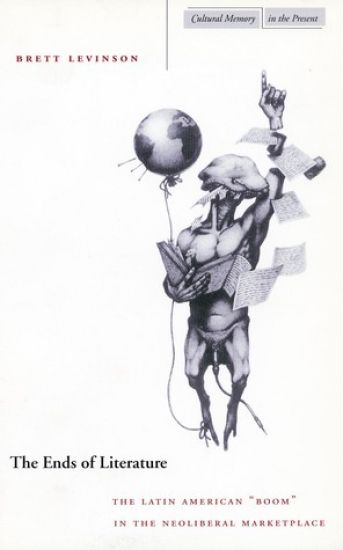
The Ends of Literature

The Ends of Literature

Brett Levinson

Stanford University Press
2002
sidottu
The Ends of Literature analyzes the part played by literature within contemporary Latin American thought and politics, above all the politics of neoliberalism. The "why?" of contemporary Latin American literature is the book's overarching concern. Its wide range includes close readings of the prose of Cortázar, Carpentier, Paz, Valenzuela, Piglia, and Las Casas; of the relationship of the "Boom" movement and its aftermath; of testimonial narrative; and of contemporary Chilean and Chicano film. The work also investigates in detail various theoretical projects as they intersect with and emerge from Latin American scholarship: cultural studies, deconstruction, psychoanalysis, and postcolonial studies. Latin American literature, both as a vehicle of conservatism and as an agent of subversion, is bound from its inception to the rise of the state. Literature's nature, role, and status are therefore altered when the Latin American nation-state succumbs to the process of neoliberalism: as the "too-strong" state (dictatorship) yields to the "too-weak" state (the market), and as the various practices of civil society and public life are replaced by private or privatized endeavors. However, neither the "end of literature" nor the "end of the state" can be assumed. The end of literature in Latin America is in fact the call for more literature; it is the call of literature, in particular that of the Boom. The end of the state, likewise, is the demand upon this state. The book, then, analyzes the "ends" in question as at once their purpose, direction, future, and conclusion. Also key to the study is the notion of transition. Within much recent Latin American political discussion la transición refers to the passage from dictatorship to democracy, as well as to the failure of this shift, the failure of post-dictatorship. The author argues that the movement from literary to cultural studies, while issuing from intellectual and aesthetic circles, is an integral component of this same transition. The thematization of the bind between these two displacements—hence of Latin America's voyage into "post-transition"—forms a fundamental portion of the text.
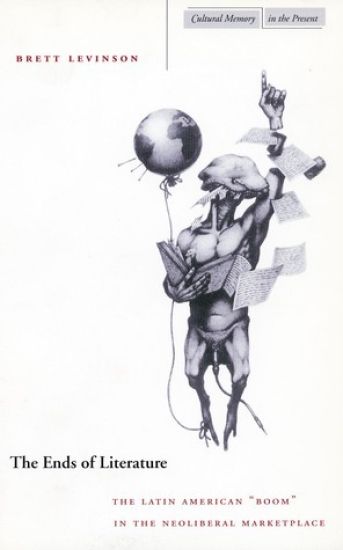
The Ends of Literature

The Ends of Literature

Brett Levinson

Stanford University Press
2002
pokkari
The Ends of Literature analyzes the part played by literature within contemporary Latin American thought and politics, above all the politics of neoliberalism. The "why?" of contemporary Latin American literature is the book's overarching concern. Its wide range includes close readings of the prose of Cortázar, Carpentier, Paz, Valenzuela, Piglia, and Las Casas; of the relationship of the "Boom" movement and its aftermath; of testimonial narrative; and of contemporary Chilean and Chicano film. The work also investigates in detail various theoretical projects as they intersect with and emerge from Latin American scholarship: cultural studies, deconstruction, psychoanalysis, and postcolonial studies. Latin American literature, both as a vehicle of conservatism and as an agent of subversion, is bound from its inception to the rise of the state. Literature's nature, role, and status are therefore altered when the Latin American nation-state succumbs to the process of neoliberalism: as the "too-strong" state (dictatorship) yields to the "too-weak" state (the market), and as the various practices of civil society and public life are replaced by private or privatized endeavors. However, neither the "end of literature" nor the "end of the state" can be assumed. The end of literature in Latin America is in fact the call for more literature; it is the call of literature, in particular that of the Boom. The end of the state, likewise, is the demand upon this state. The book, then, analyzes the "ends" in question as at once their purpose, direction, future, and conclusion. Also key to the study is the notion of transition. Within much recent Latin American political discussion la transición refers to the passage from dictatorship to democracy, as well as to the failure of this shift, the failure of post-dictatorship. The author argues that the movement from literary to cultural studies, while issuing from intellectual and aesthetic circles, is an integral component of this same transition. The thematization of the bind between these two displacements—hence of Latin America's voyage into "post-transition"—forms a fundamental portion of the text.

Market and Thought

Market and Thought

Brett Levinson

Fordham University Press
2004
sidottu
In this ambitious book, Brett Levinson explores the possibilities for a genuinely radical critique of globalized culture and politics—at a time when intellectuals and nonintellectuals alike struggle to understand the configuration of the contemporary world. Levinson seeks to unsettle a naturalized and commonsensical assumption: that democracy and the economic market must be viewed as either united or at odds. Against both neoliberalists and cultural pluralists, he argues that the state is not yielding to the market, but that the universe now turns on a "duopoly" between statist and global forms, one that generates not only economic and cultural sites but also ways of knowing, a postdemocratic episteme. Touching upon current issues such as terrorism, human rights, the attack on the World Trade Center, and the notion of the "people," delving into the idea of bio politics, and investigating the essential relation between language and political praxis, Levinson engages with the work of Giorgio Agamben, Jacques Rancière, Etienne Balibar, Michael Hardt, Antonio Negri, Michel Foucault, and others. Levinson offers no solutions, but his work will be an important voice for readers looking for conceptual tools to grasp what political and intellectual possibilities might exist in the postcommunist world and how this world has come to be shaped in our time.
Market and Thought

Market and Thought

Brett Levinson

Fordham University Press
2004
pokkari
In this ambitious book, Brett Levinson explores the possibilities for a genuinely radical critique of globalized culture and politics—at a time when intellectuals and nonintellectuals alike struggle to understand the configuration of the contemporary world. Levinson seeks to unsettle a naturalized and commonsensical assumption: that democracy and the economic market must be viewed as either united or at odds. Against both neoliberalists and cultural pluralists, he argues that the state is not yielding to the market, but that the universe now turns on a "duopoly" between statist and global forms, one that generates not only economic and cultural sites but also ways of knowing, a postdemocratic episteme. Touching upon current issues such as terrorism, human rights, the attack on the World Trade Center, and the notion of the "people," delving into the idea of bio politics, and investigating the essential relation between language and political praxis, Levinson engages with the work of Giorgio Agamben, Jacques Rancière, Etienne Balibar, Michael Hardt, Antonio Negri, Michel Foucault, and others. Levinson offers no solutions, but his work will be an important voice for readers looking for conceptual tools to grasp what political and intellectual possibilities might exist in the postcommunist world and how this world has come to be shaped in our time.