Kirjojen hintavertailu. Mukana 11 342 296 kirjaa ja 12 kauppaa.

Kirjahaku

Etsi kirjoja tekijän nimen, kirjan nimen tai ISBN:n perusteella.

10 kirjaa tekijältä Brian Boyd

Stalking Nabokov

Stalking Nabokov

Brian Boyd

Columbia University Press
2011
sidottu
At the age of twenty-one, Brian Boyd wrote a thesis on Vladimir Nabokov that the famous author called "brilliant." After gaining exclusive access to the writer's archives, he wrote a two-part, award-winning biography, Vladimir Nabokov: The Russian Years (1990) and Vladimir Nabokov: The American Years (1991). This collection features essays written by Boyd since completing the biography, incorporating material he gleaned from his research as well as new discoveries and formulations. Boyd confronts Nabokov's life, career, and legacy; his art, science, and thought; his subtle humor and puzzle-like storytelling; his complex psychological portraits; and his inheritance from, reworking of, and affinities with Shakespeare, Pushkin, Tolstoy, and Machado de Assis. Boyd offers new ways of reading Nabokov's best English-language works: Lolita, Pale Fire, Ada, and the unparalleled autobiography, Speak, Memory, and he discloses otherwise unknown information about the author's world. Sharing his personal reflections, Boyd recounts the adventures, hardships, and revelations of researching Nabokov's biography and his unusual finds in the archives, including materials still awaiting publication. The first to focus on Nabokov's metaphysics, Boyd cautions against their being used as the key to unlock all of the author's secrets, showing instead the many other rooms in Nabokov's castle of fiction that need exploring, such as his humor, narrative invention, and psychological insight into characters and readers alike. Appreciating Nabokov as novelist, memoirist, poet, translator, scientist, and individual, Boyd helps us understand more than ever the author's multifaceted genius.
Stalking Nabokov

Stalking Nabokov

Brian Boyd

Columbia University Press
2013
pokkari
At the age of twenty-one, Brian Boyd wrote a thesis on Vladimir Nabokov that the famous author called "brilliant." After gaining exclusive access to the writer's archives, he wrote a two-part, award-winning biography, Vladimir Nabokov: The Russian Years (1990) and Vladimir Nabokov: The American Years (1991). This collection features essays written by Boyd since completing the biography, incorporating material he gleaned from his research as well as new discoveries and formulations. Boyd confronts Nabokov's life, career, and legacy; his art, science, and thought; his subtle humor and puzzle-like storytelling; his complex psychological portraits; and his inheritance from, reworking of, and affinities with Shakespeare, Pushkin, Tolstoy, and Machado de Assis. Boyd offers new ways of reading Nabokov's best English-language works: Lolita, Pale Fire, Ada, and the unparalleled autobiography, Speak, Memory, and he discloses otherwise unknown information about the author's world. Sharing his personal reflections, Boyd recounts the adventures, hardships, and revelations of researching Nabokov's biography and his unusual finds in the archives, including materials still awaiting publication. The first to focus on Nabokov's metaphysics, Boyd cautions against their being used as the key to unlock all of the author's secrets, showing instead the many other rooms in Nabokov's castle of fiction that need exploring, such as his humor, narrative invention, and psychological insight into characters and readers alike. Appreciating Nabokov as novelist, memoirist, poet, translator, scientist, and individual, Boyd helps us understand more than ever the author's multifaceted genius.
On the Origin of Stories

On the Origin of Stories

Brian Boyd

The Belknap Press
2010
nidottu
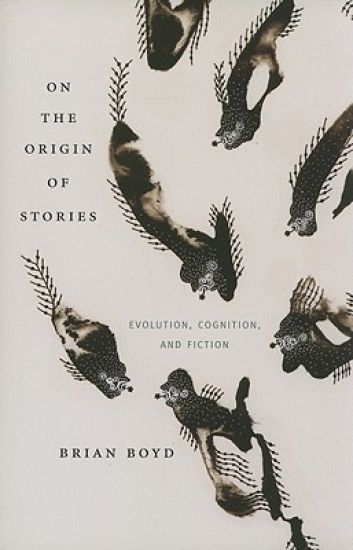
A century and a half after the publication of Origin of Species, evolutionary thinking has expanded beyond the field of biology to include virtually all human-related subjects—anthropology, archeology, psychology, economics, religion, morality, politics, culture, and art. Now a distinguished scholar offers the first comprehensive account of the evolutionary origins of art and storytelling. Brian Boyd explains why we tell stories, how our minds are shaped to understand them, and what difference an evolutionary understanding of human nature makes to stories we love. Art is a specifically human adaptation, Boyd argues. It offers tangible advantages for human survival, and it derives from play, itself an adaptation widespread among more intelligent animals. More particularly, our fondness for storytelling has sharpened social cognition, encouraged cooperation, and fostered creativity.After considering art as adaptation, Boyd examines Homer’s Odyssey and Dr. Seuss’s Horton Hears a Who! demonstrating how an evolutionary lens can offer new understanding and appreciation of specific works. What triggers our emotional engagement with these works? What patterns facilitate our responses? The need to hold an audience’s attention, Boyd underscores, is the fundamental problem facing all storytellers. Enduring artists arrive at solutions that appeal to cognitive universals: an insight out of step with contemporary criticism, which obscures both the individual and universal. Published for the bicentenary of Darwin’s birth and the 150th anniversary of the publication of Origin of Species, Boyd’s study embraces a Darwinian view of human nature and art, and offers a credo for a new humanism.
Why Lyrics Last

Why Lyrics Last

Brian Boyd

Harvard University Press
2012
sidottu
In Why Lyrics Last, the internationally acclaimed critic Brian Boyd turns an evolutionary lens on the subject of lyric verse. He finds that lyric making, though it presents no advantages for the species in terms of survival and reproduction, is “universal across cultures because it fits constraints of the human mind.” An evolutionary perspective— especially when coupled with insights from aesthetics and literary history—has much to tell us about both verse and the lyrical impulse. Boyd places the writing of lyrical verse within the human disposition “to play with pattern,” and in an extended example he uncovers the many patterns to be found within Shakespeare’s Sonnets. Shakespeare’s bid for readership is unlike that of any sonneteer before him: he deliberately avoids all narrative, choosing to maximize the openness of the lyric and demonstrating the power that verse can have when liberated of story. In eschewing narrative, Shakespeare plays freely with patterns of other kinds: words, images, sounds, structures; emotions and moods; argument and analogy; and natural rhythms, in daily, seasonal, and life cycles. In the originality of his stratagems, and in their sheer number and variety, both within and between sonnets, Shakespeare outdoes all competitors. A reading of the Sonnets informed by evolution is primed to attend to these complexities and better able to appreciate Shakespeare’s remarkable gambit for immortal fame.
Vladimir Nabokov

Vladimir Nabokov

Brian Boyd

Princeton University Press
1993
pokkari
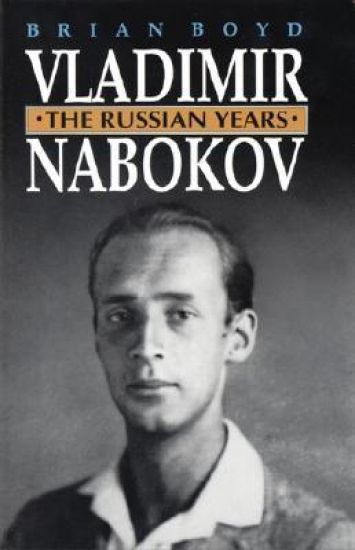
This first major critical biography of Vladimir Nabokov, one of the greatest of twentieth-century writers, finally allows us full access to the dramatic details of his life and the depths of his art. An intensely private man, Nabokov was uprooted first by the Russian Revolution and then by World War II. Transformed into a permanent wanderer, he did not achieve fame until late in life, with the success of Lolita. In this first of two volumes, Brian Boyd vividly describes the liberal milieu of the aristocratic Nabokovs, their escape from Russia, Nabokov's education at Cambridge, and the murder of his father in Berlin. Boyd then turns to the years that Nabokov spent, impoverished, in Germany and France, until the coming of Hitler forced him to flee, with wife and son, to the United States. This volume stands on its own as a fascinating exploration of Nabokov's Russian years and Russian worlds, prerevolutionary and emigre. In the course of his ten years' work on the biography, Boyd traveled along Nabokov's trail everywhere from Yalta to Palo Alto. The only scholar to have had free access to the Nabokov archives in Montreux and the Library of Congress, he also interviewed at length Nabokov's family and scores of his friends and associates. For the general reader, Boyd offers an introduction to Nabokov the man, his works, and his world. For the specialist, he provides a basis for all future research on Nabokov's life and art, as he dates and describes the composition of all Nabokov's works, published and unpublished. Boyd investigates Nabokov's relation to and his independence from his time, examines the special structures of his mind and thought, and explains the relations between his philosophy and his innovations of literary strategy and style. At the same time he provides succinct introductions to all the fiction, dramas, memoirs, and major verse; presents detailed analyses of the major books that break new ground for the scholar, while providing easy paths into the works for other readers; and shows the relationship between Nabokov's life and the themes and subjects of his art.
Vladimir Nabokov

Vladimir Nabokov

Brian Boyd

Princeton University Press
1993
pokkari
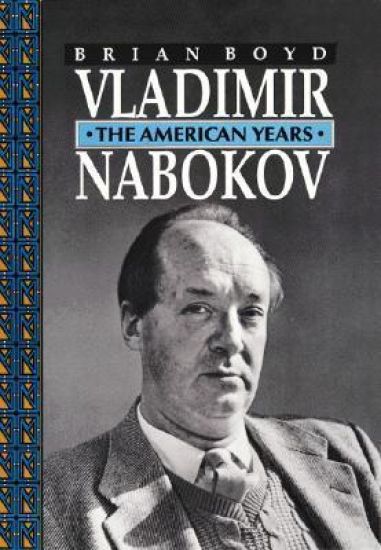
The story of Nabokov's life continues with his arrival in the United States in 1940. He found that supporting himself and his family was not easy--until the astonishing success of Lolita catapulted him to world fame and financial security.
Nabokov's Pale Fire

Nabokov's Pale Fire

Brian Boyd

Princeton University Press
2001
pokkari
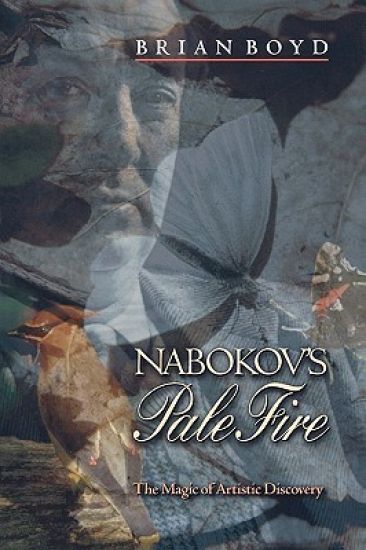
Pale Fire is regarded by many as Vladimir Nabokov's masterpiece. The novel has been hailed as one of the most striking early examples of postmodernism and has become a famous test case for theories about reading because of the apparent impossibility of deciding between several radically different interpretations. Does the book have two narrators, as it first appears, or one? How much is fantasy and how much is reality? Whose fantasy and whose reality are they? Brian Boyd, Nabokov's biographer and hitherto the foremost proponent of the idea that Pale Fire has one narrator, John Shade, now rejects this position and presents a new and startlingly different solution that will permanently shift the nature of critical debate on the novel. Boyd argues that the book does indeed have two narrators, Shade and Charles Kinbote, but reveals that Kinbote had some strange and highly surprising help in writing his sections. In light of this interpretation, Pale Fire now looks distinctly less postmodern--and more interesting than ever. In presenting his arguments, Boyd shows how Nabokov designed Pale Fire for readers to make surprising discoveries on a first reading and even more surprising discoveries on subsequent readings by following carefully prepared clues within the novel. Boyd leads the reader step-by-step through the book, gradually revealing the profound relationship between Nabokov's ethics, aesthetics, epistemology, and metaphysics. If Nabokov has generously planned the novel to be accessible on a first reading and yet to incorporate successive vistas of surprise, Boyd argues, it is because he thinks a deep generosity lies behind the inexhaustibility, complexity, and mystery of the world. Boyd also shows how Nabokov's interest in discovery springs in part from his work as a scientist and scholar, and draws comparisons between the processes of readerly and scientific discovery. This is a profound, provocative, and compelling reinterpretation of one of the greatest novels of the twentieth century.
Vladimir Nabokov

Vladimir Nabokov

Brian Boyd

Rowohlt Verlag GmbH
1999
sidottu
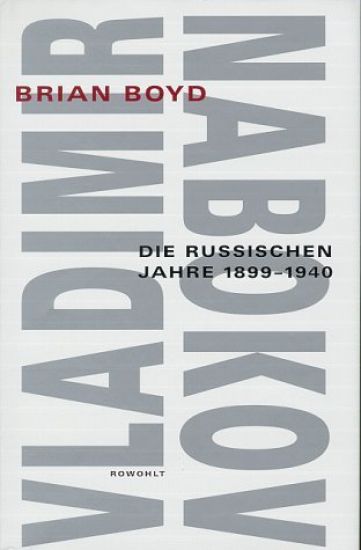
Brian Boyd, einer der besten Kenner von Nabokovs (1899?1977) Leben und Werk, beschreibt das liberale aristokratische Milieu, in dem er aufwuchs, die Flucht der Familie aus Rußland, seine Studienzeit in Cambridge, die Ermordung des Vaters in Berlin. Es folgen die Jahre, in denen Vladimir Nabokov und seine Frau V?ra in Deutschland und Frankreich in Armut lebten und die Flucht in die Vereinigten Staaten.Boyd untersucht Nabokovs Verhältnis zu den Zeitläufen, spürt den besonderen Strukturen seines Denkens und Schreibens nach. Zudem gibt er gedrängte Einführungen in die Romane, Memoiren, Dramen und Gedichte des Autors, analysiert seine wichtigen Bücher. Er ist so dem Leser ein kenntnisreicher Führer durch das Werk. ?Die russischen Jahre? sind eine packende Darstellung von Nabokovs Leben, Nabokovs Welt im vorrevolutionären Rußland und in der Emigration.
Vladimir Nabokov

Vladimir Nabokov

Brian Boyd

Rowohlt Verlag GmbH
2005
sidottu
Der zweite und abschließende Band von Boyds beeindruckender Biographie setzt ein mit der Ankunft Nabokovs in Amerika 1940 - das heißt mit dem Verzicht auf die russische Sprache und dem Verlust der Reputation des russischen Autors Sirin (so Nabokovs bisheriges Pseudonym). In den USA den Lebensunterhalt zu verdienen war nicht einfach; schließlich gelang es Nabokov, auf eine Professur in Cornell berufen zu werden.Dann brachte der erstaunliche Erfolg des Romans "Lolita", der 1955 erschien, Weltruhm und finanzielle Sicherheit. "Lolita" - beinahe hätte der Autor das noch unvollendete Manuskript verbrannt; es fand sich zunächst kein Verlag, Nabokov dachte sogar an eine Veröffentlichung unter einem Pseudonym; und als das Buch schließlich bei der Olympia Press in Paris erschien, waren die Probleme keineswegs vorüber. Boyd ist ein kenntnisreicher Führer durch Leben und Werk Nabokovs.Zu den besonderen Stärken seiner Biographie gehört es, dass zum ersten Mal Nabokov auch als Lehrer, Kritiker, Übersetzer und Wissenschaftler ausführlich gewürdigt wird. Und der Biograph schildert eindrucksvoll die Persönlichkeit Nabokovs - einen warmherzigen, verletzlichen Menschen, der sich in seinen letzten zwanzig Lebensjahren, als er zu einer öffentlichen Figur geworden war, gern hinter einer abweisenden Maske verbarg. Ein Lesevergnügen, nicht nur für Nabokov-Kenner.