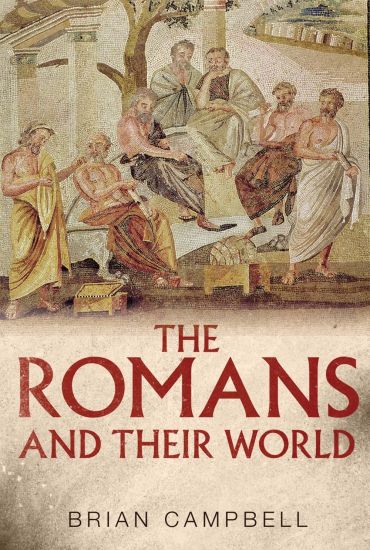
Drawing on an array of ancient sources, and covering topics of interest to readers with little prior background in Roman history as well as those already familiar with the great civilization, Brian Campbell provides a fascinating and wide-ranging introduction to the world of ancient Rome. “A lucid survey of Roman history.”—Adam Kirsch, New Yorker “One of the great joys of Campbell’s unfailingly readable account is the readiness with which it returns to the Roman record, drawing on ancient sources to give a lively and immediate feel for Roman life and culture.”—Michael Kerrigan, Scotsman
The Roman army is remarkable for its detailed organisation and professional structure. It not only extended and protected Rome's territorial empire which was the basis of Western civilisation, but also maintained the politcal power of the emperors. The army was an integral part of the society and life of the empire and illustrated many aspects of Roman government. This sourcebook presents literary and epigraphic material, papyri and coins which illustrate the life of the army from recruitment and in the field, to peacetime and the community. It is designed as a basic tool for students of the Roman army and Roman history in general.
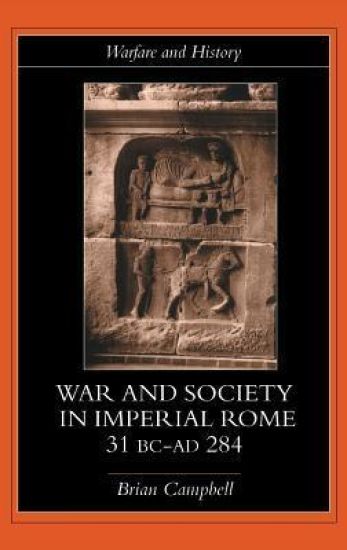
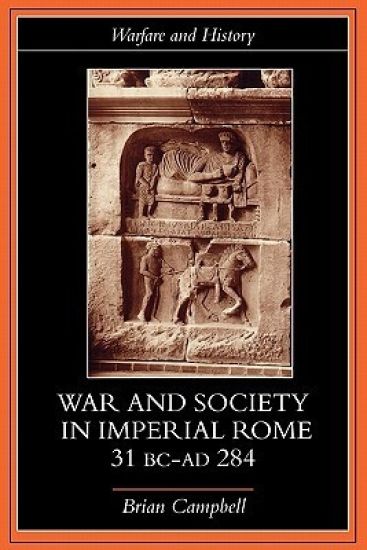
This well-documented study of the Roman army provides a crucial aid to understanding the Roman Empire in economic, social and political terms. Employing numerous examples, Brian Campbell explores the development of the Roman army and the expansion of the Roman Empire from 31 BC-280 AD.When Augustus established a permanent, professional army, this implied a role for the Emperor as a military leader. Warfare and Society in Imperial Rome examines this personal association between army and emperor, and argues that the Emperor's position as commander remained much the same for the next 200 years.
This well-documented study of the Roman army provides a crucial aid to understanding the Roman Empire in economic, social and political terms. Employing numerous examples, Brian Campbell explores the development of the Roman army and the expansion of the Roman Empire from 31 BC-280 AD.When Augustus established a permanent, professional army, this implied a role for the Emperor as a military leader. Warfare and Society in Imperial Rome examines this personal association between army and emperor, and argues that the Emperor's position as commander remained much the same for the next 200 years.
Brian Campbell has selected and translated a wide range of pieces from the ancient military writers who tell us about the technical aspects of military practice and the management of armies.The pieces cover a fascinating range of topics - battle formations and manoeuvres, different types of troops, the art of generalship, methods for conducting and resisting a siege, the construction of artillery and fortifications, and every kind of ploy used by generals to defeat their opponents.Each piece is annotated with further explanation and context, making this an essential resource for everyone studying the army and warfare in the classical age.
Brian Campbell has selected and translated a wide range of pieces from the ancient military writers who tell us about the technical aspects of military practice and the management of armies.The pieces cover a fascinating range of topics - battle formations and manoeuvres, different types of troops, the art of generalship, methods for conducting and resisting a siege, the construction of artillery and fortifications, and every kind of ploy used by generals to defeat their opponents.Each piece is annotated with further explanation and context, making this an essential resource for everyone studying the army and warfare in the classical age.
The Roman army is remarkable for its detailed organisation and professional structure. It not only extended and protected Rome's territorial empire which was the basis of Western civilisation, but also maintained the politcal power of the emperors. The army was an integral part of the society and life of the empire and illustrated many aspects of Roman government. This sourcebook presents literary and epigraphic material, papyri and coins which illustrate the life of the army from recruitment and in the field, to peacetime and the community. It is designed as a basic tool for students of the Roman army and Roman history in general.
Figuring in myth, religion, law, the military, commerce, and transportation, rivers were at the heart of Rome's increasing exploitation of the environment of the Mediterranean world. In Rivers and the Power of Ancient Rome, Brian Campbell explores the role and influence of rivers and their surrounding landscape on the society and culture of the Roman Empire. Examining artistic representations of rivers, related architecture, and the work of ancient geographers and topographers, as well as writers who describe rivers, Campbell reveals how Romans defined the geographical areas they conquered and how geography and natural surroundings related to their society and activities. In addition, he illuminates the prominence and value of rivers in the control and expansion of the Roman Empire--through the legal regulation of riverine activities, the exploitation of rivers in military tactics, and the use of rivers as routes of communication and movement. Campbell shows how a technological understanding of--and even mastery over--the forces of the river helped Rome rise to its central place in the ancient world.