Kirjojen hintavertailu. Mukana 11 244 527 kirjaa ja 12 kauppaa.

Kirjahaku

Etsi kirjoja tekijän nimen, kirjan nimen tai ISBN:n perusteella.

3 kirjaa tekijältä Brian Craig Miller

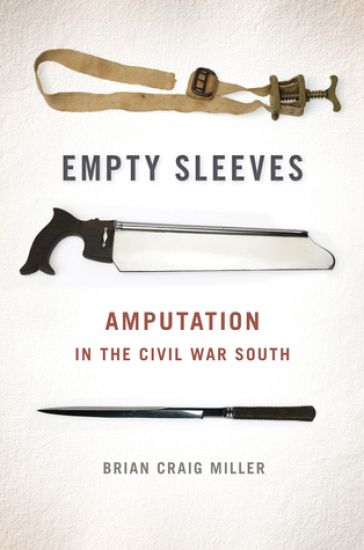
Empty Sleeves

Empty Sleeves

Brian Craig Miller

University of Georgia Press
2015
sidottu
The Civil War acted like a battering ram on human beings, shattering both flesh and psyche of thousands of soldiers. Despite popular perception that doctors recklessly erred on the side of amputation, surgeons labored mightily to adjust to the medical quagmire of war. And as Brian Craig Miller shows in Empty Sleeves, the hospital emerged as the first arena where southerners faced the stark reality of what amputation would mean for men and women and their respective positions in southern society after the war. Thus, southern women, through nursing and benevolent care, prepared men for the challenges of returning home defeated and disabled.Still, amputation was a stark fact for many soldiers. On their return, southern amputees remained dependent on their spouses, peers, and dilapidated state governments to reconstruct their shattered manhood and meet the challenges brought on by their newfound disabilities. It was in this context that Confederate patients based their medical care decisions on how comrades, families, and society would view the empty sleeve. In this highly original and deeply researched work, Miller explores the ramifications of amputation on the Confederacy both during and after the Civil War and sheds light on how dependency and disability reshaped southern society.
Empty Sleeves

Empty Sleeves

Brian Craig Miller

University of Georgia Press
2015
pokkari
The Civil War acted like a battering ram on human beings, shattering both flesh and psyche of thousands of soldiers. Despite popular perception that doctors recklessly erred on the side of amputation, surgeons labored mightily to adjust to the medical quagmire of war. And as Brian Craig Miller shows in Empty Sleeves, the hospital emerged as the first arena where southerners faced the stark reality of what amputation would mean for men and women and their respective positions in southern society after the war. Thus, southern women, through nursing and benevolent care, prepared men for the challenges of returning home defeated and disabled.Still, amputation was a stark fact for many soldiers. On their return, southern amputees remained dependent on their spouses, peers, and dilapidated state governments to reconstruct their shattered manhood and meet the challenges brought on by their newfound disabilities. It was in this context that Confederate patients based their medical care decisions on how comrades, families, and society would view the empty sleeve. In this highly original and deeply researched work, Miller explores the ramifications of amputation on the Confederacy both during and after the Civil War and sheds light on how dependency and disability reshaped southern society.
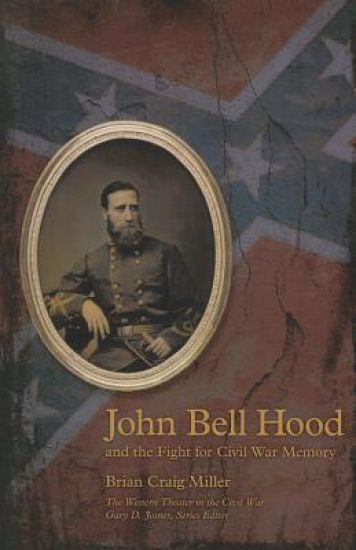
John Bell Hood and the Fight for Civil War Memory

John Bell Hood and the Fight for Civil War Memory

Brian Craig Miller

University of Tennessee Press
2014
nidottu
Some Southern generals, like Lee and Jackson, have stood the test of time, celebrated in their place in history. And then there are generals like John Bell Hood, reviled and ridiculed by generations of Civil War historians as one of the inglorious architects of the Confederate disgrace in the Western Theater. The time has come to rethink this long-held notion, argues Brian Miller, in his comprehensive new biography, John Bell Hood and the Fight for Civil War Memory, and to reassess John Bell Hood as a man, a myth, and a memory.In this first biography of the general in more than twenty years, Miller offers a new, original perspective, directly challenging those historians who have pointed to Hood’s perceived personality flaws, his alleged abuse of painkillers, and other unsubstantiated claims as proof of his incompetence as a military leader. This book takes into account Hood’s entire life—as a student at West Point, his meteoric rise and fall as a soldier and Civil War commander, and his career as a successful postwar businessman. In many ways, Hood represents a typical southern man, consumed by personal and societal definitions of manhood that were threatened by amputation and preserved and reconstructed by Civil War memory. Miller consults an extensive variety of sources, explaining not only what Hood did but also the environment in which he lived and how it affected him.What emerges is a more nuanced, balanced portrait, unfettered by the one-sided perceptions of previous historical narratives. It gives Hood the fair treatment he has been denied for far too long. By looking at Hood’s formative years, his wartime experiences, and his postwar struggles to preserve his good name, this book opens up a provocative new perspective on the life of this controversial figure.