Kirjojen hintavertailu. Mukana 11 342 296 kirjaa ja 12 kauppaa.

Kirjahaku

Etsi kirjoja tekijän nimen, kirjan nimen tai ISBN:n perusteella.

7 kirjaa tekijältä Brian Croke

Count Marcellinus and his Chronicle

Count Marcellinus and his Chronicle

Brian Croke

Oxford University Press
2001
sidottu
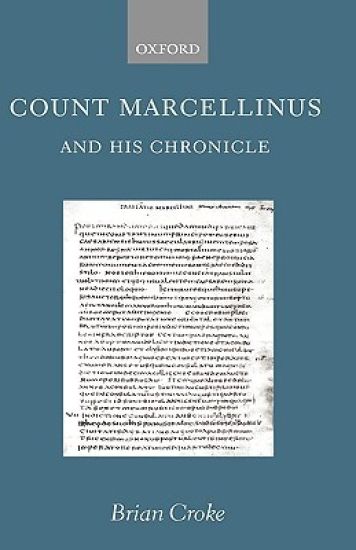
Count Marcellinus and his Chronicle constitutes the first comprehensive study of Marcellinus, a courtier of the emperor Justinian, and his chronicle covering the eastern Roman world from AD 379 to 534. Marcellinus' chronicle provides a first-hand account of the Nika riots at Constantinople in 532, as well as other direct glimpses of political and religious life in the imperial capital in the early sixth century. It also testifies to the confrontations in the Balkans between the Romans and the Huns, Goths, and Bulgars. In this book Brian Croke develops a case for understanding Marcellinus' Latin chronicle as an essentially Byzantine document written by an educated imperial official and reflecting the cosmopolitan culture and society of sixth-century Constantinople. He approaches the chronicle as a historiographical text which is shaped by its genre, the expectations of its audience, and a coherent view of the past, deriving from the author's Christian culture and outlook. The book also explores the nature and function of chronicle writing as a distinct mode of Christian discourse which has been misunderstood and undervalued by modern scholarship. Separate attention is given to the anonymous continuation of the chronicle from 535 to 548, and to the subsequent use of Marcellinus' works in Ireland and Anglo-Saxon England. Croke also casts new light on the career of Marcellinus, his range of literary output which included books on topography and chronology, and the course and impact of the fifth- and sixth-century raids into Roman Illyricum. This book also enriches our understanding of society and politics in the imperial capital and raises broader questions about Christian life, liturgy, and culture in the sixth century, particularly the central role of imperial and religious ceremonial in Byzantine public life.
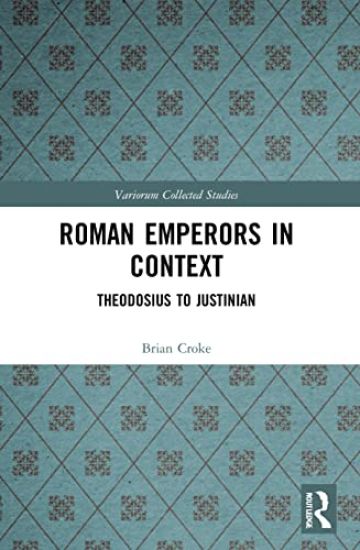
Roman Emperors in Context

Roman Emperors in Context

Brian Croke

Routledge
2021
sidottu
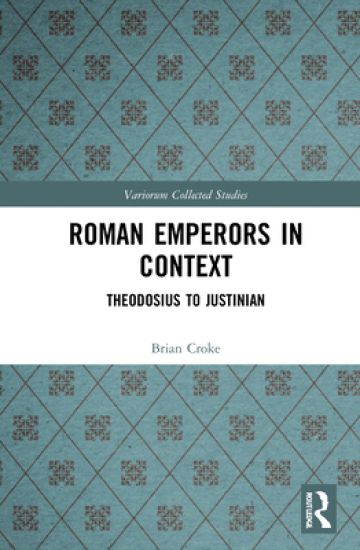
Roman Emperors in Context: Theodosius to Justinian brings together ten articles by renowned historian Brian Croke.Written separately and over a period of fifteen years, the revised and updated chapters in this volume provide a coherent and substantial story of the change and development in imperial government at the eastern capital of Constantinople between the reigns of Theodosius I (379-95) and Justinian (527-65). Bookended by chapters on the city itself, this book is based on a conviction that the legal and administrative decisions of emperors have an impact on the whole of the political realm. The fifth century, which forms the core of this book, is shown to be essentially Roman in that the significance of aristocracy and dynasty still formed the basic framework for political advancement and the conduct/conflict of political power around a Roman imperial court from one generation to the next. Also highlighted is how power at court was mediated through military generals, including major regional commanders in the Balkans and the East, bishops and bureaucrats. Finally, the book demonstrates how the prolonged absence of male heirs during this period allowed the sisters, daughters, mothers and wives of Roman emperors to become more important and more central to imperial government.This book is essential reading for scholars and students of Roman and Byzantine history, as well as those interested in political and legal history. (CS1100)
Roman Emperors in Context

Roman Emperors in Context

Brian Croke

TAYLOR FRANCIS LTD
2023
nidottu
Roman Emperors in Context: Theodosius to Justinian brings together ten articles by renowned historian Brian Croke.Written separately and over a period of fifteen years, the revised and updated chapters in this volume provide a coherent and substantial story of the change and development in imperial government at the eastern capital of Constantinople between the reigns of Theodosius I (379-95) and Justinian (527-65). Bookended by chapters on the city itself, this book is based on a conviction that the legal and administrative decisions of emperors have an impact on the whole of the political realm. The fifth century, which forms the core of this book, is shown to be essentially Roman in that the significance of aristocracy and dynasty still formed the basic framework for political advancement and the conduct/conflict of political power around a Roman imperial court from one generation to the next. Also highlighted is how power at court was mediated through military generals, including major regional commanders in the Balkans and the East, bishops and bureaucrats. Finally, the book demonstrates how the prolonged absence of male heirs during this period allowed the sisters, daughters, mothers and wives of Roman emperors to become more important and more central to imperial government.This book is essential reading for scholars and students of Roman and Byzantine history, as well as those interested in political and legal history. (CS1100)
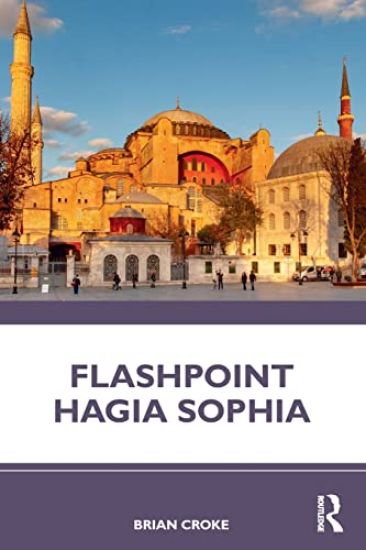
Flashpoint Hagia Sophia

Flashpoint Hagia Sophia

Brian Croke

TAYLOR FRANCIS LTD
2021
sidottu
Istanbul’s Hagia Sophia (‘Holy Wisdom’), or Ayasofya, is one of the world’s most visited buildings. Yet, few visitors have any idea of its long and complex story, or why it has always been a place where history, religion and politics collide. In July 2020, Turkish President Erdogan set off an explosive controversy by announcing that Hagia Sophia would now be modified into a mosque. This decision provoked fierce criticism from UNESCO because Hagia Sophia was enjoying World Heritage Site benefits. The United States, the European Union, Russia and Greece all chimed in. However, Erdogan’s action was wildly popular in Turkey, with its 99% Muslim population. Why is Hagia Sophia so important to modern Turkey? Why this provocative decision, and why now? How could all the international critics be ignored? Why does the world care so much about this old building? Why should it continue to care?This book explains President Erdogan’s controversial decision in terms of Turkey’s national, independent and Islamic politics, and as a response to the mosque massacre in Christchurch in March 2019 when his life was threatened by the gunman. Any consideration of Hagia Sophia’s present and future also requires appreciation of the almost 1,500-year old story of this architectural marvel, from its inception as a church in 537 to its configuration as a mosque in 2020 and beyond. Because all world heritage sites depend on national management, Hagia Sophia will remain Turkey’s responsibility, but the international community is watching to ensure Turkey honours Hagia Sophia’s entire heritage, from the 6th century to the 21st century.
Flashpoint Hagia Sophia

Flashpoint Hagia Sophia

Brian Croke

TAYLOR FRANCIS LTD
2021
nidottu
Istanbul’s Hagia Sophia (‘Holy Wisdom’), or Ayasofya, is one of the world’s most visited buildings. Yet, few visitors have any idea of its long and complex story, or why it has always been a place where history, religion and politics collide. In July 2020, Turkish President Erdogan set off an explosive controversy by announcing that Hagia Sophia would now be modified into a mosque. This decision provoked fierce criticism from UNESCO because Hagia Sophia was enjoying World Heritage Site benefits. The United States, the European Union, Russia and Greece all chimed in. However, Erdogan’s action was wildly popular in Turkey, with its 99% Muslim population. Why is Hagia Sophia so important to modern Turkey? Why this provocative decision, and why now? How could all the international critics be ignored? Why does the world care so much about this old building? Why should it continue to care?This book explains President Erdogan’s controversial decision in terms of Turkey’s national, independent and Islamic politics, and as a response to the mosque massacre in Christchurch in March 2019 when his life was threatened by the gunman. Any consideration of Hagia Sophia’s present and future also requires appreciation of the almost 1,500-year old story of this architectural marvel, from its inception as a church in 537 to its configuration as a mosque in 2020 and beyond. Because all world heritage sites depend on national management, Hagia Sophia will remain Turkey’s responsibility, but the international community is watching to ensure Turkey honours Hagia Sophia’s entire heritage, from the 6th century to the 21st century.
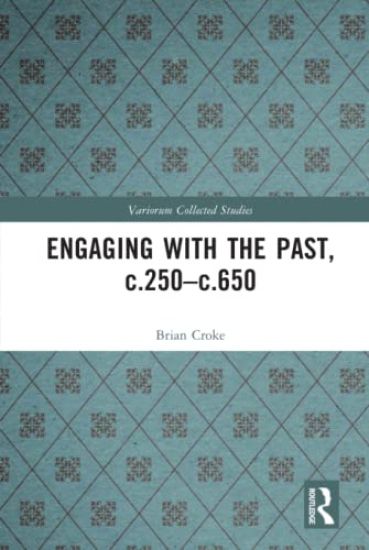
Engaging with the Past, c.250-c.650

Engaging with the Past, c.250-c.650

Brian Croke

TAYLOR FRANCIS LTD
2023
sidottu
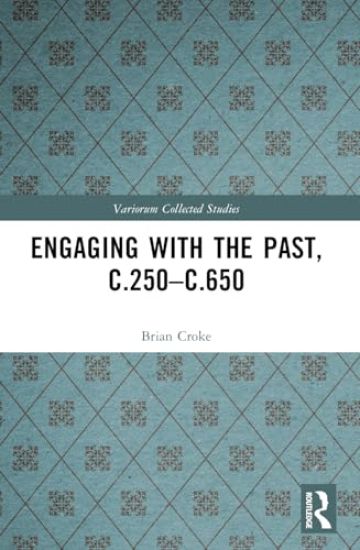
Between c.250 and c.650, the way the past was seen, recorded and interpreted for a contemporary audience changed fundamentally. Only since the 1970s have the key elements of this historiographical revolution become clear, with the recasting of the period, across both east and west, as ‘late antiquity’. Historiography, however, has struggled to find its place in this new scholarly world. No longer is decline and fall the natural explanatory model for cultural and literary developments, but continuity and transformation. In addition, the emergence of ‘late antiquity’ coincided with a methodological challenge arising from the ‘linguistic turn’ which impacted on history writing in all eras.This book is focussed on the development of modern understanding of how the ways of seeing and recording the past changed in the course of adjusting to emerging social, religious and cultural developments over the period from c.250 to c.650. Its overriding theme is how modern historiography has adapted over the past half century to engaging with the past between c.250 and c.650. Now, as explained in this book, the newly dominant historiographical genres (chronicles, epitomes, church histories) are seen as the preferred modes of telling the story of the past, rather than being considered rudimentary and naïve.
Engaging with the Past, c.250-c.650

Engaging with the Past, c.250-c.650

Brian Croke

TAYLOR FRANCIS LTD
2024
nidottu
Between c.250 and c.650, the way the past was seen, recorded and interpreted for a contemporary audience changed fundamentally. Only since the 1970s have the key elements of this historiographical revolution become clear, with the recasting of the period, across both east and west, as ‘late antiquity’. Historiography, however, has struggled to find its place in this new scholarly world. No longer is decline and fall the natural explanatory model for cultural and literary developments, but continuity and transformation. In addition, the emergence of ‘late antiquity’ coincided with a methodological challenge arising from the ‘linguistic turn’ which impacted on history writing in all eras.This book is focussed on the development of modern understanding of how the ways of seeing and recording the past changed in the course of adjusting to emerging social, religious and cultural developments over the period from c.250 to c.650. Its overriding theme is how modern historiography has adapted over the past half century to engaging with the past between c.250 and c.650. Now, as explained in this book, the newly dominant historiographical genres (chronicles, epitomes, church histories) are seen as the preferred modes of telling the story of the past, rather than being considered rudimentary and naïve.