Kirjojen hintavertailu. Mukana 11 244 527 kirjaa ja 12 kauppaa.

Kirjahaku

Etsi kirjoja tekijän nimen, kirjan nimen tai ISBN:n perusteella.

8 kirjaa tekijältä Brian Cummings

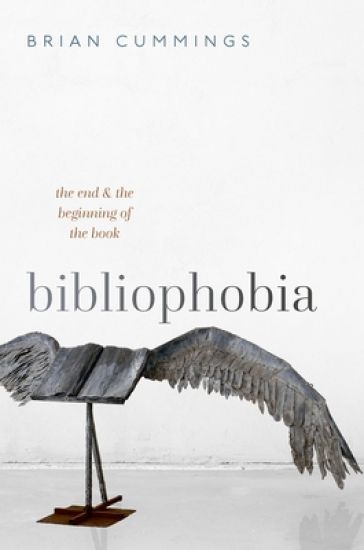
Bibliophobia

Bibliophobia

Brian Cummings

Oxford University Press
2022
sidottu
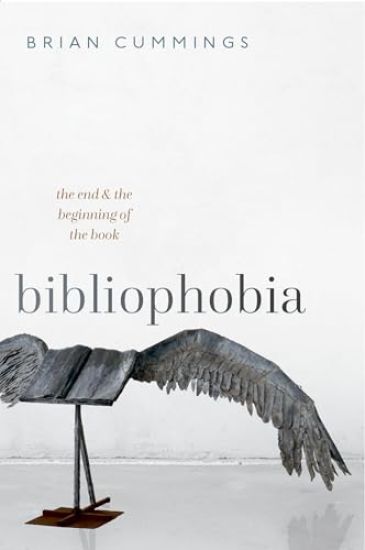
Bibliophobia is a book about material books, how they are cared for, and how they are damaged, throughout the 5000-year history of writing from Sumeria to the smartphone. Its starting point is the contemporary idea of 'the death of the book' implied by the replacement of physical books by digital media, with accompanying twenty-first-century experiences of paranoia and literary apocalypse. It traces a twin fear of omniscience and oblivion back to the origins of writing in ancient Babylon and Egypt, then forwards to the age of Google. It uncovers bibliophobia from the first Chinese emperor to Nazi Germany, alongside parallel stories of bibliomania and bibliolatry in world religions and literatures. Books imply cognitive content embodied in physical form, in which the body cooperates with the brain. At its heart this relationship of body and mind, or letter and spirit, always retains a mystery. Religions are founded on holy books, which are also sites of transgression, so that writing is simultaneously sacred and profane. In secular societies these complex feelings are transferred to concepts of ideology and toleration. In the ambiguous future of the internet, digital immateriality threatens human equilibrium once again. Bibliophobia is a global history, covering six continents and seven religions, describing written examples from each of the last thirty centuries (and several earlier). It discusses topics such as the origins of different kinds of human script; the development of textual media such as scrolls, codices, printed books, and artificial intelligence; the collection and destruction of libraries; the use of books as holy relics, talismans, or shrines; and the place of literacy in the history of slavery, heresy, blasphemy, censorship, and persecution. It proposes a theory of writing, how it relates to speech, images, and information, or to concepts of mimesis, personhood, and politics. Originating as the Clarendon Lectures in the Faculty of English at the University of Oxford, the methods of Bibliophobia range across book history; comparative religion; philosophy from Plato to Hegel and Freud; and a range of global literature from ancient to contemporary. Richly illustrated with textual forms, material objects, and art works, its inspiration is the power that books always (and continue to) have in the emotional, spiritual, bodily, and imaginative lives of readers.
The Literary Culture of the Reformation

The Literary Culture of the Reformation

Brian Cummings

Oxford University Press
2002
sidottu
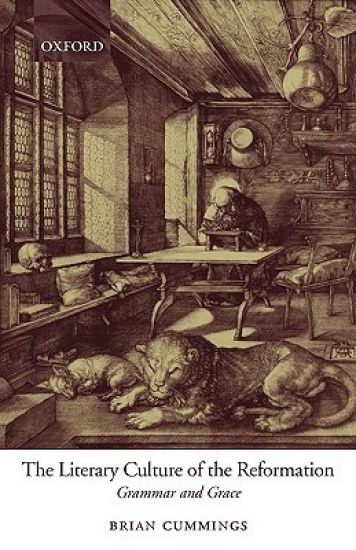
The Literary Culture of the Reformation examines the place of literature in the Reformation, considering both how arguments about biblical meaning and literary interpretation influenced the new theology, and how developments in theology in turn influenced literary practices. Part One focuses on Northern Europe, reconsidering the relationship between Renaissance humanism (especially Erasmus) and religious ideas (especially Luther). Parts Two and Three examine Tudor and early Stuart England. Part Two describes the rise of vernacular theology and protestant culture in relation to fundamental changes in the understanding of the English language. Part Three studies English religious poetry (including Donne, Herbert, and in an Epilogue, Milton) in the wake of these changes. Bringing together genres and styles of writing which are normally kept apart (poems, sermons, treatises, commentaries) Brian Cummings offers a major re-evaluation of the literary production of this intensely verbal and controversial period.
The Book of Common Prayer

The Book of Common Prayer

Brian Cummings

Oxford University Press
2018
nidottu
The Book of Common Prayer is one of the most influential books in history. First published in the reign of Edward VI, in 1549, it was a product of the English Reformation following the break with Rome. For nearly five centuries, it has formed the order of worship for established Christianity in England. More listeners have heard these prayers, it is said, than the soliloquies of Shakespeare. As British imperial ambitions spread, the Book of Common Prayer became the primary instrument (at least as much as the King James Bible) of English culture, firstly in Ireland in 1551. When the Puritans fled to America in 1620 it was to escape the discipline imposed by of the Book of Common Prayer, yet the book came to embody official religion in America before and after Independence, and is still in use. Today it is a global book: it was the first book printed in many languages, from north America to southern Africa, to the Indian sub-continent. In this Very Short Introduction Brian Cummings tells the fascinating history of the Book of Common Prayer, and explains why it is easily misunderstood. Designed in the 1540s as a radical Protestant answer to Catholic "superstition", within a century (during the English Civil Wars) radical Christians regarded the Book of Common Prayer as itself "superstitious" and even (paradoxically) "Papist". Changing in meaning and context over time, the Book of Common Prayer has acted as a cultural symbol, affecting the everyday conduct of life as much as the spiritual, and dividing conformity from non-conformity, in social terms as well as religious, from birth to marriage to death. ABOUT THE SERIES: The Very Short Introductions series from Oxford University Press contains hundreds of titles in almost every subject area. These pocket-sized books are the perfect way to get ahead in a new subject quickly. Our expert authors combine facts, analysis, perspective, new ideas, and enthusiasm to make interesting and challenging topics highly readable.
Mortal Thoughts

Mortal Thoughts

Brian Cummings

Oxford University Press
2018
nidottu
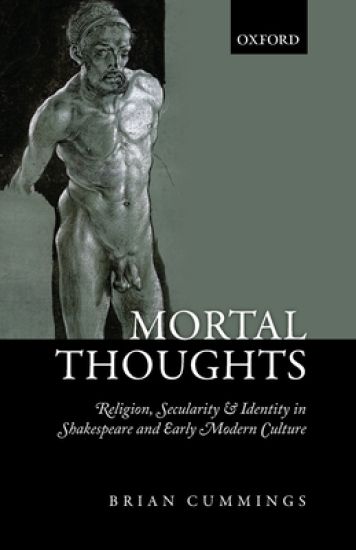
Since the nineteenth century it has been assumed that the concept of personal identity in the early modern period is bound up with secularization. Indeed, many explanations of the emergence of modernity have been based on this thesis, in which Shakespeare as a secular author has played a central role. However, the idea of secularization is now everywhere under threat. The secularity of modern society is less apparent than it was a generation ago. Shakespeare, too, has come to be seen in a religious perspective. What happens to human identity in this different framework? Mortal Thoughts asks what selfhood looks like if we do not assume that an idea of the self could only come into being as a result of an emptying out of a religious framework. It does so by examining human mortality. What it is to be human, and how a life is framed by its ending, are issues that cross religious confessions in early modernity, and interrogate the sacred and secular divide. A series of chapters examines literature and art in relation to concepts such as conscience, martyrdom, soliloquy, luck, suicide, and embodiment. Religious and philosophical creativity are revealed as poised around anxieties about finitude and contingency, challenging conventional divisions between kinds of literary and artistic endeavour. Mortal Thoughts considers incipient genres of life writing (More, Foxe, and Montaigne) and life drawing (Dürer, Hans Baldung Grien) in relation to dramatic representation and literary narration (Shakespeare, Donne, Milton). In the process it asks whether the problem of human identity rewrites historical boundaries.
Bibliophobia

Bibliophobia

Brian Cummings

Oxford University Press
2026
nidottu
Bibliophobia is a book about material books, how they are cared for, and how they are damaged, throughout the 5000-year history of writing from Sumeria to the smartphone. Its starting point is the contemporary idea of 'the death of the book' implied by the replacement of physical books by digital media, with accompanying twenty first-century experiences of paranoia and literary apocalypse. It traces a twin fear of omniscience and oblivion back to the origins of writing in ancient Babylon and Egypt, then forwards to the age of Google. It uncovers bibliophobia from the first Chinese emperor to Nazi Germany, alongside parallel stories of bibliomania and bibliolatry in world religions and literatures. Books imply cognitive content embodied in physical form, in which the body cooperates with the brain. At its heart this relationship of body and mind, or letter and spirit, always retains a mystery. Religions are founded on holy books, which are also sites of transgression, so that writing is simultaneously sacred and profane. In secular societies these complex feelings are transferred to concepts of ideology and toleration. In the ambiguous future of the internet, digital immateriality threatens human equilibrium once again. Bibliophobia is a global history, covering six continents and seven religions, describing written examples from each of the last thirty centuries (and several earlier). It discusses topics such as the origins of different kinds of human script; the development of textual media such as scrolls, codices, printed books, and artificial intelligence; the collection and destruction of libraries; the use of books as holy relics, talismans, or shrines; and the place of literacy in the history of slavery, heresy, blasphemy, censorship, and persecution. It proposes a theory of writing, how it relates to speech, images, and information, or to concepts of mimesis, personhood, and politics. Originating as the Clarendon Lectures in the Faculty of English at the University of Oxford, the methods of Bibliophobia range across book history; comparative religion; philosophy from Plato to Hegel and Freud; and a range of global literature from ancient to contemporary. Richly illustrated with textual forms, material objects, and art works, its inspiration is the power that books always (and continue to) have in the emotional, spiritual, bodily, and imaginative lives of readers.
The Literary Culture of the Reformation

The Literary Culture of the Reformation

Brian Cummings

Oxford University Press
2007
nidottu
Brian Cummings examines the place of literature in the Reformation, considering both how arguments about biblical meaning and literary interpretation influenced the new theology, and how developments in theology in turn influenced literary practices. Part One focuses on Northern Europe, reconsidering the relationship between Renaissance humanism (especially Erasmus) and religious ideas (especially Luther). Parts Two and Three examine Tudor and early Stuart England. Part Two describes the rise of vernacular theology and protestant culture in relation to fundamental changes in the understanding of the English language. Part Three studies English religious poetry (including Donne, Herbert, and in an Epilogue, Milton) in the wake of these changes. Bringing together genres and styles of writing which are normally kept apart (poems, sermons, treatises, commentaries), Cummings offers a major re-evaluation of the literary production of this intensely verbal and controversial period.
Mortal Thoughts

Mortal Thoughts

Brian Cummings

Oxford University Press
2013
sidottu
Since the nineteenth century, it has been assumed that the concept of personal identity in the early modern period is bound up with secularization. Indeed, many explanations of the emergence of modernity have been based on this thesis, in which Shakespeare as a secular author has played a central role. However, the idea of secularization is now everywhere under threat. The secularity of modern society is less apparent than it was a generation ago. Shakespeare, too, has come to be seen in a religious perspective. What happens to human identity in this different framework? Mortal Thoughts asks what selfhood looks like if we do not assume that an idea of the self could only come into being as a result of an emptying out of a religious framework. It does so by examining human mortality. What it is to be human, and how a life is framed by its ending, are issues that cross religious confessions in early modernity, and interrogate the sacred and secular divide. A series of chapters examines literature and art in relation to concepts such as conscience, martyrdom, soliloquy, luck, suicide, and embodiment. Religious and philosophical creativity are revealed as poised around anxieties about finitude and contingency, challenging conventional divisions between kinds of literary and artistic endeavour. Mortal Thoughts considers incipient genres of life writing (More, Foxe and Montaigne) and life drawing (Dürer, Hans Baldung Grien) in relation to dramatic representation and literary narration (Shakespeare, Donne, Milton). In the process it asks whether the problem of human identity rewrites historical boundaries.