Kirjojen hintavertailu. Mukana 11 213 693 kirjaa ja 12 kauppaa.

Kirjahaku

Etsi kirjoja tekijän nimen, kirjan nimen tai ISBN:n perusteella.

6 kirjaa tekijältä Brian D. Bunk

From Football to Soccer

From Football to Soccer

Brian D. Bunk

University of Illinois Press
2021
sidottu
Rediscovering soccer's long history in the U.S. Across North America, native peoples and colonists alike played a variety of kicking games long before soccer's emergence in the late 1800s. Brian D. Bunk examines the development and social impact of these sports through the rise of professional soccer after World War I. As he shows, the various games called football gave women an outlet as athletes and encouraged men to form social bonds based on educational experience, occupation, ethnic identity, or military service. Football also followed young people to college as higher education expanded in the nineteenth century. University play, along with the arrival of immigrants from the British Isles, helped spark the creation of organized soccer in the United States—and the beautiful game's transformation into a truly international sport. A multilayered look at one game's place in American life, From Football to Soccer refutes the notion of the U.S. as a land outside of football history.
Beyond the Field

Beyond the Field

Brian D. Bunk

UNIVERSITY OF ILLINOIS PRESS
2025
sidottu
Played by both migrants and native-born Americans, soccer created communities across the United States. Brian D. Bunk ranges from Pawtucket to Honolulu as he illuminates the deep and diverse origins of the American sport.Soccer took root as immigration, urbanization, and industrialization triggered immense changes across society. Matches built local pride as teams battled rival neighborhoods and towns. Teammates and supporters shared meals, raised money for fallen players, and attended each other's weddings and funerals. If sometimes damaged by economic depression or shattered by war, clubs often bounced back to provide a steadying, resilient force in their towns. Bunk follows the story from the 1880s through World War I by profiling the struggles and joys of players while also tracing the overlooked impact of people of African, Chinese, Hawaiian, Jewish, and Filipino descent on American soccer culture.Engaging and rich in detail, Beyond the Field draws on extensive original research to expand our idea of the people and places that formed the American game.
From Football to Soccer

From Football to Soccer

Brian D. Bunk

University of Illinois Press
2021
nidottu
Rediscovering soccer's long history in the U.S. Across North America, native peoples and colonists alike played a variety of kicking games long before soccer's emergence in the late 1800s. Brian D. Bunk examines the development and social impact of these sports through the rise of professional soccer after World War I. As he shows, the various games called football gave women an outlet as athletes and encouraged men to form social bonds based on educational experience, occupation, ethnic identity, or military service. Football also followed young people to college as higher education expanded in the nineteenth century. University play, along with the arrival of immigrants from the British Isles, helped spark the creation of organized soccer in the United States—and the beautiful game's transformation into a truly international sport. A multilayered look at one game's place in American life, From Football to Soccer refutes the notion of the U.S. as a land outside of football history.

Beyond the Field

Beyond the Field

Brian D. Bunk

UNIVERSITY OF ILLINOIS PRESS
2025
nidottu
Played by both migrants and native-born Americans, soccer created communities across the United States. Brian D. Bunk ranges from Pawtucket to Honolulu as he illuminates the deep and diverse origins of the American sport.Soccer took root as immigration, urbanization, and industrialization triggered immense changes across society. Matches built local pride as teams battled rival neighborhoods and towns. Teammates and supporters shared meals, raised money for fallen players, and attended each other's weddings and funerals. If sometimes damaged by economic depression or shattered by war, clubs often bounced back to provide a steadying, resilient force in their towns. Bunk follows the story from the 1880s through World War I by profiling the struggles and joys of players while also tracing the overlooked impact of people of African, Chinese, Hawaiian, Jewish, and Filipino descent on American soccer culture.Engaging and rich in detail, Beyond the Field draws on extensive original research to expand our idea of the people and places that formed the American game.
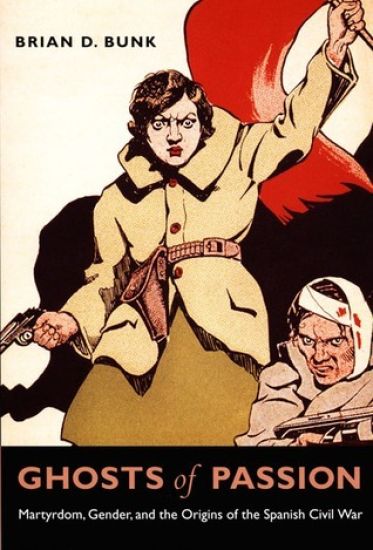
Ghosts of Passion

Ghosts of Passion

Brian D. Bunk

Duke University Press
2007
sidottu
The question of what caused the Spanish Civil War (1936–39) is the central focus of modern Spanish historiography. In Ghosts of Passion, Brian D. Bunk argues that propaganda related to the revolution of October 1934 triggered the broader conflict by accentuating existing social tensions surrounding religion and gender. Through careful analysis of the images produced in books, newspapers, posters, rallies, and meetings, Bunk contends that Spain’s civil war was not inevitable. Commemorative imagery produced after October 1934 bridged the gap between rhetoric and action by dehumanizing opponents and encouraging violent action against them. In commemorating the uprising, revolutionaries and conservatives used the same methods to promote radically different political agendas: they deployed religious imagery to characterize the political situation as a battle between good and evil, with the fate of the nation hanging in the balance, and exploited traditional gender stereotypes to portray themselves as the defenders of social order against chaos. The resulting atmosphere of polarization combined with increasing political violence to plunge the country into civil war.
Ghosts of Passion

Ghosts of Passion

Brian D. Bunk

Duke University Press
2007
pokkari
The question of what caused the Spanish Civil War (1936–39) is the central focus of modern Spanish historiography. In Ghosts of Passion, Brian D. Bunk argues that propaganda related to the revolution of October 1934 triggered the broader conflict by accentuating existing social tensions surrounding religion and gender. Through careful analysis of the images produced in books, newspapers, posters, rallies, and meetings, Bunk contends that Spain’s civil war was not inevitable. Commemorative imagery produced after October 1934 bridged the gap between rhetoric and action by dehumanizing opponents and encouraging violent action against them. In commemorating the uprising, revolutionaries and conservatives used the same methods to promote radically different political agendas: they deployed religious imagery to characterize the political situation as a battle between good and evil, with the fate of the nation hanging in the balance, and exploited traditional gender stereotypes to portray themselves as the defenders of social order against chaos. The resulting atmosphere of polarization combined with increasing political violence to plunge the country into civil war.