Kirjojen hintavertailu. Mukana 11 699 587 kirjaa ja 12 kauppaa.

Kirjahaku

Etsi kirjoja tekijän nimen, kirjan nimen tai ISBN:n perusteella.

4 kirjaa tekijältä Brian D. McKnight

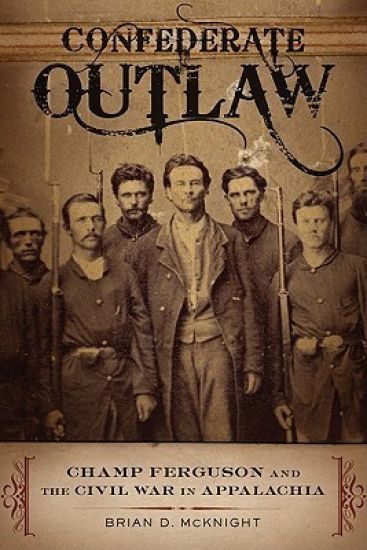
Confederate Outlaw

Confederate Outlaw

Brian D. McKnight

Louisiana State University Press
2011
sidottu
In the fall of 1865, the United States Army executed Confederate guerrilla Champ Ferguson for his role in murdering fifty-three loyal citizens of Kentucky and Tennessee during the Civil War. Long remembered as the most unforgiving and inglorious warrior of the Confederacy, Ferguson has often been dismissed by historians as a cold-blooded killer. In Confederate Outlaw: Champ Ferguson and the Civil War in Appalachia, biographer Brian D. McKnight demonstrates how such a simple judgment ignores the complexity of this legendary character.In his analysis, McKnight maintains that Ferguson fought the war on personal terms and with an Old Testament mentality regarding the righteousness of his cause. He believed that friends were friends and enemies were enemies, no middle ground existed. As a result, he killed prewar comrades as well as longtime adversaries without regret, all the while knowing that he might one day face his own brother, who served as a Union scout.Ferguson's continued popularity demonstrates that his bloody legend did not die on the gallows. Widespread rumors endured of his last-minute escape from justice, and over time, the borderland terrorist emerged as a folk hero for many southerners. Numerous authors resurrected and romanticized his story for popular audiences, and even Hollywood used Ferguson's life to create the composite role played by Clint Eastwood in The Outlaw Josey Wales. McKnight's study deftly separates the myths from reality and weaves a thoughtful, captivating, and accurate portrait of the Confederacy's most celebrated guerrilla.An impeccably researched biography, Confederate Outlaw offers an abundance of insight into Ferguson's wartime motivations, actions, and tactics, and also describes borderland loyalties, guerrilla operations, and military retribution. McKnight concludes that Ferguson, and other irregular warriors operating during the Civil War, saw the conflict as far more of a personal battle than a political one.
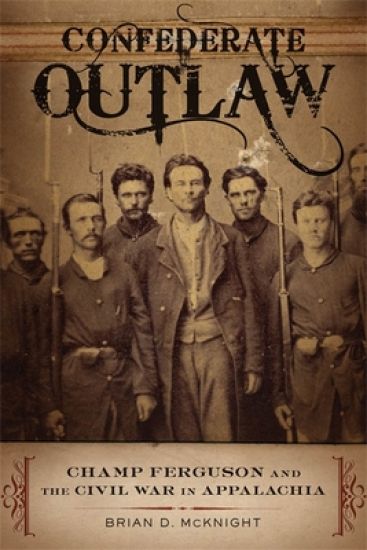
Confederate Outlaw

Confederate Outlaw

Brian D. McKnight

LOUISIANA STATE UNIVERSITY PRESS
2022
pokkari
In the fall of 1865, the United States Army executed Confederate guerrilla Champ Ferguson for his role in murdering fifty-three loyal citizens of Kentucky and Tennessee during the Civil War. Long remembered as the most unforgiving and inglorious warrior of the Confederacy, Ferguson has often been dismissed by historians as a cold-blooded killer. In Confederate Outlaw: Champ Ferguson and the Civil War in Appalachia, biographer Brian D. McKnight demonstrates how such a simple judgment ignores the complexity of this legendary character.In his analysis, McKnight maintains that Ferguson fought the war on personal terms and with an Old Testament mentality regarding the righteousness of his cause. He believed that friends were friends and enemies were enemies—no middle ground existed. As a result, he killed prewar comrades as well as longtime adversaries without regret, all the while knowing that he might one day face his own brother, who served as a Union scout.Ferguson's continued popularity demonstrates that his bloody legend did not die on the gallows. Widespread rumors endured of his last-minute escape from justice, and over time, the borderland terrorist emerged as a folk hero for many southerners. Numerous authors resurrected and romanticized his story for popular audiences, and even Hollywood used Ferguson's life to create the composite role played by Clint Eastwood in The Outlaw Josey Wales. McKnight's study deftly separates the myths from reality and weaves a thoughtful, captivating, and accurate portrait of the Confederacy's most celebrated guerrilla.An impeccably researched biography, Confederate Outlaw offers an abundance of insight into Ferguson's wartime motivations, actions, and tactics, and also describes borderland loyalties, guerrilla operations, and military retribution. McKnight concludes that Ferguson, and other irregular warriors operating during the Civil War, saw the conflict as far more of a personal battle than a political one.
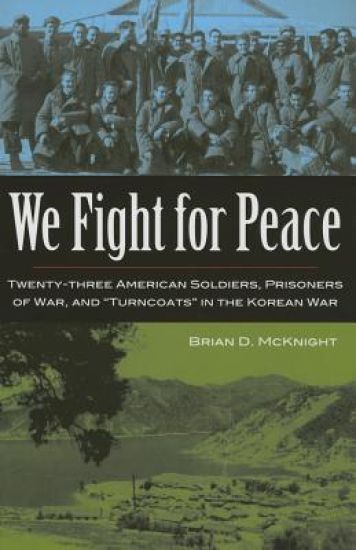
We Fight for Peace

We Fight for Peace

Brian D. McKnight

Kent State University Press
2014
sidottu
At midnight on January 24, 1954, the last step was taken in the armistice to end the war in Korea. That night, the neutral Indian guards who had overseen the prisoner of war repatriation process abandoned their posts, leaving their charges to make their own decisions. The vast majority of men allowed to choose a new nation were Chinese and North Koreans who elected the path of freedom. There were smaller groups hoping that the communist bloc would give them a better life; among these men were twenty-one American soldiers and prisoners of war. “We Fight for Peace” tells their story.During the four months prior to the armistice, news had spread throughout the United States and the world that a group of twenty-three Americans was refusing repatriation. In the interim, two of the twenty-three soldiers had escaped. Once back behind American lines, the first voluntary repatriate, Edward Dickenson, was given celebrity treatment with the hope that this positive experience would entice the others to return to the United States. Just one more American POW, Claude Batchelor,chose repatriation.In the United States, Dickenson, who was being treated at Walter Reed Medical Center, was placed under arrest and charged with a variety of collaboration related crimes. Weeks later, Batchelor was similarly arrested. Over the course of the coming months, Dickenson and Batchelor, against the backdrop of Joseph McCarthy’s Army Hearings, were prosecuted, convicted, and imprisoned. In the ensuing years, Dickenson and Batchelor, both of whom had voluntarily returned to the United States, watched from their jail cells as most of the remaining twenty-one Americans trickled back home, protected by the dishonorable discharges they received. Exhaustively researched and meticulously documented, “We Fight for Peace” is the first comprehensive scholarly work on this controversial event in international history.
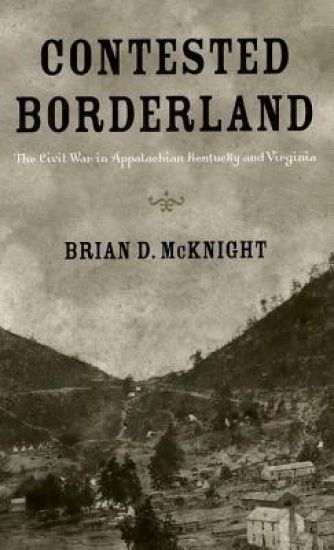
Contested Borderland

Contested Borderland

Brian D. McKnight

The University Press of Kentucky
2006
sidottu
From 1861 to 1865, the border separating eastern Kentucky and southwestern Virginia was more than just a geographic marker -- it represented a major ideological split, serving as an "international" boundary between the United States and the Confederacy. The loyalties of those who lived in this mountainous region could not be so easily divided, and large segments of the population remained neutral or vacillated in their support. Location and a wealth of resources made the region strategically important to both sides in the conflict, and both armies fought for control. In Contested Borderland, Brian D. McKnight shows how military invasion of this region led to increasing guerrilla warfare and how regular armies and state militias ripped communities along partisan lines, leaving wounds long after the official end of the Civil War.