Kirjojen hintavertailu. Mukana 11 342 296 kirjaa ja 12 kauppaa.

Kirjahaku

Etsi kirjoja tekijän nimen, kirjan nimen tai ISBN:n perusteella.

5 kirjaa tekijältä Brian D. Taylor

Russian Politics

Russian Politics

Brian D. Taylor

OXFORD UNIVERSITY PRESS INC
2025
nidottu
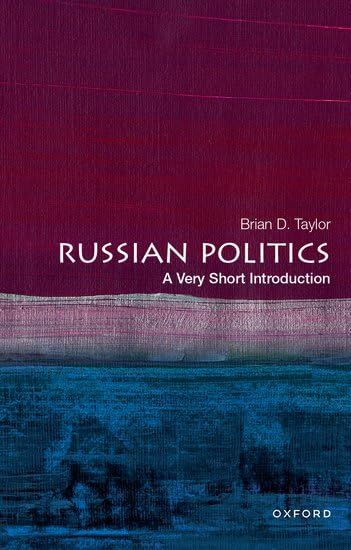
Russia is rarely out of the news. This has been particularly true since it launched the largest war in Europe since World War II when it invaded Ukraine in 2022. Yet Russian politics can be difficult to understand. It is powerfully shaped by large, impersonal forces such as geography, and Russia's place in the international political and economic system. At the same time, Russia's formal political institutions, such as the Constitution and electoral procedures, are relatively weak and manipulable compared to those of stable, established democracies. Under these circumstances, powerful leaders such as Mikhail Gorbachev, Boris Yeltsin, and Vladimir Putin represent a source of potential dynamism and change. This Very Short Introduction provides a guide to understanding Russian Politics that goes beyond the headlines, offering a vivid account of the key forces driving Russian politics. It places Russia in a global context while explaining its internal political development. Several major themes run through the book, including the primacy of the state over society, the role of the so-called "West," which has represented a source of inspiration, of threat, and of competition for generations of Russians, and the collapse of the Soviet Union in 1991. The Soviet collapse brought about dramatic change across multiple spheres, from the nature of the political and economic system to the country's borders and who counted as a citizen. To this day, Russia is still working its way through the consequences of these transformations.

Politics and the Russian Army

Politics and the Russian Army

Brian D. Taylor

Cambridge University Press
2003
pokkari
Military coups have plagued many countries around the world, but Russia, despite its tumultuous history, has not experienced a successful military coup in over two centuries. In a series of detailed case studies, Brian Taylor explains the political role of the Russian military. Drawing on a wealth of new material, including archives and interviews, Taylor discusses every case of actual or potential military intervention in Russian politics from Peter the Great to Vladimir Putin. Taylor analyzes in particular detail the army’s behavior during the political revolutions that marked the beginning and end of the twentieth century, two periods when the military was, uncharacteristically, heavily involved in domestic politics. He argues that a common thread unites the late-Imperial, Soviet, and post-Soviet Russian army: an organizational culture that believes that intervention against the country’s political leadership - whether tsar, general secretary, or president - is fundamentally illegitimate.
State Building in Putin’s Russia

State Building in Putin’s Russia

Brian D. Taylor

Cambridge University Press
2011
sidottu
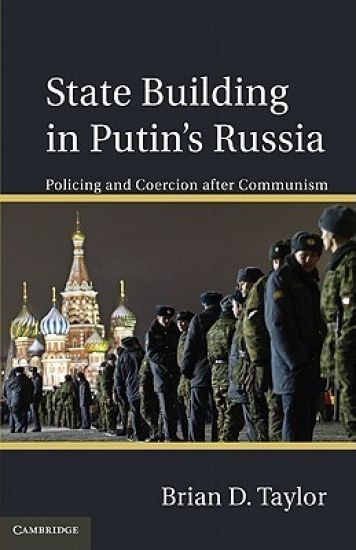
This book argues that Putin's strategy for rebuilding the state was fundamentally flawed. Taylor demonstrates that a disregard for the way state officials behave toward citizens - state quality - had a negative impact on what the state could do - state capacity. Focusing on those organizations that control state coercion, what Russians call the 'power ministries', Taylor shows that many of the weaknesses of the Russian state that existed under Boris Yeltsin persisted under Putin. Drawing on extensive field research and interviews, as well as a wide range of comparative data, the book reveals the practices and norms that guide the behavior of Russian power ministry officials (the so-called siloviki), especially law enforcement personnel. By examining siloviki behavior from the Kremlin down to the street level, State Building in Putin's Russia uncovers the who, where and how of Russian state building after communism.
Politics and the Russian Army

Politics and the Russian Army

Brian D. Taylor

Cambridge University Press
2003
sidottu
Military coups have plagued many countries around the world, but Russia, despite its tumultuous history, has not experienced a successful military coup in over two centuries. In a series of detailed case studies, Brian Taylor explains the political role of the Russian military. Drawing on a wealth of new material, including archives and interviews, Taylor discusses every case of actual or potential military intervention in Russian politics from Peter the Great to Vladimir Putin. Taylor analyzes in particular detail the army's behavior during the political revolutions that marked the beginning and end of the twentieth century, two periods when the military was, uncharacteristically, heavily involved in domestic politics. He argues that a common thread unites the late-Imperial, Soviet, and post-Soviet Russian army: an organizational culture that believes that intervention against the country's political leadership - whether tsar, general secretary, or president - is fundamentally illegitimate.
State Building in Putin’s Russia

State Building in Putin’s Russia

Brian D. Taylor

Cambridge University Press
2013
pokkari
This book argues that Putin's strategy for rebuilding the state was fundamentally flawed. Taylor demonstrates that a disregard for the way state officials behave toward citizens - state quality - had a negative impact on what the state could do - state capacity. Focusing on those organizations that control state coercion, what Russians call the 'power ministries', Taylor shows that many of the weaknesses of the Russian state that existed under Boris Yeltsin persisted under Putin. Drawing on extensive field research and interviews, as well as a wide range of comparative data, the book reveals the practices and norms that guide the behavior of Russian power ministry officials (the so-called siloviki), especially law enforcement personnel. By examining siloviki behavior from the Kremlin down to the street level, State Building in Putin's Russia uncovers the who, where and how of Russian state building after communism.