Kirjojen hintavertailu. Mukana 11 244 527 kirjaa ja 12 kauppaa.

Kirjahaku

Etsi kirjoja tekijän nimen, kirjan nimen tai ISBN:n perusteella.

12 kirjaa tekijältä Brian Dillon

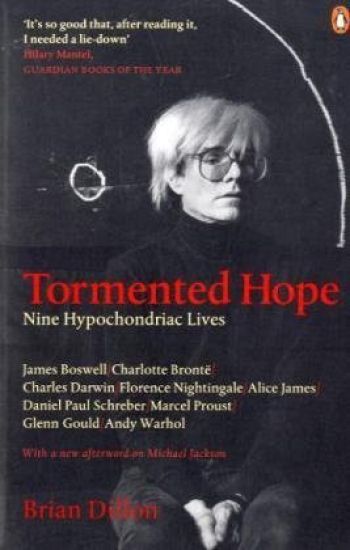
Tormented Hope

Tormented Hope

Brian Dillon

Penguin Books Ltd
2010
pokkari
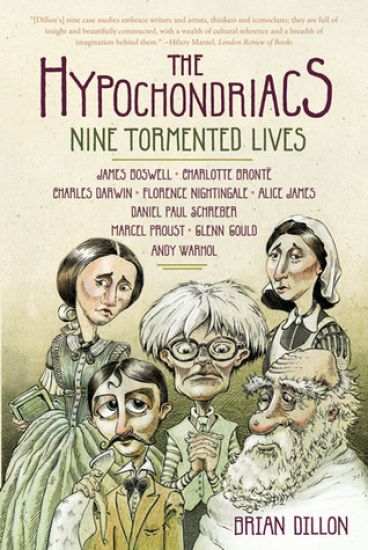
'It's so good that, after reading it, I needed a lie-down' - Hilary Mantel, Guardian Books of the YearBrian Dillon looks at nine prominent hypochondriacs - James Boswell, Charlotte Brontë, Charles Darwin, Florence Nightingale, Daniel Paul Schreber, Alice James, Marcel Proust, Glenn Gould and Andy Warhol - and what their lives tell us about the way the mind works with, and against, the body. His findings are stimulating and surprising, and the stories he tells are often moving, sometimes hilarious, and always gripping. With a new afterword on Michael Jackson.Brian Dillon's first book, In the Dark Room, won the Irish Book Award for Non-fiction in 2006. He lives in Canterbury.
Blackstone's Emergency Planning, Crisis and Disaster Management
Blackstone's Emergency Planning, Crisis, and Disaster Management is a practical guide for those involved in all aspects of emergency preparedness, resilience, and response. Primarily focused on the requirements of the Civil Contingencies Act 2004, it has been developed from the highly regarded Emergency Planning Officers' Handbook. The complete toolkit for anyone involved in emergency planning, business continuity, and resilience management, this must-have guide offers a comprehensive, chronological guide to each stage of emergency planning, from creating a plan or exercise through to setting up a control room and debriefing for future improvement and development. There is also full coverage of how the emergency response is managed by each of the main agencies involved, helping you to gain a greater understanding of what to expect from each agency and the individuals participating, so they can be better integrated into an exercise or plan. Overviews at the start of each chapter, key point and top tip boxes, as well as tasks and flowcharts provide you with the complete reference, whether you are beginning your emergency planning or simply need to refresh your memory as you initiate an exercise.
The Great Explosion

The Great Explosion

Brian Dillon

Penguin Books Ltd
2016
pokkari
A masterful account of a terrible disaster in a remarkable place: shortlisted for the Royal Society of Literature Ondaatje PrizeIn April 1916, shortly before the commencement of the Battle of the Somme, a fire started in a vast munitions works located in the Kentish marshes. The resulting series of explosions killed 108 people and injured many more.In a brilliant piece of storytelling, Brian Dillon recreates the events of that terrible day - and, in so doing, sheds a fresh and unexpected light on the British home front in the Great War. He offers a chilling natural history of explosives and their effects on the earth, on buildings, and on human and animal bodies. And he evokes with vivid clarity one of Britain's strangest and most remarkable landscapes - where he has been a habitual explorer for many years. The Great Explosion is a profound work of narrative, exploration and inquiry from one of our most brilliant writers.'The Great Explosion is exhilarating and moving and lyrical. It is a quiet evisceration of a landscape through the discovery of a lost history of destructiveness, a meditation on Englishness, an autobiography, a mapping of absences. I loved it.' Edmund de Waal, author of The Hare with Amber Eyes''What a fascinating, unclassifiable, brilliant book, confirming Brian Dillon's reputation as one of our most innovative and elegant non-fictioneers. No one else could have written it.' Robert Macfarlane, author of The Old Ways'Forensic, fascinating, endlessly interesting' Philip Hoare, Samuel Johnson Prize-winning author of Leviathan andThe Sea Inside 'A subtle, human history of the early twentieth century ... Explosions are a fruitful subject in Dillon's hands, one that enables him to reflect movingly on the instant between life and death, on the frailty of human endeavour, and on the readiness of nations to tear one another apart. The Great Explosion deftly covers a tumultuous period of history while centring on the tiniest moments - just punctuation marks in time' Financial Times '[Dillon's] account of the Faversham explosion is as bold as it is dramatic, while his descriptive passages about the marshlands of Kent are so evocative that you can practically feel the mud sticking at your feet' Evening Standard'A brilliant evocation of place grasped in its modernity' Guardian'Dillon ... has a WG Sebald-like gift for interrogating the landscape ... a work of real elegiac seriousness that goes to the heart of a case of human loss and destruction in England's sinister pastures green' Ian Thomson, Irish Times'Exhilarating ... utterly beguiling' Literary Review
The Hypochondriacs

The Hypochondriacs

Brian Dillon

FABER FABER
2011
nidottu
Charlotte Bront found in her illnesses, real and imagined, an escape from familial and social duties, and the perfect conditions for writing. The German jurist Daniel Paul Schreber believed his body was being colonized and transformed at the hands of God and doctors alike. Andy Warhol was terrified by disease and by the idea of disease. Glenn Gould claimed a friendly pat on his shoulder had destroyed his ability to play piano. And we all know someone who has trawled the Internet in solitude, seeking to pinpoint the source of his or her fantastical symptoms. The Hypochondriacs is a book about fear and hope, illness and imagination, despair and creativity. It explores, in the stories of nine individuals, the relationship between mind and body as it is mediated by the experience, or simply the terror, of being ill. And, in an intimate investigation of those lives, it shows how the mind can make a prison of the body by distorting our sense of ourselves as physical beings. Through witty, entertaining, and often moving examinations of the lives of these eminent hypochondriacs--James Boswell, Charlotte Bront , Charles Darwin, Florence Nightingale, Alice James, Daniel Paul Schreber, Marcel Proust, Glenn Gould, and Andy Warhol--Brian Dillon brilliantly unravels the tortuous connections between real and imagined illness, irrational fear and rational concern, the mind's aches and the body's ideas.
Essayism: On Form, Feeling, and Nonfiction

Essayism: On Form, Feeling, and Nonfiction

Brian Dillon

New York Review of Books
2018
nidottu
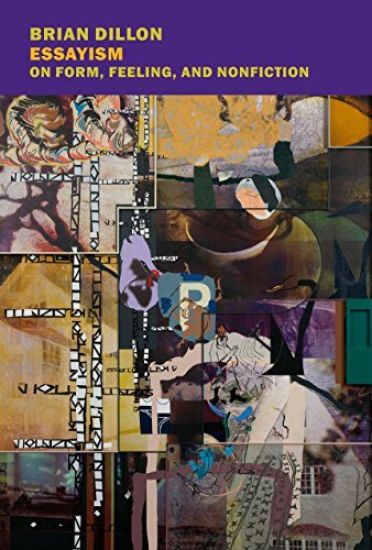
A compelling ode to the essay form and the great essaysists themselves, from Montaigne to Woolf to Sontag. Essayism is a book about essays and essayists, a study of melancholy and depression, a love letter to belle-lettrists, and an account of the indispensable lifelines of reading and writing. Brian Dillon's style incorporates diverse features of the essay. By turns agglomerative, associative, digressive, curious, passionate, and dispassionate, his is a branching book of possibilities, seeking consolation and direction from Michel de Montaigne, Virginia Woolf, Roland Barthes, Theodor Adorno, Walter Benjamin, Georges Perec, Elizabeth Hardwick, and Susan Sontag, to name just a few of his influences. Whether he is writing on origins, aphorisms, coherence, vulnerability, anxiety, or a number of other subjects, his command of language, his erudition, and his own personal history serve not so much to illuminate or magnify the subject as to discover it anew through a kaleidoscopic alignment of attention, thought, and feeling, a dazzling and momentary suspension of disparate elements, again and again.
Affinities: On Art and Fascination

Affinities: On Art and Fascination

Brian Dillon

New York Review of Books
2023
nidottu
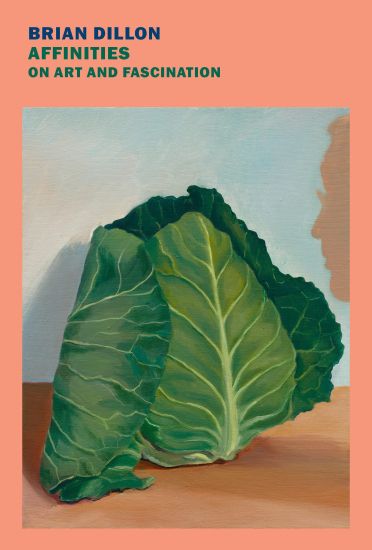
A meditation on the power and pleasures of the image, from paintings to photographs to migraine auras, by one of Britain's finest literary minds. In Affinities, Brian Dillon, who Joyce Carol Oates has said writes "fascinating prose . . . on virtually any subject," explores images and artists he is drawn to and analyzes the attraction. What does it mean to claim affinity with a picture? What do feelings of affinity imply about the experience of art and of the world? Affinities is a critical and personal study of a sensation that is not exactly taste, desire, or solidarity, but has aspects of all three. Approaching this subject via discrete examples, Dillon examines works by artists such as Dora Maar and Andy Warhol, Rinko Kawauchi and Susan Hiller, as well as scientific or vernacular images of sea creatures and migraine auras. Written as a series of linked essays, Affinities completes a trilogy, with Essayism and Suppose a Sentence, about the intimate and abstract pleasures of reading and looking.
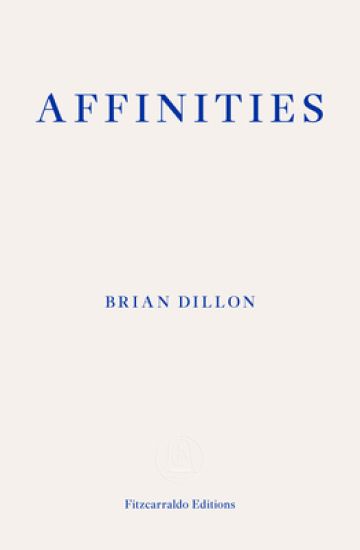
Affinities

Affinities

Brian Dillon

Fitzcarraldo Editions
2023
nidottu
What do we mean when we claim affinity with an object or picture, or say affinities exist between such things? Affinities is a critical and personal study of a sensation that is not exactly taste, desire, or allyship, but has aspects of all. Approaching this subject via discrete examples, this book is first of all about images that have stayed with the author over many years, or grown in significance during months of pandemic isolation, when the visual field had shrunk. Some are historical works by artists such as Julia Margaret Cameron, Dora Maar, Claude Cahun, Samuel Beckett and Andy Warhol. Others are scientific or vernacular images: sea creatures, migraine auras, astronomical illustrations derived from dreams. Also family photographs, film stills, records of atomic ruin. And contemporary art by Rinko Kawauchi, Susan Hiller and John Stezaker. Written as a series of linked essays, interwoven with a reflection on affinity itself, Affinities is an extraordinary book about the intimate and abstract pleasures of reading and looking.
Essayism

Essayism

Brian Dillon

Fitzcarraldo Editions
2017
nidottu
Imagine a type of writing so hard to define its very name means a trial, effort or attempt. An ancient form with an eye on the future, a genre poised between tradition and experiment. The essay wants above all to wander, but also to arrive at symmetry and wholeness; it nurses competing urges to integrity and disarray, perfection and fragmentation, confession and invention. How to write about essays and essayists while staying true to these contradictions? Essayism is a personal, critical and polemical book about the genre, its history and contemporary possibilities. It’s an example of what it describes: an essay that is curious and digressive, exacting yet evasive, a form that would instruct, seduce and mystify in equal measure. Among the essayists to whom he pays tribute – from Virginia Woolf to Georges Perec, Joan Didion to Sir Thomas Browne – Brian Dillon discovers a path back into his own life as a reader, and out of melancholia to a new sense of writing as adventure.
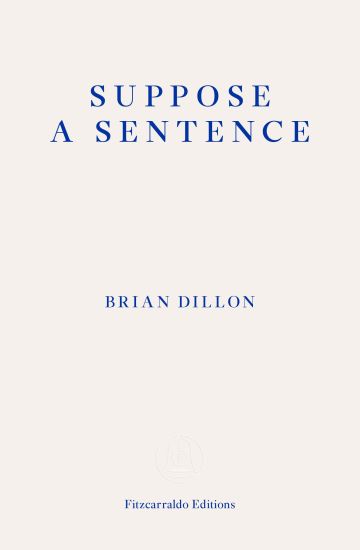
Suppose a Sentence

Suppose a Sentence

Brian Dillon

Fitzcarraldo Editions
2020
pokkari
In Suppose a Sentence, Brian Dillon turns his attention to the oblique and complex pleasures of the sentence. A series of essays prompted by a single sentence – from Shakespeare to Gertrude Stein, John Ruskin to Joan Didion – the book explores style, voice, and language, along with the subjectivity of reading. Both an exercise in practical criticism and a set of experiments or challenges, Suppose a Sentence is a polemical and personal reflection on the art of the sentence in literature. Whether the sentence in question is a rigorous expression of a state of vulnerability, extremity, even madness, or a carefully calibrated arrangement, Dillon examines not only how it works and why but also, in the course of the book, what the sentence once was, what it is today, and what it might become tomorrow.
Ambivalence

Ambivalence

Brian Dillon

Fitzcarraldo Editions
2026
nidottu
When Brian Dillon was sixteen his mother died and he simply gave up all schoolwork. While he courted exam failure, his real education was going on elsewhere: with books, music, films and television. When at last he made it to university, his head was already full of avant-garde writing, art and ideas. Could academia live up to the hopes and dreams he had invested in it? Halfway through college his father died, and the stakes of reading and writing seemed even higher. Ambivalence explores what learning meant to its author, what it enabled and denied, between the ages of seventeen and twenty-six, when he left his native Dublin. It's at once a memoir of that city in the 1980s and 1990s, an uncynical portrait of the adolescent and early-adult mind, and an intimate defence of radical thinking about literature and life. In vivid present-tense fragments, Dillon describes his first encounters with writers such as Virginia Woolf, Walter Benjamin, Samuel Beckett, Roland Barthes and Jacques Derrida. He recalls being seduced by ambivalence, ambiguity and androgyny – on the page and in the life he hoped his reading would transfigure. The era he describes seemed to demand new ways of thinking about aesthetics and politics. Today, when rights are fragile, arts and humanities attacked, and students dismissed as radicals or narcissists, Ambivalence is an argument for the poetic and revolutionary force of changing yourself and even the world by changing what you know.