Kirjojen hintavertailu. Mukana 12 390 323 kirjaa ja 12 kauppaa.

Kirjahaku

Etsi kirjoja tekijän nimen, kirjan nimen tai ISBN:n perusteella.

6 kirjaa tekijältä Brian E. Crim

Antisemitism in the German Military Community and the Jewish Response, 1914–1938
Antisemitism in the German Military Community and the Jewish Response, 1914–1938 explores how German World War I veterans from different social and political backgrounds contributed to antisemitic politics during the Weimar Republic. The book compares how the military, right-wing veterans, and Jewish veterans chose to remember their war experiences and translate these memories into a political reality in the postwar world. Antisemitism addresses several neglected issues. First, there is relatively little scholarship discussing antisemitism in the imperial German army and the impact former imperial officers had on the antisemitic predilections of veteran associations. This subject deserves attention given that veteran politics during the Weimar Republic were of tremendous significance to the collapse of democracy and the rise of National Socialism, and that the primary architects of the Third Reich and the “Final Solution” were either World War I veterans or had been members of paramilitary organizations in the interwar period. The second issue addressed is how veterans influenced the definition of “Aryan” identity, or how race came to be perceived through the prism of war and political violence. Since German Jews had to fight both accusations of shirking military service and the perception of the “Jew” as effeminate, the manner in which these veterans tried to reforge Jewish identity and their relationship with their former comrades is an extraordinarily important issue. The third issue concerns situational antisemitism, or the process by which an organization expressed an opinion or policy concerning Jews in response to internal dissension and external influences.

Antisemitism in the German Military Community and the Jewish Response, 1914–1938
Antisemitism in the German Military Community and the Jewish Response, 1914–1938 explores how German World War I veterans from different social and political backgrounds contributed to antisemitic politics during the Weimar Republic. The book compares how the military, right-wing veterans, and Jewish veterans chose to remember their war experiences and translate these memories into a political reality in the postwar world. Antisemitism addresses several neglected issues. First, there is relatively little scholarship discussing antisemitism in the imperial German army and the impact former imperial officers had on the antisemitic predilections of veteran associations. This subject deserves attention given that veteran politics during the Weimar Republic were of tremendous significance to the collapse of democracy and the rise of National Socialism, and that the primary architects of the Third Reich and the “Final Solution” were either World War I veterans or had been members of paramilitary organizations in the interwar period. The second issue addressed is how veterans influenced the definition of “Aryan” identity, or how race came to be perceived through the prism of war and political violence. Since German Jews had to fight both accusations of shirking military service and the perception of the “Jew” as effeminate, the manner in which these veterans tried to reforge Jewish identity and their relationship with their former comrades is an extraordinarily important issue. The third issue concerns situational antisemitism, or the process by which an organization expressed an opinion or policy concerning Jews in response to internal dissension and external influences.
Our Germans

Our Germans

Brian E. Crim

Johns Hopkins University Press
2018
sidottu
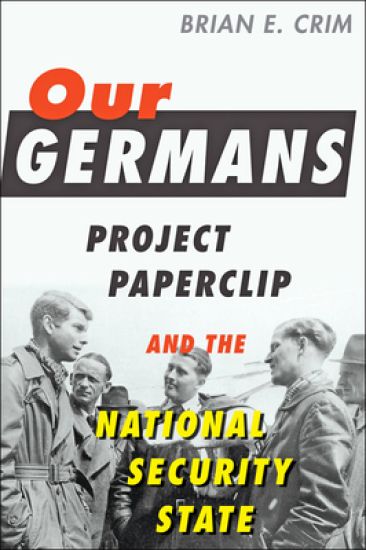
A gripping history of one of the United States' most controversial Cold War intelligence operations.Project Paperclip brought hundreds of German scientists and engineers, including aerospace engineer Wernher von Braun, to the United States in the first decade after World War II. More than the freighters full of equipment or the documents recovered from caves and hastily abandoned warehouses, the German brains who designed and built the V-2 rocket and other "wonder weapons" for the Third Reich proved invaluable to America's emerging military-industrial complex. Whether they remained under military employment, transitioned to civilian agencies like NASA, or sought more lucrative careers with corporations flush with government contracts, German specialists recruited into the Paperclip program assumed enormously influential positions within the labyrinthine national security state. Drawing on recently declassified documents from intelligence agencies, the Department of Defense, the FBI, and the State Department, Brian E. Crim's Our Germans examines the process of integrating German scientists into a national security state dominated by the armed services and defense industries. Crim explains how the Joint Intelligence Objectives Agency enticed targeted scientists, whitewashed the records of Nazis and war criminals, and deceived government agencies about the content of security investigations. Exploring the vicious bureaucratic rivalries that erupted over the wisdom, efficacy, and morality of pursuing Paperclip, Our Germans reveals how some Paperclip proponents and scientists influenced the perception of the rival Soviet threat by volunteering inflated estimates of Russian intentions and technical capabilities. As it describes the project's embattled legacy, Our Germans reflects on the myriad ways that Paperclip has been remembered in culture and national memory. As this engaging book demonstrates, whether characterized as an expedient Cold War program born from military necessity or a dishonorable episode, the project ultimately reflects American ambivalence about the military-industrial complex and the viability of an "ends justifies the means" solution to external threats.
Our Germans

Our Germans

Brian E. Crim

Johns Hopkins University Press
2020
pokkari
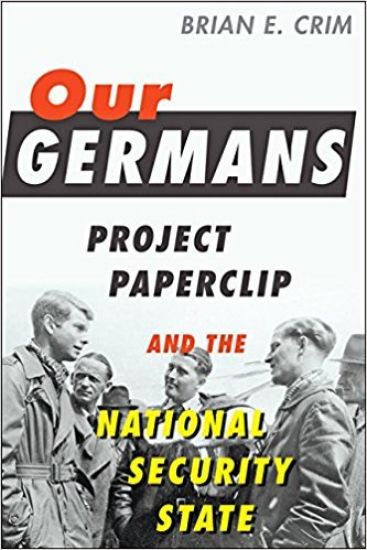
A gripping history of one of the United States' most controversial Cold War intelligence operations.Project Paperclip brought hundreds of German scientists and engineers, including aerospace engineer Wernher von Braun, to the United States in the first decade after World War II. More than the freighters full of equipment or the documents recovered from caves and hastily abandoned warehouses, the German brains who designed and built the V-2 rocket and other "wonder weapons" for the Third Reich proved invaluable to America's emerging military-industrial complex. Whether they remained under military employment, transitioned to civilian agencies like NASA, or sought more lucrative careers with corporations flush with government contracts, German specialists recruited into the Paperclip program assumed enormously influential positions within the labyrinthine national security state. Drawing on recently declassified documents from intelligence agencies, the Department of Defense, the FBI, and the State Department, Brian E. Crim's Our Germans examines the process of integrating German scientists into a national security state dominated by the armed services and defense industries. Crim explains how the Joint Intelligence Objectives Agency enticed targeted scientists, whitewashed the records of Nazis and war criminals, and deceived government agencies about the content of security investigations. Exploring the vicious bureaucratic rivalries that erupted over the wisdom, efficacy, and morality of pursuing Paperclip, Our Germans reveals how some Paperclip proponents and scientists influenced the perception of the rival Soviet threat by volunteering inflated estimates of Russian intentions and technical capabilities. As it describes the project's embattled legacy, Our Germans reflects on the myriad ways that Paperclip has been remembered in culture and national memory. As this engaging book demonstrates, whether characterized as an expedient Cold War program born from military necessity or a dishonorable episode, the project ultimately reflects American ambivalence about the military-industrial complex and the viability of an "ends justifies the means" solution to external threats.
Planet Auschwitz

Planet Auschwitz

Brian E. Crim

Rutgers University Press
2020
nidottu
Planet Auschwitz explores the diverse ways in which the Holocaust influences and shapes science fiction and horror film and television by focusing on notable contributions from the last fifty years. The supernatural and extraterrestrial are rich and complex spaces with which to examine important Holocaust themes - trauma, guilt, grief, ideological fervor and perversion, industrialized killing, and the dangerous afterlife of Nazism after World War II. Planet Auschwitz explores why the Holocaust continues to set the standard for horror in the modern era and asks if the Holocaust is imaginable here on Earth, at least by those who perpetrated it, why not in a galaxy far, far away? The pervasive use of Holocaust imagery and plotlines in horror and science fiction reflects both our preoccupation with its enduring trauma and our persistent need to “work through” its many legacies.Planet Auschwitz website (https://planetauschwitz.com)
Planet Auschwitz

Planet Auschwitz

Brian E. Crim

Rutgers University Press
2020
sidottu
Planet Auschwitz explores the diverse ways in which the Holocaust influences and shapes science fiction and horror film and television by focusing on notable contributions from the last fifty years. The supernatural and extraterrestrial are rich and complex spaces with which to examine important Holocaust themes - trauma, guilt, grief, ideological fervor and perversion, industrialized killing, and the dangerous afterlife of Nazism after World War II. Planet Auschwitz explores why the Holocaust continues to set the standard for horror in the modern era and asks if the Holocaust is imaginable here on Earth, at least by those who perpetrated it, why not in a galaxy far, far away? The pervasive use of Holocaust imagery and plotlines in horror and science fiction reflects both our preoccupation with its enduring trauma and our persistent need to “work through” its many legacies.Planet Auschwitz website (https://planetauschwitz.com)