Kirjojen hintavertailu. Mukana 12 434 473 kirjaa ja 12 kauppaa.

Kirjahaku

Etsi kirjoja tekijän nimen, kirjan nimen tai ISBN:n perusteella.

6 kirjaa tekijältä Brian E. Davies

A-Z of Mumbles and Gower

A-Z of Mumbles and Gower

Brian E. Davies

Amberley Publishing
2021
nidottu
For many the vibrant seaside village of Mumbles is the gateway to the beautiful Gower Peninsula, and both have fascinating history and fine scenery to offer. Mumbles is well known for many things, including the Mumbles Mile, the popular pier and the historic Oystermouth Castle, and the village was once important for oyster fishing. The Gower Peninsula was Britain’s first Area of Outstanding Natural Beauty and the special charm of this place has been well protected. Many of the scenic and popular highlights of Gower are visited in this book, as well as some lesser-known places. Notable events and prehistoric sites are described, and we meet the ‘Red Lady’ of Paviland and the ‘Queen of Reynoldston’. Other personalities include the legendary rugby half-back pairing of Haydn Tanner and Willie Davies from Penclawdd and the ‘Golden Boy’ of Welsh football, Ivor Allchurch. Gower’s stunning coast and villages are well represented, from Langland Bay to Rhossili and from Newton to Llanrhidian. From shipwrecks to fairy stories, this fascinating A to Z tour features a carefully chosen selection of the places, people and history of Mumbles and Gower. Illustrated throughout, this attractive book will appeal to all those with an interest in this very special part of Wales.
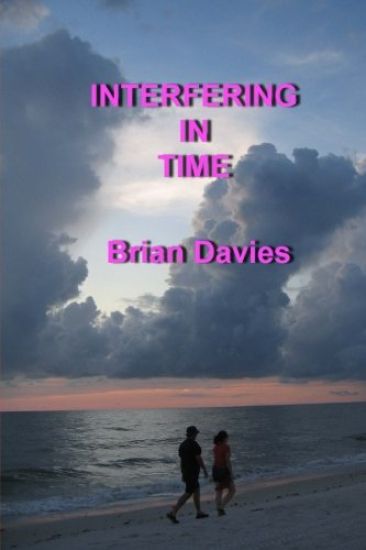
Interfering in Time

Interfering in Time

Brian E. Davies

Createspace Independent Publishing Platform
2016
nidottu
A quiet September afternoon in Brecon, Wales and a Nazi SS officer mysteriously appears on the street. Entering a police station he shoots two police officers but later commits suicide. University lecturer Polly Probert picks blackberries along a disused Welsh railway track when a train passes and disappears. A lunch box thrown out bears a Reichbahn logo and a price in marks. When she and her colleague and lover Harry Long are working in a remote mountain valley they see a concentration camp and nuclear reactor. A Nazi officer arrives at what he expects to be a Waffen SS base but finds himself in a firefight with the British army. Polly discovers that every ten days she must shuttle between her own time and 1978 when Germany had won World War II. Anyone very close to her will go with her and come back. The Reich of 1978 is seen through the eyes of Ludwig F rstner the cynical head of intelligence services. Adolf Hitler's son now rules and is planning a surprise nuclear attack on the USA. He intends to marry the head of concentration camps - and they hate each other. An American physicist explains multiverses as quantum wave forms and two waveform seem to be interfering. As interference increases one or maybe both universes must decohere, disappear. Polly's shuttling could be used to increase instability in the other-world and make it decohere to 1940. Polly meets her half sister (Janet) in 1978 who is also caught up in time shuttling. Visits become increasingly dangerous and Harry is badly injured in one transfer. Polly and Janet are on the run in snowbound Welsh mountains aided by Welsh partisans. As events unfold which universe will meet its G tterd mmerung?
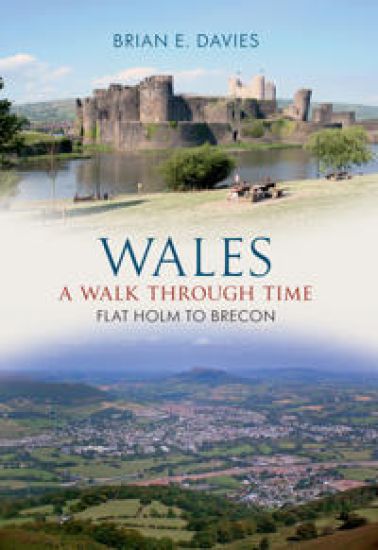
Wales A Walk Through Time - Flat Holm to Brecon

Wales A Walk Through Time - Flat Holm to Brecon

Brian E. Davies

Amberley Publishing
2011
nidottu
Using a historical perspective, Wales: A Walk Through Time describes a unique walk through a remarkable country. Illustrated with a fascinating collection of old photographs and contemporary images, the route has been specially chosen to explore the sheer beauty and diversity of Wales. It will eventually reach Anglesey, but in this first of three parts we are treated to the glorious landscapes and proud industrial heritage of South Wales. Beginning with a boat trip to the interesting offshore island of Flat Holm, where Lighthouse Point marks the most southerly spot in Wales the walk resumes on the mainland at East Aberthaw and follows the southern coast to Barry and Cardiff Bay, heading through the city to Caerphilly and the valleys. It goes through the Blaenavon World Heritage Site and Abergavenny, then along the Monmouthshire & Brecon Canal and through the Brecon Beacons National Park. We encounter characters such as Marconi, Captain Scott, Roald Dahl, Tommy Cooper and some of the heroes of Rorke's Drift. Historical events are recalled, giving the reader a real sense of how the past is present at every step. And we cross the paths of earlier travellers, such as Giraldus Cambrensis and George Borrow, who had their own take on some of the places we visit. Each chapter covers a day's walking, full-colour maps show the way, and a number of tempting hostelries are discovered en route. Not just a guide for walkers, it will also appeal to historians and indeed all who love Wales.
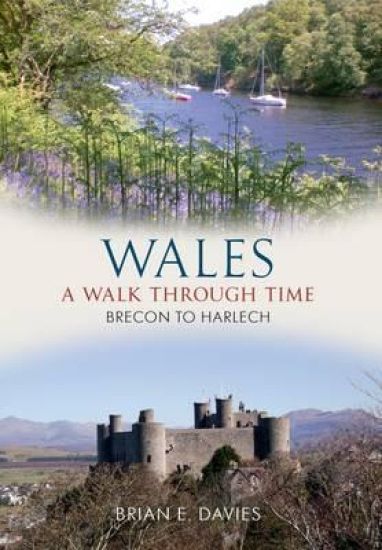
Wales A Walk Through Time - Brecon to Harlech

Wales A Walk Through Time - Brecon to Harlech

Brian E. Davies

Amberley Publishing
2012
nidottu
Using an historical perspective to enrich the journey, Wales: A Walk Through Time describes a unique walk through a remarkable country. Illustrated with a fascinating collection of old photographs and contemporary images, the route has been specially chosen to explore the beauty and history of Wales. The walk will eventually reach Anglesey, but in this second of three parts we are treated to the glorious landscapes and proud heritage of central Wales. The journey begins in the historic town of Brecon where Giraldus Cambrensis, who famously travelled through Wales in the twelfth century, was once the Archdeacon. The route joins the delightful Wye Valley Walk to pass through Builth Wells and Rhayader in the heart of Wales before leaving the Wye to follow a bridleway to Llanidloes. Here, Glyndwr's Way National Trail is joined, passing through the Cambrian hills to reach Machynlleth, Owain Glyndwr's ancient capital. We enter the Snowdonia National Park, visiting the beautiful lake of Tal-y-llyn and climbing Cadair Idris before descending into Dolgellau. The Mawddach Estuary Trail takes us to the seaside at Barmouth and finally we follow a section of the Ardudwy Way to reach Harlech with its great castle. Along the way, we enjoy wonderful scenery and recall momentous events and great figures of Welsh history including Prince Llywelyn, Owain Glyndwr and Henry Tudor. The reader is given a real sense of how the past is present at every step. Each chapter covers an attractive section of the walk, full-colour maps show the way, and a number of welcoming hostelries are discovered en route. But this is not only a guide for walkers; the rich history and images within will have the broadest appeal.
Lead in Soil

Lead in Soil

Bobby G. Wixson; Brian E. Davies

CRC Press
2017
sidottu
Until the publication of this new book there had been a lack of well-founded guidelines for evaluating concentrations of lead in soil and its relationship to human health. Thus, much confusion has existed among regulatory agencies, industries, public health officials, and the medical community about the evaluation and remedying of lead-contaminated soils. Lead in Soil: Recommended Guidelines represents the combined efforts of a multi-disciplinary international task force from the Society for Environmental Geochemistry and Health (SEGH) whose members are experts in the fields of lead pollution and toxicology. It provides an international consensus concerning environmental lead and blood lead-especially in children. The task force evaluated the evidence and made recommendations for guidelines to appraise lead concentration. It also studied the influence of soil and other sources of lead on blood lead concentrations. A model was prepared that allows the user to select appropriate target levels of blood lead while allowing for a variety of environmental situations or regulatory criteria.
Lead in Soil

Lead in Soil

Bobby G. Wixson; Brian E. Davies

CRC Press
2019
nidottu
Until the publication of this new book there had been a lack of well-founded guidelines for evaluating concentrations of lead in soil and its relationship to human health. Thus, much confusion has existed among regulatory agencies, industries, public health officials, and the medical community about the evaluation and remedying of lead-contaminated soils.Lead in Soil: Recommended Guidelines represents the combined efforts of a multi-disciplinary international task force from the Society for Environmental Geochemistry and Health (SEGH) whose members are experts in the fields of lead pollution and toxicology. It provides an international consensus concerning environmental lead and blood lead-especially in children.The task force evaluated the evidence and made recommendations for guidelines to appraise lead concentration. It also studied the influence of soil and other sources of lead on blood lead concentrations. A model was prepared that allows the user to select appropriate target levels of blood lead while allowing for a variety of environmental situations or regulatory criteria.