Kirjojen hintavertailu. Mukana 12 390 323 kirjaa ja 12 kauppaa.

Kirjahaku

Etsi kirjoja tekijän nimen, kirjan nimen tai ISBN:n perusteella.

11 kirjaa tekijältä Brian Fikkert, Russell Mask, Rick Warren

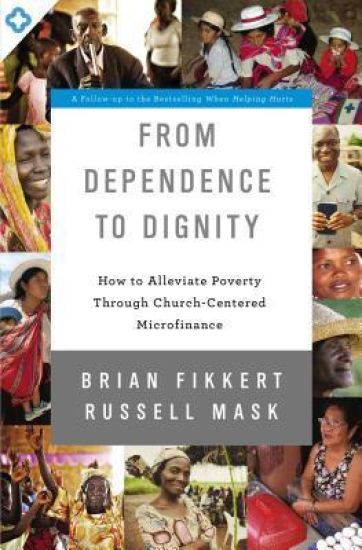
From Dependence to Dignity

From Dependence to Dignity

Brian Fikkert; Russell Mask; Rick Warren

Zondervan
2015
nidottu
The church of Jesus Christ finds itself at a very unique moment in history. The average Christian living in the “economically advanced countries” enjoys a level of prosperity that has been unimaginable for most of human history. At the same time, over 2.5 billion people in the Majority World (Africa, Asia, and Latin America) live on less than $2 per day, with many of these people being Christians. Ironically, it is amongst the “least of these” in the Global South that the global church is experiencing the most rapid growth.All of this raises profound challenges to the global church. How can churches and missionaries in the Majority World effectively address the devastating poverty both inside their congregations and just outside their doors? How can churches in the economically advanced countries effectively partner with Global South churches in this process? The very integrity of the global church’s testimony is at stake, for where God’s people reside, there should be no poverty (Deuteronomy 15:4; Acts 4:34).For the past several decades, microfinance (MF) and microenterprise development (MED) have been the leading approaches to poverty alleviation. MF/MED is a set of interventions that allow households to better manage their finances and start small businesses. From remote churches in rural Africa to the short-term missions programs of mega-churches in the United States, churches and missionaries have taken the plunge into MF/MED, trying to emulate the apparent success of large-scale relief and development organizations. Unfortunately, most churches and missionaries find this to be far more difficult than they had imagined. Repayment rates on loans are low and churches typically end up with struggling programs that require ongoing financial subsidies. Everybody gets hurt in the process: donors, relief and development agencies, churches and missionaries, and--most importantly—the poor people themselves.This book explains the basic principles for successfully utilizing microfinance in ministry. Drawing on best practice research and their own pioneering work with the Chalmers Center, Brian Fikkert and Russell Mask chart a path for churches and missionaries to pursue, a path that minimizes the risks of harm, relies on local resources, and enables missionaries and churches to minister in powerful ways to the spiritual and economic needs of some of the poorest people on the planet.The insights of microfinance can play a tremendous role in helping to stabilize poor households, removing them from the brink of disaster and enabling them to make the changes that are conducive to long-term progress. Moreover, when combined with evangelism and discipleship, a church-centered microfinance program can be a powerful tool for holistic ministry—one that is empowering for the poor and devoid of the dependencies plaguing most relationships between churches in economically advanced countries and churches in poor nations.
Church in Hard Places

Church in Hard Places

Brian Fikkert

Crossway Books
2016
nidottu
It is impossible to alleviate poverty—in its fullest sense—apart from the local church. In recent years, Christians have shown an increased commitment to helping the poor. But this renewed interest in poverty alleviation is doomed to fail if it is not rooted in the local church—God’s established means of drawing downtrodden people into a transformative relationship with himself. Emphasizing the priority of the gospel, Mez McConnell and Mike McKinley, both pastors with fruitful ministries among the poor, offer biblical guidelines and practical strategies for planting, revitalizing, and growing faithful churches in hard places—in our own communities and around the world.
Quand Aider Fait Du Tort (When Helping Hurts: How to Alleviate Poverty Without Hurting the Poor
Comment une glise locale peut-elle faire une diff rence ? Comment pouvons-nous refl ter utilement la gr ce du Christ malgr les in galit s qui nous entourent ? Les auteurs de ce livre nous pr sentent la question de la pauvret dans le monde d'un point de vue biblique, th ologique et strat gique. Ils nous am nent repenser la fa on dont nous appliquons l' vangile un monde bris . En examinant des principes bibliques li s des situations de tous les jours, ce livre nous montre comment offrir une aide pratique et des r ponses pleines de gr ce aux personnes d munies. Il m ne une vraie compr hension de la pauvret , tout en nous pr sentant un plan pour la r duire. Cet ouvrage s'av re un outil pratique pour tous ceux qui veulent servir ad quatement ceux qui souffrent de la pauvret .
Field Guide to Becoming Whole, A

Field Guide to Becoming Whole, A

Brian Fikkert; Kelly M Kapic

Moody Publishers
2019
nidottu
This is not a how-to manual... (it's a field guide) We all want to know, "How can I help without hurting in this specific situation?" But there's no one answer, and there's definitely no short cuts, but there are key principles--or ministry design principles. Think of these like the rules an improvising actor learns--the principles are crucial--but the actor must decide how to put them into practice based on the complexities of the situation. This book contains and explicates 20 ministry design principles developed over decades of observing, studying, and experimenting. They're in no way perfect, but they represent the very best ideas we have to date for how to do effective poverty alleviation in the kingdom of God.
Becoming Whole

Becoming Whole

Brian Fikkert; Kelly M Kapic

Moody Publishers
2019
nidottu
Western Civilization is wealthier, but it isn't happier. We are the richest people ever to walk the face of the earth, but according to research, we aren't becoming happier. Families and communities are increasingly fragmented, loneliness is skyrocketing, and physical and mental health are on the decline. Our unprecedented wealth doesn't seem to be doing us much good. Yet, when we try to help poor people at home or abroad, our implicit assumption is that the goal is to help them to become like us. "If they would just do things our way, they'd be fine " But even when they seem to pursue our path, they too find that the American Dream doesn't work for them. What if we have the wrong idea altogether? What if the molds we are using to help poor people don't actually fit any of us? What if the goal isn't to turn other countries into the United States or to turn America's impoverished communities into its affluent suburbs? In Becoming Whole (building on the best-selling When Helping Hurts), Brian Fikkert and Kelly M. Kapic look at the true sources of brokenness and poverty and uncover the surprising pathways to human flourishing, for poor and non-poor alike. Exposing the misconceptions of both Western Civilization and the Western church about the nature of God, human beings, and the world, they redefine success and offer new ways of achieving that success. Through biblical insights, scientific research, and practical experience, they show you how the good news of the kingdom of God reshapes our lives and our poverty alleviation ministries, moving everybody involved towards wholeness.
Helping Without Hurting In Short-Term Missions

Helping Without Hurting In Short-Term Missions

Steve Corbett; Brian Fikkert

Moody Publishers
2014
nidottu
When Helping Hurts is a paradigm-forming contemporary classic on the subject of poverty alleviation with over 300,000 copies in print. This stand-alone resource applies the principles of that book specifically to short-term missions. Helping Without Hurting in Short-Term Missions: Participant's Guide aims to train and debrief team members, preparing them to do short-term missions as effectively as possible. To do this, it provides practical examples and guidelines for team members, and it creates interaction and reflection opportunities through questions and journaling. With eight units, six of which are built around free online video content, this book equips teams to avoid harming materially poor communities and to translate their experience into lasting and mutual engagement with missions and poverty alleviation. In conjunction with the separately available Leader's Guide, it is an ideal resource for churches, Christian colleges, mission agencies, and missionaries.
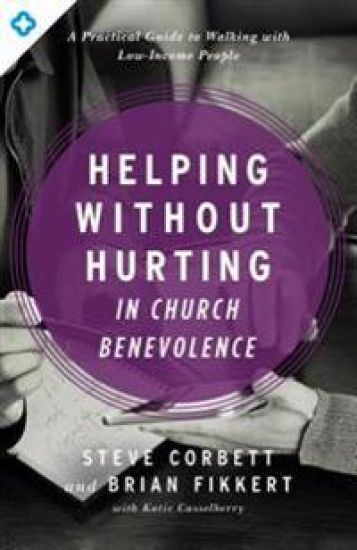
Helping Without Hurting In Church Benevolence

Helping Without Hurting In Church Benevolence

Steve Corbett; Brian Fikkert

Moody Publishers
2015
nidottu
When a low-income person asks your church for help, what do you do next? God is extraordinarily generous, and our churches should be, too. Because poverty is complex, however, helping low-income people often requires going beyond meeting their material needs to holistically addressing the roots of their poverty. But on a practical level, how do you move forward in walking with someone who approaches your church for financial help? From the authors of When Helping Hurts comes Helping Without Hurting in Church Benevolence, a guidebook for church staff, deacons, or volunteers who work with low-income people. Short and to the point, this tool provides foundational principles for poverty alleviation and then addresses practical matters, like: How to structure and focus your benevolence work How to respond to immediate needs while pursuing long-term solutions How to mobilize your church to walk with low-income people With practical stories, forms, and tools for churches to use, Helping Without Hurting in Church Benevolence is an all-in-one guide for church leaders and laypeople who want to help the poor in ways that lead to lasting change.
The Spiritual Danger of Doing Good

The Spiritual Danger of Doing Good

Peter Greer; Anna Haggard; Brian Fikkert

Bethany House Publishers, a division of Baker Publishing Group
2014
nidottu
A Powerful Warning for All Interested in Charity and Christian Service What happens when Christian ministry and social justice lead to burnout, pride, or worse? Peter Greer knows firsthand how this can happen. Using stories from his own life and the lives of others in ministry, Greer shows everyone from CEOs to weekend volunteers how to protect themselves from the unseen hazards of doing good works and how to keep the flame of passionate ministry burning brightly. Includes end-of-chapter questions for personal reflection or group discussion.
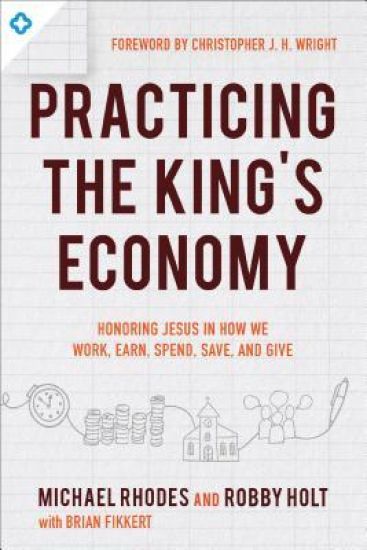
Practicing the King`s Economy – Honoring Jesus in How We Work, Earn, Spend, Save, and Give

Practicing the King`s Economy – Honoring Jesus in How We Work, Earn, Spend, Save, and Give

Michael J. Rhodes; Robby Holt; Brian Fikkert; Christopher Wright

Baker Books, a division of Baker Publishing Group
2018
nidottu
The church in the West is rediscovering the fact that God cares deeply for the poor. More and more, churches and individual Christians are looking for ways to practice economic discipleship, but it's hard to make progress when we are blind to our own entanglement in our culture's idolatrous economic beliefs and practices. Practicing the King's Economy cuts through much confusion and invites Christians to take their place within the biblical story of the "King Jesus Economy." Through eye-opening true stories of economic discipleship in action, and with a solid exploration of six key biblical themes, the authors offer practical ways for God's people to earn, invest, spend, compensate, save, share, and give in ways that embody God's love and provision for the world.Foreword by Christopher J. H. Wright.