Kirjojen hintavertailu. Mukana 11 717 486 kirjaa ja 12 kauppaa.

Kirjahaku

Etsi kirjoja tekijän nimen, kirjan nimen tai ISBN:n perusteella.

3 kirjaa tekijältä Brian Hochman

The Listeners

The Listeners

Brian Hochman

HARVARD UNIVERSITY PRESS
2022
sidottu
They’ve been listening for longer than you think. A new history reveals how—and why.Wiretapping is nearly as old as electronic communications. Telegraph operators intercepted enemy messages during the Civil War. Law enforcement agencies were listening to private telephone calls as early as 1895. Communications firms have assisted government eavesdropping programs since the early twentieth century—and they have spied on their own customers too. Such breaches of privacy once provoked outrage, but today most Americans have resigned themselves to constant electronic monitoring. How did we get from there to here?In The Listeners, Brian Hochman shows how the wiretap evolved from a specialized intelligence-gathering tool to a mundane fact of life. He explores the origins of wiretapping in military campaigns and criminal confidence games and tracks the use of telephone taps in the US government’s wars on alcohol, communism, terrorism, and crime. While high-profile eavesdropping scandals fueled public debates about national security, crime control, and the rights and liberties of individuals, wiretapping became a routine surveillance tactic for private businesses and police agencies alike.From wayward lovers to foreign spies, from private detectives to public officials, and from the silver screen to the Supreme Court, The Listeners traces the long and surprising history of wiretapping and electronic eavesdropping in the United States. Along the way, Brian Hochman considers how earlier generations of Americans confronted threats to privacy that now seem more urgent than ever.
Savage Preservation

Savage Preservation

Brian Hochman

University of Minnesota Press
2014
sidottu
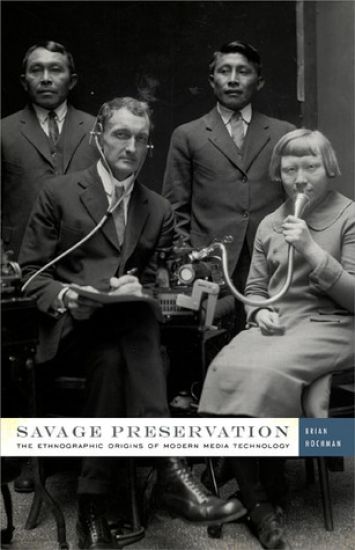
During the late nineteenth and early twentieth centuries, writers and anthropologists believed that the world’s primitive races were on the brink of extinction. They also believed that films, photographs, and phonographic recordings-modern media in their technological infancy-could capture lasting relics of primitive life before it vanished into obscurity. For many Americans, the promise of media and the problem of race were inextricably linked. While professional ethnologists tried out early recording machines to preserve the sounds of authentic indigenous cultures, photographers and filmmakers hauled newfangled equipment into remote corners of the globe to document rituals and scenes that seemed destined to vanish forever. In Savage Preservation, Brian Hochman shows how widespread interest in recording vanishing races and disappearing cultures influenced audiovisual innovation, experimentation, and use in the United States. Drawing extensively on seldom-seen archival sources-from phonetic alphabets and sign language drawings to wax cylinder recordings and early color photographs-Hochman uncovers the parallel histories of ethnography and technology in the turn-of-the-century period. While conventional wisdom suggests that media technologies work mostly to produce ideas about race, Savage Preservation reveals that the reverse has also been true. During this period, popular conceptions of race constructed the authority of new media technologies as reliable archives of the real. Brimming with nuanced critical insights and unexpected historical connections, Savage Preservation offers a new model for thinking about race and media in the American context-and a fresh take on a period of accelerated technological change that closely resembles our own.
Savage Preservation

Savage Preservation

Brian Hochman

University of Minnesota Press
2014
nidottu
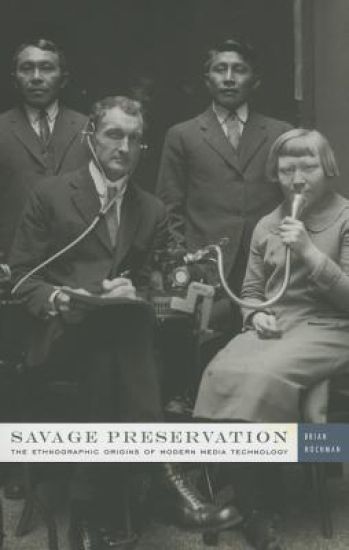
During the late nineteenth and early twentieth centuries, writers and anthropologists believed that the world’s primitive races were on the brink of extinction. They also believed that films, photographs, and phonographic recordings-modern media in their technological infancy-could capture lasting relics of primitive life before it vanished into obscurity. For many Americans, the promise of media and the problem of race were inextricably linked. While professional ethnologists tried out early recording machines to preserve the sounds of authentic indigenous cultures, photographers and filmmakers hauled newfangled equipment into remote corners of the globe to document rituals and scenes that seemed destined to vanish forever. In Savage Preservation, Brian Hochman shows how widespread interest in recording vanishing races and disappearing cultures influenced audiovisual innovation, experimentation, and use in the United States. Drawing extensively on seldom-seen archival sources-from phonetic alphabets and sign language drawings to wax cylinder recordings and early color photographs-Hochman uncovers the parallel histories of ethnography and technology in the turn-of-the-century period. While conventional wisdom suggests that media technologies work mostly to produce ideas about race, Savage Preservation reveals that the reverse has also been true. During this period, popular conceptions of race constructed the authority of new media technologies as reliable archives of the real. Brimming with nuanced critical insights and unexpected historical connections, Savage Preservation offers a new model for thinking about race and media in the American context-and a fresh take on a period of accelerated technological change that closely resembles our own.