Kirjojen hintavertailu. Mukana 12 390 323 kirjaa ja 12 kauppaa.

Kirjahaku

Etsi kirjoja tekijän nimen, kirjan nimen tai ISBN:n perusteella.

7 kirjaa tekijältä Brian J. Young

George-Etienne Cartier

George-Etienne Cartier

Brian J. Young

McGill-Queen's University Press
1981
nidottu
Through the use of new sources, this study gives prominence to Cartier's business, social, and family milieu. It examines his emergence as a corporation lawyer, company director, landlord, and railway promoter as well as his political battles with his in-laws, his disintegrating marriage, and his long liaison with the unorthodox Luce Cuvillier. A rebel and political exile in 1837, Cartier by the 1850s was a member of the militia, a government minister, and a perennial defender of British traditions. His solid conservatism brough him support and rewards from the English-speaking bourgeoisie, the Grand Trunk Railway, and the Seminary of Montreal. After confederation, Cartier's political energies lessened, and his interest turned to his country estate and to pleasures of the table, drawing room, and stable. His degenerative disease and his alienation from his working-class voters in east-end Montreal made him vulnerable to his opponents, and his life ended in political defeat and implication in the Pacific scandal. His career, Young concludes, illustrates the development of bourgeois hegemony in Montreal after 1840 and the progressive integration of institutional, political, and economic structures to preserve that power.
In Its Corporate Capacity

In Its Corporate Capacity

Brian J. Young

McGill-Queen's University Press
1986
sidottu
The end of the Lower Canada rebellions of 1837-8 assured the survival of the Seminary. Assuming a reinforced social and ideological role in industrializing Montreal, the Seminary benefited from new corporate powers, rights of recruitment, and income, while its expanding social role ensured its protection by an appreciate bourgeoisie. Emphasizing economic rather than religious history, Brian Young's study compares the Seminary's pre-industrial forms of income to its new capitalist revenues from land sales, subdivision developments, bonds, and rentier income from office, warehousing, and urban-housing properties. Its changing income required new forms of management and the priest-manager was eventually assisted by an accountant, architect, surveyor, clerk, and several notaries and lawyers. The Seminary played a central role in the development of popular schools in Montreal, and in financing and directing social institutions such as hospitals, newspapers, libraries, and national societies, the Seminary of Montreal legitimized the changing class structure of industrializing Montreal.
The Politics of Codification

The Politics of Codification

Brian J. Young

McGill-Queen's University Press
1994
sidottu
Young interprets codification as part of a larger process that included the collapse of the Lower Canadian rebellions, the decline of seigneurialism, expansion of bourgeois democracy in central Canada, professionalization of the bar, and formation of the institutional state. Central to codification was a profound ideological shift in Lower Canadian society that gave priority to exchange and individual property rights. Young examines the evolution of codification from its nationalist origins in the 1820s and 1830s into a Civil Code that was integral to Confederation and became a flagship of bilingualism in Quebec. The formation of the commission, the work of the codifiers, and the reaction of the anglophone minority and the Roman Catholic hierarchy are considered, as is the Code's meticulous blending of a conservative social vision with the principles of freedom of property. The Politics of Codification will be of great interest to students of law, members of the legal professions, and Canadian social and legal historians.
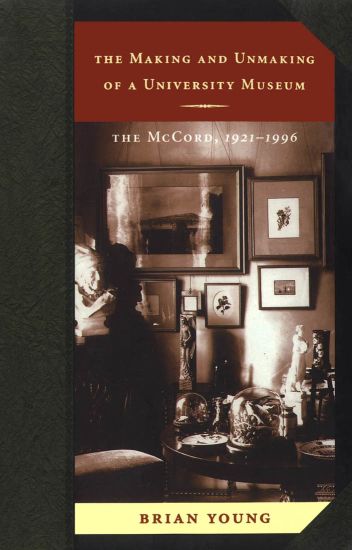
The Making and Unmaking of a University Museum

The Making and Unmaking of a University Museum

Brian J. Young

McGill-Queen's University Press
2000
sidottu
Museums and cultural institutions across North America and Europe are being transformed by budget cuts, re-evaluation of their cultural missions, evolving concepts of museology, and changing audiences, making Brian Young's trenchant history of a prestigious university museum, Montreal's McCord Museum of Canadian History, especially pertinent. In The Making and Unmaking of a University Museum Young elucidates the relationship between museums and communities by examining the nineteenth-century social context of the family who bequeathed their collection to McGill University and the collection's fate in an academic institution. Tracing the museum's history from its founding by David Ross McCord, he emphasizes the centrality of elite women to the culture of the museum and its survival in the twentieth century, the museum's importance as the collective memory of Montreal's English-speaking elite, and the difficulty academic historians have had in dealing with material history. He recounts a sorry tale of mismatched institutional and intellectual cultures that culminated in the university's transfer of custodial responsibility to a corporate museum board and the collapse of the museum's central research and conservation mandates. The Making and Unmaking of a University Museum reveals the complex and often conflicting relationships between private collectors, curators, museum and university officials, volunteers, researchers, philanthropic foundations, the state, and the public. It shows how the makeup, interests, and perspectives of these groups have changed over the course of the century, leading to the current crisis in which many museums are forced to function according to a corporate culture in which the dictates of audience size, marketing, and public relations experts dominate the priorities of curators and collections, the needs of scholars and students, and the interests of communities. Young exposes the present-day conflict between cultural institutions operating ahistorically and often without any social vision and a public demanding greater help in understanding the past. It will be of interest to everyone who cares about culture, museums, and public memory.
The Making and Unmaking of a University Museum

The Making and Unmaking of a University Museum

Brian J. Young

McGill-Queen's University Press
2000
nidottu
Museums and cultural institutions across North America and Europe are being transformed by budget cuts, re-evaluation of their cultural missions, evolving concepts of museology, and changing audiences, making Brian Young's trenchant history of a prestigious university museum, Montreal's McCord Museum of Canadian History, especially pertinent. In The Making and Unmaking of a University Museum Young elucidates the relationship between museums and communities by examining the nineteenth-century social context of the family who bequeathed their collection to McGill University and the collection's fate in an academic institution. Tracing the museum's history from its founding by David Ross McCord, he emphasizes the centrality of elite women to the culture of the museum and its survival in the twentieth century, the museum's importance as the collective memory of Montreal's English-speaking elite, and the difficulty academic historians have had in dealing with material history. He recounts a sorry tale of mismatched institutional and intellectual cultures that culminated in the university's transfer of custodial responsibility to a corporate museum board and the collapse of the museum's central research and conservation mandates. The Making and Unmaking of a University Museum reveals the complex and often conflicting relationships between private collectors, curators, museum and university officials, volunteers, researchers, philanthropic foundations, the state, and the public. It shows how the makeup, interests, and perspectives of these groups have changed over the course of the century, leading to the current crisis in which many museums are forced to function according to a corporate culture in which the dictates of audience size, marketing, and public relations experts dominate the priorities of curators and collections, the needs of scholars and students, and the interests of communities. Young exposes the present-day conflict between cultural institutions operating ahistorically and often without any social vision and a public demanding greater help in understanding the past. It will be of interest to everyone who cares about culture, museums, and public memory.