
Kirjahaku
Etsi kirjoja tekijän nimen, kirjan nimen tai ISBN:n perusteella.
10 kirjaa tekijältä Brian Keeble
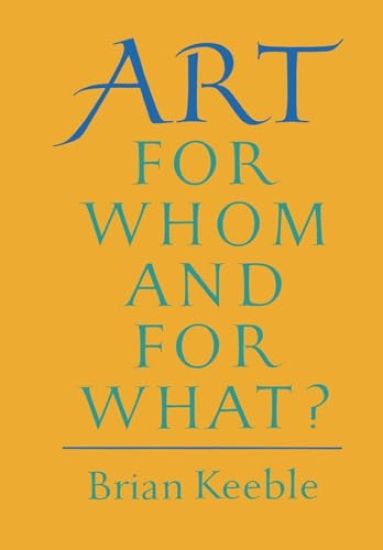
As the title suggests, we are here addressing the most fundamental questions: Who is man? What is art? What is the bond that unites man, nature and art? The argument at the heart of this book is that what should be common to all men and women-a natural affinity with the sacred that holds out the promise of spiritual experience in everyday life- is in fact made all but impossible by the very nature of modern society. For what the modern world has set in place is nothing other than a pattern of life that prevents us from being what we truly are. The destruction of man that is part and parcel of the scientific, industrial view of our destiny cannot do otherwise than in turn destroy those values and meanings that have always been the bedrock of normal human existence. At a time when the inadequacy of modernism has become apparent, the author returns to the challenge of the English radical tradition of thought (Blake, Cobbett, Carlyle, Ruskin, Morris, Gill and others), with its critique of the industrial-now post-industrial-way of life. Through a series of highly original studies of several major English artists and craftsman, and by addressing key themes that relate to the spiritual, cultural and environmental crisis that now confronts us, the author offers a positive development of the radical perspective. Can modern man survive the process of self-mutilation he has embarked upon? In this unique study of our present predicament, the author suggests we cannot do so by turning our back on the perennial wisdom that has always informed the wisest philosophies of life, with their intuition of the sacred nature of reality.
In her prolific work as a scholar and essayist-laying the "laborious foundations," as she called it-Kathleen Raine spent little effort elucidating her meaning as a poet; but it becomes evident to any attentive reader that these labors give a resonant indication of the premises and values that inform her craft-on which, as a poet, she proceeded and wished finally to be judged. If there is to be a worthy-if belated-critical assessment of Kathleen Raine's poetry, it must of necessity proceed on the basis of an appropriate understanding: especially in this case seeing that this is a poetry that rests upon premises far removed from the sort of values that, for the most part, are likely to preoccupy both the writer and reader of contemporary poetry. For this reason the reader will find in this book very little attempt to "judge" and every effort to elucidate. This collection of studies by the eminent perennialist author Brian Keeble, a long-time friend, colleague, and editor of the poet, is a series of regards, each having a focal point that differs from its neighbors, but which nonetheless is directed towards the same subject-the poet's singular imaginative vision. Considered together, the reader will find in this book a reliably authentic foundation on which to build an appreciation of Kathleen Raine's poetic accomplishment.
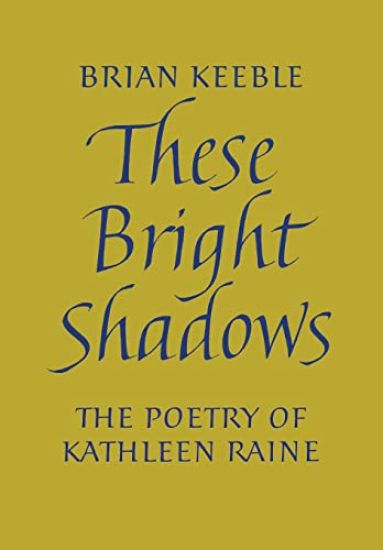
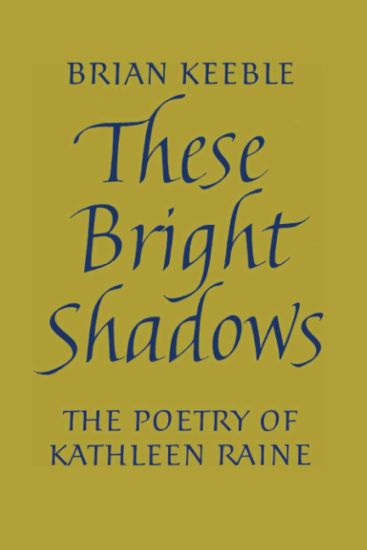
In her prolific work as a scholar and essayist-laying the "laborious foundations," as she called it-Kathleen Raine spent little effort elucidating her meaning as a poet; but it becomes evident to any attentive reader that these labors give a resonant indication of the premises and values that inform her craft-on which, as a poet, she proceeded and wished finally to be judged. If there is to be a worthy-if belated-critical assessment of Kathleen Raine's poetry, it must of necessity proceed on the basis of an appropriate understanding: especially in this case seeing that this is a poetry that rests upon premises far removed from the sort of values that, for the most part, are likely to preoccupy both the writer and reader of contemporary poetry. For this reason the reader will find in this book very little attempt to "judge" and every effort to elucidate. This collection of studies by the eminent perennialist author Brian Keeble, a long-time friend, colleague, and editor of the poet, is a series of regards, each having a focal point that differs from its neighbors, but which nonetheless is directed towards the same subject-the poet's singular imaginative vision. Considered together, the reader will find in this book a reliably authentic foundation on which to build an appreciation of Kathleen Raine's poetic accomplishment.
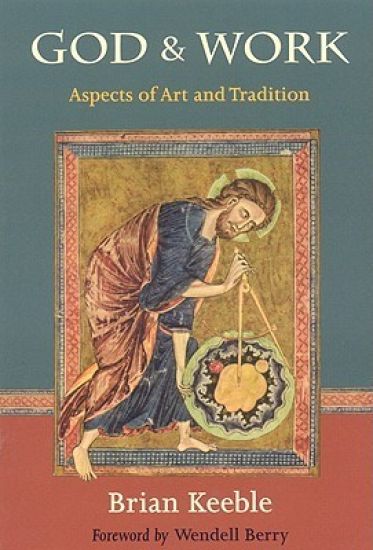
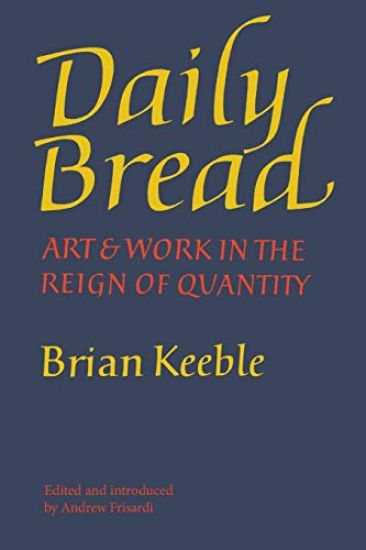
This book is a compilation of Brian Keeble's insightful essays dealing with the oft-neglected relationship between God and work, spirituality and art, as well as contemplation and action. In the midst of the fast-paced modern world, it addresses the question, "how can work become a form of prayer?" Keeble focuses on artists and craftsmen such as poet and engraver William Blake, calligrapher Edward Johnston, sculptor Eric Gill and key figures of the Arts and Crafts movement in Britain.