Kirjojen hintavertailu. Mukana 11 244 527 kirjaa ja 12 kauppaa.

Kirjahaku

Etsi kirjoja tekijän nimen, kirjan nimen tai ISBN:n perusteella.

15 kirjaa tekijältä Brian McFarlane

Novel to Film

Novel to Film

Brian McFarlane

Clarendon Press
1996
nidottu
This text looks at the way in which works of literature are transformed into the medium of cinema. Drawing upon recent literary and film theory, the book provides analysis of the theory and practice of metamorphosis. Films such as "Great Expectations" and "Cape Fear" provide case studies.
Screen Adaptations: Great Expectations

Screen Adaptations: Great Expectations

Brian McFarlane

Methuen Drama
2008
nidottu
A close study of the relationship between text and film versions of Great Expectations. Literature and film studies students will find plenty of material to support their courses and essay writing on how the film versions provide different readings of the original text. Focussing on David Lean's film of Great Expectations, the book discusses: the literary text in its historical context, key themes and dominant readings of the text, how the text is adapted for screen and how adaptations have changed our reading of the original text. There are numerous excerpts from the literary text, screenplays and shooting scripts, with suggestions for comparison. The book also features quotations from authors, screenwriters, directors, critics and others linked with the chosen film and text.
Lance Comfort

Lance Comfort

Brian McFarlane

Manchester University Press
2013
nidottu
In the years between 1941 and 1965, Lance Comfort made some of the most entertaining films in Britain. There was the striking success of his second feature as director, Hatter’s Castle (1941) and when he returned to this melodramatic vein in 1945 he made a series of highly proficient and enjoyable studies in obsession, including Bedelia (1946) with Margaret Lockwood as a murderess, and Temptation Harbour (1947) starring Robert Newton as a decent man in the grip of erotic attraction. Comfort’s career has never been charted in full – that is, from the apprenticeship in the 1930s, through the melodramas of the 1940s to the often rewarding co-features of the following two decades. His is in many ways a prototypical career in British cinema: his very attractive body of work has been marginalised by critical focus on a few giant figures. This is a book that will appeal to all students and researchers in British cinema, as well as to anyone with an interest in British films – and why they were the way they were – in their most productive period.
Real and Reel

Real and Reel

Brian McFarlane

Manchester University Press
2011
nidottu
From a little before ten years of age Brian McFarlane became addicted to stories told on the screen, and the mere fact that he had difficulty in getting to see the films he wanted - or any for that matter - only made them seem more alluring. But it wasn't just seeing the films that mattered: he also wanted, and quite soon needed, to be writing about them and these obsessions have been part of his life for the next sixty-odd years.Real and reel is a light-hearted and but deeply felt account of a lifetime's addiction. It is one particular writer and critic's story, but it will strike sparks among many others. Though many other interests have kept Brian McFarlane's life lively, nothing else has exerted such a long-standing grip on the author's imagination as film.Editor of the Encyclopaedia of British Cinema, co-editor of Manchester University Press's British Film Makers series, and author of over a dozen critical works on film and adaptation, Brian McFarlane's autobiographical Real and reel can also be read as a biography of the subject of Film Studies itself.
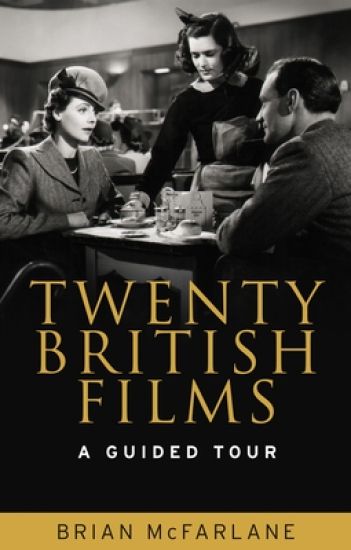
Twenty British Films

Twenty British Films

Brian McFarlane

Manchester University Press
2015
sidottu
Anyone who has loved British films will want to read this book. In choosing twenty films, many of them of classics of their kind – think of Brief Encounter, The Third Man, Genevieve – as well as some less well-known titles, the author communicates his enthusiasm for the sheer range of British cinema as well as a keenly critical interest in what has made these films stay in the mind often after many decades and many viewings. Not that it is just a nostalgic wallow: it comes nearer to the present day with titles such as Last Orders and In The Loop; and it is intended to provoke discussion as much as recollection. Though it is rigorous in conducting its ‘guided tour’ of these films, it does so in ways that make it accessible to anyone with a passion for cinema. You don’t have to be a specialist to enjoy the tour.
Twenty British Films

Twenty British Films

Brian McFarlane

Manchester University Press
2015
nidottu
Anyone who has loved British films will want to read this book. In choosing twenty films, many of them classics of their kind – think of Brief Encounter, The third man, Genevieve – as well as some less well-known titles, the author communicates his enthusiasm for the sheer range of British cinema as well as a keenly critical interest in what has made these films stay in the mind often after many decades and many viewings. Not that it is just a nostalgic wallow: it comes nearer to the present day with titles such as Last Orders and In the Loop and it is intended to provoke discussion as much as recollection. Though it is rigorous in conducting its ‘guided tour’ of these films, it does so in ways that make it accessible to anyone with a passion for cinema. You don’t have to be a specialist to enjoy the tour.
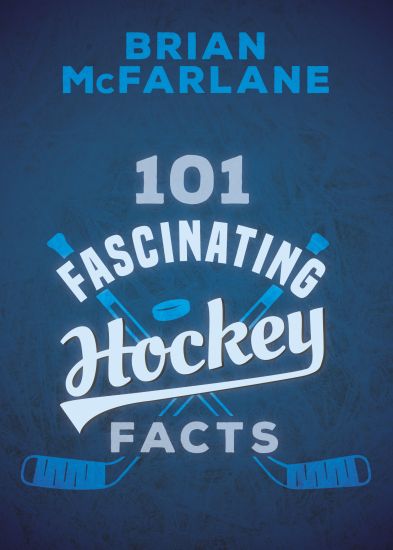
101 Fascinating Hockey Facts

101 Fascinating Hockey Facts

Brian McFarlane

Dundurn Group Ltd
2020
pokkari
101 fascinating stories about hockey that will enlighten and delight fans.Have you heard about the referee who was dragged back to the rink by an angry mob demanding he change the result? Or the playoff goal that was scored with half a puck? Or the fourteen-year-old who played in a professional game?In 101 Fascinating Hockey Facts, NHL elder-statesman Brian McFarlane tells these and 98 other tales from the rink. Hockey fans will love flipping through this collection, packed with trivia and did-you-knows, to test their knowledge and to find tidbits to share with their friends.
The Films of Fred Schepisi

The Films of Fred Schepisi

Brian McFarlane

University Press of Mississippi
2021
pokkari
Fred Schepisi is one of the crucial names associated with the revival of the Australian film industry in the 1970s. The Films of Fred Schepisi traces the lead-up to his critical successes in feature filmmaking, via his earlier award-winning success as a producer in advertising commercials in the 1960s and the setting up of his own company. Unlike some directors, he derived from this experience a sure sense of the commercial aspects of filmmaking, as well as its aesthetic considerations. The volume also considers stories of his early education in a Catholic seminary, which he drew on in his semiautobiographical film, The Devil’s Playground, the success of which launched him as an exciting new feature director. The volume expands on Schepisi’s success story to chart his development as a director in demand in other countries, notably in the US and the UK, as well as continuing to make major films in Australia. Brian McFarlane argues that Schepisi’s career is symptomatic of Australian directors who have made their presences felt on the international stage. Whereas other key directors of the Australian film revival, such as Peter Weir and Bruce Beresford, have been the subject of book-length critical studies, Schepisi’s career has not to-date been so explored. McFarlane takes a critical account of Schepisi’s film output—including such standouts as The Chant of Jimmie Blacksmith, Plenty, Roxanne, Six Degrees of Separation, Mr. Baseball, and Last Orders—and he augments analysis with interviews with the director. By discussing the production histories and both critical and popular receptions, McFarlane’s study shines a new light on Schepisi’s work and his rise to prominence in the global film industry.
The Films of Fred Schepisi

The Films of Fred Schepisi

Brian McFarlane

University Press of Mississippi
2021
sidottu
Fred Schepisi is one of the crucial names associated with the revival of the Australian film industry in the 1970s. The Films of Fred Schepisi traces the lead-up to his critical successes in feature filmmaking, via his earlier award-winning success as a producer in advertising commercials in the 1960s and the setting up of his own company. Unlike some directors, he derived from this experience a sure sense of the commercial aspects of filmmaking, as well as its aesthetic considerations. The volume also considers stories of his early education in a Catholic seminary, which he drew on in his semiautobiographical film, The Devil’s Playground, the success of which launched him as an exciting new feature director. The volume expands on Schepisi’s success story to chart his development as a director in demand in other countries, notably in the US and the UK, as well as continuing to make major films in Australia. Brian McFarlane argues that Schepisi’s career is symptomatic of Australian directors who have made their presences felt on the international stage. Whereas other key directors of the Australian film revival, such as Peter Weir and Bruce Beresford, have been the subject of book-length critical studies, Schepisi’s career has not to-date been so explored. McFarlane takes a critical account of Schepisi’s film output—including such standouts as The Chant of Jimmie Blacksmith, Plenty, Roxanne, Six Degrees of Separation, Mr. Baseball, and Last Orders—and he augments analysis with interviews with the director. By discussing the production histories and both critical and popular receptions, McFarlane’s study shines a new light on Schepisi’s work and his rise to prominence in the global film industry.
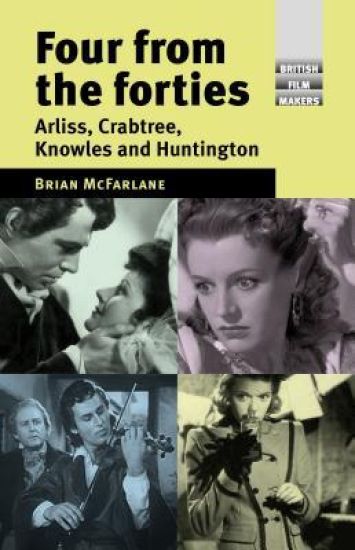
Four from the Forties

Four from the Forties

Brian McFarlane

Manchester University Press
2018
sidottu
The ‘Gainsborough melodramas’ were a mainstay of 1940s British cinema, and helped make the careers of such stars as Margaret Lockwood, James Mason and Stewart Granger. But what was unique about these films? And who were the directors behind them? This book presents four key filmmakers, each with his own talents and specialities. It traces their professional lives through the highs of the 1940s, when the popularity of Gainsborough films was at its peak, to the tougher decades that followed the genre’s decline. Featuring expert analysis of such films as The Man in Grey (1943), Madonna of the Seven Moons (1945) and The Upturned Glass (1947), alongside valuable historical context, the book constitutes the first extended examination of this group of directors. It combines critical acumen with readability, making it a valuable resource for students, lecturers and general readers alike.
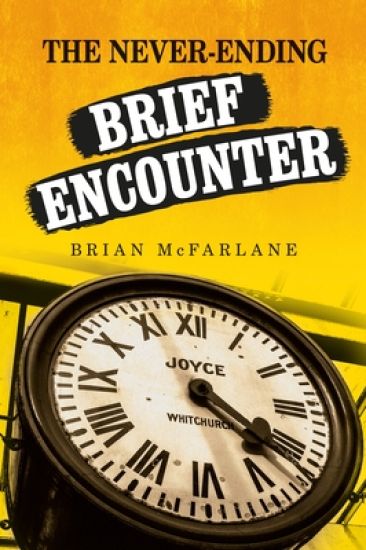
The Never-Ending Brief Encounter

The Never-Ending Brief Encounter

Brian McFarlane

Manchester University Press
2019
nidottu
This is a book for all those who have been absorbed and moved by Brief Encounter in the seventy or so years since its first appearance. It explores the central relationship of the film, where two people who fall unexpectedly in love come to realise that there is more to life than self-gratification. Mores have undoubtedly changed, for better or worse, but that essential moral choice has never lost its power. While acknowledging this, the book goes further in an effort to account for the way the film has passed into the wider culture. People born decades after its first appearance are now adept at picking up references to it, whether a black-and-white scene in a much later film or a passing joke about a bald man in a barber’s shop.
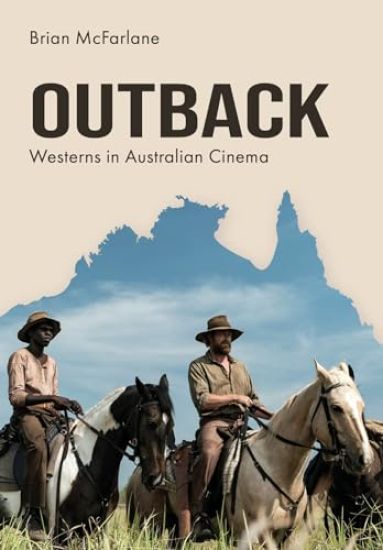
Outback

Outback

Brian McFarlane

INTELLECT
2024
sidottu
Focusing on the incidence of the ‘westerns’ film genre in the 120-odd years of Australian cinema history, exploring how the American genre has been adapted to the changing Australian social, political and cultural contexts of their production, including the shifting emphases in the representation of the Indigenous population. The idea for the book came to the author while he was writing two recent articles. One was an essay for Screen Education on the western in Australian cinema of the 21st century; the other piece was the review of a book entitled Film and the Historian, for the online journal Inside Story . Between the two, he saw the interesting prospect of a book-length study of the role of the western genre in Australia’s changing political and cultural history over the last century – and the ways in which film can, without didacticism, provide evidence of such change. Key matters include the changing attitudes to and representation of Indigenous peoples and of women's roles in Australian Westerns. When one considers that the longest narrative film then seen in Australia, and quite possibly the world was Charles Tait’s The Story of the Kelly Gang (1906), it is clear that Australia has some serious history in the genre, and Kelly has ridden again in Justin Kurzel’s 2020 adaptation of Peter Carey’s The True History of the Kelly Gang.
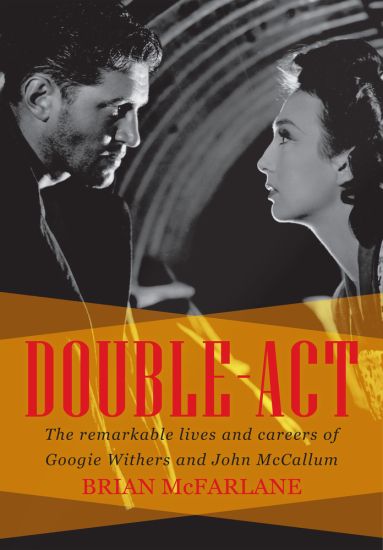
Double Act

Double Act

Brian McFarlane

Monash University Publishing
2015
nidottu
Not many can boast of careers that lasted successfully for nearly 70 years, but that is what was achieved by Australian actors Googie Withers and John McCallum. Withers acted everything, from brazen murderesses to Lady Bracknell, as well as a broad range of everyman characters, such as blonde nitwits, wartime Resistance workers, lady farmers, and Shakespearean women. McCallum not only performed memorably in all the acting media, but he was also a pioneer ? ? ? ?producer in Australian television, sending the popular series Skippy the Bush Kangaroo into the far corners of the world. He was also the managing director of a huge theatrical firm, a film director, a playwright, and an author. Just as remarkable was their 62-year marriage, not all that common in the entertainment world, and the way their marriage succeeded is as fascinating as their varied and prolific careers. There were plenty of disagreements along the way, but underlying all was their profound respect for each other's work and a kind of love that was essentially complementary. Together, in professional and personal matters alike, Googie Withers and John McCallum were an unbeatable combination. *** ..".engagingly presented biography of two truly exceptional and talented people who ultimately and successfully combined competitive acting careers and a marriage. An inherently fascinating read from beginning to end..." - Midwest Book Review, MBR Bookwatch: August 2015, Micah's Bookshelf (Series: Biography) Subject: Biography, Australian Studies, Theater, Entertainment]
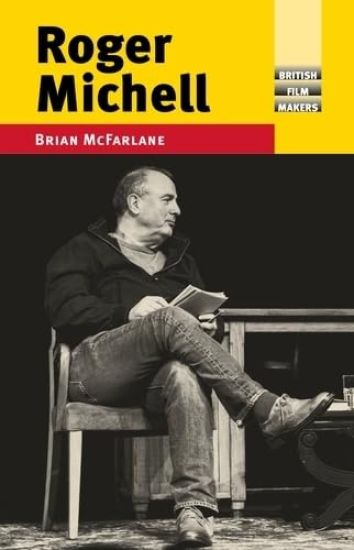
Roger Michell

Roger Michell

Brian McFarlane

MANCHESTER UNIVERSITY PRESS
2026
sidottu
This book offers the first serious critical study of Roger Michell’s career as a filmmaker. Best known for Notting Hill, Michell brought a distinctive sensitivity to his work in both the UK and the US, across genres ranging from romantic comedy to historical drama. While Michell had success in theatre and television, the focus here is on his twenty-year career in film and the particular qualities he brought to adaptation and character-driven storytelling. The book explores his handling of relationships and place, from the quiet emotional detail of Persuasion to the observational humour of The Duke, and highlights his ability to subvert narrative conventions through careful attention to mood, tone and performance. McFarlane’s study positions Michell as a perceptive and underappreciated figure in contemporary British cinema, whose work continues to reward close viewing.
Outback

Outback

Brian McFarlane

INTELLECT
2026
nidottu
Focusing on the incidence of the ‘Westerns’ film genre in the 120-odd years of Australian cinema history, exploring how the American genre has been adapted to the changing Australian social, political and cultural contexts of their production, including the shifting emphases in the representation of the Indigenous population. The idea for the book came to the author while he was writing two recent articles. One was an essay for Screen Education on the western in Australian cinema of the 21st century; the other piece was the review of a book entitled Film and the Historian, for the online journal Inside Story . Between the two, he saw the interesting prospect of a book-length study of the role of the western genre in Australia’s changing political and cultural history over the last century – and the ways in which film can, without didacticism, provide evidence of such change. Key matters include the changing attitudes to and representation of Indigenous peoples and of women's roles in Australian Westerns. When one considers that the longest narrative film then seen in Australia, and quite possibly the world was Charles Tait’s The Story of the Kelly Gang (1906), it is clear that Australia has some serious history in the genre, and Kelly has ridden again in Justin Kurzel’s 2020 adaptation of Peter Carey’s The True History of the Kelly Gang.