Kirjojen hintavertailu. Mukana 12 390 323 kirjaa ja 12 kauppaa.

Kirjahaku

Etsi kirjoja tekijän nimen, kirjan nimen tai ISBN:n perusteella.

14 kirjaa tekijältä Brian McGinty

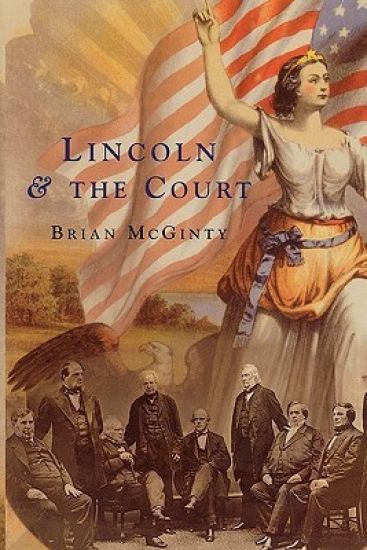
Lincoln and the Court

Lincoln and the Court

Brian McGinty

Harvard University Press
2009
nidottu
In a meticulously researched and engagingly written narrative, Brian McGinty rescues the story of Abraham Lincoln and the Supreme Court from long and undeserved neglect, recounting the compelling history of the Civil War president's relations with the nation's highest tribunal and the role it played in resolving the agonizing issues raised by the conflict.Lincoln was, more than any other president in the nation's history, a "lawyerly" president, the veteran of thousands of courtroom battles, where victories were won, not by raw strength or superior numbers, but by appeals to reason, citations of precedent, and invocations of justice. He brought his nearly twenty-five years of experience as a practicing lawyer to bear on his presidential duties to nominate Supreme Court justices, preside over a major reorganization of the federal court system, and respond to Supreme Court decisions--some of which gravely threatened the Union cause.The Civil War was, on one level, a struggle between competing visions of constitutional law, represented on the one side by Lincoln's insistence that the United States was a permanent Union of one people united by a "supreme law," and on the other by Jefferson Davis's argument that the United States was a compact of sovereign states whose legal ties could be dissolved at any time and for any reason, subject only to the judgment of the dissolving states that the cause for dissolution was sufficient. Alternately opposed and supported by the justices of the Supreme Court, Lincoln steered the war-torn nation on a sometimes uncertain, but ultimately triumphant, path to victory, saving the Union, freeing the slaves, and preserving the Constitution for future generations.
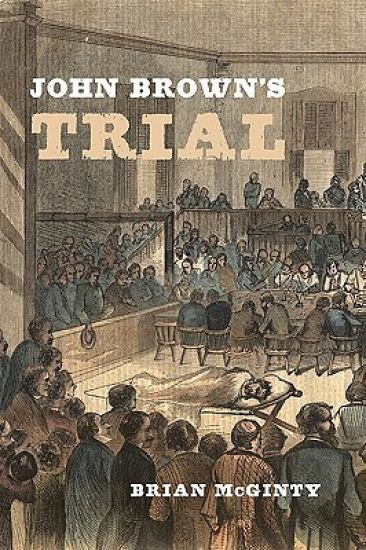
John Brown’s Trial

John Brown’s Trial

Brian McGinty

Harvard University Press
2009
sidottu
Mixing idealism with violence, abolitionist John Brown cut a wide swath across the United States before winding up in Virginia, where he led an attack on the U.S. armory and arsenal at Harpers Ferry. Supported by a “provisional army” of 21 men, Brown hoped to rouse the slaves in Virginia to rebellion. But he was quickly captured and, after a short but stormy trial, hanged on December 2, 1859.Brian McGinty provides the first comprehensive account of the trial, which raised important questions about jurisdiction, judicial fairness, and the nature of treason under the American constitutional system. After the jury returned its guilty verdict, an appeal was quickly disposed of, and the governor of Virginia refused to grant clemency. Brown met his death not as an enemy of the American people but as an enemy of Southern slaveholders.Historians have long credited the Harpers Ferry raid with rousing the country to a fever pitch of sectionalism and accelerating the onset of the Civil War. McGinty sees Brown’s trial, rather than his raid, as the real turning point in the struggle between North and South. If Brown had been killed in Harpers Ferry (as he nearly was), or condemned to death in a summary court-martial, his raid would have had little effect. Because he survived to stand trial before a Virginia judge and jury, and argue the case against slavery with an eloquence that reverberated around the world, he became a symbol of the struggle to abolish slavery and a martyr to the cause of freedom.
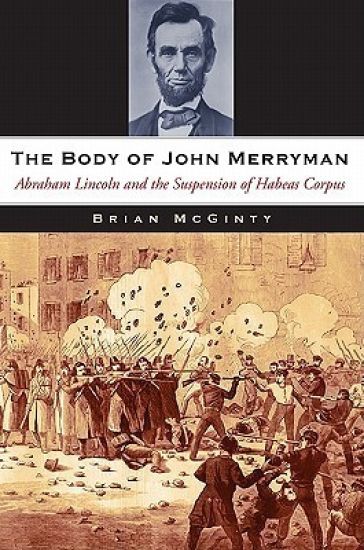
The Body of John Merryman

The Body of John Merryman

Brian McGinty

Harvard University Press
2011
sidottu
In April 1861, President Abraham Lincoln suspended the writ of habeas corpus along the military line between Washington, D.C., and Philadelphia. This allowed army officers to arrest and indefinitely detain persons who were interfering with military operations in the area. When John Merryman, a wealthy Marylander suspected of burning bridges to prevent the passage of U.S. troops to Washington, was detained in Fort McHenry, the chief justice of the Supreme Court, Roger Taney, declared the suspension of habeas corpus unconstitutional and demanded Merryman's immediate release. Lincoln defied Taney’s order, offering his own forceful counter-argument for the constitutionality of his actions. Thus the stage was set for one of the most dramatic personal and legal confrontations the country has ever witnessed.The Body of John Merryman is the first book-length examination of this much-misunderstood chapter in American history. Brian McGinty captures the tension and uncertainty that surrounded the early months of the Civil War, explaining how Lincoln's suspension of habeas corpus was first and foremost a military action that only subsequently became a crucial constitutional battle. McGinty's narrative brings to life the personalities that drove this uneasy standoff and expands our understanding of the war as a legal—and not just a military, political, and social—conflict. The Body of John Merryman is an extraordinarily readable book that illuminates the contours of one of the most significant cases in American legal history—a case that continues to resonate in our own time.
Strong Wine

Strong Wine

Brian McGinty

Stanford University Press
1998
sidottu
Bold, flamboyant, extravagant, devious, visionary, Agoston Haraszthy (1812-1869) is one of the most fascinating—and elusive—figures in the history of American agriculture. Apart from his pioneer efforts to establish a world-class wine industry in California, he holds other important distinctions: he was the first Hungarian to permanently settle in the United States, author of only the second Hungarian-language book about the United States, founder of one of the earliest towns in Wisconsin, and owner and operator of the first steamboat to engage in regularly scheduled traffic on the upper Mississippi River. Lured by the discovery of gold to cross the plains to California in 1849, Haraszthy became the first sheriff of San Diego, a member of the California legislature, and the first assayer of the United States Mint in San Francisco. Long fascinated with the possibility of growing fine European grapes in America, he moved in 1856 to northern California's Sonoma Valley, where he built the first stone wineries in California, introduced more than 300 varieties of European grapes, and planted (or helped his neighbors plant) more than a thousand acres of choice wine vineyards. He made a well-publicized wine tour of Europe in 1862, wrote the first notable book on California wine growing, and built his Sonoma estate into what was widely advertised as "the largest vineyard in the world." In this book, the first full-length biography of one of nineteenth-century America's most interesting and influential immigrants, the author examines Haraszthy's amazing life, dispels many of the myths that have gathered around him, and makes a careful assessment of his contributions to American immigration and agricultural history.
Strong Wine

Strong Wine

Brian McGinty

Stanford University Press
1998
pokkari
Bold, flamboyant, extravagant, devious, visionary, Agoston Haraszthy (1812-1869) is one of the most fascinating—and elusive—figures in the history of American agriculture. Apart from his pioneer efforts to establish a world-class wine industry in California, he holds other important distinctions: he was the first Hungarian to permanently settle in the United States, author of only the second Hungarian-language book about the United States, founder of one of the earliest towns in Wisconsin, and owner and operator of the first steamboat to engage in regularly scheduled traffic on the upper Mississippi River. Lured by the discovery of gold to cross the plains to California in 1849, Haraszthy became the first sheriff of San Diego, a member of the California legislature, and the first assayer of the United States Mint in San Francisco. Long fascinated with the possibility of growing fine European grapes in America, he moved in 1856 to northern California's Sonoma Valley, where he built the first stone wineries in California, introduced more than 300 varieties of European grapes, and planted (or helped his neighbors plant) more than a thousand acres of choice wine vineyards. He made a well-publicized wine tour of Europe in 1862, wrote the first notable book on California wine growing, and built his Sonoma estate into what was widely advertised as "the largest vineyard in the world." In this book, the first full-length biography of one of nineteenth-century America's most interesting and influential immigrants, the author examines Haraszthy's amazing life, dispels many of the myths that have gathered around him, and makes a careful assessment of his contributions to American immigration and agricultural history.
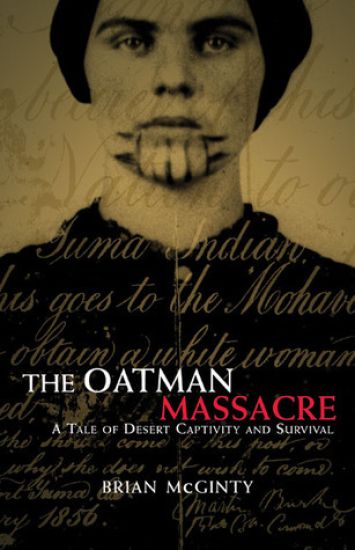
The Oatman Massacre

The Oatman Massacre

Brian McGinty

University of Oklahoma Press
2006
nidottu
The Oatman massacre is among the most famous and dramatic captivity stories in the history of the Southwest. In this riveting account, Brian McGinty explores the background, development, and aftermath of the tragedy.Roys Oatman, a dissident Mormon, led his family of nine and a few other families from their homes in Illinois on a journey west, believing a prophecy that they would find the fertile ""Land of Bashan"" at the confluence of the Gila and Colorado Rivers. On February 18, 1851, a band of southwestern Indians attacked the family on a cliff overlooking the Gila River in present-day Arizona. All but three members of the family were killed. The attackers took thirteen-year-old Olive and eight-year-old Mary Ann captive and left their wounded fourteen-year-old brother Lorenzo for dead.Although Mary Ann did not survive, Olive lived to be rescued and reunited with her brother at Fort Yuma.On Olive's return to white society in 1857, Royal B. Stratton published a book that sensationalized the story, and Olive herself went on lecture tours, telling of her experiences and thrilling audiences with her Mohave chin tattoos.Ridding the legendary tale of its anti-Indian bias and questioning the historic notion that the Oatmans' attackers were Apaches, McGinty explores the extent to which Mary Ann and Olive may have adapted to life among the Mohaves and charts Olive's eight years of touring and talking about her ordeal.
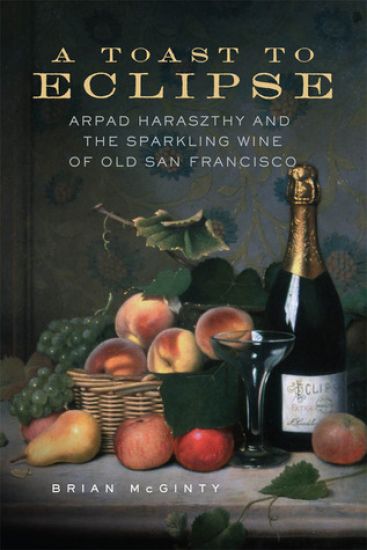
A Toast to Eclipse

A Toast to Eclipse

Brian McGinty

University of Oklahoma Press
2012
sidottu
The sparkling wines of California rival the best French Champagnes today, but their place at our tables came about through careful craftsmanship that began more than a century ago. The predecessor of today's California bubbly was Eclipse Champagne, the first commercially successful California sparkling wine, produced by Arpad Haraszthy in the mid- to late nineteenth century. In A Toast to Eclipse, Brian McGinty offers a definitive history of the wine, exploring California's winemaking past and two of the people who put the state's varietal wines on the map: Arpad and his father Agoston Haraszthy, the legendary ""father of California viticulture.""Inspired by his father's dream of making California one of the world's great viticultural regions, Arpad Haraszthy (1840-1900) pursued that goal at a time when the best grapes for making California wine had yet to be discovered, when the best locations for vineyards had not yet been established, and when the public could hardly believe that good wine could be made in a country overrun with gold miners and desperados. As a young man, Arpad spent two years in the Champagne country of northeastern France, studying the classic methods of French sparkling wine manufacture, before bringing his knowledge home to California.As McGinty shows, the story of the award-winning wine Haraszthy created is also the story of San Francisco during its heyday as the largest, most dynamic city in the American West. McGinty reveals new information about California varietals and winemaking districts, and probes the controversy about whether Agoston Haraszthy introduced the Zinfandel grape to the Golden State. Aficionados of wine and of California history will find this narrative insightful and refreshing, and all readers will gain an appreciation for Arpad Haraszthy, Eclipse, and the delicate process of making a wine sparkle.
A Toast to Eclipse

A Toast to Eclipse

Brian McGinty

UNIVERSITY OF OKLAHOMA PRESS
2024
nidottu
The sparkling wines of California rival the best French Champagnes today, but their place at our tables came about through careful craftsmanship that began more than a century ago. The predecessor of today’s California bubbly was Eclipse Champagne, the first commercially successful California sparkling wine, produced by Arpad Haraszthy in the mid- to late nineteenth century. In A Toast to Eclipse, Brian McGinty offers a definitive history of the wine, exploring California’s winemaking past and two of the people who put the state’s varietal wines on the map: Arpad and his father Agoston Haraszthy, the legendary “father of California viticulture.” Inspired by his father’s dream of making California one of the world’s great viticultural regions, Arpad Haraszthy (1840–1900) pursued that goal at a time when the best grapes for making California wine had yet to be discovered, when the best locations for vineyards had not yet been established, and when the public could hardly believe that good wine could be made in a country overrun with gold miners and desperados. As a young man, Arpad spent two years in the Champagne country of northeastern France, studying the classic methods of French sparkling wine manufacture, before bringing his knowledge home to California. As McGinty shows, the story of the award-winning wine Haraszthy created is also the story of San Francisco during its heyday as the largest, most dynamic city in the American West. McGinty reveals new information about California varietals and winemaking districts, and probes the controversy about whether Agoston Haraszthy introduced the Zinfandel grape to the Golden State. Aficionados of wine and of California history will find this narrative insightful and refreshing, and all readers will gain an appreciation for Arpad Haraszthy, Eclipse, and the delicate process of making a wine sparkle.
Archy Lee's Struggle for Freedom

Archy Lee's Struggle for Freedom

Brian McGinty

The Lyons Press
2020
sidottu
In San Francisco, CA, in 1858, a young African American man was freed from the claims of a white man who sought to return him to slavery in Mississippi. This was one year after the Supreme Court’s notorious Dred Scott decision and during the California Gold Rush, which saw the population of the state rise from 7,000 to more than 60,000 in a few short years. Archy Lee was the name of the man who, with the aid of anti-slavery lawyers and determined opponents of human bondage, had just won his freedom from the claims of Charles Stovall. With the aid of pro-slavery lawyers and equally determined supporters, Stovall had sought to capture him and carry him back to a far-away slave plantation. Yet the book is not solely about Archy Lee. It is also about the travel routes that the gold-seekers followed to California in the 1850s, some by land over the Great Plains, some by sea around Cape Horn, yet others by sailing from the east coast of North America to the isthmus of Panama, where they crossed over the land there by train and continued on by sea to San Francisco. It is about the efforts of the racially motivated lawmakers to suppress the rights of all of California’s residents except whites, and to subject people of African, Asian, Hispanic, and Native American descent to second-, third-, or even fourth-class citizenship. It is about the residents of the state—including many whites—who fought back against those efforts, seeking to ameliorate or repeal the discriminatory laws and introduce a measure of fairness and justice into California’s civil life. It is about the lawyers and judges who participated in Archy Lee’s legal struggles in 1858, some supporting his claims for freedom while others ferociously opposed them and, in the process, elevated their own political and professional profiles.
The Rest I Will Kill

The Rest I Will Kill

Brian McGinty

Liveright Publishing Corporation
2016
sidottu
Independence Day, 1861. The schooner S. J. Waring sets sail from New York on a routine voyage to South America. Seventeen days later, it limps back into New York’s frenzied harbor with the ship's black steward, William Tillman, at the helm. While the story of that ill-fated voyage is one of the most harrowing tales of captivity and survival on the high seas, it has, almost unbelievably, been lost to history. Now reclaiming Tillman as the real American hero he was, historian Brian McGinty dramatically returns readers to that riotous, explosive summer of 1861, when the country was tearing apart at the seams and the Union army was in near shambles following a humiliating defeat at the First Battle of Bull Run. Desperate for good news, the North was soon riveted by reports of an incident that occurred a few hundred miles off the coast of New York, where the Waring had been overtaken by a marauding crew of Confederate privateers. While the white sailors became chummy with their Southern captors, free black man William Tillman was perfectly aware of the fate that awaited him in the ruthless, slave-filled ports south of the Mason-Dixon Line. Stealthily biding his time until a moonlit night nine days after the capture, Tillman single-handedly killed three officers of the privateer crew, then took the wheel and pointed it home. Yet, with no experience as a navigator, only one other helper, and a war-torn Atlantic seaboard to contend with, his struggle had just begun. It took five perilous days at sea—all thrillingly recounted here—before the Waring returned to New York Harbor, where the story of Tillman's shipboard courage became such a tabloid sensation that he was not only put on the bill of Barnum’s American Museum but also proclaimed to be the "first hero" of the Civil War. As McGinty evocatively shows, however, in the horrors of the war then engulfing the nation, memories of his heroism—even of his identity—were all but lost to history. As such, The Rest I Will Kill becomes a thrilling and historically significant work, as well as an extraordinary journey that recounts how a free black man was able to defy efforts to make him a slave and become an unlikely glimmer of hope for a disheartened Union army in the war-battered North.
Lincoln's Greatest Case: The River, the Bridge, and the Making of America
In May of 1856, the steamboat Effie Afton barreled into a pillar of the Rock Island Bridge, unalterably changing the course of American transportation history. Within a year, long-simmering tensions between powerful steamboat interests and burgeoning railroads exploded, and the nation's attention, absorbed by the Dred Scott case, was riveted by a new civil trial. Dramatically reenacting the Effie Afton case--from its unlikely inception, complete with a young Abraham Lincoln's soaring oratory, to the controversial finale--this "masterful" (Christian Science Monitor) account gives us the previously untold story of how one sensational trial propelled a self-taught lawyer and a future president into the national spotlight.
The Rest I Will Kill

The Rest I Will Kill

Brian McGinty

Liveright Publishing Corporation
2016
nidottu
Independence Day, 1861. The schooner S. J. Waring sets sail from New York on a routine voyage to South America. Seventeen days later, it limps back into New York’s frenzied harbor with the ship's black steward, William Tillman, at the helm. While the story of that ill-fated voyage is one of the most harrowing tales of captivity and survival on the high seas, it has, almost unbelievably, been lost to history. Now reclaiming Tillman as the real American hero he was, historian Brian McGinty dramatically returns readers to that riotous, explosive summer of 1861, when the country was tearing apart at the seams and the Union army was in near shambles following a humiliating defeat at the First Battle of Bull Run. Desperate for good news, the North was soon riveted by reports of an incident that occurred a few hundred miles off the coast of New York, where the Waring had been overtaken by a marauding crew of Confederate privateers. While the white sailors became chummy with their Southern captors, free black man William Tillman was perfectly aware of the fate that awaited him in the ruthless, slave-filled ports south of the Mason-Dixon Line. Stealthily biding his time until a moonlit night nine days after the capture, Tillman single-handedly killed three officers of the privateer crew, then took the wheel and pointed it home. Yet, with no experience as a navigator, only one other helper, and a war-torn Atlantic seaboard to contend with, his struggle had just begun. It took five perilous days at sea—all thrillingly recounted here—before the Waring returned to New York Harbor, where the story of Tillman's shipboard courage became such a tabloid sensation that he was not only put on the bill of Barnum’s American Museum but also proclaimed to be the "first hero" of the Civil War. As McGinty evocatively shows, however, in the horrors of the war then engulfing the nation, memories of his heroism—even of his identity—were all but lost to history. As such, The Rest I Will Kill becomes a thrilling and historically significant work, as well as an extraordinary journey that recounts how a free black man was able to defy efforts to make him a slave and become an unlikely glimmer of hope for a disheartened Union army in the war-battered North.
Lincoln and California

Lincoln and California

Brian McGinty

Potomac Books Inc
2023
sidottu
The ties that bound Abraham Lincoln to California, and California to Lincoln, have long been overlooked by historians. Although the great Civil War president has been the subject of thousands of books, his important relationship with the Western state, both before and during the war-the part it played in bringing on the great conflict and the help it gave him in winning it-have been little described and imperfectly understood. In Lincoln and California Brian McGinty explains the relationship between the president and the Golden State, describing important events that took place in California and elsewhere during Lincoln’s lifetime. He includes the histories of Lincoln’s close friends and personal acquaintances who made history as they went to California, lived there, and helped to keep it part of the imperiled Union. McGinty demonstrates that California was in large part responsible for beginning the Civil War, as the principal purpose of its conquest in the Mexican War was to acquire land into which the Southern states could extend their cotton-growing and slaveholding empire. The decision of California’s first voters to exclude slavery from the state but to enact virulently racist legislation encouraged Southerners’ hope that, if they established a separate republic, it would become an independent slave nation with the power to extend its territory to the Pacific coast of North America and into the Caribbean and Latin America. Lincoln’s opposition to their plans unleashed the Civil War. As the struggle played out, however, the hopes of the proslavery Confederates were ultimately defeated because California played a vital role in helping Lincoln save the Union. Lincoln and California shines new light on an important state, a pivotal president, and a turning point in American history.