Kirjojen hintavertailu. Mukana 11 627 220 kirjaa ja 12 kauppaa.

Kirjahaku

Etsi kirjoja tekijän nimen, kirjan nimen tai ISBN:n perusteella.

38 kirjaa tekijältä Brian Morris

Molecular Biology of the Neuron

Molecular Biology of the Neuron

Brian Morris

Oxford University Press
2004
sidottu
Neurons are arguably the most complex of all cells. From the action of these cells comes movement, thought and consciousness. It is a challenging task to understand what molecules direct the various diverse aspects of their function. This has produced an ever-increasing amount of molecular information about neurons, and only in Molecular Biology of the Neuron can a large part of this information be found in one source. In this book, a non-specialist can learn about the molecules that control information flow in the brain or the progress of brain disease in an approachable format, while the expert has access to a wealth of detailed information from a wide range of topics impacting on his or her field of endeavour. The text is designed to achieve a balance of accessibility and broad coverage with up-to-date molecular detail. In the six years since the first edition of Molecular Biology of the Neuron there has been an explosion in the molecular information about neurons that has been discovered, and this information is incorporated into this second edition. Entirely new chapters have been introduced where recent advances have made a new aspect of neuronal function more comprehensible at the molecular level. Written by leading researchers in the field, the book provides an essential overview of the molecular structure and function of neurons, and will be an invaluable tool to students and researchers alike.

Anthropological Studies of Religion

Anthropological Studies of Religion

Brian Morris

Cambridge University Press
1987
pokkari
In this important, scholarly and wide-ranging text, Brian Morris provides a lucid outline of the nature of the explanations of religious phenomena offered by such great thinkers as Hegel, Marx, and Weber. In doing so he also unravels the many theoretical strategies in the study of religion that have been developed and explored by later anthropologists. Besides discussing the classical authors and the debates surrounding their work, Morris presents perceptive accounts of more contemporary scholars such as Jung, Malinowski, Levi-Strauss, Geertz, and Godelier. Written from the standpoint of critical sympathy, and free of jargon, this book is an invaluable guide to the writings on religion of all the major figures in anthropology.
Religion and Anthropology

Religion and Anthropology

Brian Morris

Cambridge University Press
2005
pokkari
This important textbook provides a critical introduction to the social anthropology of religion, focusing on more recent classical ethnographies. Comprehensive, free of scholastic jargon, engaging, and comparative in approach, it covers all the major religious traditions that have been studied concretely by anthropologists - Shamanism, Buddhism, Islam, Hinduism, Christianity and its relation to African and Melanesian religions and contemporary Neopaganism. Eschewing a thematic approach and treating religion as a social institution and not simply as an ideology or symbolic system, the book follows the dual heritage of social anthropology in combining an interpretative understanding and sociological analysis. The book will appeal to all students of anthropology, whether established scholars or initiates to the discipline, as well as to students of the social sciences and religious studies, and for all those interested in comparative religion.
Religion and Anthropology

Religion and Anthropology

Brian Morris

Cambridge University Press
2005
sidottu
This important textbook provides a critical introduction to the social anthropology of religion, focusing on more recent classical ethnographies. Comprehensive, free of scholastic jargon, engaging, and comparative in approach, it covers all the major religious traditions that have been studied concretely by anthropologists - Shamanism, Buddhism, Islam, Hinduism, Christianity and its relation to African and Melanesian religions and contemporary Neopaganism. Eschewing a thematic approach and treating religion as a social institution and not simply as an ideology or symbolic system, the book follows the dual heritage of social anthropology in combining an interpretative understanding and sociological analysis. The book will appeal to all students of anthropology, whether established scholars or initiates to the discipline, as well as to students of the social sciences and religious studies, and for all those interested in comparative religion.
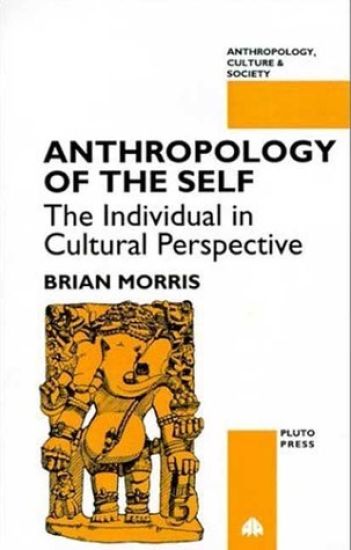
Anthropology of the Self

Anthropology of the Self

Brian Morris

Pluto Press
1994
pokkari
Western society is individualised; we feel at ease talking about individuals and we study individual behaviour through psychology and psychoanalysis. Yet anthropology teaches us that an individual approach is only one of many ways of looking at ourselves. In this wide-ranging text Morris explores the origins, doctrines and conceptions of the self in Western, Asian and African societies passing though Greek philosophy, Buddhism, Hinduism, Confuscism, Tao and African philosophy and ending with contemporary feminism. Scholarly and written in a lucid style, free of jargon, this work is written from an anthropological perspective with an interdisciplinary approach. Morris emphasises the varying conceptions of the self found cross-culturally and contrasts these with the conceptions found in the different Western intellectual traditions.
Western Conceptions of the Individual

Western Conceptions of the Individual

Brian Morris

Berg Publishers
1991
nidottu
This is a comprehensive study of the varying conceptions of the human subject in the Western intellectual tradition. Although informed by an anthropological perspective, the author draws on material from all the major intellectual disciplines that have contributed to this tradition and offers biographical and theoretical vignettes of all the major Western scholars. By scrutinizing the classical texts of the Western tradition, he succeeds in delineating the differing conceptions of the human individual which emerge from these writings, and gives a guide to the most important ideas in Western cultural traditions.
The Secret Of Lizard Mountain

The Secret Of Lizard Mountain

Brian Morris

Storypics
2008
pokkari
It's the start of the school holidays and four friends, Bob Hughes, Steve Martin, Nick Russel and Billy Price are on their way to Lizard Mountain to catch newts in their jam jars. But something strange happens when Christine Brown and Pam Martin arrive which plunges them into another world to begin a fight for their survival.
The Wellness Code: The Evidence-Based Prescription for Weight Loss, Longevity, Health and Happiness
In the tradition of The 7 Habits of Highly Effective People by Stephen Covey, The Happiness Project by Gretchen Rubin, The Four Agreements by Don Miguel Ruiz and The Life-Changing Magic of Tidying Up by Marie Kondo comes the national bestseller The Wellness Code by Dr. Brian Morris. The Wellness Code is unlike any health or diet book you've ever read. In this life-changing book, you will learn why conventional diets don't work and what actually works. You will learn Dr. Morris' four-column process that is pivotal to long-term wellness. You will also learn the 50 most important habits that promote weight loss, longevity, health, and happiness. For years, Dr. Brian Morris has shared the secrets to maintaining a healthy lifestyle and an optimal weight with his patients. For the first time, Dr. Morris is making this information available to the general public. Backed by hundreds of references from the medical literature, The Wellness Code synthesizes decades of scientific research and clinical experience into a time-tested, holistic program for looking and feeling great. The Wellness Code will show you how to create a personalized plan to finally lose the weight, transform your health, and find lasting happiness. You will learn how to live long and live well. "In The Wellness Code, Dr. Morris achieves what few have done. He provides scientific, yet understandable, explanations of how to live long and prosper." -Nina Shapiro, M.D., Bestselling Author of Take a Deep Breath: Clear The Air For The Health of Your Child "Thank you, Dr. Morris, for a clear and well thought out long-term plan for healthy change." -Jordan Kerner, Producer of Charlotte's Web, Fried Green Tomatoes, The Smurfs, and The Mighty Ducks "The Wellness Code is a recipe for long-term success." -Cynthia Sass, M.P.H., M.A., R.D., C.S.S.D., Nutritionist and New York Times Bestselling Author "The Wellness Code is a true game-changer. It is required reading for anyone looking to finally lose the weight and make a health transformation." -Gavin James, President and CEO, Western Asset Mortgage Capital "The Wellness Code is a valuable science-based program for enhancing total wellness" -David Heber, M.D., Ph.D., Bestselling Author of What Color Is Your Diet?
Nightmare at Sea

Nightmare at Sea

Brian Morris

Trafford Publishing
2011
pokkari
Special Forces team is in for a ride on this pleasure cruise. Fighting to survive a living nightmare. Will the team prove themselves to be the best they were trained to be? Or will the team fail for the final test? Who can they trust? Who will live? and Who will die?
The Green Beret Bushcrafting Guide

The Green Beret Bushcrafting Guide

Brian Morris

Skyhorse Publishing
2023
pokkari
The Eight Pillars of SurvivalMany survival and emergency preparedness experts today use the pyramid approach to survival prioritization, putting food, water, shelter and security in the largest block at the base of the pyramid and then community, sustainability and higher needs in smaller brackets at the top of the pyramid. My survival model takes a different and linear approach to survival using an eight-pillar system. The eight pillars that I use as the basis of my survival methodology are food, water, shelter, security, communication, health, survival navigation and fire-craft. In my system no one pillar takes priority to another initially. It is up to the survivor to assess their situation and then choose the pillar that is needed most to survive in the situation at hand. Much like a rifle pop-up target range where a shooter is expected to hit the closer (more dangerous) 50-meter target first before engaging the 300-meter target, the survivor needs to prioritize the pillars and choose the pillar that is most urgent and necessary to save his life under the circumstances. The foundation for my methodology is KISS which stands for “keep it simple, stupid”, an acronym widely used by the military to remind soldiers that the best solutions are often the simplest. I developed this 8 Pilar approach over decades of serving as a Green Beret in the US Army Special Forces
Pioneers Of Ecological Humanism

Pioneers Of Ecological Humanism

Brian Morris

Black Rose Books
2017
nidottu
In our world of ecological catastrophe and social crisis, some roundly condemn modern civilisation as the source of our Promethean predicament. What can follow is a rejection of humanism, science and the City and a turn to either nostalgic primitivism or esoteric spirituality. But do we really need to flee the city for the woods in order to build a free society? In this triple intellectual biography, Brian Morris lucidly discusses three intellectual giants who made an enormous, though often overlooked, contribution to modern ecology: Lewis Mumford, Ren Dubos, and Murray Bookchin. Morris argues that they have forged a third way beyond both industrialism and anti-modernism: ecological humanism (also known as social ecology), a tradition that embraces both ecological realities and the ethical and cultural wealth of humanism. In examining their thought, Professor Morris paves the way for fresh debate on ecology, charting an optimistic vision for the profound reharmonisation of nature and culture as well as the ecological, egalitarian and democratic transformation of our cities and society.Essential reading for anyone with an interest or active role in ecology or philosophy and their associated disciplines, Pioneers of Ecological Humanism is written in a clear and refreshingly direct style that will appeal to academics, activists, and armchair ecologists alike.Leaving school at the age of fifteen, Brian Morris had a varied career: foundry worker, seaman, and tea-planter in Malawi, before becoming a university teacher. Now Emeritus Professor of Anthropology at Goldsmiths College, University of London, he is the author of numerous articles and books on ethnobotany, religion and symbolism, hunter-gatherer societies and concepts of the individual. His books include Richard Jefferies and the Ecological Vision (2006), Religion and Anthropology: A Critical Introduction(2006), Insects and Human Life (2004) and Kropotkin: The Politics of Community (2004). Black Rose Books is also the publisher of hisBakunin: The Philosophy of Freedom (1993) and the forthcoming Anarchist Miscellany.
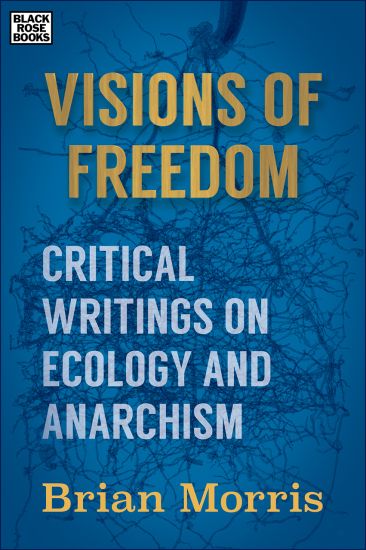
Visions of Freedom

Visions of Freedom

Brian Morris

Black Rose Books
2017
pokkari
Every ten years, notoriously eclectic thinker Brian Morris takes a year of sabbatical and launches out into another field about which he knows nothing. In the 1980s it was botany; in the 1990s, zoology; in the 2000s, entomology. The quintessential polymath, Morris has written on his incredible breadth of interests in wide-ranging essays, with subjects ranging from boxing to deep ecology to new-age gurus. Collected here for the first time, Visions of Freedom brings together all of Morris's concise yet diverse essays on politics, history, and ecology written since 1989. It includes book reviews, letters, and articles in the engaging and accessible style for which Morris is known. The thinkers he deals with are as diverse as Thomas Paine to C. L. R. James, from Karl Marx to Krishnamurti, from Max Weber to Naomi Klein. He also delves into the canon of classic anarchist thinkers like Kropotkin, Bakunin, Reclus, Proudhon, and Flores Magnon. Taking a stance against the obscurantism of contemporary academic discourse, Morris' writings demonstrate an interdisciplinary approach that moves seamlessly between topics, developing practical connections between scholarly debates and the pressing social, ecological and political issues of our times.