Kirjojen hintavertailu. Mukana 12 280 165 kirjaa ja 12 kauppaa.

Kirjahaku

Etsi kirjoja tekijän nimen, kirjan nimen tai ISBN:n perusteella.

15 kirjaa tekijältä Brian Murdoch

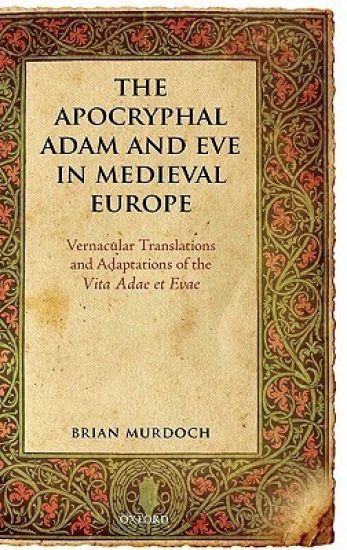
The Apocryphal Adam and Eve in Medieval Europe

The Apocryphal Adam and Eve in Medieval Europe

Brian Murdoch

Oxford University Press
2009
sidottu
What happened to Adam and Eve after their expulsion from paradise? Where the biblical narrative fell silent apocryphal writings took up this intriguing question, notably including the Early Christian Latin text, the Life of Adam and Eve. This account describes the (failed) attempt of the couple to return to paradise by fasting whilst immersed in a river, and explores how they coped with new experiences such as childbirth and death. Brian Murdoch guides the reader through the many variant versions of the Life, demonstrating how it was also adapted into most western and some eastern European languages in the Middle Ages and beyond, constantly developing and changing along the way. The study considers this development of the apocryphal texts whilst presenting a fascinating insight into the flourishing medieval tradition of Adam and Eve. A tradition that the Reformation would largely curtail, stories from the Life were celebrated in European prose, verse and drama in many different languages from Irish to Russian.
Gregorius

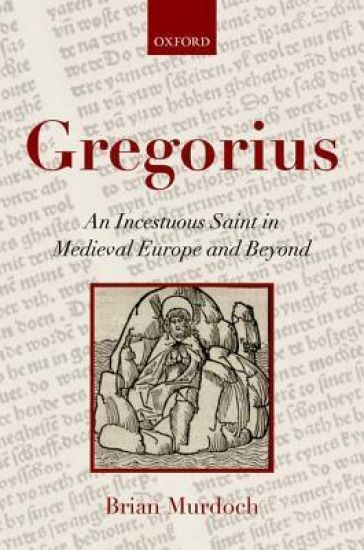
Gregorius

Brian Murdoch

Oxford University Press
2012
sidottu
The story of the apocryphal pope and saint Gregorius was extremely popular throughout the middle ages and later in Europe and beyond. In a memorable narrative Gregorius is born from an incestuous relationship between a noble brother and sister, and is set out to sea with (unspecific) details of his origin. He is found and brought up by an abbot, but when revealed as a foundling leaves as a knight to seek his origins; he rescues his mother's land from attack, and marries her. On discovering his sin he undertakes years of penance on a rocky islet, which he survives miraculously. An angel sends emissaries from Rome to find him after the death of the pope, the key to his shackles is equally miraculously discovered, and he becomes pope. This hagiographical romance is not a variation upon Oedipus; it uses the invisible sin of incest as a parallel both for original sin (the sin of Adam and Eve) and for actual sin. It combines the universal theme of the quest for identity with the problem not of guilt as such, which is inevitable, but of how sinful humanity can cope with it. Brian Murdoch traces the story's probable origins in medieval England or France, and its later appearance in versions from Iceland and Ireland to Iraq and Egypt, in verse and prose, in full-scale literary forms or in much-reduced folktales, in theological as well as secular contexts, down to Thomas Mann and beyond.
Fighting Songs and Warring Words

Fighting Songs and Warring Words

Brian Murdoch

Routledge
1990
sidottu
The accepted canon of war poetry usually includes only those underlining patriotic or nationalistic views. This study opens up the view of war poetry with the inclusion of such material as Nazi poetry and song, and the poetry of the atomic bomb.
Fighting Songs and Warring Words

Fighting Songs and Warring Words

Brian Murdoch

Routledge
2018
nidottu
The accepted canon of war poetry usually includes only those underlining patriotic or nationalistic views. This study opens up the view of war poetry with the inclusion of such material as Nazi poetry and song, and the poetry of the atomic bomb.
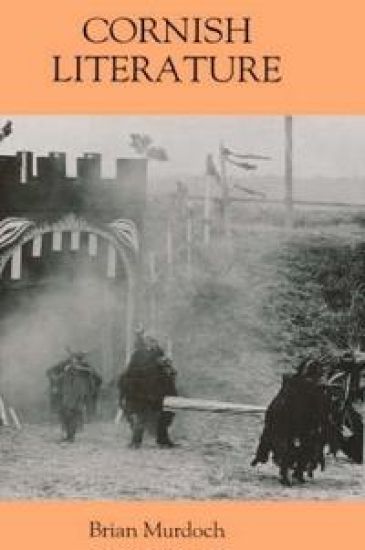
Cornish Literature

Cornish Literature

Brian Murdoch

D.S. Brewer
1993
sidottu
Comparative study of Cornish literature, placing it in a wider context and looking in detail at major works. `This admirable survey...compact, smoothly written, easy to read and digest, yet indicative throughout of profound scholarship and an obvious mastery of the field, Cornish Literatureprovides an enduring guide to this smallbut significant genre. The three Middle Cornish plays - in English titles, The Creation of the World, Life of St Meriasekand the tripartite Ordinalia - accompany a long Pascon agan Arluth, a verse `Passion of our Lord' and the odd fragment... His last chapter, `Survivals and Revivals', is a fair but detached account covering a long (1611 to 1992) phase that will also interest sociologists. The chief strength of his book is the textual analysis of the main plays, placing them alongside medieval English drama as well as the larger European manifestation of religious drama and the complex question of all their biblical and quasi-biblical sources. There is auseful bibliography. Modestly priced, Brian Murdoch's scholarly and attractive guide should appeal to many beyond medievalist circles; it will not be superseded for a long time.' THE TIMES LITERARY SUPPLEMENT BRIAN MURDOCHis head of the Department of German at Stirling University.
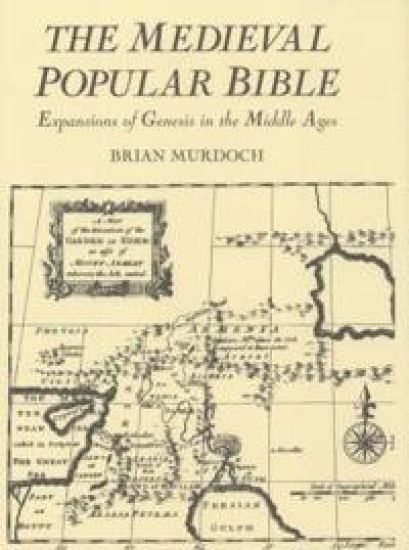
The Medieval Popular Bible

The Medieval Popular Bible

Brian Murdoch

D.S. Brewer
2003
sidottu
The presentation, the use, and the possible reception of the book of Genesis to lay audience largely unable to read the original texts. What was meant by the medieval popular Bible - what was presented as biblical narrative to an audience largely unable to read the original biblical texts? Presentations in the vernacular languages of Europe of supposedly biblicalepisodes were more often than not expanded and interpreted, sometimes very considerably. This book looks at the presentation, the use, and the possible lay reception of the book of Genesis, using as wide a range of medieval genresand vernaculars as possible on a comparative basis down to the Reformation. Literatures taken into consideration include Irish, Cornish, English, French, High and Low German, Spanish, Italian and others. Genesis was an importantbook, and the focus is on those narrative high points which lend themselves most particularly (it is never exclusive) to literal expansion, even though allegory can also work backwards into the literal narrative. Starting with thedevil in paradise (who is not biblical), the book examines what Adam and Eve did afterwards, who killed Cain, what happened in the flood or at the tower of Babel, and ends with a consideration of the careers of Jacob and Joseph.The book is based on the Speaker's Lectures, given in 2002 in the University of Oxford. BRIAN MURDOCH is Professor of German at the University of Stirling.
German Literature and the First World War: The Anti-War Tradition
The period immediately following the end of the First World War witnessed an outpouring of artistic and literary creativity, as those that had lived through the war years sought to communicate their experiences and opinions. In Germany this manifested itself broadly into two camps, one condemning the war outright; the other condemning the defeat. Of the former, Erich Maria Remarque’s All Quiet on the Western Front remains the archetypal example of an anti-war novel, and one that has become synonymous with the Great War. Yet the tremendous and enduring popularity of Remarque’s work has to some extent eclipsed a plethora of other German anti-war writers, such as Hans Chlumberg, Ernst Johannsen and Adrienne Thomas. In order to provide a more rounded view of German anti-war literature, this volume offers a selection of essays published by Brian Murdoch over the past twenty years. Beginning with a newly written introduction, providing the context for the volume and surveying recent developments in the subject, the essays that follow range broadly over the German anti-war literary tradition, telling us much about the shifting and contested nature of the war. The volume also touches upon subjects such as responsibility, victimhood, the problem of historical hiatus in the production and reception of novels, drama, poetry, film and other literature written during the war, in the Weimar Republic, and in the Third Reich. The collection also underlines the potential dangers of using novels as historical sources even when they look like diaries. One essay was previously unpublished, two have been augmented, and three are translated into English for the first time. Taken together they offer a fascinating insight into the cultural memory and literary legacy of the First World War and German anti-war texts.
German Literature and the First World War: The Anti-War Tradition
The period immediately following the end of the First World War witnessed an outpouring of artistic and literary creativity, as those that had lived through the war years sought to communicate their experiences and opinions. In Germany this manifested itself broadly into two camps, one condemning the war outright; the other condemning the defeat. Of the former, Erich Maria Remarque’s All Quiet on the Western Front remains the archetypal example of an anti-war novel, and one that has become synonymous with the Great War. Yet the tremendous and enduring popularity of Remarque’s work has to some extent eclipsed a plethora of other German anti-war writers, such as Hans Chlumberg, Ernst Johannsen and Adrienne Thomas. In order to provide a more rounded view of German anti-war literature, this volume offers a selection of essays published by Brian Murdoch over the past twenty years. Beginning with a newly written introduction, providing the context for the volume and surveying recent developments in the subject, the essays that follow range broadly over the German anti-war literary tradition, telling us much about the shifting and contested nature of the war. The volume also touches upon subjects such as responsibility, victimhood, the problem of historical hiatus in the production and reception of novels, drama, poetry, film and other literature written during the war, in the Weimar Republic, and in the Third Reich. The collection also underlines the potential dangers of using novels as historical sources even when they look like diaries. One essay was previously unpublished, two have been augmented, and three are translated into English for the first time. Taken together they offer a fascinating insight into the cultural memory and literary legacy of the First World War and German anti-war texts.
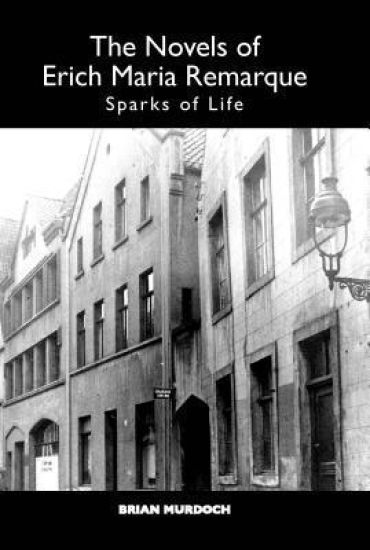
The Novels of Erich Maria Remarque

The Novels of Erich Maria Remarque

Brian Murdoch

Camden House Inc
2010
pokkari
New view of Remarque's novels as a chronicle of the century yet more than a mere reflection of historical events. Erich Maria Remarque is a writer of great popularity who has rightly been described as a "chronicler of the twentieth century." He is both a German writer and a genuinely international one. Although he spent much of his life in exile from Germany, most of his novels reflect its twentieth-century history: the two world wars and the Weimar and Nazi regimes, and especially their effects on the individual. His portrayals of the lives of refugees from Nazi Germany are especially vivid. His themes are universal, dealing with human relationships, with love in particular, and with the provisional nature of life. Often seen as a one-novel writer due to the immense success of All Quiet onthe Western Front, Remarque wrote many other novels, major works that have nearly all been filmed and have remained popular. Nor should it be ignored that his works are above all else immensely readable: not a negligible criterion. This new study of Remarque's novels treats them as a chronicle of the century, but also looks at them as works that go beyond the reflection of historical events. Brian Murdoch is Emeritus Professor of German atthe University of Stirling, Scotland.
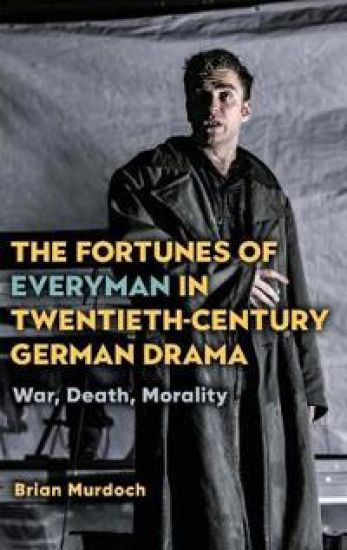
The Fortunes of Everyman in Twentieth-Century German Drama
Death still comes to Everyman, but this study of three twentieth-century German plays shows the harder challenge of living without salvation in an age of war and unprecedented mass destruction. Death comes to everyone, and in the late-medieval morality play of Everyman the familiar skeleton forces the universalized central figure to come to terms with this. Only his inner resources, in the forms of Good Deeds and Knowledge, ensure that he repents and is redeemed. Three important twentieth-century German plays echo Everyman - Toller's Hinkemann, Borchert's The Man Outside, and Frisch's The Arsonists/Firebugs - but the unprecedented scale of killing in the First and Second World Wars changed the view of death, while in the Cold War the nuclear destruction literally of everyone became a possibility. Brian Murdoch traces the heritage of Everyman in the three plays in terms of dramatic effect, changes in the image of Death, and especially the problem of living with existential guilt. Death, now over-fed, still has to be faced, but Everyman has the harder problem of living with the awareness of human wickedness without the possibility of salvation. All three plays have tended to be viewed in their specific historical contexts, but by viewing them less rigidly and as part of a long dramatic tradition, Murdoch shows that all present a message of lasting and universal significance. They pose directly to the theater audience questions not just of how to cope with death, but how to cope with life.
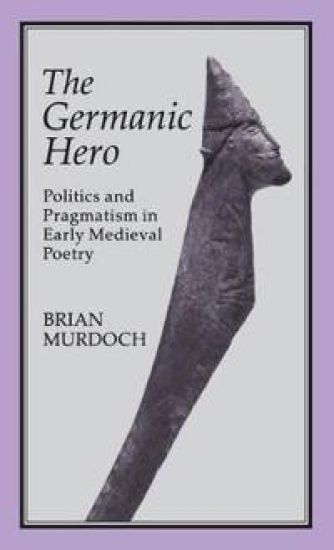
The Germanic Hero

The Germanic Hero

Brian Murdoch

Hambledon Continuum
1996
sidottu
In this study, the author looks at the role the warrior-hero plays within a set of predetermined political and social constraints. The hero if not a sword-wielding barbarian, bent only upon establishing his own fame; such fame-seekers (including some famous medieval literary figures) might even fall outside the definition of the Germanic hero, the real value of whose deeds are given meaning only within the political construct. Individual prowess is not enough. The hero must conquer the blows of fate because he is committed to the conquest of chaos, and over all to the need for social stability. Even the warrior-hero's concern with his reputation is usually expressed negatively: that the wrong songs are not sung about him. The author discusses works in Old English, Old and Middle High German, Old Norse, Latin and Old French, deliberately going beyond what is normally thought of as "heroic poetry" to include the German so-called "minstrel epic" and a work by a writer who is normally classified as a late medieval chivalric poet, Konrad von Wurzburg, the comparison of which with "Beowulf" allows us to span half a millennium.
Memory and Memorials

Memory and Memorials

William Kidd; Brian Murdoch

Ashgate Publishing Limited
2004
sidottu
The twentieth century, perhaps more than any other, was shaped by war and conflict. In particular, the two world wars have had a profound influence on the development of world history, especially in western Europe. The aim of Memory and Memorials, however, is not to seek the effects war has had on the twentieth century, but rather to explore how societies chose to remember wars and manipulate this memory for political and cultural purposes. Tackling issues of actual memory, distorted memory and reconstructions of the past, the use and nature of the war memorial, and the reflection of all these points in selected art, literature and film, the main theme of Memory and Memorials is to stress both continuity and change in memory and memorial.
Catullus

Catullus

Gaius Valerius Catullus; Brian Murdoch

The Choir Press
2023
nidottu
The book is a translation into English verse of the poems of the Latin writer Catullus (first century BCE). Catullus's poems vary from two-line epigrams to much longer pieces, and they range in subjects from declarations of love (and celebrations of sex), to moving personal poems and also scurrilous attacks on others, including Julius Caesar himself. Although Catullus has often been translated very freely, this collection tries to balance formal poetic style with the sometimes very direct and deliberately startling vocabulary. An introductory essay, which acknowledges how often these poems have been put into English, concentrates not on Catullus himself (about whose life we know very little for sure), but on the general and specific problems of translating his work into poetic English. It also gives background details for some of the longer mythological poems.