Kirjojen hintavertailu. Mukana 11 342 296 kirjaa ja 12 kauppaa.

Kirjahaku

Etsi kirjoja tekijän nimen, kirjan nimen tai ISBN:n perusteella.

6 kirjaa tekijältä Brian O'Connell

Aspects of Learning (RLE Edu O)

Aspects of Learning (RLE Edu O)

Brian O'Connell

Routledge
2011
sidottu
The time has passed when learning was identified purely as a process involving the ability to store and recall knowledge and facts, and the competence to produce them when required. These abilities still seriously concern the potential teacher and this book duly examines them, but the ‘whys’ and the ‘hows’ of learning and teaching are now considered as important as the implanting of facts for regurgitation at exam time.Some children learn more quickly than others, some can remember facts more easily, and a teacher must ask several fundamental questions in order to understand the factors at work in this learning process. Where is knowledge stored? Why do we remember some facts and forget others? When are we learning new facts and when are we remembering and adapting knowledge to see it in a new light? To help answer these and many other questions a number of learning situations, typical in most schools, are examined, the processes at work in the classrooms are examined and then they are both related to different theories of learning.The examination of a series of learning processes should not necessarily involve a choice between them, and a feature of this volume is its lack of partiality towards any particular teaching method, although the teacher and student will draw their own conclusions.
Aspects of Learning (RLE Edu O)

Aspects of Learning (RLE Edu O)

Brian O'Connell

Routledge
2014
nidottu
The time has passed when learning was identified purely as a process involving the ability to store and recall knowledge and facts, and the competence to produce them when required. These abilities still seriously concern the potential teacher and this book duly examines them, but the ‘whys’ and the ‘hows’ of learning and teaching are now considered as important as the implanting of facts for regurgitation at exam time.Some children learn more quickly than others, some can remember facts more easily, and a teacher must ask several fundamental questions in order to understand the factors at work in this learning process. Where is knowledge stored? Why do we remember some facts and forget others? When are we learning new facts and when are we remembering and adapting knowledge to see it in a new light? To help answer these and many other questions a number of learning situations, typical in most schools, are examined, the processes at work in the classrooms are examined and then they are both related to different theories of learning.The examination of a series of learning processes should not necessarily involve a choice between them, and a feature of this volume is its lack of partiality towards any particular teaching method, although the teacher and student will draw their own conclusions.
The Career Survival Guide

The Career Survival Guide

Brian O'Connell

McGraw-Hill Inc.,US
2002
nidottu
This career guide lays a blueprint for career success in the often frustrating corporate workplace climate. It seeks to show readers how to leverage the corporate infrastructure and culture to their advantage and presents strategies for surviving in the workforce to be successful. Topics include the value of a mentor (and what to do if he/she is fired), the advantages of studying your company and its history, and the downside of lying, scheming and backstabbing to keep your job. The author also identifies seven types of "corporate survivors" who have mastered corporate culture, so that readers can discover which model best suits their own personalities.
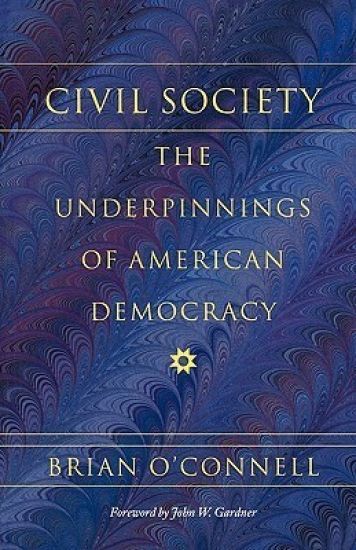
Civil Society

Civil Society

Brian O'Connell

Tufts University
1999
nidottu
Edward Gibbon said of the ancient Athenians, "when the freedom they wished for most was freedom from responsibility, then Athens ceased to be free."America is the longest-lived democracy in the history of the world, but there are signs that our own extraordinary system faces a similar peril. A vibrant civil society, characterized by active citizen participation, is essential to a strong democracy, argues Brian O'Connell, and in his new book he offers a citizen's guide to this concept of civil society -- what it is, how it functions, its limitations and potential, and most importantly, what individuals can do to nurture and support it. It is designed to provide practical understanding and foster action among community and national leaders, including mayors, civic leaders, school boards, public administrators, independent sector leaders, scholars, and teachers.Civil Society explores the idea and the reality of citizen participation, including government's essential responsibility to preserve the freedoms that allow and encourage it. It also traces the contemporary weakening of this tradition as a result of indifference, selfishness, loss of confidence in government, governmental limits on citizen participation, the influence of special interests on elected officials, separation between the haves and have nots, intolerance and incivility.Founding president of INDEPENDENT SECTOR and first chairman of CIVICUS: World Alliance for Citizen Participation, Brian O'Connell draws on his extensive practical experience of civil society to outline concrete actions that can improve the prospects of an enduring democracy, including:- increasing the role of education in preparing students for the rights and responsibilities of citizenship;- reorienting public administrators towards a greater receptivity of citizen involvement;- expanding research into and conducting regular evaluations of the state of civil society itself;- developing a concerted effort to share and apply what we already know about passing on to future generations the nation's traditions of service and generosity.In Civil Society, Brian O'Connell has created a practical handbook for elected officials, community leaders, and ordinary citizens who seek to nurture and expand this crucial dimension of a democratic society.
Jesus Does Stand-Up

Jesus Does Stand-Up

Brian O'Connell

Year of the Book Press
2024
pokkari
You've got front row seats and a backstage pass to the best new comedy show in town.When you look at the all-time great communicators, they all used comedy to some extent. With over two billion followers, it is not a stretch to imagine Jesus using stand-up comedy as a way to share his message with his platform.We're not making fun of the Bible. We're finding humor in the Bible.You're invited as Jesus Christ takes the stage
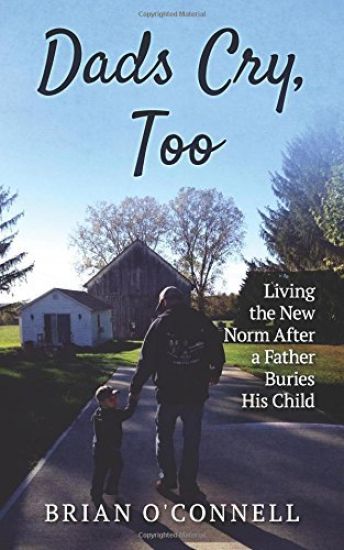
Dads Cry Too: Living the New Norm After a Father Buries His Child
Some life-altering moments happen in a flash, an impulse decision. Others are presented to us by the universe, fate, or God. Late at night on a winding road near Hinckley, Ohio, PJ O'Connell made a decision that would impact his friends for years to come, and change the lives of his mother, sister, and father forever. Turning grief and rage into acceptance and understanding is never easy. Unlike "widow" or "orphan," there are no words for a parent who has lost a child, and entrance to this terrible club is something no one requests. But life and death moments do not discriminate. "This is the story of how my son helped me become a better man."