Kirjojen hintavertailu. Mukana 11 627 220 kirjaa ja 12 kauppaa.

Kirjahaku

Etsi kirjoja tekijän nimen, kirjan nimen tai ISBN:n perusteella.

9 kirjaa tekijältä Brian O'Connor

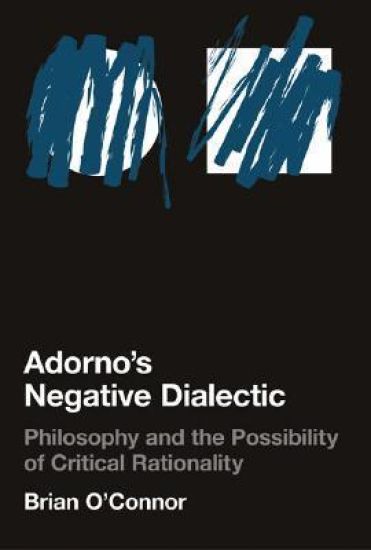
Adorno's Negative Dialectic

Adorno's Negative Dialectic

Brian O'Connor

MIT Press
2005
pokkari
The purely philosophical concerns of Theodor W. Adorno's negative dialectic would seem to be far removed from the concreteness of critical theory; Adorno's philosophy considers perhaps the most traditional subject of "pure" philosophy, the structure of experience, whereas critical theory examines specific aspects of society. But, as Brian O'Connor demonstrates in this highly original interpretation of Adorno's philosophy, the negative dialectic can be seen as the theoretical foundation of the reflexivity or critical rationality required by critical theory. Adorno, O'Connor argues, is committed to the "concretion" of philosophy: his thesis of nonidentity attempts to show that reality is not reducible to appearances. This lays the foundation for the applied "concrete" critique of appearances that is essential to the possibility of critical theory. To explicate the context in which Adorno's philosophy operates-the tradition of modern German philosophy, from Kant to Heidegger-O'Connor examines in detail the ideas of these philosophers as well as Adorno's self-defining differences with them. O'Connor discusses Georg LucA cs and the influence of his "protocritical theory" on Adorno's thought; the elements of Kant's and Hegel's German idealism appropriated by Adorno for his theory of subject-object mediation; the priority of the object and the agency of the subject in Adorno's epistemology; and Adorno's important critiques of Kant and the phenomenology of Heidegger and Husserl, critiques that both illuminate Adorno's key concepts and reveal his construction of critical theory through an engagement with the problems of philosophy.
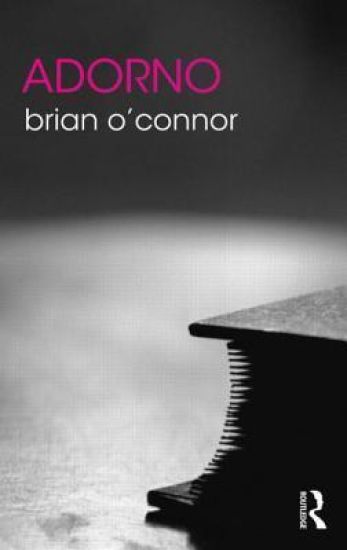
Adorno

Adorno

Brian O'Connor

Routledge
2012
sidottu
Theodor W. Adorno (1903-69) was one of the foremost philosophers and social theorists of the post-war period. Crucial to the development of Critical Theory, his highly original and distinctive but often difficult writings not only advance questions of fundamental philosophical significance, but provide deep-reaching analyses of literature, art, music sociology and political theory. In this comprehensive introduction, Brian O’Connor explains Adorno’s philosophy for those coming to his work for the first time, through original new lines of interpretation. Beginning with an overview of Adorno’s life and key philosophical views and influences, which contextualizes the intellectual environment in which he worked, O’Connor assesses the central elements of Adorno’s philosophy.He carefully examines Adorno’s distinctive style of analysis and shows how much of his work is a critical response to the various forms of identity thinking that have underpinned the destructive forces of modernity. He goes on to discuss the main areas of Adorno’s philosophy: social theory, the philosophy of experience, metaphysics, morality and aesthetics; setting out detailed accounts of Adorno’s notions of the dialectic of Enlightenment, reification, totality, mediation, identity, nonidentity, experience, negative dialectics, immanence, freedom, autonomy, imitation and autonomy in art. The final chapter considers Adorno’s philosophical legacy and importance today.Including a chronology, glossary, chapter summaries, and suggestions for further reading, Adorno is an ideal introduction to this demanding but important thinker, and essential reading for students of philosophy, literature, sociology and cultural studies.
Adorno

Adorno

Brian O'Connor

Routledge
2012
nidottu
Theodor W. Adorno (1903-69) was one of the foremost philosophers and social theorists of the post-war period. Crucial to the development of Critical Theory, his highly original and distinctive but often difficult writings not only advance questions of fundamental philosophical significance, but provide deep-reaching analyses of literature, art, music sociology and political theory. In this comprehensive introduction, Brian O’Connor explains Adorno’s philosophy for those coming to his work for the first time, through original new lines of interpretation. Beginning with an overview of Adorno’s life and key philosophical views and influences, which contextualizes the intellectual environment in which he worked, O’Connor assesses the central elements of Adorno’s philosophy.He carefully examines Adorno’s distinctive style of analysis and shows how much of his work is a critical response to the various forms of identity thinking that have underpinned the destructive forces of modernity. He goes on to discuss the main areas of Adorno’s philosophy: social theory, the philosophy of experience, metaphysics, morality and aesthetics; setting out detailed accounts of Adorno’s notions of the dialectic of Enlightenment, reification, totality, mediation, identity, nonidentity, experience, negative dialectics, immanence, freedom, autonomy, imitation and autonomy in art. The final chapter considers Adorno’s philosophical legacy and importance today.Including a chronology, glossary, chapter summaries, and suggestions for further reading, Adorno is an ideal introduction to this demanding but important thinker, and essential reading for students of philosophy, literature, sociology and cultural studies.
Idleness

Idleness

Brian O'Connor

PRINCETON UNIVERSITY PRESS
2018
sidottu
The first book to challenge modern philosophy’s case against idleness, revealing why the idle state is one of true freedomFor millennia, idleness and laziness have been regarded as vices. We're all expected to work to survive and get ahead, and devoting energy to anything but labor and self-improvement can seem like a luxury or a moral failure. Far from questioning this conventional wisdom, modern philosophers have worked hard to develop new reasons to denigrate idleness. In Idleness, the first book to challenge modern philosophy's portrayal of inactivity, Brian O'Connor argues that the case against an indifference to work and effort is flawed--and that idle aimlessness may instead allow for the highest form of freedom.Idleness explores how some of the most influential modern philosophers drew a direct connection between making the most of our humanity and avoiding laziness. Idleness was dismissed as contrary to the need people have to become autonomous and make whole, integrated beings of themselves (Kant); to be useful (Kant and Hegel); to accept communal norms (Hegel); to contribute to the social good by working (Marx); and to avoid boredom (Schopenhauer and de Beauvoir).O'Connor throws doubt on all these arguments, presenting a sympathetic vision of the inactive and unserious that draws on more productive ideas about idleness, from ancient Greece through Robert Burton's Anatomy of Melancholy, Schiller and Marcuse's thoughts about the importance of play, and recent critiques of the cult of work. A thought-provoking reconsideration of productivity for the twenty-first century, Idleness shows that, from now on, no theory of what it means to have a free mind can exclude idleness from the conversation.
Idleness

Idleness

Brian O'Connor

Princeton University Press
2020
pokkari
The case for idleness as freedom from usefulness, performance, and the opinion of othersFor millennia, idleness and laziness have been seen as vices. We're all expected to work to survive and get ahead, and devoting energy to anything but labor and self-improvement can seem like a luxury or a moral failure. Far from questioning this conventional wisdom, modern philosophers have entrenched it, viewing idleness as an obstacle to the ethical need people have to be autonomous, to be useful, to contribute to the social good, or simply to avoid boredom. In Idleness, the first book to challenge modern philosophy's portrayal of inactivity, Brian O'Connor argues that the case against an indifference to work and effort is flawed—and that idle aimlessness may instead allow for the highest form of freedom.
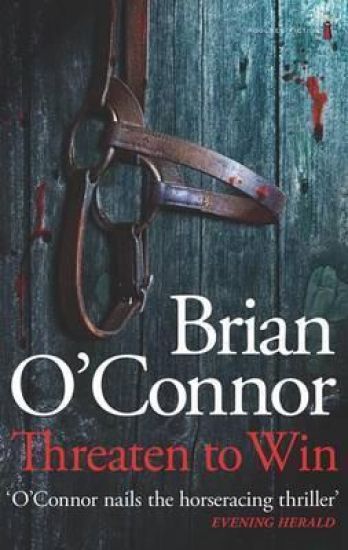
Threaten to Win

Threaten to Win

Brian O'Connor

Poolbeg Press Ltd
2012
nidottu
Lorcan Donovan is an ex-amateur rider in charge of the bloodstock empire of the billionaire American, Jake Weinberger. But behind the glamour of big-money horse deals and the world's great races, all is not as it seems. Jockey Mike Clancy is in the pocket of a ruthless Irish gangster and is stopping Weinberger's great Derby hope from winning. With millions gambled on the result, Donovan becomes a pawn in a vicious game of blackmail, kidnapping and corruption. The race to the finish line becomes a simple race to survive and the only one he can trust is himself.
Asthma

Asthma

Brian O'Connor

Birkhauser Verlag AG
1999
sidottu
This text features an analysis of the epidemiology of asthma in children and adults, the role of steroids in asthma management and new and novel asthma therapies. The book addresses clinicians and basic scientists with an interest in asthma epidemiology, steroids and future therapies.
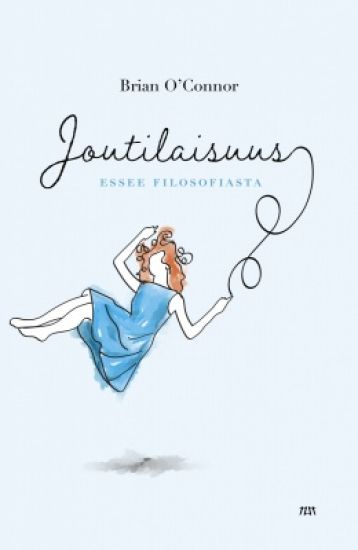
Joutilaisuus

Joutilaisuus

Brian O'Connor

Eurooppalaisen filosofian seura
2022
nidottu
Filosofit ovat taajaan asettuneet puurtamisen puolelle toimettomuutta vastaan. Brian O'Connor kuitenkin osoittaa, ettei touhukkuus ole niin alati arvokasta kuin luullaan: lunkistiottamisellekin on vankat filosofiset perusteet.