Kirjahaku
Etsi kirjoja tekijän nimen, kirjan nimen tai ISBN:n perusteella.
8 kirjaa tekijältä Brian O'Leary
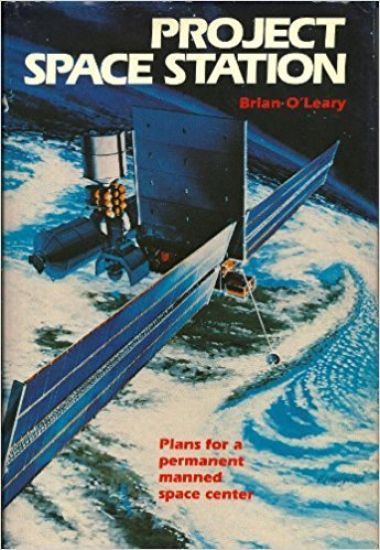
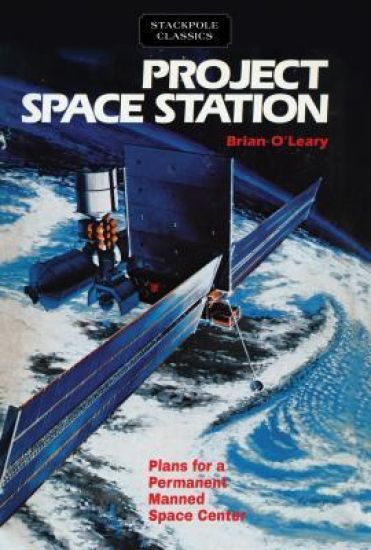
It’s happening now—plans are being formulated under the coordination of NASA to launch a permanent, manned space station by the year 1990. Studies surveying user requirements, system attributes, and architectural options have been conducted, and you’re on the top of these far-reaching considerations on the next big step taken within space! Now that the Shuttle and Spacelab are realities, NASA has set sights on a new horizon—a permanent, manned space station in the high frontier. The precedents have been set—Skylab hosted human visits for up to 84 days, and the Soviet’s Salyut was and is a temporary base for cosmonaut crew. The differences are the term and scope of space station living and the accomplishments that can be realized with a permanent site and continuous experimentation within its facilities. Brian O’Leary, writer, astrophysicist, and former astronaut, describes the “tinkermodules” that will be carried to the earth’s orbit to be assembled as a space station. His inside track information also lay

From 1837 the Poor Law Commissioners in the United Kingdom sanctioned temporary relief at workhouses for casual wayfarers, heralding a departure from historic attempts to control the wandering poor with criminal vagrancy legislation. The proposed book provides a detailed account of the development of the casual relief system while also addressing gaps in the historiography of Victorian and Edwardian vagrancy, such as the significant underestimation of women using the system, contemporary perceptions of the alleged threat, the influence of penal separation upon casual relief, and changes in the attributes of recipients that occurred during the period.
Among the many strands in Christian spirituality, one of the most esteemed bears the name of St Ignatius Loyola. In recent years Ignatian spirituality has experienced a resurgence and is attracting interest from across the range of Christian denominations and from every walk of life. There has been a widespread desire to learn more about Ignatius and his legacy, and many people have made the Spiritual Exercises in one of its many forms and have grown through the experience. Exploring Ignatian Spirituality is written to appeal, not only to those who are looking for an introduction to Ignatian spirituality, but also to those who have some acquaintance with the Ignatian tradition. It will draw its readers into an exploration of a rich Christian heritage that continues to live and breathe today.
Brian O’Leary, an Irish Jesuit, has been researching and writing on Ignatian spirituality since the 1970s. Over that period he has authored five books, the last of which (God Ever Greater, 2018) was a selection of his lectures and talks. His new offering, To Love and To Serve, is also a selection – this time of essays that have appeared in spirituality journals in a number of countries. Since these are not easily accessible, O’Leary made the decision to gather together the best of his work in this genre into one book, so making that work more widely available. The essays vary considerably in content, purpose, and style. Some are short and aimed at a popular readership, others tend to be more academic or written with practitioners of Ignatian spirituality in mind. All are eminently readable and display great clarity of style. Ignatian spirituality is most commonly associated with the Spiritual Exercises. Consequently these figure largely in O’Leary’s writings. However, the Exercises do not represent the totality of Ignatian spirituality and so there are a number of pieces on the Jesuit Constitutions – a spiritual classic that is surprisingly relevant outside its original context. The Constitutions are frequently quoted today in the context of spiritual formation and of leadership. And then there is spiritual direction – is there a specifically Ignatian model of this ministry? There are also intriguing questions around St. Ignatius Loyola himself, perhaps most of all around his mysticism. And what would such mysticism look like if lived out in the post-modern world? The range of topics is remarkable.
Interest in mysticism is increasing at a time when commitment to religious institutions is in decline. Mysticism, in the eyes of many, evokes the free workings of the Spirit, while churches as institutions evoke rigidity and control. That this is a distorted picture is somehow beside the point – perception often sways people more powerfully than reality. And reading the mystics, it is being discovered, benefits everyone, whether Church member or agnostic. Not too long ago Ignatius Loyola would not have appeared on a list of Christian mystics. He would have been described as a soldier-saint, the author of the Spiritual Exercises, the founder of the Society of Jesus (Jesuits), a skilful organizer whose principles of governance are still studied in schools of management. If his inner life were being spoken of, he would have been placed among the ascetics rather than the mystics. Even the Spiritual Exercises were given a predominantly ascetical interpretation. Today, all that is changed. Ignatius is recognised as a major mystic in the western Christian tradition. He is now given a place beside Teresa of Avila and John of the Cross. His other qualities and achievements are not downplayed as a result, but they are seen in a new light -- as flowing from the deep inner fountain that is his mystical relationship with God. The texts in which he speaks of these mystical experiences are given renewed attention – what happened at Loyola, Manresa, La Storta, and Rome. The Autobiography and Spiritual Diary, in particular, describe the events and their context, while in a more indirect way, the Spiritual Exercises are an invaluable source to be mined. In his new book, O’Leary offers a clear and accessible account of what we now know about Ignatius as a mystic. Drawing on his own familiarity with the sources, he opens up for us the inner life of Ignatius in so far as it can be known. He also hopes that the reader will resonate with something of what Ignatius is describing, thus making their reading truly transformative.