Kirjojen hintavertailu. Mukana 11 342 296 kirjaa ja 12 kauppaa.

Kirjahaku

Etsi kirjoja tekijän nimen, kirjan nimen tai ISBN:n perusteella.

7 kirjaa tekijältä Brian Patrick Mitchell

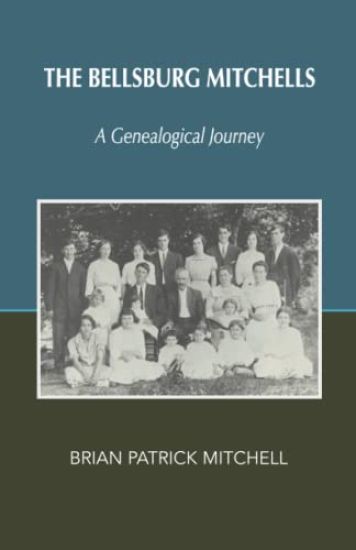
The Bellsburg Mitchells

The Bellsburg Mitchells

Brian Patrick Mitchell

Pontic Press
2021
pokkari
The Bellsburg Mitchells tells the story of a search for ancestors among the settlers of Tennessee's Dickson, Robertson, and Cheatham Counties and also among their predecessors in the American colonies and Western Europe. The search was begun by the author's father in 1986 and has been furthered by the author in this century with the aid of the Internet and the latest DNA technology, with surprising results. While focusing on the author's Mitchell forebears, the story includes names, dates, details, and trees for nearly ninety of the author's father's ancestors, both paternal and maternal. These ancestors connect the author to the Pilgrims who sailed with the Mayflower in 1620; to five of the original thirteen colonies-Massachusetts, Pennsylvania, Virginia, North Carolina, and South Carolina; to England, Scotland, Wales, Ireland, France, Germany, and Switzerland; and to one U.S. President, Richard Nixon. Thoroughly researched and expertly written, The Bellsburg Mitchells makes a complicated investigation comprehensible and enjoyable, entertaining readers on every page with interesting details of life long ago. Readers will learn a lot about American and European history and culture as well as about the methods and pitfalls of genealogical research. Family names: Absten, Baxter, Bell, Binckele, Binggeli, Binkley, Bonney, Burri, Compton, Dauge, Deane, Doane, Dozier, Durrant, Etheridge, Frey, Fry, Gibbs, Gregory, Haile, Harris, Hogan, Hon, Keuhlin, Meyer, Mitchell, Morris, Munden, Oberdorfer, Page, Penquite, Petree, Ralston, Rawlston, Ring, Rolestone, Rollestone, Rolston, Rolstone, Roulston, Schall, Schaub, Schmidt, Sharpe, Simmons, Simpkins, Smith, Speight, Spring, Stewart, Twenynge, Twining, Weissenbach, Zbindon, Zimmerman.
Eight Ways to Run the Country

Eight Ways to Run the Country

Brian Patrick Mitchell

Praeger Publishers Inc
2006
sidottu
Political partisans want you to choose only between Left and Right, Red and Blue, Us and Them. But the reality is that Americans are deeply divided in more ways than one, and the savvy voter, no less than the savvy politician, must make more sense of things. Eight Ways to Run the Country explains what conventional political theory cannot, offering a profoundly illuminating look at our political past and our present differences. Eight Ways doesn't do away with Left and Right, but it defines them in better terms and adds a whole new dimension to explain what Left and Right can't. It correctly pegs the ideological poles and thus brings easy-to-understand order to the dizzying diversity of political perspectives. It places neoconservatives into historical context, illuminating both what they share with other conservatives and how their differences have wrought a change in the character of the Right. It explains the recurring attempts to define an independent, non-ideological center. It provides the best definition of populism to be found. Finally, it relates the political heritage of the American Founders to the politics of today.
A Crown of Life: A Novel of the Great Persecution

A Crown of Life: A Novel of the Great Persecution

Brian Patrick Mitchell

Pontic Press
2014
nidottu
A Crown of Life is an epic romance spanning ten pivotal years in the history of the world, beginning in 303, when churches were closed, books were burned, and Christians were forbidden to assemble and later forced to prove their loyalty to the empire by offering a sacrifice to the government's gods. Thousands chose death instead, in what has been known since as the Great Persecution. Vividly written, with surprising twists, heart-pounding drama, a colorful cast of endearing characters good and bad, and profound insight into life's deepest mysteries, A Crown of Life is an inspiring tale of Christian faith in the face of death. You will cheer. You will weep. You will fall in love. You will learn why they believed and why they died.
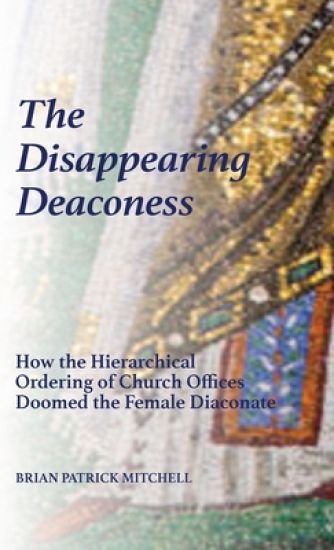
The Disappearing Deaconess

The Disappearing Deaconess

Brian Patrick Mitchell

Eremia
2021
sidottu
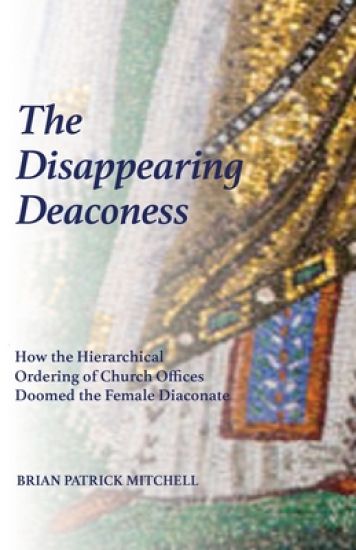
For all the recent research on deaconesses in the early Church, we still know very little about them, for two reasons: First, their duties were very limited, so there isn't much said about them in ancient texts. Second, their presence was also very limited: There weren't many of them anywhere outside Constantinople. In many places, there weren't any at all, and for a long time, there weren't any anywhere in the Orthodox Church. Why? The Disappearing Deaconess examines not just the evidence of their existence but also patristic teaching on male and female and the evolution of various ministries in the early Church to conclude that the office of deaconess was inherently problematic for early Christians because it appeared to elevate women over men in the hierarchy of the Church, contrary to Christian beliefs about both the natural order and the divine economy. The book first summarizes what is known about deaconesses in the early Church, weighing various explanations for their decline and disappearance, then it surveys early Christian teaching on gender to provide a broader context for understanding the female diaconate before tracing the hierarchical evolution of Church organization-from the many more or less informal offices mentioned in the New Testament to the emergence of the clerical orders we know today, with increasing emphasis on the distinction of clergy and laity leading to the concept of "hierarchy" as understood by the sixth-century writer known as Pseudo-Dionysius. The Disappearing Deaconess also includes two important appendices addressing proposals to reinstitute the order of deaconess and the larger issue of male and female as understood by the Orthodox Church. The first appendix is "A Public Statement on Orthodox Deaconesses by Concerned Clergy and Laity," signed by fifty-seven Orthodox clergymen and lay leaders and released January 15, 2018. The second appendix is the author's remarks at a conference on "Renewing the Male and Female Diaconate" organized by the St. Phoebe Center for the Deaconess, held in Irvine, California, on October 7, 2017. These remarks set forth a theological basis for the distinction of male and female as the key to understanding many gender issues, including the exclusion of women from clerical orders.
Origen's Revenge

Origen's Revenge

Brian Patrick Mitchell

Pickwick Publications
2021
pokkari
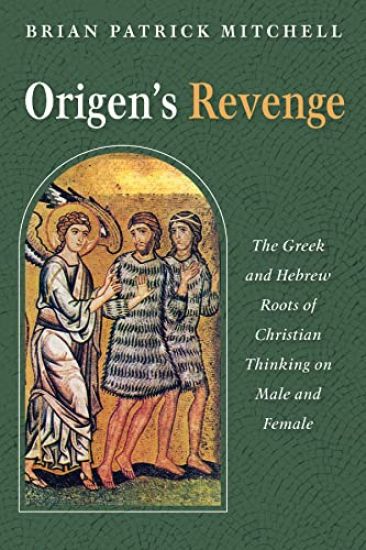
Is the difference of male and female to be ""completely shaken off"" so that men and women are no longer men and women but merely human beings? The great seventh-century saint Maximus the Confessor said yes, but such thinking is difficult if not impossible to reconcile with much else in Christian tradition that obliges men and women to live as either men or women. Origen's Revenge contrasts the two main sources of early Christian thinking on male and female: the generally negative view of Greek philosophy, limiting sexual distinction to the body and holding the body in low regard, and the much more positive view of Hebrew Scripture, in which sexual distinction and reproduction are both deemed naturally good and necessary for human existence. These two views account for much of the controversy in early Christianity concerning marriage and monasticism. They also still contribute to current controversies over sex roles, gender identity, and sexual ethics. Origen's Revenge also develops the more Hebrew line of early Christian thought to propose a new understanding of male and female with a firmer grounding in scripture, tradition, theology, and philosophy and with profound implications for all human relationships, whether social, political, or spiritual.
Origen's Revenge

Origen's Revenge

Brian Patrick Mitchell

Pickwick Publications
2021
sidottu
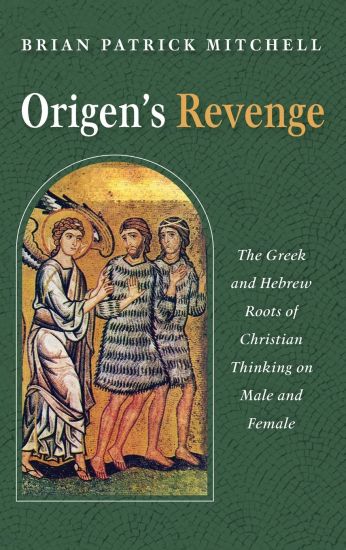
Is the difference of male and female to be ""completely shaken off"" so that men and women are no longer men and women but merely human beings? The great seventh-century saint Maximus the Confessor said yes, but such thinking is difficult if not impossible to reconcile with much else in Christian tradition that obliges men and women to live as either men or women. Origen's Revenge contrasts the two main sources of early Christian thinking on male and female: the generally negative view of Greek philosophy, limiting sexual distinction to the body and holding the body in low regard, and the much more positive view of Hebrew Scripture, in which sexual distinction and reproduction are both deemed naturally good and necessary for human existence. These two views account for much of the controversy in early Christianity concerning marriage and monasticism. They also still contribute to current controversies over sex roles, gender identity, and sexual ethics. Origen's Revenge also develops the more Hebrew line of early Christian thought to propose a new understanding of male and female with a firmer grounding in scripture, tradition, theology, and philosophy and with profound implications for all human relationships, whether social, political, or spiritual.