Kirjojen hintavertailu. Mukana 11 697 174 kirjaa ja 12 kauppaa.

Kirjahaku

Etsi kirjoja tekijän nimen, kirjan nimen tai ISBN:n perusteella.

5 kirjaa tekijältä Brian R. Cheffins

Company Law

Company Law

Brian R. Cheffins

Clarendon Press
1997
nidottu
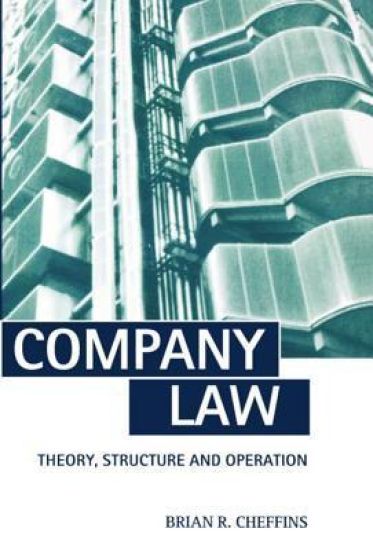
Company Law: Theory, Structure and Operation is the first United Kingdom law text to use economic theory to provide insights into corporate law, an approach widely adopted in the United States. In this book, Brian Cheffins discusses the inner workings of companies, examines the impact of the legal system on corporate activities, and evaluates the merits of governmental regulatory strategies. The book covers core areas of the undergraduate company law syllabus in a stimulating and theoretically enlightening fashion and addresses important company law topics such as: * limited liability of shareholders * shareholders' remedies * corporate governance (including the Cadbury Report) * executive pay (including the Greenbury Report) * the role of self-regulation in United Kingdom securities markets * the impact of European Union Directives on company law in the UK Brian Cheffins also examines in detail a number of questions which have not been fully explored elsewhere. These include: * What are the justifications for legal regulation of company affairs? * What are the drawbacks associated with government intervention? * How can one ascertain the optimal format for company law rules?
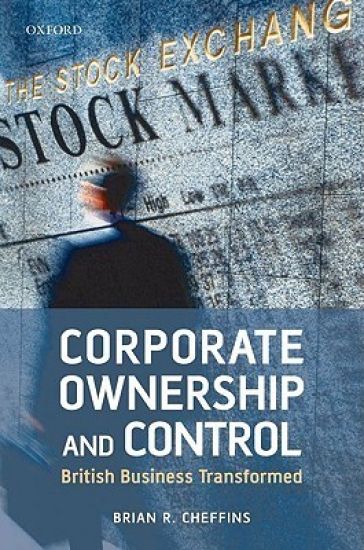
Corporate Ownership and Control

Corporate Ownership and Control

Brian R. Cheffins

Oxford University Press
2008
sidottu
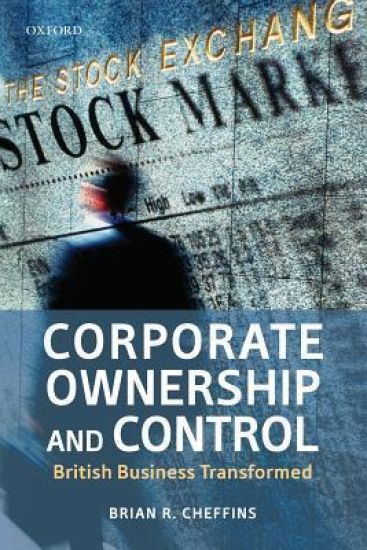
The typical British publicly traded company has widely dispersed share ownership and is run by professionally trained managers who collectively own an insufficiently large percentage of shares to dictate the outcome when shareholders vote. This separation of ownership and control has not only dictated the tenor of corporate governance debate in Britain but serves to distinguish the UK from most other countries. Existing theories fail to account adequately for arrangements in the UK. Corporate Ownership and Control accordingly seeks to explain why ownership became divorced from control in major British companies. The book is organized by reference to the 'sell side', which encompasses the factors that might prompt those owning large blocks of shares to exit or accept dilution of their stake, and the 'buy side', which involves factors that motivate investors to buy equities and deter the new shareholders from themselves exercising control. The book's approach is strongly historical in orientation, as it examines how matters evolved from the 17th century through to today. While a modern-style divorce of ownership and control can be traced back at least as far as mid-19th century railways, the 'outsider/arms-length' system of ownership and control that currently characterizes British corporate governance did not crystallize until the middle of the 20th century. The book brings the story right up to date by showing current arrangements are likely to be durable. Correspondingly, the insights the book offers should remain salient for some time to come.
Corporate Ownership and Control

Corporate Ownership and Control

Brian R. Cheffins

Oxford University Press
2010
nidottu
The typical British publicly traded company has widely dispersed share ownership and is run by professionally trained managers who collectively own an insufficiently large percentage of shares to dictate the outcome when shareholders vote. This separation of ownership and control has not only dictated the tenor of corporate governance debate in Britain but serves to distinguish the UK from most other countries. Existing theories fail to account adequately for arrangements in the UK. Corporate Ownership and Control accordingly seeks to explain why ownership became divorced from control in major British companies. The book is organized by reference to the 'sell side', which encompasses the factors that might prompt those owning large blocks of shares to exit or accept dilution of their stake, and the 'buy side', which involves factors that motivate investors to buy equities and deter the new shareholders from themselves exercising control. The book's approach is strongly historical in orientation, as it examines how matters evolved from the 17th century right through to today. While a modern-style divorce of ownership and control can be traced back at least as far as mid-19th century railways, the 'outsider/arms-length' system of ownership and control that currently characterizes British corporate governance did not crystallize until the middle of the 20th century. The book brings the story right up to date by showing current arrangements are likely to be durable. Correspondingly, the insights the book offers should remain salient for some time to come.
Advanced Introduction to Corporate Governance Law and Regulation

Advanced Introduction to Corporate Governance Law and Regulation

Brian R. Cheffins

EDWARD ELGAR PUBLISHING LTD
2024
sidottu
Elgar Advanced Introductions are stimulating and thoughtful introductions to major fields in the social sciences, business and law, expertly written by the world’s leading scholars. Designed to be accessible yet rigorous, they offer concise and lucid surveys of the substantive and policy issues associated with discrete subject areas.Advanced Introduction to Corporate Governance Law and Regulation provides a key overview of the facets of corporate law essential to the governance of publicly traded companies. Brian R. Cheffins deploys a robust theoretical and multijurisdictional framework to analyse the elements of corporate law crucial for governance, offering incisive insights into both corporate law and corporate governance. Chapters use an influential ‘contractarian’ approach to corporate law to explain the operation of public companies and consider company governance codes and systems; the role of the board and shareholders; and executive pay.Key Features:Offers multijurisdictional perspectives on corporate governance law Scrutinises the legal aspects of crucial corporate governance topicsEmploys a robust theoretical approach, building upon ‘contractarian’ analysis This authoritative Advanced Introduction will be a vital read for legal scholars and students of corporate governance and corporate law. It is also beneficial for professionals interested in further understanding the legal aspects of governance of public companies.
Advanced Introduction to Corporate Governance Law and Regulation

Advanced Introduction to Corporate Governance Law and Regulation

Brian R. Cheffins

EDWARD ELGAR PUBLISHING LTD
2024
nidottu
Elgar Advanced Introductions are stimulating and thoughtful introductions to major fields in the social sciences, business and law, expertly written by the world’s leading scholars. Designed to be accessible yet rigorous, they offer concise and lucid surveys of the substantive and policy issues associated with discrete subject areas.Advanced Introduction to Corporate Governance Law and Regulation provides a key overview of the facets of corporate law essential to the governance of publicly traded companies. Brian R. Cheffins deploys a robust theoretical and multijurisdictional framework to analyse the elements of corporate law crucial for governance, offering incisive insights into both corporate law and corporate governance. Chapters use an influential ‘contractarian’ approach to corporate law to explain the operation of public companies and consider company governance codes and systems; the role of the board and shareholders; and executive pay.Key Features:Offers multijurisdictional perspectives on corporate governance law Scrutinises the legal aspects of crucial corporate governance topicsEmploys a robust theoretical approach, building upon ‘contractarian’ analysis This authoritative Advanced Introduction will be a vital read for legal scholars and students of corporate governance and corporate law. It is also beneficial for professionals interested in further understanding the legal aspects of governance of public companies.