Kirjojen hintavertailu. Mukana 11 717 486 kirjaa ja 12 kauppaa.

Kirjahaku

Etsi kirjoja tekijän nimen, kirjan nimen tai ISBN:n perusteella.

8 kirjaa tekijältä Brian R. Dirck

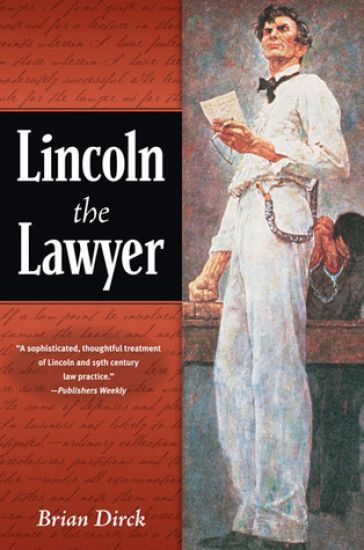
Lincoln the Lawyer

Lincoln the Lawyer

Brian R. Dirck

University of Illinois Press
2008
nidottu
This fascinating history explores Abraham Lincoln's legal career, investigating the origins of his desire to practice law, his legal education, his partnerships with John Stuart, Stephen Logan, and William Herndon, and the maturation of his far-flung practice in the 1840s and 1850s. Brian Dirck also examines Lincoln's clientele, how he charged his clients, and how he addressed judge and jury, as well as his views on legal ethics and the supposition that he never defended a client he knew to be guilty.
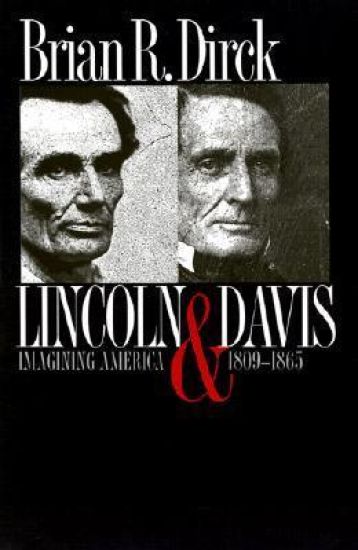
Lincoln and Davis

Lincoln and Davis

Brian R. Dirck

University Press of Kansas
2001
sidottu
Both Abraham Lincoln and Jefferson Davis are locked in the American psyche as iconic symbols of victory and defeat. The author contests that these images tend to obscure the larger visions that compelled both men to pursue their policies and actions, resulting in the American civil war.
Abraham Lincoln and White America

Abraham Lincoln and White America

Brian R. Dirck

University Press of Kansas
2012
sidottu
As “Savior of the Union” and the “Great Emancipator,” Abraham Lincoln has been lauded for his courage, wisdom, and moral fibre. Yet Frederick Douglass’s assertion that Lincoln was the “white man’s president” has been used by some detractors as proof of his fundamentally racist character. Viewed objectively, Lincoln was a white man’s president by virtue of his own whiteness and that of the culture that produced him. Until now, however, historians have rarely explored just what this means for our understanding of the man and his actions. Writing at the vanguard of “whiteness studies,” Brian Dirck considers Lincoln as a typical American white man of his time who bore the multiple assumptions, prejudices, and limitations of his own racial identity. He shows us a Lincoln less willing or able to transcend those limitations than his more heroic persona might suggest but also contends that Lincoln’s understanding and approach to racial bigotry was more enlightened than those of most of his white contemporaries. Blazing a new trail in Lincoln studies, Dirck reveals that Lincoln was well aware of and sympathetic to white fears, especially that of descending into “white trash,” a notion that gnawed at a man eager to distance himself from his own coarse origins. But he also shows that after Lincoln crossed the Rubicon of black emancipation, he continued to grow beyond such cultural constraints, as seen in his seven recorded encounters with non-whites. Dirck probes more deeply into what “white” meant in Lincoln’s time and what it meant to Lincoln himself, and from this perspective he proposes a new understanding of how Lincoln viewed whiteness as a distinct racial category that influenced his policies. As Dirck ably demonstrates, Lincoln rose far enough above the confines of his culture to accomplish deeds still worthy of our admiration, and he calls for a more critically informed admiration of Lincoln that allows us to celebrate his considerable accomplishments while simultaneously recognising his limitations. When Douglass observed that Lincoln was the white man’s president, he may not have intended it as a serious analytical category. But, as Dirck shows, perhaps we should do so—the better to understand not just the Lincoln presidency, but the man himself.
Abraham Lincoln and White America

Abraham Lincoln and White America

Brian R. Dirck

University Press of Kansas
2015
nidottu
As ""Savior of the Union"" and the ""Great Emancipator,"" Abraham Lincoln has been lauded for his courage, wisdom, and moral fiber. Yet Frederick Douglass's assertion that Lincoln was the ""white man's president"" has been used by some detractors as proof of his fundamentally racist character. Viewed objectively, Lincoln was a white man's president by virtue of his own whiteness and that of the culture that produced him. Until now, however, historians have rarely explored just what this means for our understanding of the man and his actions. Writing at the vanguard of ""whiteness studies,"" Brian Dirck considers Lincoln as a typical American white man of his time who bore the multiple assumptions, prejudices, and limitations of his own racial identity. He shows us a Lincoln less willing or able to transcend those limitations than his more heroic persona might suggest but also contends that Lincoln's understanding and approach to racial bigotry was more enlightened than those of most of his white contemporaries. Blazing a new trail in Lincoln studies, Dirck reveals that Lincoln was well aware of and sympathetic to white fears, especially that of descending into ""white trash,"" a notion that gnawed at a man eager to distance himself from his own coarse origins. But he also shows that after Lincoln crossed the Rubicon of black emancipation, he continued to grow beyond such cultural constraints, as seen in his seven recorded encounters with nonwhites. Dirck probes more deeply into what ""white"" meant in Lincoln's time and what it meant to Lincoln himself, and from this perspective he proposes a new understanding of how Lincoln viewed whiteness as a distinct racial category that influenced his policies. As Dirck ably demonstrates, Lincoln rose far enough above the confines of his culture to accomplish deeds still worthy of our admiration, and he calls for a more critically informed admiration of Lincoln that allows us to celebrate his considerable accomplishments while simultaneously recognizing his limitations. When Douglass observed that Lincoln was the white man's president, he may not have intended it as a serious analytical category. But, as Dirck shows, perhaps we should do so—the better to understand not just the Lincoln presidency, but the man himself.
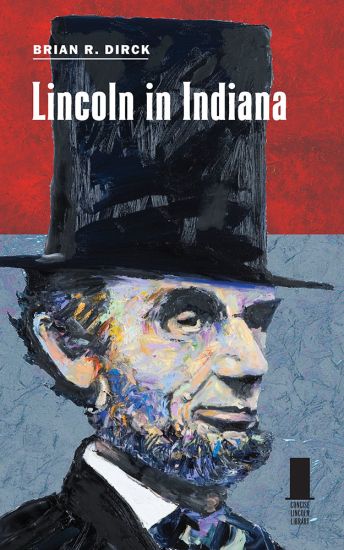
Lincoln in Indiana

Lincoln in Indiana

Brian R. Dirck

Southern Illinois University Press
2017
sidottu
Abraham Lincoln, born in Kentucky in 1809, moved with his parents, Thomas and Nancy Lincoln, and his older sister, Sarah, to the Pigeon Creek area of southern Indiana in 1816. There Lincoln spent more than a quarter of his life. It was in Indiana that he developed a complicated and often troubled relationship with his father, exhibited his now-famous penchant for self-education, and formed a restless ambition to rise above his origins. Although some questions about these years are unanswerable due to a scarcity of reliable sources, Brian R. Dirck’s fascinating account of Lincoln’s boyhood sets what is known about the relationships, values, and environment that fundamentally shaped Lincoln’s character within the context of frontier and farm life in early nineteenth-century midwestern America.Lincoln in Indiana tells the story of Lincoln’s life in Indiana, from his family’s arrival to their departure. Dirck explains the Lincoln family’s ancestry and how they and their relatives came to settle near Pigeon Creek. He shows how frontier families like the Lincolns created complex farms out of wooded areas, fashioned rough livelihoods, and developed tight-knit communities in the unforgiving Indiana wilderness. With evocative prose, he describes the youthful Lincoln’s relationship with members of his immediate and extended family. Dirck illuminates Thomas Lincoln by setting him into his era, revealing the concept of frontier manhood, and showing the increasingly strained relationship between father and son. He illustrates how pioneer women faced difficulties as he explores Nancy Lincoln’s work and her death from milk sickness; how Lincoln’s stepmother, Sarah Bush, fit into the family; and how Lincoln’s sister died in childbirth. Dirck examines Abraham’s education and reading habits, showing how a farming community could see him as lazy for preferring book learning over farmwork. While explaining how he was both similar to and different from his peers, Dirck includes stories of Lincoln’s occasional rash behavior toward those who offended him. As Lincoln grew up, his ambitions led him away from the family farm, and Dirck tells how Lincoln chafed at his father’s restrictions, why the Lincolns decided to leave Indiana in 1830, and how Lincoln eventually broke away from his family.In a triumph of research, Dirck cuts through the myths about Lincoln’s early life, and along the way he explores the social, cultural, and economic issues of early nineteenth-century Indiana. The result is a realistic portrait of the youthful Lincoln set against the backdrop of American frontier culture.
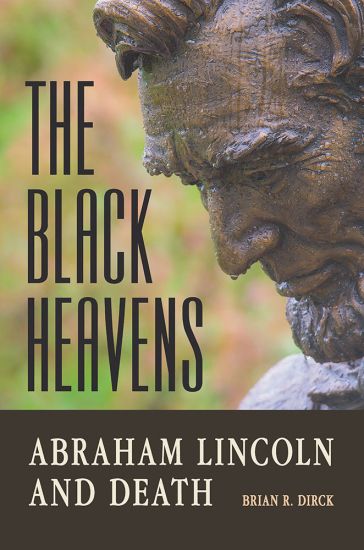
The Black Heavens

The Black Heavens

Brian R. Dirck

Southern Illinois University Press
2019
sidottu
From multiple personal tragedies to the terrible carnage of the Civil War, death might be alongside emancipation of the slaves and restoration of the Union as one of the great central truths of Abraham Lincoln’s life. Yet what little has been written specifically about Lincoln and death is insufficient, sentimentalized, or devoid of the rich historical literature about death and mourning during the nineteenth century. The Black Heavens: Abraham Lincoln and Death is the first in-depth account of how the sixteenth president responded to the riddles of mortality, undertook personal mourning, and coped with the extraordinary burden of sending hundreds of thousands of soldiers to be killed on battlefields.Going beyond the characterization of Lincoln as a melancholy, tragic figure, Brian R. Dirck investigates Lincoln’s frequent encounters with bereavement and sets his response to death and mourning within the social, cultural, and political context of his times. At a young age Lincoln saw the grim reality of lives cut short when he lost his mother and sister. Later, he was deeply affected by the deaths of two of his sons, three-year-old Eddy in 1850 and eleven-year-old Willie in 1862, as well as the combat deaths of close friends early in the war. Despite his own losses, Lincoln learned how to approach death in an emotionally detached manner, a survival skill he needed to cope with the reality of his presidency.Dirck shows how Lincoln gradually turned to his particular understanding of God’s will in his attempts to articulate the meaning of the atrocities of war to the American public, as showcased in his allusions to religious ideas in the Gettysburg Address and the Second Inaugural. Lincoln formed a unique approach to death: both intellectual and emotional, typical and yet atypical of his times. In showing how Lincoln understood and responded to death, both privately and publicly, Dirck paints a compelling portrait of a commander in chief who buried two sons and gave the orders that sent an unprecedented number of Americans to their deaths.
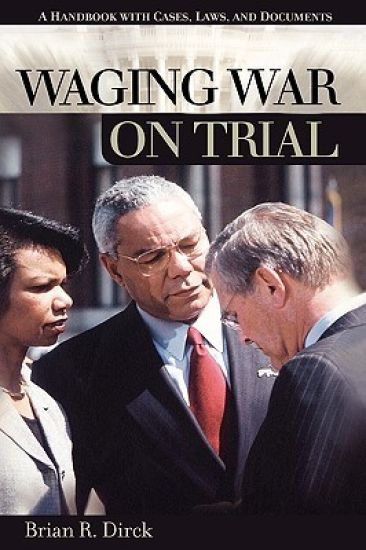
Waging War on Trial

Waging War on Trial

Brian R. Dirck

ABC-CLIO
2003
sidottu
A thought-provoking and engaging guide to the legal, moral, and political issues that arise when the United States goes to war.From the American Revolution to the Bush administration's new type of war on terror, Waging War on Trial views warfare from a legal, social, cultural, and political standpoint. Included are homefront debates during major hostilities, "brushfire" incidents, and how the events of September 11th have shaped our domestic wartime policy.The battle continues today as the President and Congress debate over who begins and ends military operations. Concerns about civil liberties, the draft, and internal security are as relevant today as during the Civil War. Questions arise on how dissenters and minorities are treated and if America can legally control the behavior of our soldiers. It's an intricate interplay between war and America's institutions.A–Z entries on key people such as Oliver Wendell Holmes and Senator Lee Overman, court decisions such as Abrams v. United States and Schenck v. United States, events such as the Gulf War, and issues such as the suspension of the writ of habeas corpusA chronology spanning the history of waging war from 1792, which saw the formation of the Society of Cincinnatus, through 2002, with the United States contemplating war with Iraq
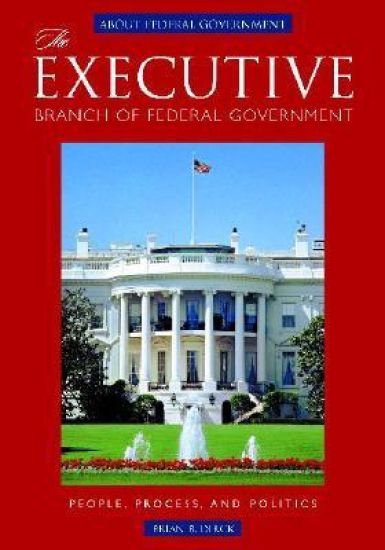
The Executive Branch of Federal Government
This volume gives students, professors, and the general public a single, comprehensive source on the key themes in the historical development of the presidency from America's founding era through the presidency of George W. Bush.How has the role of the president changed since George Washington? How does the president interact with Congress? The courts? The states? Other nations? These are just a few of the overarching questions addressed in this volume in ABC-CLIO’s About Federal Government set devoted to the president and the executive branch he manages.The Executive Branch of the Federal Government provides a brief history of the presidency, then looks at the constitutional powers of the office, the day-to-day functions of the federal bureaucracy, general elections, and presidential relationships with Congress and the courts. But perhaps most compelling are the insights into the officeholders themselves, the individuals who have served as president, each fashioning a term reflective of his own personality.Special features include edited and annotated texts of the presidents' inaugural addresses, a timeline of presidential elections and terms of office, and insightful portraits of all the major presidentsA reference section includes lists of executive branch personnel and legislation aimed at granting or curtailing presidential power