Kirjojen hintavertailu. Mukana 11 342 296 kirjaa ja 12 kauppaa.

Kirjahaku

Etsi kirjoja tekijän nimen, kirjan nimen tai ISBN:n perusteella.

6 kirjaa tekijältä Brian R. Kent

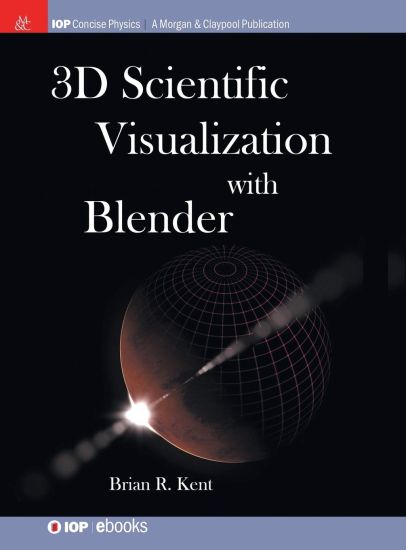
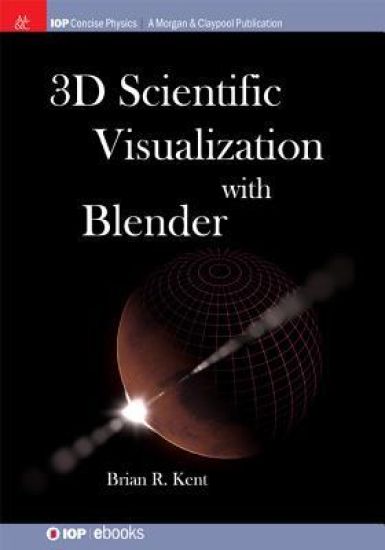
3D Scientific Visualization with Blender

3D Scientific Visualization with Blender

Brian R. Kent

Morgan and Claypool Life Sciences
2014
nidottu
This is the first book written on using Blender (an open-source visualization suite widely used in the entertainment and gaming industries) for scientific visualization. It is a practical and interesting introduction to Blender for understanding key parts of 3D rendering that pertain to the sciences via step-by-step guided tutorials. Any time you see an awesome science animation in the news, you will now know how to develop exciting visualizations and animations with your own data.3D Scientific Visualization with Blender takes you through an understanding of 3D graphics and modeling for different visualization scenarios in the physical sciences. This includes guides and tutorials for:Understanding and manipulating the interfaceGenerating 3D modelsUnderstanding lighting, animation, and camera controlScripting Data import with the Python APIThe agility of Blender and its well organized Python API make it an exciting and unique visualization suite every modern scientific/engineering workbench should include. Blender provides multiple scientific visualizations including: solid models/surfaces/rigid body simulations; data cubes/transparent/translucent rendering; 3D catalogs; N-body simulations; soft body simulations; surface/terrain maps; and phenomenological models. The possibilities for generating visualizations are considerable via this ever growing software package replete with a vast community of users providing support and ideas.
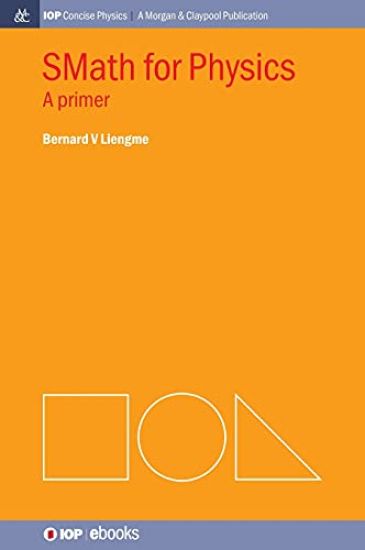
SMath for Physics

SMath for Physics

Brian R. Kent

Morgan and Claypool Life Sciences
2014
nidottu
SMath is a free mathematical notebook program similar to Mathcad that provides many options for studying and solving complex mathematical equations. This book is a primer providing a concise but thorough introduction that keeps physics at a fairly low level so readers can concentrate on understanding the SMath features.A wide range of topics are discussed in SMath for Physics including: using SMath as a simple scratch pad; getting familiar with the functions (polyroots, roots, and solve) to find the roots of the equations; making use of SMath’s built-in ability to perform symbolic and numerical differentiation and numerical integration; using the vector and matrix features; and performing linear and non-linear regression analysis.The student who learns how to use SMath can expect to get more accurate results compared to a paper-and-calculator method since input errors are more easily spotted on the SMath ‘page’. The skills acquired learning SMath will help the reader in future work — even if they end up working for a company that uses Mathcad since the interface and features are very similar.
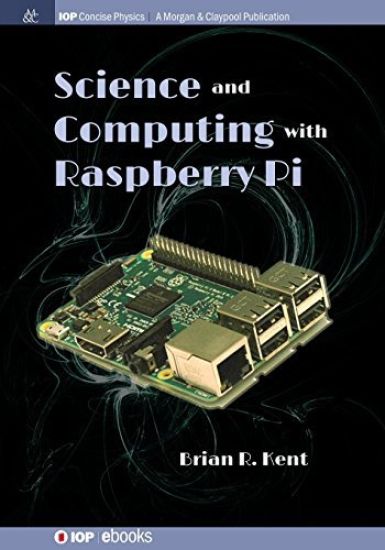
Science and Computing with Raspberry Pi

Science and Computing with Raspberry Pi

Brian R. Kent

Morgan Claypool Publishers
2018
nidottu
The world of single-board computing puts powerful coding tools in the palm of your hand. The portable Raspberry Pi computing platform with the power of Linux yields an exciting exploratory tool for beginning scientific computing.Science and Computing with Raspberry Pi takes the enterprising researcher, student, or hobbyist through explorations in a variety of computing exercises with the physical sciences. The book has tutorials and exercises for a wide range of scientific computing problems while guiding the user through:Configuring your Raspberry Pi and Linux operating systemUnderstanding the software requirements while using the Pi for scientific computingComputing exercises in physics, astronomy, chaos theory, and machine learning
Science and Computing with Raspberry Pi

Science and Computing with Raspberry Pi

Brian R. Kent

Morgan Claypool Publishers
2018
sidottu
The world of single-board computing puts powerful coding tools in the palm of your hand. The portable Raspberry Pi computing platform with the power of Linux yields an exciting exploratory tool for beginning scientific computing.Science and Computing with Raspberry Pi takes the enterprising researcher, student, or hobbyist through explorations in a variety of computing exercises with the physical sciences. The book has tutorials and exercises for a wide range of scientific computing problems while guiding the user through:Configuring your Raspberry Pi and Linux operating systemUnderstanding the software requirements while using the Pi for scientific computingComputing exercises in physics, astronomy, chaos theory, and machine learning