Kirjojen hintavertailu. Mukana 12 016 292 kirjaa ja 12 kauppaa.

Kirjahaku

Etsi kirjoja tekijän nimen, kirjan nimen tai ISBN:n perusteella.

9 kirjaa tekijältä Brian Regal

Radio

Radio

Brian Regal

Greenwood Press
2005
sidottu
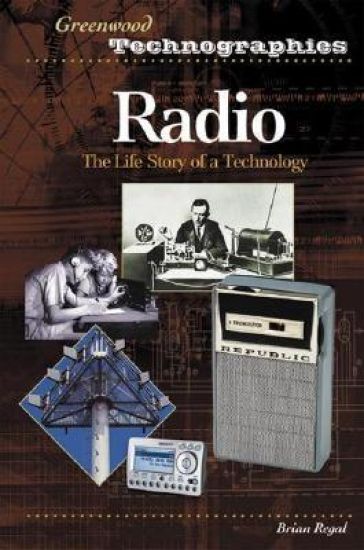
This book chronicles the history of radio as technology and as media. Radio grew from a clumsy, temperamental form of wireless telegraph to a system that is so ubiquitous and easy to use that it has disappeared to users as a technology and became part of the fabric of human existence. This biography charts the growth of the technical end of radio, starting with the history of electricity, and moving through the invention of vacuum tubes, the heterodyne, FM, transistors, and microchips. But the history of radio is not just wires and electricity—it's the story of strange characters, deep thinkers, visionary mystics, hyperactive minds, ambitious souls, power hungry demagogues, and utopian humanists; all of whom strove to make radio into what they thought it should be. In addition, Radio: The Life Story of a Technology looks at the technology as a cultural phenomenon, including the corporate aspects and history of the business of radio. In the middle of the 20th century people saw that radio could be used as an agent of social change, both good and bad. The transition of radio from private corporate device to public news provider to entertainment box back to political tool is at the heart of this work.
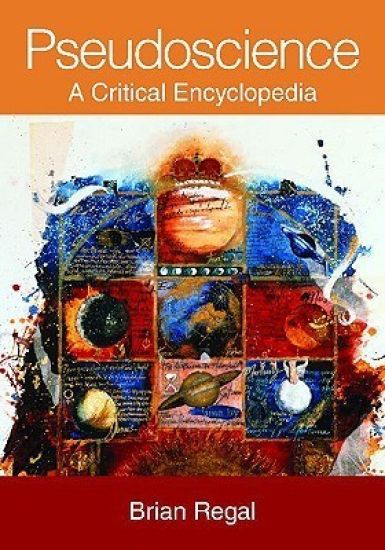
Pseudoscience

Pseudoscience

Brian Regal

Greenwood Press
2009
sidottu
More than just a collection of factual entries, this rich resource explores the difference between scientific and pseudoscientific pursuits in a way that spurs readers to ask questions and formulate answers.What makes science science? How do we tell which assertions, beliefs, and methods are scientifically sound, and which are not? Brian Regal’s authoritative, entertaining new reference, Pseudoscience: A Critical Encyclopedia gets at the heart of these questions by helping readers understand how the scientific method works, how to critically analyze all kinds of “evidence,” and how to sort through long-running myths and current pseudoscience controversies.Ranging from the dawn of history to the present and across world cultures, Pseudoscience uses a field of endless fascination as a means of driving home the importance of solid scientific reasoning. The encyclopedia spans the full spectrum of scientific and nonscientific pursuits, from chemistry, biology, psychology, and medicine to eugenics, religion, cryptozoology, the occult, and paranormal activities. Specific entries focus on general concepts of science, the lives of individuals, and claims of abilities. Throughout, these entries go beyond simply stating facts by constantly engaging readers in a discussion about the very nature of true scientific discovery.124 entries, from alchemy and alien abductions to yetis and zombies, that continually focus readers on the true nature of legitimate scientific methods and findingsAn introductory essay, drawing on the work of genuine historians and philosophers of science, offering guidelines for assessing topics in pseudoscience40 original line drawings created specifically for this reference, depicting key individuals, creatures, artifacts, and moreAn extensive bibliography of current and classic works on the full range of pseudoscience topics covered in this volumeAn index that makes it easy to locate specific topics, terms, names, and ideas
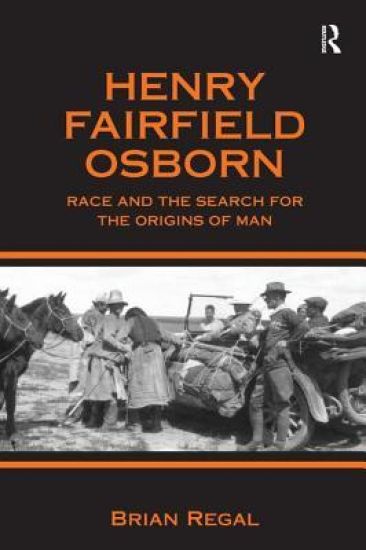
Henry Fairfield Osborn

Henry Fairfield Osborn

Brian Regal

Ashgate Publishing Limited
2002
sidottu
The discovery in the 1920s of a huge cache of fossils in the Gobi Desert fuelled a mania for dinosaurs that continues to the present. But the original goal of the expedition was to search for the origins of man. Henry Fairfield Osborn (1857-1935), director of the American Museum of Natural History, stood at the forefront of the debate over human evolution and the expedition aimed to prove his theory of human origins. Osborn rejected the idea of primate ancestry and constructed a non-Darwinian theory that the evolution of man was the long adventurous story of individuals and groups exerting personal will-power and inborn characteristics to achieve both biological and spiritual success. It is an idea that still echoes today. Study of Osborn’s thinking, however, has been obscured by the perception that racism influenced his theories. Brian Regal paints a different and more textured picture in this book - he shows that Osborn's views on race, like his political ideas, were motivated by his science, itself grounded in religious doctrine. His belief in the Central Asian origins of man, his role as an activist for eugenic reform and immigration controls, his support for Nordicism, his place in the 'New' versus 'Old' biology debate, his role in the Christian Fundamentalist controversy, the Scopes Monkey trial, and finally his construction of the 'Dawn Man' hypothesis - all stemmed from his desire to support his human evolution theory, and point the way to salvation. This biography charts Osborn's intellectual development, from its roots in the eclectic Christianity of his mother, through his student days with Arnold Guyot, James McCosh, and T.H. Huxley, to his mature work at the American Museum. It examines his trials and tribulations, friendships and conflicts, and the world in which he lived: all contributed to the construction of his theory. It is the dramatic story of a man holding onto ideas that for him represented the very meaning of life itself.
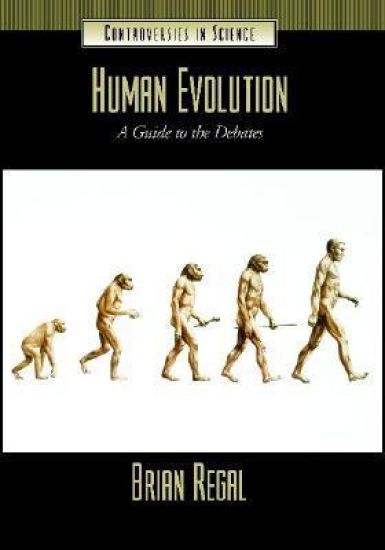
Human Evolution

Human Evolution

Brian Regal

ABC-CLIO
2004
sidottu
A fascinating and wide-ranging look at the controversies surrounding the search for the origins of the human species. Written for those new to the subject, Human Evolution: A Guide to the Debates presents the remarkable history of our understanding of human origins as it developed from the 1800s to the present. Most works on this topic focus narrowly on one individual, theory, or debate. In contrast, Human Evolution draws from a wide range of sources to offer a fully rounded portrait of the entire field. The chapters of the book follow a basic chronological order covering the issues, personalities, and discoveries that are central to the questions and controversies surrounding human evolution. The coverage draws from a wide range of associated topics and examines not only controversies of a religious nature but also those that have little to do with religion, allowing readers to weigh the information, come to their own conclusions, and even begin their own debates.
The Monster of Newark

The Monster of Newark

Brian Regal

CFZ PRESS
2024
pokkari
Born and raised in the Ironbound section of Newark, New Jersey, Dr. Regal has weathered tempests, had hairbreadth escapes, romanced femme fatales, carried secrets, and stole artifacts. He supped with Sciopodii and searched for werewolves in the Black Forrest. He saw terrible things and wonderful things, patrolled the Iron Curtain in a tank, and taught classes in America and China. He saw men launched into space, heard the bells chime at midnight, and heard the echo of the countdown to the end of the world. All of this is set against the backdrop of the Newark riots, the Cold War, 9/11, Covid, Trump, and the political and cultural upheavals of the late twentieth and early twenty-first centuries.His life was one long preparation for writing about monsters. An early traumatic encounter with a monster trying to get into his room sent him on a life long journey to find the secrets of the monstrous and the strange. He has travelled the world to libraries and archives to research his books and articles.This story chronicles the making of an historian of science and of monsters. As a child he was dyslexic and likely lead poisoned. A teacher once told him he was brain damaged. Dr. Regal's story is a journey from the streets of New Jersey to the hallowed halls of academia. It is a roller coaster ride through the ups and downs of the rollicking life of a scholar. It all began with the Monster of Newark.
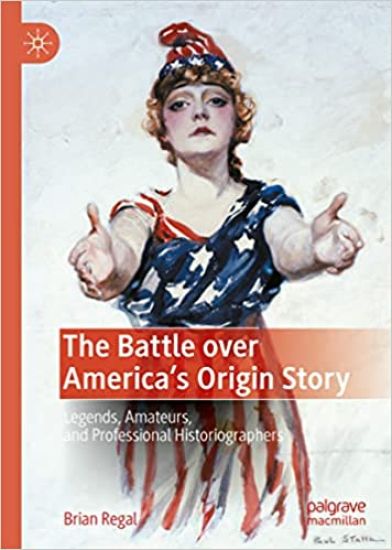
The Battle over America's Origin Story

The Battle over America's Origin Story

Brian Regal

Springer Nature Switzerland AG
2022
sidottu
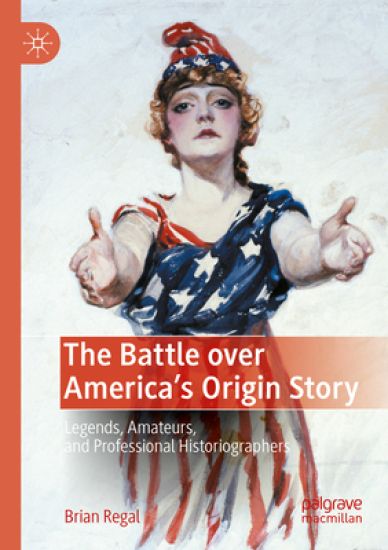
This book examines the legends of who ‘really’ discovered America. It argues that histories of America's origins were always based less on empirical evidence and more on social, political, and cultural wish fulfillment. Influenced by a complex interplay of Nativist hatred of immigrants and Aboriginal people, as well as distrust of academic scholarship, these legends ebbed and flowed with changing conditions in wider American society. The book focuses on the actions of a collection of quirky, obsessed amateur investigators who spent their lives trying to prove their various theories by promoting Welsh princes, Vikings, Chinese admirals, Neo-lithic Europeans, African explorers, and others who they say arrived centuries before Columbus. These myths acted as mitigating agencies for those who embraced them. Along with recent scholarship, this book makes extensive use of archival materials—some of which have never been employed before. It covers the period from the sixteenth century to the present. It brings together separate historiographic ideas to create a unified history rather than focusing on one particular legend as most books on the subject do. It shows how questions of who discovered America helped create the field of historical scholarship in this country. This book does not attempt to prove who discovered America, rather it tells the story of those who think they did.
The Battle over America's Origin Story

The Battle over America's Origin Story

Brian Regal

Springer Nature Switzerland AG
2023
nidottu
This book examines the legends of who ‘really’ discovered America. It argues that histories of America's origins were always based less on empirical evidence and more on social, political, and cultural wish fulfillment. Influenced by a complex interplay of Nativist hatred of immigrants and Aboriginal people, as well as distrust of academic scholarship, these legends ebbed and flowed with changing conditions in wider American society. The book focuses on the actions of a collection of quirky, obsessed amateur investigators who spent their lives trying to prove their various theories by promoting Welsh princes, Vikings, Chinese admirals, Neo-lithic Europeans, African explorers, and others who they say arrived centuries before Columbus. These myths acted as mitigating agencies for those who embraced them. Along with recent scholarship, this book makes extensive use of archival materials—some of which have never been employed before. It covers the period from the sixteenth century to the present. It brings together separate historiographic ideas to create a unified history rather than focusing on one particular legend as most books on the subject do. It shows how questions of who discovered America helped create the field of historical scholarship in this country. This book does not attempt to prove who discovered America, rather it tells the story of those who think they did.
Darwin and the Monsters

Darwin and the Monsters

Brian Regal

TAYLOR FRANCIS LTD
2026
nidottu
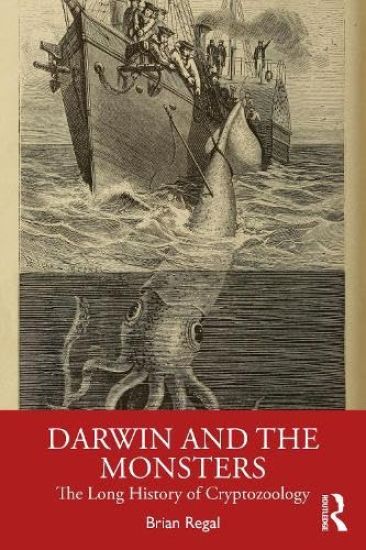
Regal tells the story of the engagement of philosophers, naturalists and scientists in what we now call cryptozoology, a much longer history than most appreciate. Most believe cryptozoology—the study of mysterious, unrecognized creatures—emerged in the twentieth century. But the fascination with monsters and the unknown stretches back to the ancient world. Long before the term was coined, philosophers and naturalists pondered the existence of cryptids, weaving them into the fabric of scientific curiosity. Challenging the notion that mainstream science has always dismissed cryptids, it reveals a rich history of inquiry and debate. Offering a groundbreaking examination of the long and complex history of cryptozoology, Regal situates it within broader debates about biology, evolution, and the limits of scientific knowledge. A fascinating read for students and scholars of cryptozoology, the history of biology and zoology, and science technology and society studies.
Darwin and the Monsters

Darwin and the Monsters

Brian Regal

TAYLOR FRANCIS LTD
2026
sidottu
Regal tells the story of the engagement of philosophers, naturalists and scientists in what we now call cryptozoology, a much longer history than most appreciate. Most believe cryptozoology—the study of mysterious, unrecognized creatures—emerged in the twentieth century. But the fascination with monsters and the unknown stretches back to the ancient world. Long before the term was coined, philosophers and naturalists pondered the existence of cryptids, weaving them into the fabric of scientific curiosity. Challenging the notion that mainstream science has always dismissed cryptids, it reveals a rich history of inquiry and debate. Offering a groundbreaking examination of the long and complex history of cryptozoology, Regal situates it within broader debates about biology, evolution, and the limits of scientific knowledge. A fascinating read for students and scholars of cryptozoology, the history of biology and zoology, and science technology and society studies.