
Kirjahaku
Etsi kirjoja tekijän nimen, kirjan nimen tai ISBN:n perusteella.
65 kirjaa tekijältä Brian Taylor

What is Vladimir Putin up to? This book shows how the mentality of Putin and his team - the code of Putinism - has shaped Russian politics over the past two decades. It explains not only the thoughts and ideas that motivate Putin's decisions, but also the set of emotions and habits that influence how Putin and his close allies view the world. The code of Putinism has powerfully shaped the nature of Russia's political system, its economy, and its foreign policy. Taylor draws on a large number of interviews, the speeches of Putin and other top officials, and the Russian media to analyze the mentality of Team Putin. Key features of Russian politics today -- such as authoritarianism, Putin's reliance on a small group of loyal friends and associates, state domination of the economy, and an assertive foreign policy - are traced to the code of Putinism. Key ideas of the code include conservatism, anti-Americanism, and the importance of a state that is powerful both at home and abroad. Dominant habits of Putin and his associates include control, order, and loyalty. Important feelings driving Russia's rulers include the need for respect, resentment about lost status and mistreatment by the West, and vulnerability. While some observers portray Putin as either a cold-blooded pragmatist or a strident Russian nationalist, Taylor provides a more nuanced and compelling interpretation of Putin's motives and actions. The Code of Putinism also shows how Putin's choices, guided by this mentality, have led to a Russia that is misruled at home and punching above its weight abroad.

What is Vladimir Putin up to? This book shows how the mentality of Putin and his team - the code of Putinism - has shaped Russian politics over the past two decades. It explains not only the thoughts and ideas that motivate Putin's decisions, but also the set of emotions and habits that influence how Putin and his close allies view the world. The code of Putinism has powerfully shaped the nature of Russia's political system, its economy, and its foreign policy. Taylor draws on a large number of interviews, the speeches of Putin and other top officials, and the Russian media to analyze the mentality of Team Putin. Key features of Russian politics today -- such as authoritarianism, Putin's reliance on a small group of loyal friends and associates, state domination of the economy, and an assertive foreign policy - are traced to the code of Putinism. Key ideas of the code include conservatism, anti-Americanism, and the importance of a state that is powerful both at home and abroad. Dominant habits of Putin and his associates include control, order, and loyalty. Important feelings driving Russia's rulers include the need for respect, resentment about lost status and mistreatment by the West, and vulnerability. While some observers portray Putin as either a cold-blooded pragmatist or a strident Russian nationalist, Taylor provides a more nuanced and compelling interpretation of Putin's motives and actions. The Code of Putinism also shows how Putin's choices, guided by this mentality, have led to a Russia that is misruled at home and punching above its weight abroad.

A translation and analysis of the Five Buddhist Hindrances which are obstacles to the practice of the Path which leads to the end of Suffering and rebirth in the Sangsara and to Nibbana.

The aim of Buddhist Meditation is the realisation of Nibb
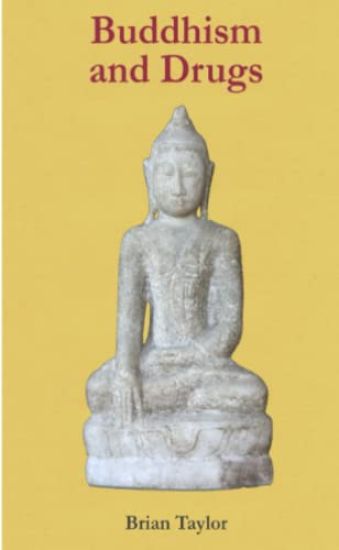
Drugs are substances that lead men to carelessness about their own bodies. These become sick and degenerate. Judgement is impaired and men make mistakes in their work, their driving, their relationships wih others. Their families and dependents too are affected by the errors of judgement which result from their carelessness. The Buddha pinpoints that it is the carelessness resulting from taking drugs that causes errors in our thinking and behaviour. This carelessness is avoided if the cause, the drugs themselves are given up. (14 pages)

Responding to Men in Crisis is based on new research looking at gendered assumptions about rationality and men's mental health. It looks at postmodern theory in relation to masculinities and madness, and discusses key contemporary debates in political uses of risk, dangerousness and so on. The author relates this to a discussion of current policy and practice responses to men within the mental health system. It offers the reader a theoretical exploration of a topically and politically sensitive issues and is relevant to service user involvement and survivor movements, making it essential reading for academics and students of sociology and allied disciplines.

Responding to Men in Crisis is based on new research looking at gendered assumptions about rationality and men's mental health. It looks at postmodern theory in relation to masculinities and madness, and discusses key contemporary debates in political uses of risk, dangerousness and so on. The author relates this to a discussion of current policy and practice responses to men within the mental health system. It offers the reader a theoretical exploration of a topically and politically sensitive issues and is relevant to service user involvement and survivor movements, making it essential reading for academics and students of sociology and allied disciplines.

Forrest Reid's books were never commercial successes, and many have fallen out of print. Yet he has been called 'the first Ulster novelist of European status', and he continues to attract a small and loyal audience. Apart from three years at Cambridge, he lived in Belfast from his birth in 1875 till his death in 1947. He cared little for literary coteries, preferring that a small circle of friends, amongst whom he numbered E. M. Forster and Walter de la Mare, should visit him in his quiet, bachelor home in the suburbs. However, the richness of his imaginative life stands in stark contrast to this apparent provincial obscurity. Reid was obsessed with boyhood. He loved boys, wrote about them and wanted to write about nothing else. Throughout his work the recurrent theme is childhood and the loss of its complicated innocence. This book, first published in 1980, was the first study of Reid for twenty-five years.

Chasing philosophers through the ages, following our own ideas about the self, to dismantle both himself and modernity, the author brings in this tiny work, with candour, wisdom and depth, a dismantling of thought, a critique of the species, a pathway to virtue. "We are not talking about God here, nor even the grand scheme of society, we wonder about ourselves. By realizing when someone or something asks us to believe in it, in its intention, to create some reality out of an idea, we can begin to wonder about the value of following the rule." "If modernity is the cause of complexity and systemic complexity is the cause of the rampant ineptitude that keeps rearing its ugly head, and we, in our infinite confusion, attempt only to counter this problem by adding further complexity, are we not just denying there is even a problem?" For sample chapters visit www.anti-socialengineering.com

A semi-biographical account and a research analysis of current voting trends. With a look back at the 2008 Presidential Election. Information about the three major political parties of the United States.

This important book provides an invaluable guide to the establishment of Scotland's Parliament. First published in 1999, this revised and updated edition follows the road to devolution - with fresh detail of the obstacles which stood in the way. In a separate, companion book, Scotland's Parliament: The Story So Far Brian Taylor analyses how the Scottish Parliament has worked in practice. With his unique insight, gained in twenty-five years of covering Scottish politics as a journalist, Taylor offers an analysis of the background to the most monumental political change in Scotland since the Union. In this book, Taylor examines the popular motivation for devolution - and traces the practical steps which led to the establishment of Scotland's new Parliament. In addition, he provides a challenging assessment of Scotland's political future: tackling the issue of whether devolution will content the Scots. There is substantial analytical coverage of the Referendum, the Scotland Act and the establishment of the Parliament, following the elections in May 1999. Written in an entertaining and accessible style, this book is ideal for all those requiring an insight into the underlying issues which drive Scotland's new politics.



Collected from the works of philosophy and social criticism of Brian C. Taylor from 2006 to 2013, this anthology contains everything of value written so far. This collection also has unpublished works formerly unavailable online or in book form.
"Between fear & love is hope." Cole is a powerful young psychic, unknowingly involved in a conspiracy to end a mental war with a mysterious consciousness, taking place within a drug-induced dream. Last Human Being is a science fiction mystery, written and presented as a novella for a film. Praise for Last Human Being: English Professor and Author of Forge, Kevin Macpherson Eckhoff has said, "Fast and shadowy, Last Human Being pits instinct against philosophy. This book, part somnambulist allegory, part speculative psychosomatic thriller, renders shifting dream-scapes in which impassioned characters confront not only one another's fears, but also the haunting vacuity of their own interiors. Fans of MTV's original Aeon Flux series or George Lucas's THX 1138 will easily be consumed by the ink-whether electric or chemical-within Brian Taylor's first novella." For more information please visit www.lasthumanbeing.com

Clusters of English "unofficial" roses have climbed the fence to face the sun. Each in its crimson finery supposes that it, alone, is the only one. Compliment inflates. Blame deflates. Truth understates. When the Giant Progress invented the wheel, he drove around running over everyone's babies until they begged him to invent the road. FOOL MOON Abolishing the moon by draining the pool is an occupation for the fool. Look at her! Sitting like a Question Mark, halfway between please and no thank you. I asked my Mother, "What shall I be? Will I be famous? Will I be rich?" Here's what she said to me: "You will be a Big Issue Seller! Just like your father before you!" THATCHER Ethics detached from intelligence (a dangerous thing in woman). She abused her education by sunbathing her ego in every passing neon light. DEIST AND ATHEIST Be careful when you stop believing in God. He may stop believing in you.