Kirjojen hintavertailu. Mukana 11 627 220 kirjaa ja 12 kauppaa.

Kirjahaku

Etsi kirjoja tekijän nimen, kirjan nimen tai ISBN:n perusteella.

4 kirjaa tekijältä Bridget M. Hutter

Compliance: Regulation and Environment

Compliance: Regulation and Environment

Bridget M. Hutter

Clarendon Press
1997
sidottu
Regulation touches upon areas of vital importance to our lives and the economy, but it is still very much a 'grey area' of criminal law and social control, subject to very little academic scrutiny. This book combines an analysis of the broader structural factors which influence regulation and its definition at the everyday level with a discussion of empirical data, to reach a thorough understanding of the subject. The empirical data focuses on the regulation of economic activities in the areas of occupational health and safety and the environment in England and Wales in the 1980s.
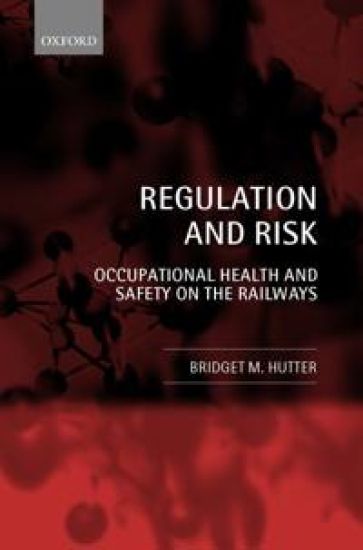
Regulation and Risk

Regulation and Risk

Bridget M. Hutter

Oxford University Press
2001
sidottu
Regulating the risks associated with economic activities is a feature of modern societies and one in which the state increasingly seeks to co-opt the regulatory powers of corporations. This book examines the impact of a system of enforced self-regulation on the corporate life of British Railways. It uses this case study of occupational health and safety regulation to focus on broader theoretical and empirical discussions of regulation, risk, and corporate activities. A central organizing perspective of this book is that regulation is a form of risk management. It examines how workplace risks in modern societies are managed by businesses and the individuals within them and considers what influence the law has in this. The tensions between the constitutive and controlling aspects of regulatory law are analysed with reference to in-depth empirical data about corporate and individual compliance and non-compliance. Related concerns about the social control of organizational and economic life are explored and their policy and theoretical implications examined. These issues are especially significant following the privatization of Britain's rail network and the introduction of regulatory systems which are highly reliant on industry self-regulation. More generally, their significance is highlighted by the increasing popularity of risk-based approaches to corporate governance. The book argues that if regulation is to be an effective way of managing risk we need to pay more attention to the assumptions we make about corporate life and be more prepared to use the full range of regulatory sources and tools available to us.
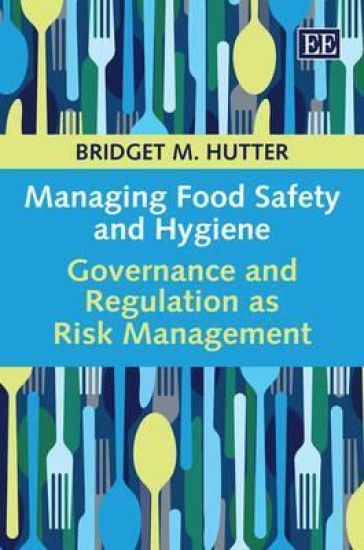
Managing Food Safety and Hygiene

Managing Food Safety and Hygiene

Bridget M. Hutter

Edward Elgar Publishing Ltd
2011
sidottu
Food safety and hygiene is of critical importance to us all, yet, as periodic food crises in various countries each year show, we are all dependent on others in business and public regulation to ensure that the food we consume in the retailing and hospitality sectors is safe. Bridget Hutter considers the understandings of risk and regulation held by those in business and considers the compliance pressures on managers and owners, and how these relate to understandings of risk and uncertainty. Using data from an in-depth case study of the food retail and catering sectors in the UK, the research investigates how business risk management practices are influenced by external pressures such as state regulation, consumers, insurance and the media and by pressures within business. The argument of the book is that food businesses in the UK are generally motivated to manage risk. They realize that good risk management aligns with good business practice. However, there are challenges for an industry that is highly segmented in terms of risk management capacity. The findings have implications for contemporary risk regulation in the increasingly number of countries that rely on self-regulation. Managing Food Safety and Hygiene will prove invaluable for academic researchers and students in risk regulation studies, business studies, food studies, organizational studies, social psychology, socio-legal studies, sociology, management, public administration and political science. In addition, the book will also appeal to practitioners specifically to senior policy makers, regulators and business risk managers charged with managing risk in diverse organizational settings, and across different functional jurisdictions.
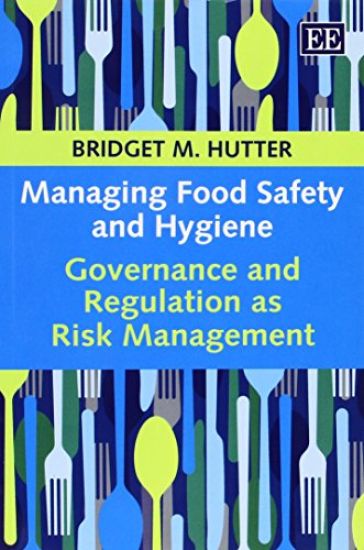
Managing Food Safety and Hygiene

Managing Food Safety and Hygiene

Bridget M. Hutter

Edward Elgar Publishing Ltd
2013
nidottu
Food safety and hygiene is of critical importance to us all, yet, as periodic food crises in various countries each year show, we are all dependent on others in business and public regulation to ensure that the food we consume in the retailing and hospitality sectors is safe. Bridget Hutter considers the understandings of risk and regulation held by those in business and considers the compliance pressures on managers and owners, and how these relate to understandings of risk and uncertainty. Using data from an in-depth case study of the food retail and catering sectors in the UK, the research investigates how business risk management practices are influenced by external pressures such as state regulation, consumers, insurance and the media and by pressures within business. The argument of the book is that food businesses in the UK are generally motivated to manage risk. They realize that good risk management aligns with good business practice. However, there are challenges for an industry that is highly segmented in terms of risk management capacity. The findings have implications for contemporary risk regulation in the increasingly number of countries that rely on self-regulation. Managing Food Safety and Hygiene will prove invaluable for academic researchers and students in risk regulation studies, business studies, food studies, organizational studies, social psychology, socio-legal studies, sociology, management, public administration and political science. In addition, the book will also appeal to practitioners specifically to senior policy makers, regulators and business risk managers charged with managing risk in diverse organizational settings, and across different functional jurisdictions.