Kirjojen hintavertailu. Mukana 11 632 922 kirjaa ja 12 kauppaa.

Kirjahaku

Etsi kirjoja tekijän nimen, kirjan nimen tai ISBN:n perusteella.

3 kirjaa tekijältä Brigitte Le Normand

Designing Tito's Capital

Designing Tito's Capital

Brigitte Le Normand

University of Pittsburgh Press
2014
nidottu
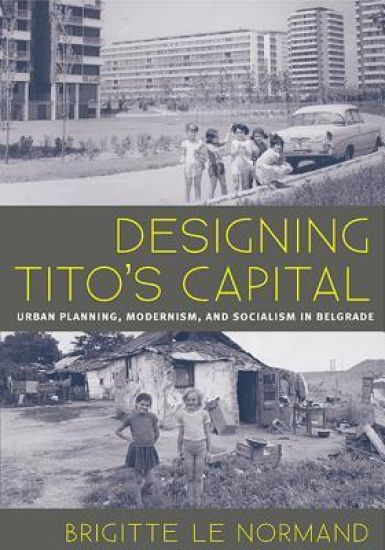
The devastation of World War II left the Yugoslavian capital of Belgrade in ruins. Communist Party leader Josip Broz Tito saw this as a golden opportunity to recreate the city through his own vision of socialism. In Designing Tito’s Capital, Brigitte Le Normand analyzes the unprecedented planning process called for by the new leader, and the determination of planners to create an urban environment that would benefit all citizens.Led first by architect Nikola Dobrovic and later by Miloš Somborski, planners blended the predominant school of European modernism and the socialist principles of efficient construction and space usage to produce a model for housing, green space, and working environments for the masses. A major influence was modernist Le Corbusier and his Athens Charter published in 1943, which called for the total reconstruction of European cities, transforming them into compact and verdant vertical cities unfettered by slumlords, private interests, and traffic congestion. As Yugoslavia transitioned toward self-management and market socialism, the functionalist district of New Belgrade and its modern living were lauded as the model city of socialist man.The glow of the utopian ideal would fade by the 1960s, when market socialism had raised expectations for living standards and the government was eager for inhabitants to finance their own housing. By 1972, a new master plan emerged under Aleksandar Ðordevic, fashioned with the assistance of American experts. Espousing current theories about systems and rational process planning and using cutting edge computer technology, the new plan left behind the dream for a functionalist Belgrade and instead focused on managing growth trends. While the public resisted aspects of the new planning approach that seemed contrary to socialist values, it embraced the idea of a decentralized city connected by mass transit.Through extensive archival research and personal interviews with participants in the planning process, Le Normand’s comprehensive study documents the evolution of ‘New Belgrade’ and its adoption and ultimate rejection of modernist principles, while also situating it within larger continental and global contexts of politics, economics, and urban planning.
Citizens Without Borders

Citizens Without Borders

Brigitte Le Normand

University of Toronto Press
2021
sidottu
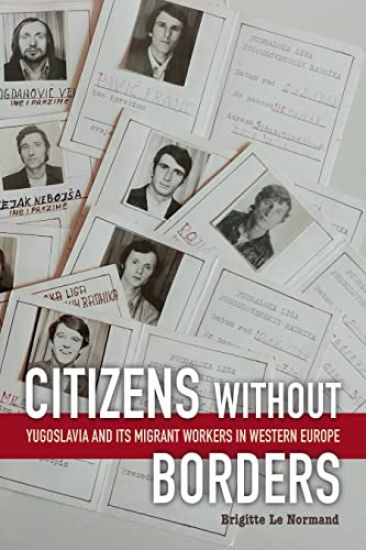
Among Eastern Europe’s postwar socialist states, Yugoslavia was unique in allowing its citizens to seek work abroad in Western Europe’s liberal democracies. This book charts the evolution of the relationship between Yugoslavia and its labour migrants who left to work in Western Europe in the 1960s and 1970s. It examines how migrants were perceived by policy-makers and social scientists and how they were portrayed in popular culture, including radio, newspapers, and cinema. Created to nurture ties with migrants and their children, state cultural, educational, and informational programs were a way of continuing to govern across international borders. These programs relied heavily on the promotion of the idea of homeland. Le Normand examines the many ways in which migrants responded to these efforts and how they perceived their own relationship to the homeland, based on their migration experiences. Citizens without Borders shows how, in their efforts to win over migrant workers, the different levels of government – federal, republic, and local – promoted sometimes widely divergent notions of belonging, grounded in different concepts of "home."
Citizens Without Borders

Citizens Without Borders

Brigitte Le Normand

University of Toronto Press
2021
pokkari
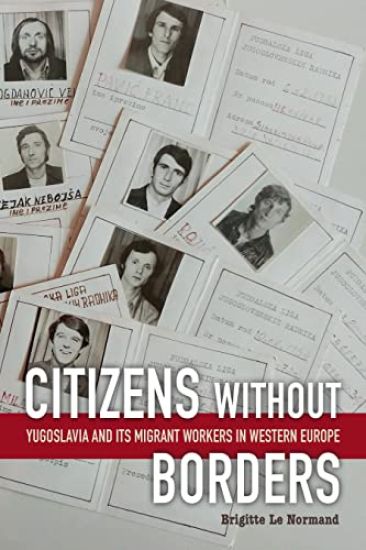
Among Eastern Europe’s postwar socialist states, Yugoslavia was unique in allowing its citizens to seek work abroad in Western Europe’s liberal democracies. This book charts the evolution of the relationship between Yugoslavia and its labour migrants who left to work in Western Europe in the 1960s and 1970s. It examines how migrants were perceived by policy-makers and social scientists and how they were portrayed in popular culture, including radio, newspapers, and cinema. Created to nurture ties with migrants and their children, state cultural, educational, and informational programs were a way of continuing to govern across international borders. These programs relied heavily on the promotion of the idea of homeland. Le Normand examines the many ways in which migrants responded to these efforts and how they perceived their own relationship to the homeland, based on their migration experiences. Citizens without Borders shows how, in their efforts to win over migrant workers, the different levels of government – federal, republic, and local – promoted sometimes widely divergent notions of belonging, grounded in different concepts of "home."