Kirjojen hintavertailu. Mukana 11 342 296 kirjaa ja 12 kauppaa.

Kirjahaku

Etsi kirjoja tekijän nimen, kirjan nimen tai ISBN:n perusteella.

7 kirjaa tekijältä Brooke Larson

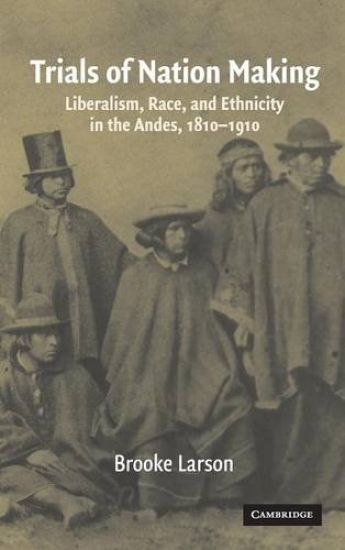
Trials of Nation Making

Trials of Nation Making

Brooke Larson

Cambridge University Press
2004
sidottu
This book offers the first interpretive synthesis of the history of Andean peasants and the challenges of nation-making in the four republics of Colombia, Ecuador, Peru, and Bolivia during the turbulent nineteenth century. Nowhere in Latin America were postcolonial transitions more vexed or violent than in the Andes, where communal indigenous roots grew deep and where the 'Indian problem' seemed so daunting to liberalizing states. Brooke Larson paints vivid portraits of Creole ruling élites and native peasantries engaged in ongoing political and moral battles over the rightful place of the Indian majorities in these emerging nation-states. In this story, indigenous people emerge as crucial protagonists through their prosaic struggles for land, community, and 'ethnic' identity, as well as in the upheaval of war, rebellion, and repression in rural society. This book raises broader issues about the interplay of liberalism, racism, and ethnicity in the formation of exclusionary 'republics without citizens'.
Trials of Nation Making

Trials of Nation Making

Brooke Larson

Cambridge University Press
2004
pokkari
This book offers the first interpretive synthesis of the history of Andean peasants and the challenges of nation-making in the four republics of Colombia, Ecuador, Peru, and Bolivia during the turbulent nineteenth century. Nowhere in Latin America were postcolonial transitions more vexed or violent than in the Andes, where communal indigenous roots grew deep and where the 'Indian problem' seemed so daunting to liberalizing states. Brooke Larson paints vivid portraits of Creole ruling élites and native peasantries engaged in ongoing political and moral battles over the rightful place of the Indian majorities in these emerging nation-states. In this story, indigenous people emerge as crucial protagonists through their prosaic struggles for land, community, and 'ethnic' identity, as well as in the upheaval of war, rebellion, and repression in rural society. This book raises broader issues about the interplay of liberalism, racism, and ethnicity in the formation of exclusionary 'republics without citizens'.
Cochabamba, 1550-1900

Cochabamba, 1550-1900

Brooke Larson

Duke University Press
1998
sidottu
Winner of the 1990 Best Book Award from the New England Council on Latin American StudiesThis study of Bolivia uses Cochabamba as a laboratory to examine the long-term transformation of native Andean society into a vibrant Quechua-Spanish-mestizo region of haciendas and smallholdings, towns and villages, peasant markets and migratory networks caught in the web of Spanish imperial politics and economics. Combining economic, social, and ethnohistory, Brooke Larson shows how the contradictions of class and colonialism eventually gave rise to new peasant, artisan, and laboring groups that challenged the evolving structures of colonial domination. Originally published in 1988, this expanded edition includes a new final chapter that explores the book’s implications for understanding the formation of a distinctive peasant political culture in the Cochabamba valleys over the eighteenth and nineteenth centuries.
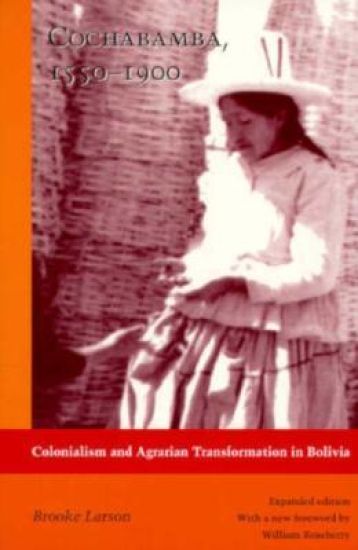
Cochabamba, 1550-1900

Cochabamba, 1550-1900

Brooke Larson

Duke University Press
1998
pokkari
Winner of the 1990 Best Book Award from the New England Council on Latin American StudiesThis study of Bolivia uses Cochabamba as a laboratory to examine the long-term transformation of native Andean society into a vibrant Quechua-Spanish-mestizo region of haciendas and smallholdings, towns and villages, peasant markets and migratory networks caught in the web of Spanish imperial politics and economics. Combining economic, social, and ethnohistory, Brooke Larson shows how the contradictions of class and colonialism eventually gave rise to new peasant, artisan, and laboring groups that challenged the evolving structures of colonial domination. Originally published in 1988, this expanded edition includes a new final chapter that explores the book’s implications for understanding the formation of a distinctive peasant political culture in the Cochabamba valleys over the eighteenth and nineteenth centuries.
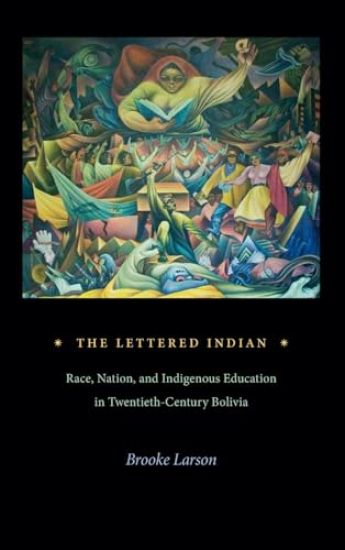
The Lettered Indian

The Lettered Indian

Brooke Larson

DUKE UNIVERSITY PRESS
2024
sidottu
Bringing into dialogue the fields of social history, Andean ethnography, and postcolonial theory, The Lettered Indian maps the moral dilemmas and political stakes involved in the protracted struggle over Indian literacy and schooling in the Bolivian Andes. Brooke Larson traces Bolivia’s major state efforts to educate its unruly Indigenous masses at key junctures in the twentieth century. While much scholarship has focused on “the Indian boarding school” and other Western schemes of racial assimilation, Larson interweaves state-centered and imperial episodes of Indigenous education reform with vivid ethnographies of Aymara peasant protagonists and their extraordinary pro-school initiatives. Exploring the field of vernacular literacy practices and peasant political activism, she examines the transformation of the rural “alphabet school” from an instrument of the civilizing state into a tool of Aymara cultural power, collective representation, and rebel activism. From the metaphorical threshold of the rural school, Larson rethinks the politics of race and indigeneity, nation and empire, in postcolonial Bolivia and beyond.
The Lettered Indian

The Lettered Indian

Brooke Larson

DUKE UNIVERSITY PRESS
2024
pokkari
Bringing into dialogue the fields of social history, Andean ethnography, and postcolonial theory, The Lettered Indian maps the moral dilemmas and political stakes involved in the protracted struggle over Indian literacy and schooling in the Bolivian Andes. Brooke Larson traces Bolivia’s major state efforts to educate its unruly Indigenous masses at key junctures in the twentieth century. While much scholarship has focused on “the Indian boarding school” and other Western schemes of racial assimilation, Larson interweaves state-centered and imperial episodes of Indigenous education reform with vivid ethnographies of Aymara peasant protagonists and their extraordinary pro-school initiatives. Exploring the field of vernacular literacy practices and peasant political activism, she examines the transformation of the rural “alphabet school” from an instrument of the civilizing state into a tool of Aymara cultural power, collective representation, and rebel activism. From the metaphorical threshold of the rural school, Larson rethinks the politics of race and indigeneity, nation and empire, in postcolonial Bolivia and beyond.
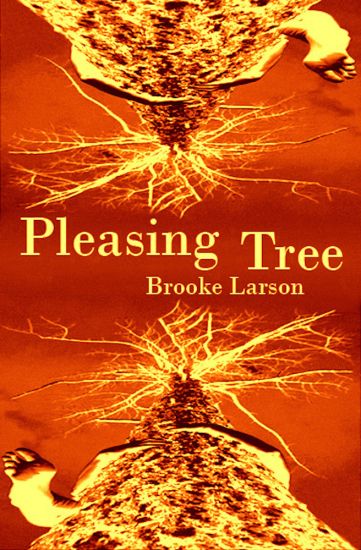
Pleasing Tree

Pleasing Tree

Brooke Larson

Arc Pair Press
2019
pokkari
Nominated for the 2020 CLMP Firecracker Award for Creative Nonfiction and the 2020 Association for Mormon Letters Award for Creative Nonfiction Brooke Larson's essay collection Pleasing Tree explores the human relationship with the wilderness. Beginning with a Mormon-founded experiment in primitive survival, teenagers hike the Arizona desert while Larson shines light on the effects of prolonged exposure to the outdoors, to lands considered inhospitable to life. Recalling Biblical and religious sojourns, Larson maps her own travels from the desert to Salt Lake City to New York City to Jerusalem, observing the life that curls in a leaf, the bug that spews cinnamon-flavored goo, and the water that occasionally floods the desert. Her essays track the impact the often unnoticed has on the human psyche, discovering the awe upon the recognition that even the desert's heart beats. This collection crawls with insects, communicative plants, and poetry. It pulses with blood and breath, excrement and the bodies of the living. "Pleasing Tree is a natural history of Larson's vagrancies: guiding YoungWalkers in the Sonoran wilderness, drinking an Amazonian psychotropic herb on Rockaway Beach, falling in love with a dewdrop above Salt Lake City, pissing in the canyons between the buildings in Manhattan, or walking with an Armenian-Palestinian in Jerusalem's Christian Quarter. While there are stories here, Larson never allows them to unfold in a straight line. Instead they ramble like her footprints-a crooked braid. Experience as viewed through lattices, the branches of a tree or the reticulations of the cultures she's adopted. Her language tumbles like a creek, dances like a flute player. Words conjoin and re-conjoin, kinky: facial beehive, piss alchemy, pan-species foreplay, sopping bloodknot, twilit bullshit. This frolic across landscapes, cityscapes, and inscapes is purposeful play, exploring desert blandness and urban loneliness, seasonal affective disorder and communion with plants, the plight of Palestinians and of lovers, the science of stomach bacteria and the mysticism of light and water. As she writes, 'The world is obscene with meaning.'" John Bennion, author of Falling toward Heaven and An Unarmed Woman "Pleasing Tree is a wakeful series of interdisciplinary excavations into how the human being, when out of options, begins to heal. Into the narrative of a troubled teen trekking into the desert with the ANASAZI wilderness program and then returning, as an adult, to work as a guide herself, Brooke Larson weaves meditations on Native American and Mormon spirituality, the benefits of blandness, the fullness of desert emptiness, the bodily experience of spiritual hunger, and the dangers of over-pathologizing ourselves and each other. With sources spanning biblical myth and botany, Emily Dickinson and John Cage, these essays speak up in favor of the wonderful weirdness inherent in the natural world and in the human being. Larson's prose is large-hearted and trippy, self-aware and funny, expansive and raw. And, ultimately, driven by hope." Jessie van Eerden, author of My Radio Radio and The Long Weeping "Brooke Larson's Pleasing Tree is a unique hybrid, braiding the personal and the informational, the lyric and the technical, into a series of histories about Mormons and seasonal affective disorder and the desert and the city, but maybe even more importantly, about people, vulnerable, lost, searching in every quadrant of the world for a place to belong." Dustin Parsons, author of Exploded View: Essays of Fatherhood with Diagrams