Kirjojen hintavertailu. Mukana 12 390 323 kirjaa ja 12 kauppaa.

Kirjahaku

Etsi kirjoja tekijän nimen, kirjan nimen tai ISBN:n perusteella.

25 kirjaa tekijältä Bruce Bond, Dan Beacy-Quick

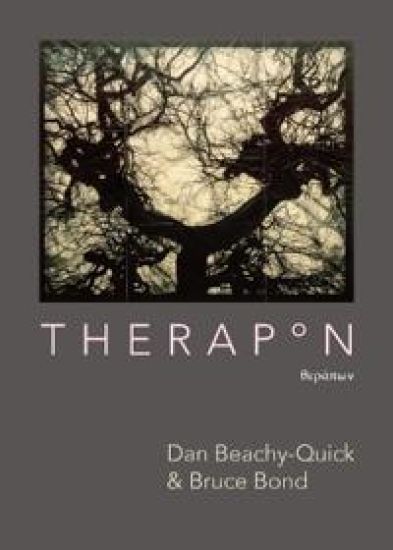
Therapon

Therapon

Bruce Bond; Dan Beacy-Quick

Tupelo Press, Incorporated
2023
nidottu
In Therapon poets Bruce Bond and Dan Beachy-Quick engage in a dialogue of near-sonnets, both personal and cultural, that explore the unfinished, haunted, and unrepresentable nature of selfhood as best suggested and enlarged in gestures of exchange. Inspired by the work of Emmanuel Levinas, this book interrogates not only our ethical relation to others as beyond the pretense of our grasp, but also the notion that otherness inhabits each of us, however individuated and misunderstood, and makes our language possible, unstable, and inexhaustibly resourceful. In this way Therapon finds in dialogue not only its medium but its fascination, a sense of setting forth in friendship, and in friendship the mercies of the strange.
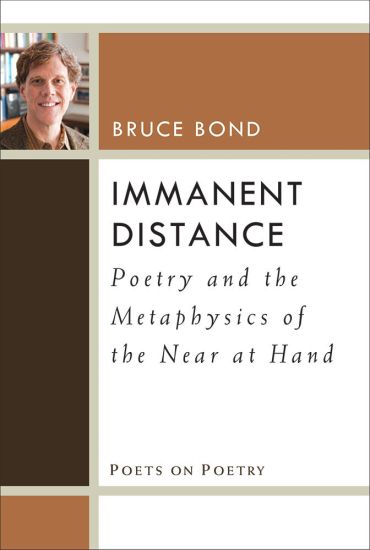
Immanent Distance

Immanent Distance

Bruce Bond

The University of Michigan Press
2015
nidottu
In these essays, Bruce Bond interrogates the commonly accepted notion that all poetry since modernism tends toward one of two traditions: that of a more architectural sensibility with its resistance to metaphysics, and that of a latter-day Romantic sensibility, which finds its authority in a metaphysics authenticated by the individual imagination. Poetry, whether self-consciously or not, has always thrived on the paradox of the distant in the immanent and the other in the self; as such, it is driven by both a metaphysical hunger and a resistance to metaphysical certainty. Hidden resources of being animate the language of the near, just as near things beckon from an elusive and inarticulate distance. Bond revalidates the role of poetry and, more broadly, of the poetic imagination as both models for and embodiments of a transfigurative process, an imperfectly mimetic yet ontological engendering of consciousness at the limits of a language that must—if cognizant of its psychological, ethical, and epistemological summons—honor that which lies beyond it.
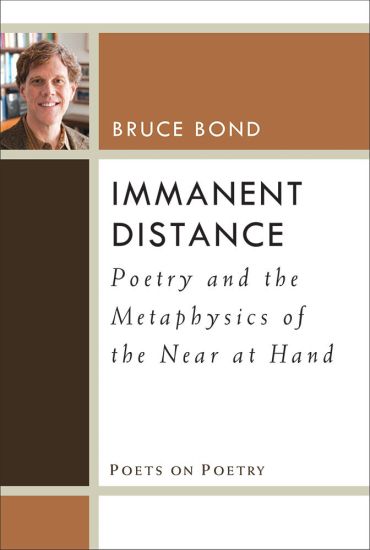
Immanent Distance

Immanent Distance

Bruce Bond

The University of Michigan Press
2015
sidottu
In these essays, Bruce Bond interrogates the commonly accepted notion that all poetry since modernism tends toward one of two traditions: that of a more architectural sensibility with its resistance to metaphysics, and that of a latter-day Romantic sensibility, which finds its authority in a metaphysics authenticated by the individual imagination. Poetry, whether self-consciously or not, has always thrived on the paradox of the distant in the immanent and the other in the self; as such, it is driven by both a metaphysical hunger and a resistance to metaphysical certainty. Hidden resources of being animate the language of the near, just as near things beckon from an elusive and inarticulate distance. Bond revalidates the role of poetry and, more broadly, of the poetic imagination as both models for and embodiments of a transfigurative process, an imperfectly mimetic yet ontological engendering of consciousness at the limits of a language that must—if cognizant of its psychological, ethical, and epistemological summons—honor that which lies beyond it.
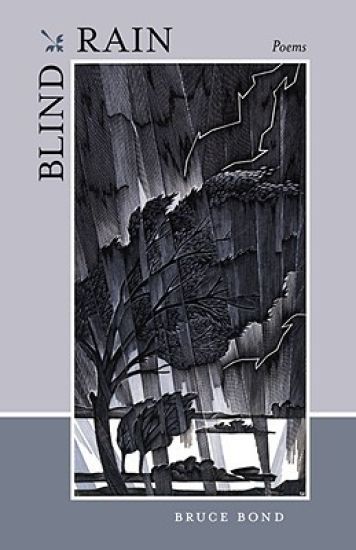
Blind Rain

Blind Rain

Bruce Bond

Louisiana State University Press
2008
nidottu
In his newest collection, Blind Rain, Bruce Bond transforms the known and the familiar into something surreal and new. With spare, unadorned language, he complicates what it is to be both bound to the world and yet free within that world, the way in which the imagination deepens our engagements and yet offers some measure of distance at the same time.Bond opens with several elegies, many of which concern the last days and death of his father. Later poems explore the power of imaginative response as compensation for loss, focusing on poetry, madness, and music, which consoles paradoxically, since it is a form of loss itself. The work includes a long meditation, ""The Return,"" that hinges on the double sense of the word ""true"" as suggesting both ""the real"" and ""the loyal,"" and so participates, often through personal and cultural narrative, in a postmodern conversation about the power of returning as a way of grounding us ethically and emotionally to the world at hand. From Wake: ""One day now since my father last tried to speak, // since the outer provinces of his body shut // down like small cities when the power goes, // just the enormity of starlight to guide them // on their cold journey into dawn. I am writing // at the edge of the other half of life, the part // without my father in it; I feel the strange // sure pull of the earth I walk here, // the polish of the grass, the distance between me // and my students who look up and wait // for my first questions, knowing so little // of my life, just as I know so little of theirs, // only a poem at a time to hold us together // like children before a fire in the woods.
The Visible

The Visible

Bruce Bond

Louisiana State University Press
2012
nidottu
In The Visible, we enter into a surreal landscape ""where it is neither day nor night / but both at once,"" where light becomes an imaginative force that both illuminates and obscures. The illegible draws us closer to the page -- the visible revealed, paradoxically, by what we cannot see.Though these formally restrained poems possess an abstract and introspective intensity, Bond grounds them in the everyday. Both vivid and speculative, the chiseled lyrics breathe. In My Mother's Closet, the pages of medical books become holy and horrendous, ""soiled at the corners, the mind's / terrific passages shocked with highlight, / glossed with scratches in a mother's hand.
For the Lost Cathedral

For the Lost Cathedral

Bruce Bond

Louisiana State University Press
2015
nidottu
For the Lost Cathedral delves deeply into the human relationship with the divine and its capacity for empathy, transformation, and the tolerance of difference and doubt. Bruce Bond seeks neither to praise nor to attack institutional religions, instead choosing to explore their interactions with the inner lives of those who hold them sacred. Faith can offer comfort and security in difficult times, yet it may also create the temptation to hold to absolutes. For the Lost Cathedral examines the tensions inherent in spiritual devotion as well as the impact of such devotion on our most defining conflicts, creativities, and acts of sacrifice. In poems whose formal simplicity belies the depth of their complexity and insight, Bond explores a dialogue between the spiritual and the religious. A tour de force of emotional truth and focus, For the Lost Cathedral embodies a spirit of wonder in the face of difficulties that might otherwise appear intractable.
Blackout Starlight

Blackout Starlight

Bruce Bond

Louisiana State University Press
2017
nidottu
Blackout Starlight brings together a selection of poems from nine previously published books, along with a generous assortment of new work. At the heart of this collection are investigations of the role of eros, language, and creative life, and of the wonder and anxiety of their absence. In Bond's telling, the lines between real and unreal, living and dead, blur together in the poet's imagination, casting an equally compassionate eye upon ""the man we see writhing in the marble"" of an uncarved statue and the son at a funeral trying to face ""the other half of life, the part / without my father in it.""Taken together, the selections in this book represent the highlights of a dazzling career in poetry and leave the reader eager for many more years of Bond's verses to come.
Words Written Against the Walls of the City

Words Written Against the Walls of the City

Bruce Bond

Louisiana State University Press
2019
nidottu
Bruce Bond's new collection, Words Written Against the Walls of the City, confronts problems of collectivity and individual freedom in ways that bring the historical into conjunction with the personal details of everyday lives. This luminous work approaches cities, real and symbolic, as both metaphors for and embodiments of the social self, inescapably embedded in a contemporary world and yet removed, summoned by the same technical connectivity that conspires to pull us further apart, one from another. In the end, Bond's assured verse reveals how a sense of some communal whole inspires its share of indebtedness and awe in an individual's efforts to navigate the environments that enfold us.
Invention of the Wilderness

Invention of the Wilderness

Bruce Bond

LOUISIANA STATE UNIVERSITY PRESS
2022
pokkari
In Invention of the Wilderness, Bruce Bond explores the wilderness as a spiritual, psychological, and ecological realm—a territory that, depending on our tolerances and affections, calls out for order, exploitation, expansion, or preservation. Although to talk of "inventing" the wilderness seems paradoxical, the book seeks to reclaim the etymological root of "invention" as a "venturing in." To invent a wilderness is to go inward by way of attentive engagement in the natural world, to affirm and liberate imaginative expression as no mere mirror of nature, but a force of it. At times meditative and melancholic, though also vibrant and full of life, Invention of the Wilderness proposes an embodied and reflective way of being in the world.
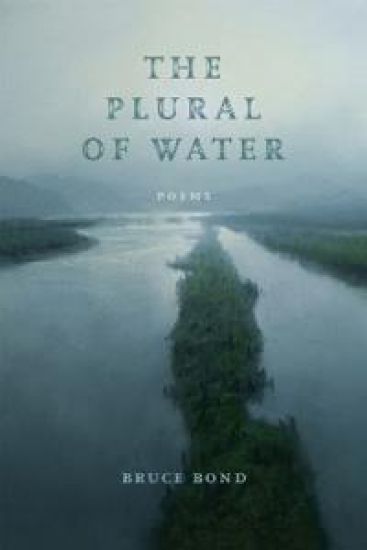
The Plural of Water

The Plural of Water

Bruce Bond

LOUISIANA STATE UNIVERSITY PRESS
2026
pokkari
Bruce Bond's new book of poetry, The Plural of Water, offers a trilogy of sequences that explore the relation of the unconscious—our denials, affinities, passions, and self-divisions—to our ability to perceive and negotiate the crises of our contemporary moment. Through a series of lyrics, both personal and historical, the book's sections constitute parts of an integrated whole that seeks a deeper understanding of the psychological roots of ethics: traumatic fracture, ecological holism, and the ineffable, multiple, communal dimensions of personhood, drawn to and from the dark of all we love, dread, and labor to transform.
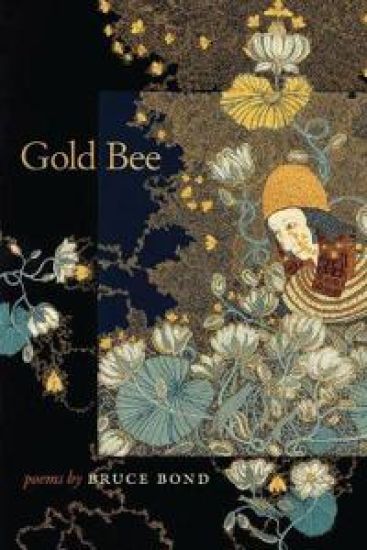
Gold Bee

Gold Bee

Bruce Bond

Southern Illinois University Press
2016
nidottu
Gold Bee takes its cue from Wallace Stevens’s Harmonium, bringing a finely honed talent to classic poetic questions concerning music, the march of progress, and the relationship between reality and the imagination. Blending humor and pathos, Bruce Bond examines the absurdities of contemporary life and explores the various roles music and art play in the human experience.
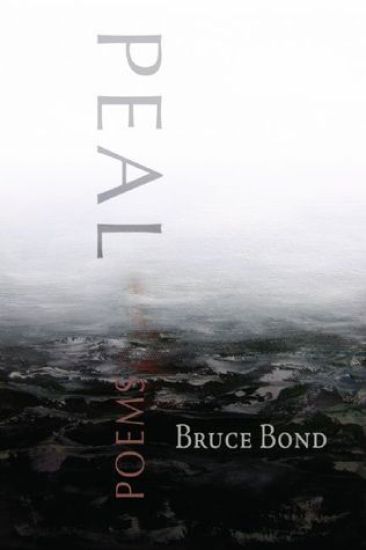
Peal: Poems

Peal: Poems

Bruce Bond

Etruscan Press
2009
nidottu
"The poems in Bruce Bond's new collection Peal probe music's deepest sources. These beautifully crafted lyrics lead us down into intricate and sonoruous paths where we meet out own uncertain songs, at once ghostly, elegiac, and ecstatic. This is a work of exquisite complexity by one of our best poets writing today."--Molly Bendall"The speculative drive of these poems pushes the reader to the very limits of reflection."--Daniel Tiffany"Poets have ever sought a seamless integration of art and life: think of Keats's 'Beauty is truth, truth beauty' or Yeats's 'How can we know the dancer from the dance' In Bruce Bond's Peal, as in the work of this best predecessors, 'it is impossible to know/where music ends, the world begins.'"--H.L. HixIn Bruce Bond's seventh book, we see a sustained exploration of mortality and its embodiment in the consolations of beauty, most notably in music.As if even the respite of song is action, its silence no less. Even the bend and reachof architecture that rises out of the smolderand back, even the legs of the arc that returnthe way the sun returns to a black well, its trespass quiet, slow, a ghost, a coin, a wish gone deep as the day grows old.Bruce Bond teaches at the University of North Texas and is poetry editor for American Literary Review.
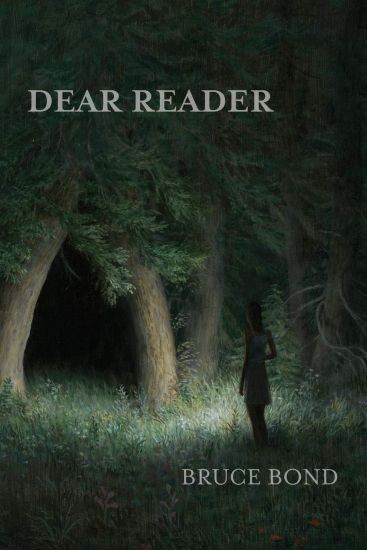
Dear Reader

Dear Reader

Bruce Bond

Parlor Press
2018
pokkari
In his single-poem sequence, Dear Reader, Bruce Bond explores the metaphysics of reading as central to the way we negotiate a world--the evasions of our gods and monsters; our Los Angeles in flames; the daily chatter of our small, sweet, and philosophical beasts. In light of an imagined listener and the world taken as a whole, Bond sees the summons of the self in the other, and in the way the other in the self informs our sacrifices and reckoning, our speechless hesitations, our jokes and our rituals of loss. Every moment of personal and political life, interpretation holds the page of the human face, not far but far enough, and all the while, beneath our gaze, the subtext that is no text at all, where the old argument between universals and particulars breaks down, exhausted, and the real in the imagined is, by necessity, renewed.What People Are SayingDear Reader is that essential intimate epistle that comes to us in an hour of great need. It offers no answers but rather reminds us of our fundamental questions. Meticulous and measured, richly working a system of resonant recurring tropes, this sequence of sonnets give us the voice of one particular sensibility--in turns tender, earnest, honest, intelligent, witty, and wry--as it reaches out across a divide it knows cannot be crossed by language and reason alone. In a time when we confront daily the frenetic, desensitizing maelstrom of political rhetoric and a ubiquitous flood of mass media, Bruce Bond reminds us in Dear Reader of the quiet but urgent philosophical and spiritual inquiries, sometimes monstrous and animal, that define and affirm our humanity. --Kathleen GraberBruce Bond's powerful book-length poem Dear Reader arrives with the "shush of oceans, page after page," buoying forward a meditation on how we read and how we are read by others. Each reader is a choir, a city, a book "the world leafs through." Bond reckons with "inner lives / so enormous I could barely see them," chronicling the longing, cruelty, and generosity those encounters elicit. And he recognizes how one's own inner life casts a ghost-face "across the glass between us." Composed of fifty blank-verse sonnets, the book is stunning in its range and quickness, urgent and penetrating in confronting the "call of freedoms other than our own" that remain achingly near and impossibly far away. --Corey MarksAbout the AuthorBruce Bond is the author of twenty books including, most recently, Immanent Distance: Poetry and the Metaphysics of the Near at Hand (U of MI, 2015), Black Anthem (Tampa Review Prize, U of Tampa, 2016), Gold Bee (Helen C. Smith Award, Crab Orchard Award, Southern Illinois University Press, 2016), Sacrum (Four Way Books, 2017), and Blackout Starlight: New and Selected Poems 1997-2015 (E. Phillabaum Award, LSU, 2017). Four books are forthcoming. Presently he is a Regents Professor of English at University of North Texas.
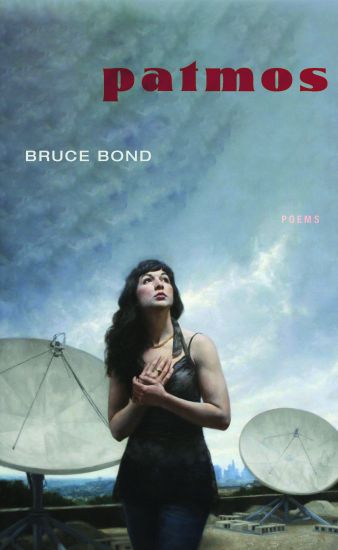
Patmos

Patmos

Bruce Bond

University of Massachusetts Press
2021
nidottu
The dead are never far from the living in Patmos, the end is always nigh, and the cultural symptoms of denial and reconciliation, unresolved shame and loneliness, remain just beneath the surface: ""It is how, these many / years, we survived. In our rooms, alone, at the end of time."" In this book-length poetic sequence, Bruce Bond explores the psychology of endings as a living presence that haunts our spiritual, moral, and ecological imaginations, elevates its summons, and draws us to question its significance. The horrors and glories in the revelations of John of Patmos provide a lens into a wound, a crisis of values, a longing to heal a visionary brokenness that is fundamentally solitary and yet contemporary, written against a door that will not open.
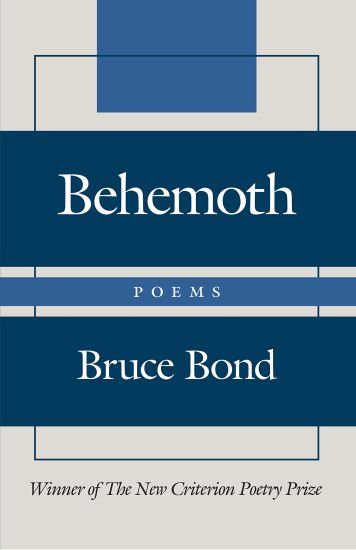
Behemoth

Behemoth

Bruce Bond

Encounter Books,USA
2021
sidottu
In the poetry collection Behemoth, Bruce Bond explores the metaphysical imagination, both in its secular and sacred forms, as something universal, endemic to consciousness, embedded in our longing to capture a lost past and stave off anxieties about the great forgetting to come. As such the book figures as both a critique and empathetic analysis of idolatry, broadly understood and equally universal, problematic as a failed strategy intent upon possession, at odds with values embedded in its symbols. Figures critical to our identity—including those associated with race, nation, and religion—become most prone to unmindful projection, fears and vulnerabilities and our subsequent potential for cruelty and exclusion. Central to the book’s inquiry is the legacy of the holocaust as something that persists, recognized or not—a critical element of cultural memory that both eludes our language and summons our need to speak.
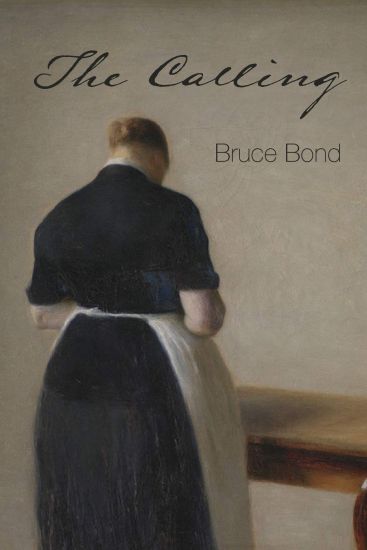
The Calling

The Calling

Bruce Bond

Parlor Press
2020
pokkari
Bruce Bond's meditative sequence of poetry entitled The Calling explores the act of naming as critical to survival--biologically, psychologically, and ethically--and yet no less an obstacle to attention, empathy, and the realization of a functional republic.What People Are Saying Midway through The Calling this appears: "I am learning to be two people, as voices are both voices /and the music in them." There is no contemporary poet more aware of this fact as opportunity than Bruce Bond, whose music, whose severe and certain music, powerfully compels all the voices at his disposal throughout this book--all those journalists, children, and parents whose voicings became the poet's. The politics of this book is an esthetic as glorious as the politics of the era in which it arises is debased: "I was looking back from a time / where I too would be speechless. / The earth green. No. Greener." The Calling succeeds in making beauty where there had been pain, which is the great gift of poetry. --Bin Ramke Bruce Bond's remarkable book-length sequence manages to be many things at once--a searing indictment of the Trump imperium, a bittersweet elegy for the author's father, a tractate, a lamentation, a prayer. It is a vexed book for our vexing times. The collection's stance--in the tradition of contemporary masters such as Milosz and Geoffrey Hill--is an admixture of sorrow, rage, and wonder. This is a book of hard-won consolation, a talisman against our bewilderment. --David Wojahn About the Author Bruce Bond is the author of twenty-five books including, most recently, Immanent Distance: Poetry and the Metaphysics of the Near at Hand (U of MI, 2015), Black Anthem (Tampa Review Prize, U of Tampa, 2016), Gold Bee (Helen C. Smith Award, Crab Orchard Award, SIU Press, 2016), Sacrum (Four Way, 2017), Blackout Starlight: New and Selected Poems 1997-2015 (L.E. Phillabaum Award, LSU, 2017), Rise and Fall of the Lesser Sun Gods (Elixir Book Prize, Elixir Press, 2018), Dear Reader (Free Verse Editions, 2018), Frankenstein's Children (Lost Horse, 2018), Plurality and the Poetics of Self (Palgrave, 2019), and Words Written Against the Walls of the City (LSU, 2019). Presently he is a Regents Professor of English at the University of North Texas.
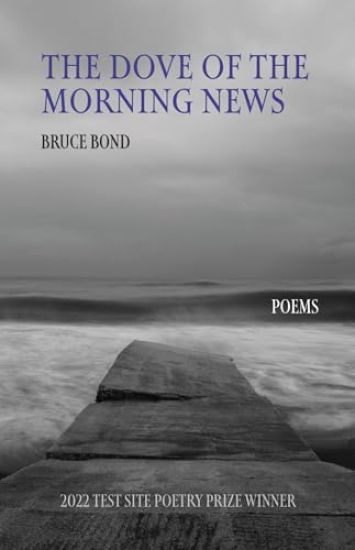
The Dove of the Morning News

The Dove of the Morning News

Bruce Bond

UNIVERSITY OF NEVADA PRESS
2024
nidottu
In poems both personal and historical, The Dove of the Morning News explores conceptions of collectivity, inflected by each psyche, as a force of both connection and division. In its look at tribalism and systemic cruelty as rooted in shame, dread, and insecurity, the book seeks a better understanding of how power needs, spurred by communities of hatred, weaponize the brain’s tendencies to think in animated figures, caricatures, erasures, or, as in the book’s mediation on vellum, texts written across the bodies of others. As a lens into contemporary life, the title sequence interrogates the vision of Pierre Teilhard de Chardin, whose sense of our increasingly interwoven cultural conversation figures now as a premonition of the internet. If his hope for the noosphere as a fulfillment of divine promise feels problematic, it nonetheless sees our globe as an organism whose long-term survival depends on the capacity of each to forge friendship across difference, to take the health and integration of the individual as emblematic of the whole.
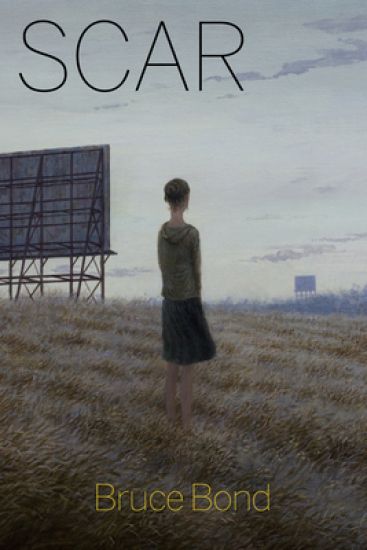
Scar

Scar

Bruce Bond

Etruscan Press
2020
nidottu
Bruce Bond's trilogy of sonnet sequences explores trauma and self-alienation and the power of imaginative life to heal--to reawaken with the past; to better understand its influence, both conscious and unconscious; to gain some measure of clarity, empathy, and freedom as we read the world around us.
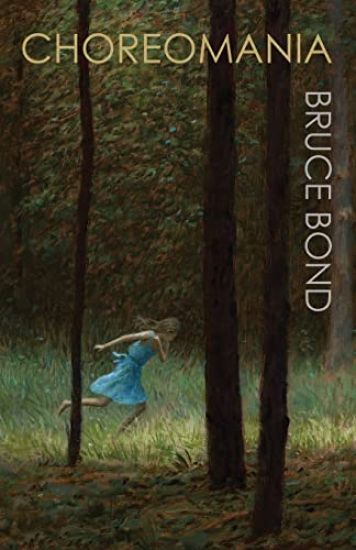
Choreomania

Choreomania

Bruce Bond

Madhat, Inc.
2023
pokkari
Choreomania explores how trauma binds us, even as it tears us apart, how loss deepens a sense of aloneness, the depths of which remain stubbornly haunted by legacy, language, gratitude and debt. History's outbreaks of collective dancing in times of plague bespeak not merely a world weariness and manic refusal, but also an energized longing to connect, even as we journey inward, to open there some lost gate. No empathy without an imagination, no imagination without its risk of sorry listening. As a book about community in crisis, this collection would investigate our readiness to listen as not only a moral and psychological summons but an art.
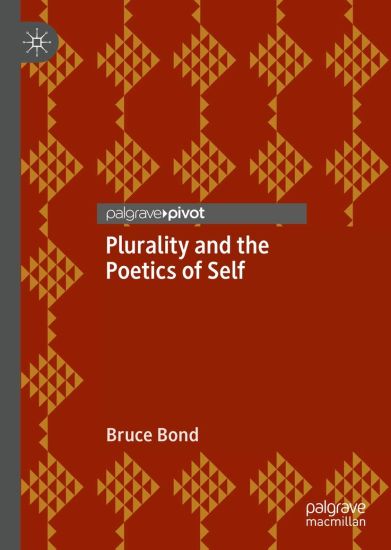
Plurality and the Poetics of Self

Plurality and the Poetics of Self

Bruce Bond

Springer Nature Switzerland AG
2019
sidottu
Plurality and the Poetics of Self investigates the words “I” and “self” as suggestive of eight territories of meaning. Via poetry’s lens into language and its limits, Bruce Bond explores the notion of self as identity, volitional agent, ego, existential monad, subjectivity, ontological origin, soul, and transpersonal psyche. Taking poetic meaning as our common currency, the book emphasizes the critical role of the un-representable and how embattled and confused assumptions threaten ever deeper alienation from one another and ourselves.