Kirjojen hintavertailu. Mukana 11 699 587 kirjaa ja 12 kauppaa.

Kirjahaku

Etsi kirjoja tekijän nimen, kirjan nimen tai ISBN:n perusteella.

8 kirjaa tekijältä Bruce Clarke

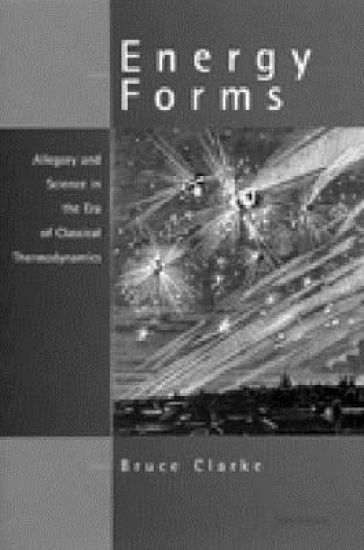
Energy Forms

Energy Forms

Bruce Clarke

The University of Michigan Press
2001
sidottu
This book follows the interplay between allegory and physics in Europe from the inception of the laws of thermodynamics in the 1850s to the cultural acceptance of the theory of relativity in the 1920s. Bruce Clarke delves into the cultural poetics of this emergence, as well as using allegory theory to link the literature of that era to the consolidation of modern physics in England. In his examination of these correlating topics the author displays not only an impressive grasp on the scientific climate of that era, but also comprehensive knowledge of late nineteenth- and early twentieth-century literature.The book begins with an overview of the interconnections between allegory in literature and allegory in science, then analyzes the interaction between energy and entropy and their personification in the literature of the times. Energy Forms draws on the writing of well-known literary and scientific authors including H. G. Wells, Camille Flammarion, Charles Howard Hinton and D. H. Lawrence, among others. The focus then shifts to the broad cultural tension between thermodynamic malaise and electromagnetic aspiration. Energy Forms uncovers the works of important but overlooked authors in the fields of science and literature and will appeal especially to those who are intrigued by interdisciplinary studies.Bruce Clarke is Professor of English,Texas Tech University. He is the author of Dora Marsden and Early Modernism: Gender, Individualism, Science; Allegories of Writing: The Subject of Metamorphosis; and editor of The Body and the Text: Comparative Essays in Literature and Medicine.
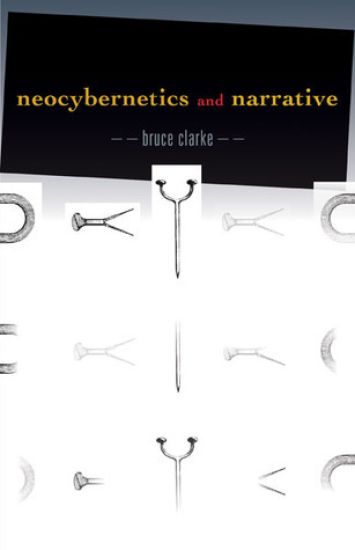
Neocybernetics and Narrative

Neocybernetics and Narrative

Bruce Clarke

University of Minnesota Press
2014
nidottu
Neocybernetics and Narrative opens a new chapter in Bruce Clarke’s project of rethinking narrative and media through systems theory. Reconceiving interrelations among subjects, media, significations, and the social, this study demonstrates second-order systems theory’s potential to provide fresh insights into the familiar topics of media studies and narrative theory. A pioneer of systems narratology, Clarke offers readers a synthesis of the neocybernetic theories of cognition formulated by biologists Humberto Maturana and Francisco Varela, incubated by cyberneticist Heinz von Foerster, and cultivated in Niklas Luhmann’s social systems theory. From this foundation, he interrogates media theory and narrative theory through a critique of information theory in favor of autopoietic conceptions of cognition. Clarke’s purview includes examinations of novels (Mrs. Dalloway and Mind of My Mind), movies (Avatar, Memento, and Eternal Sunshine of the Spotless Mind), and even Aramis, Bruno Latour’s idiosyncratic meditation on a failed plan for an automated subway. Clarke declares the era of the cyborg to have ended, laid to rest as the ontology of technical objects is brought into differential coordination with operations of living, psychic, and social systems. The second-order discourse of cognition destabilizes the usual sense of cognition as conscious awareness, revealing the possibility of nonconscious and nonhuman forms of sentience.
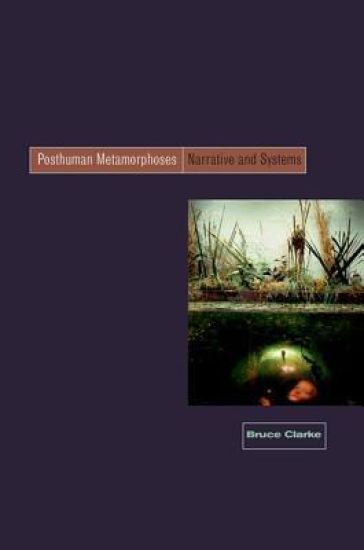
Posthuman Metamorphosis

Posthuman Metamorphosis

Bruce Clarke

Fordham University Press
2008
sidottu
From Dr. Moreau's Beast People to David Cronenberg's Brundlefly, Stanislaw Lem's robot constructors in the Cyberiad to Octavia Butler's human/alien constructs in the Xenogenesis trilogy, Posthuman Metamorphosis examines modern and postmodern stories of corporeal transformation through interlocking frames of posthumanism, narratology, and second-order systems theory. New media generate new metamorphs. New stories have emerged from cybernetic displacements of life, sensation, or intelligence from human beings to machines. But beyond the vogue for the cyborg and the cybernetic mash-up of the organic and the mechanical, Posthuman Metamorphosis develops neocybernetic systems theories illuminating alternative narratives that elicit autopoietic and symbiotic visions of the posthuman. Systems theory also transforms our modes of narrative cognition. Regarding narrative in the light of the autopoietic systems it brings into play, neocybernetics brings narrative theory into constructive relation with the systemic operations of observation, communication, and paradox. Posthuman Metamorphosis draws on Bruno Latour, Donna Haraway, Niklas Luhmann, Cary Wolfe, Mieke Bal, Katherine Hayles, Friedrich Kittler, and Lynn Margulis to read narratives of bodily metamorphosis as allegories of the contingencies of systems. Tracing the posthuman intuitions of both pre- and post-cybernetic metamorphs, it demonstrates the viability of second-order systems theories for narrative theory, media theory, cultural science studies, and literary criticism.
Posthuman Metamorphosis

Posthuman Metamorphosis

Bruce Clarke

Fordham University Press
2008
pokkari
From Dr. Moreau's Beast People to David Cronenberg's Brundlefly, Stanislaw Lem's robot constructors in the Cyberiad to Octavia Butler's human/alien constructs in the Xenogenesis trilogy, Posthuman Metamorphosis examines modern and postmodern stories of corporeal transformation through interlocking frames of posthumanism, narratology, and second-order systems theory. New media generate new metamorphs. New stories have emerged from cybernetic displacements of life, sensation, or intelligence from human beings to machines. But beyond the vogue for the cyborg and the cybernetic mash-up of the organic and the mechanical, Posthuman Metamorphosis develops neocybernetic systems theories illuminating alternative narratives that elicit autopoietic and symbiotic visions of the posthuman. Systems theory also transforms our modes of narrative cognition. Regarding narrative in the light of the autopoietic systems it brings into play, neocybernetics brings narrative theory into constructive relation with the systemic operations of observation, communication, and paradox. Posthuman Metamorphosis draws on Bruno Latour, Donna Haraway, Niklas Luhmann, Cary Wolfe, Mieke Bal, Katherine Hayles, Friedrich Kittler, and Lynn Margulis to read narratives of bodily metamorphosis as allegories of the contingencies of systems. Tracing the posthuman intuitions of both pre- and post-cybernetic metamorphs, it demonstrates the viability of second-order systems theories for narrative theory, media theory, cultural science studies, and literary criticism.
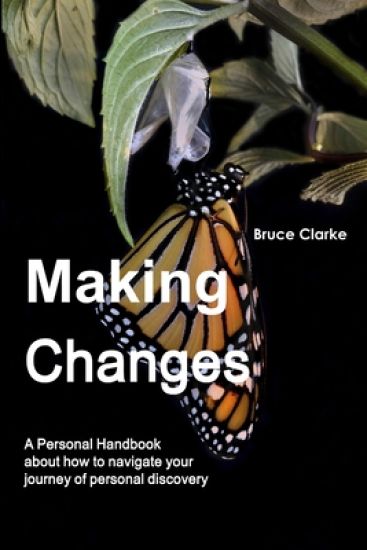
Making Changes : A Personal Handbook About How to Navigate Your Journey of Personal Discovery
A Personal Handbook, Making Changes is about the 'how' of achieving your life goals. You already know that when you are motivated, committed and focused on your goals you can achieve almost anything despite the obstacles. Yet how precisely do you motivate yourself? What do you do to get energy and commitment to tackle challenges and overcome obstacles? This handbook is for ordinary people, leading ordinary lives. People facing daily challenges, with hopes and desires and who strive to overcome the small stuff. Well here's your handbook. So if you make a million, great! In the meantime, let's make a difference. Bruce Clarke is a social entrepreneur, chair of trustee of several charities, founder of the Third Age movement on age discrimination, and a radio presenter for Swindon 105.5 Bruce is a Master Practitioner, and an accredited trainer, in Neuro Linguistic Programming (NLP). He's also an ESOL teacher and a student of Integral Theory and the Enneagram.
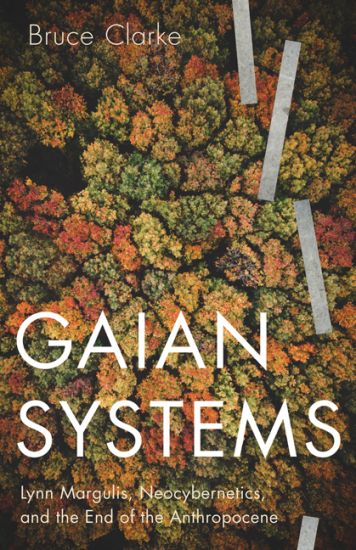
Gaian Systems

Gaian Systems

Bruce Clarke

University of Minnesota Press
2020
sidottu
A groundbreaking look at Gaia theory’s intersections with neocybernetic systems theory Often seen as an outlier in science, Gaia has run a long and varied course since its formulation in the 1970s by atmospheric chemist James Lovelock and microbiologist Lynn Margulis. Gaian Systems is a pioneering exploration of the dynamic and complex evolution of Gaia’s many variants, with special attention to Margulis’s foundational role in these developments.Bruce Clarke assesses the different dialects of systems theory brought to bear on Gaia discourse. Focusing in particular on Margulis’s work-including multiple pieces of her unpublished Gaia correspondence-he shows how her research and that of Lovelock was concurrent and conceptually parallel with the new discourse of self-referential systems that emerged within neocybernetic systems theory. The recent Gaia writings of Donna Haraway, Isabelle Stengers, and Bruno Latour contest its cybernetic status. Clarke engages Latour on the issue of Gaia’s systems description and extends his own systems-theoretical synthesis under what he terms “metabiotic Gaia.” This study illuminates current issues in neighboring theoretical conversations-from biopolitics and the immunitary paradigm to NASA astrobiology and the Anthropocene. Along the way, he points to science fiction as a vehicle of Gaian thought. Delving into many issues not previously treated in accounts of Gaia, Gaian Systems describes the history of a theory that has the potential to help us survive an environmental crisis of our own making.
Gaian Systems

Gaian Systems

Bruce Clarke

University of Minnesota Press
2020
nidottu
A groundbreaking look at Gaia theory’s intersections with neocybernetic systems theory Often seen as an outlier in science, Gaia has run a long and varied course since its formulation in the 1970s by atmospheric chemist James Lovelock and microbiologist Lynn Margulis. Gaian Systems is a pioneering exploration of the dynamic and complex evolution of Gaia’s many variants, with special attention to Margulis’s foundational role in these developments.Bruce Clarke assesses the different dialects of systems theory brought to bear on Gaia discourse. Focusing in particular on Margulis’s work-including multiple pieces of her unpublished Gaia correspondence-he shows how her research and that of Lovelock was concurrent and conceptually parallel with the new discourse of self-referential systems that emerged within neocybernetic systems theory. The recent Gaia writings of Donna Haraway, Isabelle Stengers, and Bruno Latour contest its cybernetic status. Clarke engages Latour on the issue of Gaia’s systems description and extends his own systems-theoretical synthesis under what he terms “metabiotic Gaia.” This study illuminates current issues in neighboring theoretical conversations-from biopolitics and the immunitary paradigm to NASA astrobiology and the Anthropocene. Along the way, he points to science fiction as a vehicle of Gaian thought. Delving into many issues not previously treated in accounts of Gaia, Gaian Systems describes the history of a theory that has the potential to help us survive an environmental crisis of our own making.