Kirjojen hintavertailu. Mukana 11 539 765 kirjaa ja 12 kauppaa.

Kirjahaku

Etsi kirjoja tekijän nimen, kirjan nimen tai ISBN:n perusteella.

6 kirjaa tekijältä Bruce D. Epperson

More Important Than the Music

More Important Than the Music

Bruce D. Epperson

University of Chicago Press
2013
sidottu
Today, jazz is considered high art, America's national music, and the catalog of its recordings-its discography-is often taken for granted. But behind jazz discography is a fraught and highly colorful history of research, fanaticism, and the simple desire to know who played what, where, and when. This history gets its first full-length treatment in Bruce D. Epperson's More Important Than the Music. Following the dedicated few who sought to keep jazz's legacy organized, Epperson tells a fascinating story of archival pursuit in the face of negligence and deception, a tale that saw curses and threats regularly employed, with fisticuffs and lawsuits only slightly rarer. Epperson examines recorded jazz from its careless handling as a novelty in the 1920s and '30s, through the deluge of 12-inch vinyl in the middle of the twentieth century, to the use of computers by today's discographers. Though he focuses much of his attention on comprehensive discographies, he also examines the development of a variety of related listings, such as buyer's guides and library catalogs, and he closes with a look toward discography's future. From the little black book to the full-featured online database, More Important Than the Music offers a history not just of jazz discography but of the profoundly human desire to preserve history itself.
Peddling Bicycles to America

Peddling Bicycles to America

Bruce D. Epperson

McFarland Co Inc
2010
pokkari
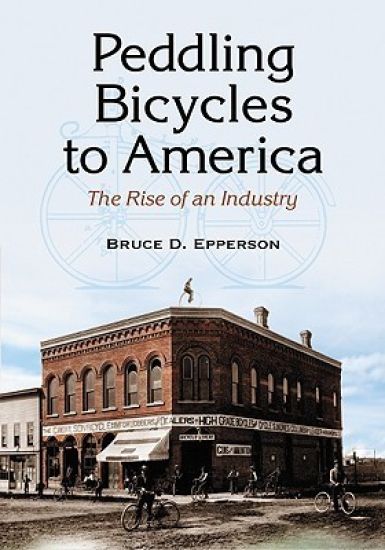
This economic and technical history of the early American bicycle industry focuses on the crucial period from 1876 to the beginning of World War I. It looks particularly at the life and career of the industry's most significant personality during this era, Albert Augustus Pope. After becoming enamored with English high-wheeled bicycles during a visit to the Philadelphia World's Fair in 1876, Pope soon started paying Hartford, Connecticut's Weed Sewing Machine Company to make his own brand of high-wheeler, the "Columbia," the first to be manufactured in America in significant numbers. A decade later, Pope bought out that company, and ten years after that, Hartford's Park River was lined with five of Pope's factories. This book tells the story of the Pope Manufacturing Company's meteoric rise and fall and the growth of an industry around it.
Bicycles in American Highway Planning

Bicycles in American Highway Planning

Bruce D. Epperson

McFarland Co Inc
2014
pokkari
The United States differs from other developed nations in the extent to which its national bicycle transportation policy relies on the use of unmodified roadways, with cyclists obeying the same traffic regulations as motor vehicles. This policy--known as "vehicular cycling"--evolved between 1969, when the "10-speed boom" saw a sharp increase in adult bicycling, and 1991, when the American Association of State Highway and Transportation Officials adopted an official policy that on-road bikeways were not desirable. This policy resulted from a growing realization by highway engineers and experienced club cyclists that they had parallel interests: the cyclists preferred to ride on highways, because most bikeways were not designed for high speeds and pack riding; and the highway engineers did not want to divert funding from roadways to construct bikeways. Using contemporary magazine articles, government reports, and archival material from industry lobbying groups and national cycling organizations, this book tells the story of how America became a nation of bicyclists without bikeways.
Roads Through the Everglades

Roads Through the Everglades

Bruce D. Epperson

McFarland Co Inc
2016
pokkari
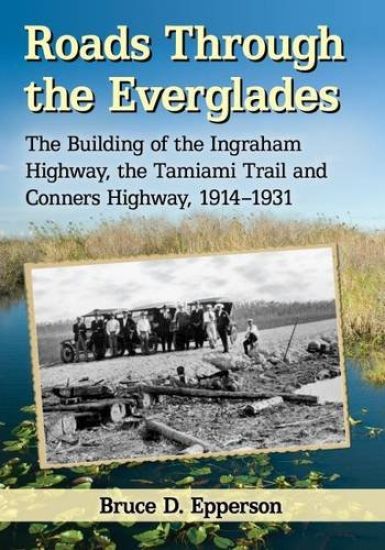
In 1915, the road system in south Florida had changed little since before the Civil War. Travelling from Miami to Ft. Myers meant going through Orlando, 250 miles north of Miami. Within 15 years, three highways were dredged and blasted through the Everglades: Ingraham Highway from Homestead, 25 miles south of Miami, to Flamingo on the tip of the peninsula; Tamiami Trail from Miami to Tampa; and Conners Highway from West Palm Beach to Okeechobee City. In 1916, Florida's road commission spent $967. In 1928 it spent $6.8 million. Tamiami Trail, originally projected to cost $500,000, eventually required $11 million. These roads were made possible by the 1920s Florida land boom, the advent of gasoline and diesel-powered equipment to replace animal and steam-powered implements, and the creation of a highway funding system based on fuel taxes. This book tells the story of the finance and technology of the first modern highways in the South.
The Moulton Bicycle

The Moulton Bicycle

Bruce D. Epperson

McFarland Co Inc
2018
pokkari
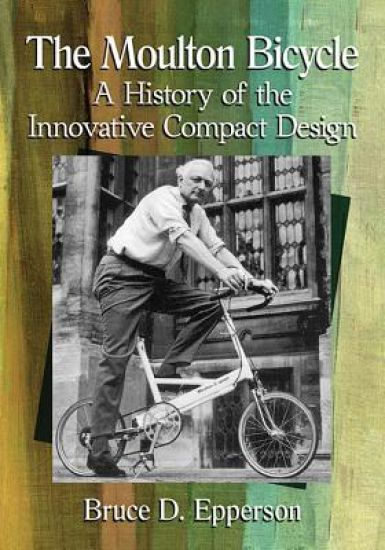
In 1963, British inventor Alex Moulton (1920-2012) introduced an innovative compact bicycle. Architectural Review editor Reyner Banham (1922-1988) predicted it would give rise to "a new class of cyclists," young urbanites riding by choice, not necessity. Forced to sell his firm in 1967, Moulton returned in the 1980s with an even more radical model, the AM--his acclaim among technology and design historians owed much to Banham's writings. The AM's price tag (some models cost many thousands of dollars) has inspired tech-savvy cyclists to create "hot rod" compact bikes from Moulton-inspired "shopper" cycles of the 1970s--a trend also foreseen by Banham, who considered hot rod culture the "folk art of the mechanical era." The author traces the intertwined lives of two unusually creative men who had an extraordinary impact on each others' careers, despite having met only a few times.
Draining the Swamp, Southern Style

Draining the Swamp, Southern Style

Bruce D. Epperson

McFarland Co Inc
2021
pokkari
In 1912, a Congressional committee met to investigate allegations that the Secretary of Agriculture had suppressed a report by J. O. Wright on drainage in the Florida Everglades. The following seven months of committee hearings uncovered a veritable horror-show of corruption, self-dealing, misuse of government personnel and property for private gain, the tarring of reputations in order to protect high-level officials, and outright blackmail within the Department of Agriculture and the state governments of Florida and North Carolina. The "Wright Report Incident" is most commonly understood in its connection to the Everglades, and few histories have included its effects on the North Carolina Pocosin wetland and other coastal plain swamps. This book seeks fills that gap. It details the timeline, intricate politics, and webs of corruption that make up the story of the Wright Incident and, specifically, its connection to land management practices in coastal North Carolina that continue to impact the industries of the state almost 100 years later.