Kirjojen hintavertailu. Mukana 11 627 067 kirjaa ja 12 kauppaa.

Kirjahaku

Etsi kirjoja tekijän nimen, kirjan nimen tai ISBN:n perusteella.

6 kirjaa tekijältä Bruce Kellner

Donald Windham

Donald Windham

Bruce Kellner

Greenwood Press
1991
sidottu
Bruce Kellner worked directly from the collection of often-overlooked novelist Donald Windham to produce this reference work. Entries on books, pamphlets, articles and criticism provided a comprehensive record of Windham's literary development, critical reception, failures, and achievements. According to Kellner, the public has yet to fully embrace the quiet eloquence of Windham's work; like authors Herman Melville and Gertrude Stein, he may be vindicated by time.Kellner introduces the bio-bibliography with a discussion of Donald Windham's background, writing style, and reception by publishers and readers. He likens Windham's subtle style to E.M. Forster, and he suggests that America's action-oriented culture lacks patience for Windham's offerings, which are homosexual but not erotic, Southern but not gothic. The book, which includes an addendum to the introduction by Windham himself, is divided into five parts: Books and Pamphlets, Books and Pamphlets with Contributions, Contributions to Periodicals, Ephemera, and Criticism and Biography. This book is valuable to students, scholars, and general audiences of literature.
Letters Of Charles Demuth

Letters Of Charles Demuth

Bruce Kellner

Temple University Press,U.S.
2000
sidottu
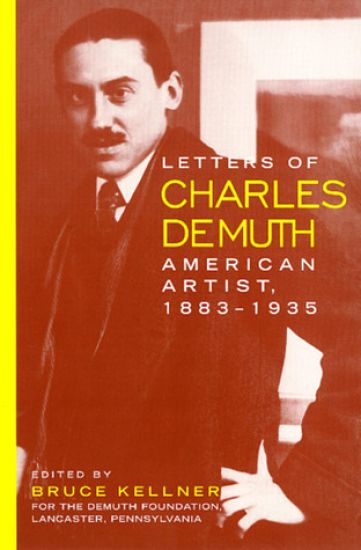
Charles Demuth is widely recognized as one of the most significant American modernists. His precisionist cityscapes, exquisite flowers, and free-wheeling watercolors of vaudeville performers, homosexual bathhouses, and cabaret scenes hand in many of the country's most prestigious collections, including the Metropolitan Museum of Art, the Philadelphia Museum of Art, the Columbus Museum of Art, the Amon Carter Museum in Fort Worth, the Art Institute of Chicago, and in Demuth's Lancaster, Pennsylvania, family residence, now home of the Demuth Foundation. At a time when many American artists remained tied to Europe, Demuth \u0022Americanized\u0022 European modernism. This collection of 155 of his letters offers valuable views of the arts and letters colonies in Provincetown, New York, and Paris. Besides offering information on Demuth's own works, the letters also shed light on the output of his contemporaries, as well as references to their trips, liaisons, and idiosyncrasies. Demuth numbered among his correspondents some of the most famous artists and writers of his time, including Georgia O'Keeffe, Eugene O'Neill, John Reed, Gertrude Stein, Alfred Stieglitz, Carl Van Vechten, and William Carlos Willliams. In his travels in the United States and abroad, he encountered many other talented contemporaries: Peggy Bacon, Muriel Draper, Marcel Duchamp, the Stetthemer sisters, artists and writers, patrons, and gallery owners. Whether he is offering to pick up a copy of Joyce's Ulysses for Eugene O'Neill or trying to convince Georgia O'Keeffe to decorate his music room (\u0022just allow that red and yellow 'canna' one to spread until it fills the room\u0022), Demuth is always in the thick of art and literary life. Flamboyant in attire but discreet in his homosexuality, Demuth also reveals in his letters the life of a talented homosexual in the teens and twenties. With his best friends Robert Locher and Marsden Hartley, he circulated through the art colonies of Greenwich Village, Provincetown, and Paris, meeting everyone. The book also contains reprints of some short appraisals of Demuth and his work that were published during his lifetime, long out of print, including pieces by A. E. Gallatin, Angela E. Hagen, Marsden Hartley, Helen Henderson, Henry McBride, Carl Van Vechten, Rita Wells, and Willard Huntington Wright.
Letters Of Charles Demuth

Letters Of Charles Demuth

Bruce Kellner

Temple University Press,U.S.
2000
pokkari
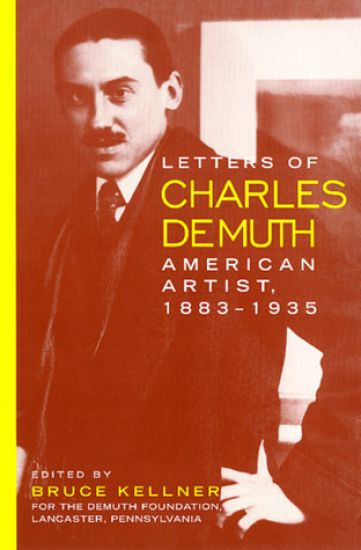
Charles Demuth is widely recognized as one of the most significant American modernists. His precisionist cityscapes, exquisite flowers, and free-wheeling watercolors of vaudeville performers, homosexual bathhouses, and cabaret scenes hand in many of the country's most prestigious collections, including the Metropolitan Museum of Art, the Philadelphia Museum of Art, the Columbus Museum of Art, the Amon Carter Museum in Fort Worth, the Art Institute of Chicago, and in Demuth's Lancaster, Pennsylvania, family residence, now home of the Demuth Foundation. At a time when many American artists remained tied to Europe, Demuth \u0022Americanized\u0022 European modernism. This collection of 155 of his letters offers valuable views of the arts and letters colonies in Provincetown, New York, and Paris. Besides offering information on Demuth's own works, the letters also shed light on the output of his contemporaries, as well as references to their trips, liaisons, and idiosyncrasies. Demuth numbered among his correspondents some of the most famous artists and writers of his time, including Georgia O'Keeffe, Eugene O'Neill, John Reed, Gertrude Stein, Alfred Stieglitz, Carl Van Vechten, and William Carlos Willliams. In his travels in the United States and abroad, he encountered many other talented contemporaries: Peggy Bacon, Muriel Draper, Marcel Duchamp, the Stetthemer sisters, artists and writers, patrons, and gallery owners. Whether he is offering to pick up a copy of Joyce's Ulysses for Eugene O'Neill or trying to convince Georgia O'Keeffe to decorate his music room (\u0022just allow that red and yellow 'canna' one to spread until it fills the room\u0022), Demuth is always in the thick of art and literary life. Flamboyant in attire but discreet in his homosexuality, Demuth also reveals in his letters the life of a talented homosexual in the teens and twenties. With his best friends Robert Locher and Marsden Hartley, he circulated through the art colonies of Greenwich Village, Provincetown, and Paris, meeting everyone. The book also contains reprints of some short appraisals of Demuth and his work that were published during his lifetime, long out of print, including pieces by A. E. Gallatin, Angela E. Hagen, Marsden Hartley, Helen Henderson, Henry McBride, Carl Van Vechten, Rita Wells, and Willard Huntington Wright.