'Bruce King maps uncharted territory,...provides ideas toward a poetics of Indian poetry in English, analyses poets in dialectical sets, summarizes poetic obsessions...King surveys, judges, informs, and provokes.' -- Peter Nazareth, World Literature Today '...a significant book...King provides us with a detailed history of publication of poetry in English in India. One aspect to admire...is King's analysis of individual poems.' -- Journal of Indian Writing in English 'When [the book] first appeared, it almost became like a Bible on the subject, the only worthwhile reference tool [to] dip into [for] trivia on poetry written in English by Indians.' -- Biblio
In the future, what will 'English Literary History' mean? A literary history of England, or one with much looser boundaries, defined only by a communality of language, not by location or history? In this, the latest volume in the Oxford English Literary History, Bruce King discusses the literature written by those who have chosen to make England their home since 1948. With decolonization following World War II, and the growth of large immigrant communities in England, came a wave of colonial, postcolonial, and immigrant writers whose entry onto the British cultural landscape forces us to consider what it is to be British, English, or national now that England is multiracial and part of a global economy. King addresses these new trends in English literature and the questions they raise in the first wide-ranging and comprehensive account of immigrant literature set in a social context. Ranging through Black and Asian British prose, poetry and drama, and writers including V. S. Naipaul, Salman Rushdie, Hanif Kureishi, and Zadie Smith, King reveals the development of the literature from writing about immigration to becoming English. Now that the literature of England includes Sri Lankans, Egyptians, and British Nigerians, does this mean that we can no longer talk of the English nation as a cultural unit? King concludes persuasively that it does not. We have not seen the demise of national cultures, but rather, a new, accomplished, and socially significant body of writing in England is influenced by the interaction between foreign cultures and British traditions. This bold and challenging account of British culture will shape debate for future generations.
Written at Derek Walcott's suggestion, and based on interviews with the playwright and actors, this is the first detailed study of a post-colonial theatre company and the problems of creating `serious' theatre in the former colonies. The book shows how Walcott strove to create a world class theatre ensemble in the West Indies - a Trinidadian Brecht Berliner ensemble - and traces his life and career in West Indian theatre, and the history of the Trinidad Theatre Workshop. Beginning with an actors' studio and the vision of a West Indian theatre company of international standards with its own style of acting, Derek Walcott developed the most important theatre company in the West Indies. This was the company which first performed his Dream on Monkey Mountain, the musical version of Ti-Jean and his Brothers, The Joker of Seville, and O Babylon! A major contribution to West Indian history and theatre, Bruce King's study reveals the heroic will of Derek Walcott and his actors, and their determination to prove that West Indian drama was a force with which to be reckoned.
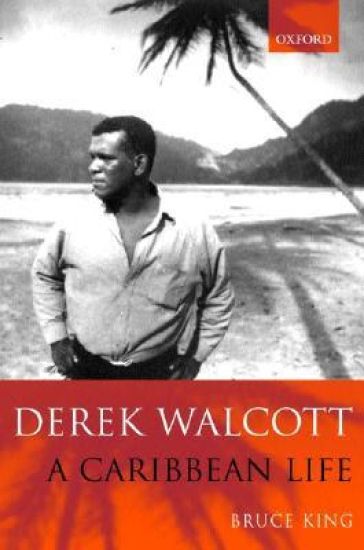
This is the first literary biography of Nobel Prize-winning poet and dramatist Derek Walcott. It traces the creative contradictions in his life from colonial St Lucia, where he was part of a tiny English-speaking Protestant mulatto elite in an overwhelmingly French-creole Roman Catholic black society, to 1999 when, a star of international literature and a symbol of cultural decolonization, he wanted to be Poet Laureate of England. The author has had access to letters, diaries, uncollected and unpublished writings, and conducted numerous interviews in the Caribbean, North America and Europe. Walcott is seen as someone driven by the need to justify his life and fulfil his talents before an unknowable God, but who, in mastering the ways of the world often regards himself as an example of fallen humanity. Besides offering an approach to Walcott as a poet, dramatist, theatre director, arts critic, and teacher, the book shows how his desire to be a painter influenced his vision and the way he works.
In the future, what will 'English Literary History' mean? A literary history of England, or one with much looser boundaries, defined only by a communality of language, not by location or history? In this, the last volume in the Oxford English Literary History, Bruce King discusses the literature written by those who have chosen to make England their home since 1948. With decolonization following World War II, and the growth of large immigrant communities in England, came a wave of colonial, postcolonial, and immigrant writers whose entry onto the British cultural landscape forces us to consider what it is to be British, English, or national now that England is multiracial and part of a global economy. King addresses these new trends in English literature and the questions they raise in the first wide-ranging and comprehensive account of immigrant literature set in a social context. Ranging through Black and Asian British prose, poetry, and drama, and writers including V. S. Naipaul, Salman Rushdie, Hanif Kureishi, and Zadie Smith, King reveals the development of the literature from writing about immigration to becoming English. Now that the literature of England includes Sri Lankans, Egyptians, and British Nigerians, does this mean that we can no longer talk of the English nation as a cultural unit? King concludes persuasively that it does not. We have not seem the demise of national cultures; rather, a new, accomplished, and socially significant body of writing in England is influenced by the interaction between foreign cultures and British traditions. This bold and challenging account of British culture will shape debate for future generations.
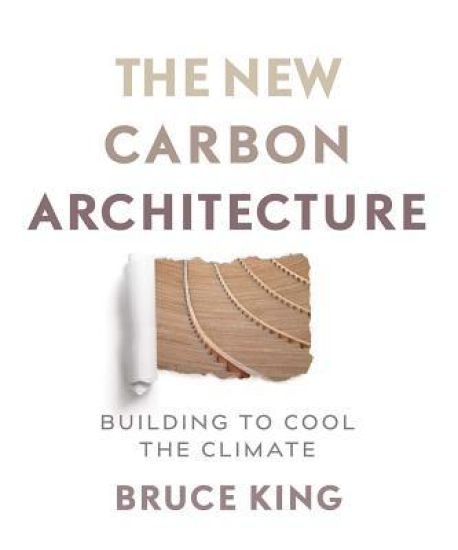
Soak up carbon into beautiful, healthy buildings that heal the climate "Green buildings" that slash energy use and carbon emissions are all the rage, but they aren't enough. The hidden culprit is embodied carbon — the carbon emitted when materials are mined, manufactured, and transported — comprising some 10% of global emissions. With the built environment doubling by 2030, buildings are a carbon juggernaut threatening to overwhelm the climate. It doesn't have to be this way. Like never before in history, buildings can become part of the climate solution. With biomimicry and innovation, we can pull huge amounts of carbon out of the atmosphere and lock it up as walls, roofs, foundations, and insulation. We can literally make buildings out of the sky with a massive positive impact. The New Carbon Architecture is a paradigm-shifting tour of the innovations in architecture and construction that are making this happen. Office towers built from advanced wood products; affordable, low-carbon concrete alternatives; plastic cleaned from the oceans and turned into building blocks. We can even grow insulation from mycelium. A tour de force by the leaders in the field, The New Carbon Architecture will fire the imagination of architects, engineers, builders, policy makers, and everyone else captivated by the possibility of architecture to heal the climate and produce safer, healthier, and more beautiful buildings.
V. S. Naipaul is a reader-friendly introduction to the writing of one of the most influential contemporary authors and the 2001 Nobel laureate in Literature. Bruce King provides a novel by novel analysis of the fiction with attention to structure, significance, and Naipaul's development as a writer, while setting the texts in their autobiographical. philosophical, social, political, colonial and postcolonial contexts. King shows how Naipaul modified Western and Indian literary traditions for the West Indies and then the wider world to become an international writer whose subject matter includes the Caribbean, England, India, Africa, the United States, Argentina, and contemporary Islam.Thoroughly revised and updated, the second edition of V. S. Naipaul now includes an expanded Introduction, and discussion of his most recent novels A Way in the World and Half a Life, his Nobel Lecture, Naipaul's writings on Islam, and a survey of the main criticism by other writers and postcolonial theorists.
V. S. Naipaul is a reader-friendly introduction to the writing of one of the most influential contemporary authors and the 2001 Nobel laureate in Literature. Bruce King provides a novel by novel analysis of the fiction with attention to structure, significance, and Naipaul's development as a writer, while setting the texts in their autobiographical. philosophical, social, political, colonial and postcolonial contexts. King shows how Naipaul modified Western and Indian literary traditions for the West Indies and then the wider world to become an international writer whose subject matter includes the Caribbean, England, India, Africa, the United States, Argentina, and contemporary Islam.Thoroughly revised and updated, the second edition of V. S. Naipaul now includes an expanded Introduction, and discussion of his most recent novels A Way in the World and Half a Life, his Nobel Lecture, Naipaul's writings on Islam, and a survey of the main criticism by other writers and postcolonial theorists.
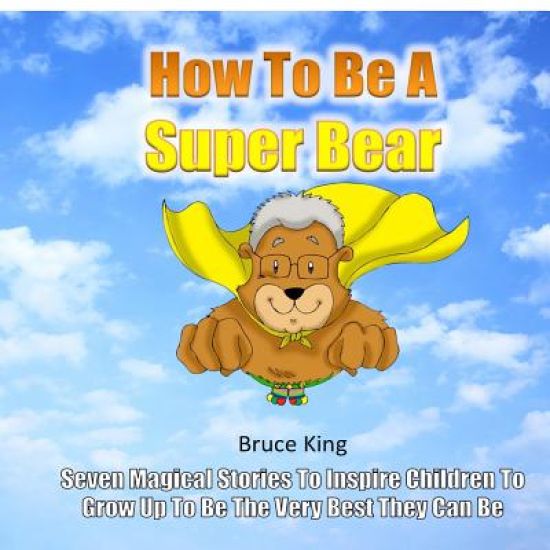
The second in the series of the adventures of Grandpa Super Bear, this book is all about how Grandpa Super Bear earned his amazing magic flying cape and fun stripy socks.Another six magical stories to inspire children to grow up to be the very best they can be with beautiful and fun full color illustrations.For children from three to eight - and parents love these stories too.Chapter headings: How It All Started Grandpa Super Bear Meets The Very Wise One Day 1 - Good Deed 1: The Field Of Fresh Vegetables Day 2 - Good Deed 2: Cleaning Up Bear Fun Park Day 3 - Good Deed 3: Rescuing The Jumbos Day 4 - Good Deed 4: Grandpa Super Bear's Lending Library Day 5 - Good Deed 5: The Thank You Picnic Party In Bear Fun Park Day 6 - Let's Go Flying Little Good Deeds For You To Do Stripy Sock Good Deed Monitor Other books in the series are: How To Be A Super BearMissions To Other Planets
The complete step-by-step training book on how to become world class at Telephone Sales and Appointment Setting. Chapter Headings: Introduction Chapter 1: What is cold calling? Chapter 2: Getting in the right frame of mind Chapter 3: Equipment & environment Chapter 4: Time management techniques for cold calling Chapter 5: Researching your prospects Chapter 6: Preparing your approach Chapter 7: The conversation Chapter 8: How to handle gatekeepers Chapter 9: Handling objections Chapter 10: Asking for the appointment & closing the sale Summary Testimonials from previous readers "I've just finished reading Bruce King's book and am impressed. I'm one of those people who hates cold calling, and so having read Bruce's book, I now know why I've been averse to it and what I can do about it. The book is so much more than just cold calling though, it is a step-by-step through the entire sales and referral process. If you are brand new to sales, this book needs to be your bible. If you are a seasoned traveller, there will still be some nuggets for you too - after all, we all slip into bad habits and a refresher never hurt anyone" Ann Andrews - The Corporate Toolbox "I've known Bruce King for at least 20 years, and can tell you that he always produces material that actually works in the real world and increases your sales and bottom line. This book should not only be part of every salesperson's arsenal, but ought to be in every single business in the UK, not just one copy but one for everyone. Highly recommended " Ron G Holland - Author of The Eureka Enigma "If you have to use the telephone for getting appointments with prospects, and you either don't like it or don't get the kind of results you'd love to have, this book is a MUST HAVE You really will become World-Class if you follow Bruce King's advice" Thomas Power "At last a great book on telemarketing ..it's the complete antidote to the scripted, robotic approach we all suffer. Bruce has created a thinking, practical handbook for real people who want to generate rapport and trust with their clients and not get the 'digital door' slammed on their fingers twenty times an hour." John Donnelly "Well - I didn't like it. I LOVED IT Bruce's latest book "Telephone Sales and Appointment setting" is - just as it says on the cover "world class". I've read a fair few sales and marketing books and this one is exceptional. It is simple and easy to read. It has NO waffle, gets right to the core of the issues facing those who want (or don't want) to make cold calls. I dare you to read this and NOT feel motivated, inspired and ready to pick up the phone. I found the worksheets on time management and the results monitor particularly valuable. I also loved the conversation scripts and the section on handling objections is very useful. This book stands out because it really offers something that little bit different, even de-bunks some of the bunkum around sales. In my work supporting great coaches to become successful coaches, I find they resist cold calling and will do almost anything to avoid picking up the phone and speaking to people. This is a book I will definitely be recommending to them." Dr Lisa Turner- CEO Psycademy
From New National to World English Literature offers a personal perspective on the evolution of a major cultural movement that began with decolonisation, continued with the assertion of African, West Indian, Commonwealth, and other literatures, and has evolved through postcolonial to world or international English literature. Bruce King's extensive Introduction discusses the personalities, writers, issues, and contexts of what he considers the most important change in culture since Modernism. The Introduction also explains the forty-five essays and reviews he has selected from his publications to illustrate the development, stages, and major national literatures, authors, and themes. Special attention is given to Nigerian, West Indian, Australian, Indian, and Pakistani literature. Topics and issues include: "Derry" Jeffares organising Commonwealth and Anglo-Irish studies, the emergence and aesthetics of African literature, the question of the existence of a "Nigerian literature", the place of the new universities in decolonising culture, the influence of the Rockefeller Foundation, the contrasting models of American and Irish literatures, ethnicity as response , the changing nature of exile and diasporas, the role of Jewish writers, minorities, Muslim objections to free speech, The Satanic Verses controversy, traditionalism versus modernism, the dangers of cultural assertion, and the relationships between nationalism and internationalism. Authors discussed include Chinua Achebe, Ahmed Ali, Margaret Atwood, David Dabydeen, K N Daruwalla, Nissim Ezekiel, Abdulrazak Gurnah, Almagir Hashmi, Attia Hosain, A D Hope, Adil Jussawalla, Arun Kolatkar, Hanif Kureishi, Dom Moraes, Frank Moorhouse, V S Naipaul, Abioseh Nicol, Gabriel Okara, Mike Phillips, Mordechai Richler, Salman Rushdie, Wole Soyinka, Garth St Omer, Kamila Shamsie, Randolph Stow, Jeet Thayil, and Derek Walcott.
From New National to World English Literature offers a personal perspective on the evolution of a major cultural movement that began with decolonization, continued with the assertion of African, West Indian, Commonwealth, and other literatures, and has evolved through postcolonial to world or international English literature. Bruce King, one of the pioneers in the study of the new national literatures and still an active literary critic, discusses the personalities, writers, issues, and contexts of what he considers the most important change in culture since modernism. In this selection of forty-five essays and reviews, King discusses issues such as the emergence and aesthetics of African literature, the question of the existence of a "Nigerian literature", the place of the new universities in decolonizing culture, the contrasting models of American and Irish literatures, and the changing nature of exile and diasporas. He emphasizes themes such as traditionalism versus modernism, the dangers of cultural assertion, and the relationships between nationalism and internationalism. Special attention is given to Nigerian, West Indian, Australian, Indian, and Pakistani literature.
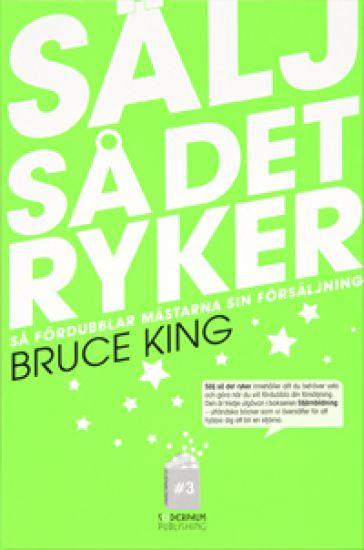
"I boken Sälj så det ryker ger Bruce King de mest praktiska och verkningsfulla råd för hur man snabbt får fart på sin försäljning som jag läst på åratal. Alla i branschen borde äga ett exemplar." Ivan R Misner, författare och grundare till BNI. "Detta är den bästa bok om försäljning som jag någonsin har läst. Så otroligt inspirerande! Den är praktisk och enkel att följa, och det skulle förvåna mig storligen om du inte fördubblade din försäljning snabbt." Thomas Power, ordförande Ecademy. Sälj så det ryker är din ultimata actionplan för att lyckas inom försäljning. Bruce King, som tidigare haft framgångar i Sverige med boken Psychoselling, kombinerar sin kraftfullamotvationsteknik med praktisk coachning steg-för-steg. Boken tar dig genom hela säljprocessen, från den första kontakten till avslutet. När du följer bokens tio steg kommer du att upptäcka att det är fullt möjligt att fördubbla din försäljning. Sälj så det ryker är tredje utgåvan i bokserien Stjärnbildning - utländska böcker som vi på Soderpalm Publishing översätter för att hjälpa dig att bli en stjärna.