Kirjojen hintavertailu. Mukana 11 342 296 kirjaa ja 12 kauppaa.

Kirjahaku

Etsi kirjoja tekijän nimen, kirjan nimen tai ISBN:n perusteella.

8 kirjaa tekijältä Bruce Levine

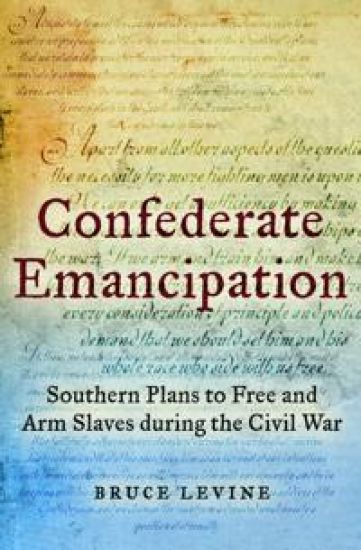
Confederate Emancipation

Confederate Emancipation

Bruce Levine

Oxford University Press Inc
2005
sidottu
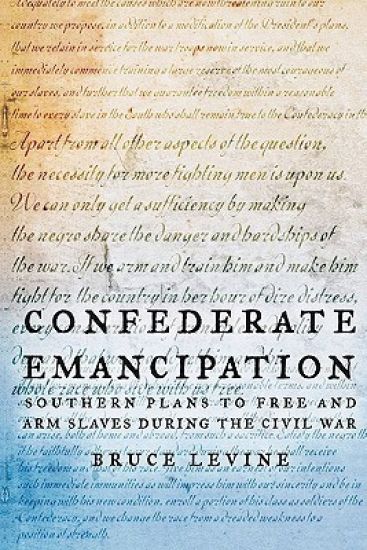
In early 1864, as the Confederate Army of Tennessee licked its wounds after being routed at the Battle of Chattanooga, Major-General Patrick Cleburne (the "Stonewall of the West") proposed that "the most courageous of our slaves" be trained as soldiers and that "every slave in the South who shall remain true to the Confederacy in this war" be freed. In Confederate Emancipation, Bruce Levine looks closely at such Confederate plans to arm and free slaves. He shows that within a year of Cleburne's proposal, which was initially rejected out of hand, Jefferson Davis, Judah P. Benjamin, and Robert E. Lee had all reached the same conclusions. At that point, the idea was debated widely in newspapers and drawing rooms across the South, as more and more slaves fled to Union lines and fought in the ranks of the Union army. Eventually, the soldiers of Lee's army voted on the proposal, and the Confederate government actually enacted a version of it in March. The Army issued the necessary orders just two weeks before Appomattox, too late to affect the course of the war. Throughout the book, Levine captures the voices of blacks and whites, wealthy planters and poor farmers, soldiers and officers, and newspaper editors and politicians from all across the South. In the process, he sheds light on such hot-button topics as what the Confederacy was fighting for, whether black southerners were willing to fight in large numbers in defense of the South, and what this episode foretold about life and politics in the post-war South. Confederate Emancipation offers an engaging and illuminating account of a fascinating and politically charged idea, setting it firmly and vividly in the context of the Civil War and the part played in it by the issue of slavery and the actions of the slaves themselves.
Confederate Emancipation

Confederate Emancipation

Bruce Levine

Oxford University Press Inc
2007
nidottu
In early 1864, as the Confederate Army of Tennessee licked its wounds after being routed at the Battle of Chattanooga, Major-General Patrick Cleburne (the "Stonewall of the West") proposed that "the most courageous of our slaves" be trained as soldiers and that "every slave in the South who shall remain true to the Confederacy in this war" be freed. In Confederate Emancipation, Bruce Levine looks closely at such Confederate plans to arm and free slaves. He shows that within a year of Cleburne's proposal, which was initially rejected out of hand, Jefferson Davis, Judah P. Benjamin, and Robert E. Lee had all reached the same conclusions. At that point, the idea was debated widely in newspapers and drawing rooms across the South, as more and more slaves fled to Union lines and fought in the ranks of the Union army. Eventually, the soldiers of Lee's army voted on the proposal, and the Confederate government actually enacted a version of it in March. The Army issued the necessary orders just two weeks before Appomattox, too late to affect the course of the war. Throughout the book, Levine captures the voices of blacks and whites, wealthy planters and poor farmers, soldiers and officers, and newspaper editors and politicians from all across the South. In the process, he sheds light on such hot-button topics as what the Confederacy was fighting for, whether black southerners were willing to fight in large numbers in defense of the South, and what this episode foretold about life and politics in the post-war South. Confederate Emancipation offers an engaging and illuminating account of a fascinating and politically charged idea, setting it firmly and vividly in the context of the Civil War and the part played in it by the issue of slavery and the actions of the slaves themselves.
The Spirit of 1848

The Spirit of 1848

Bruce Levine

University of Illinois Press
1992
sidottu
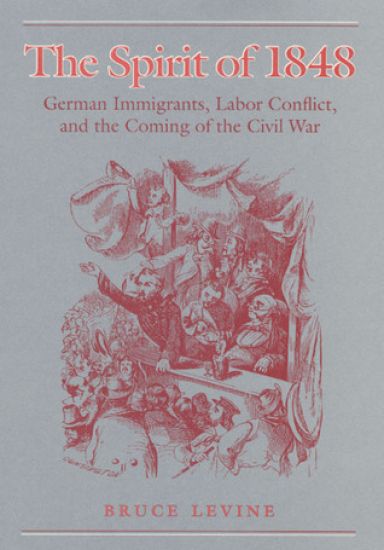
Immigrants and their children became the chief component of the U.S. working class during the nineteenth century. Bruce Levine examines the early years of this social transformation, focusing on German-born craft workers and the key roles they played in the economic and political life of the wage-earning population of antebellum America. Interweaving themes often treated separately---immigration, industrialization, class formation, and the political polarization over slavery---Levine sheds new light on the development of the working class, the nature and appeals of partisan politics, and the conflicts that led to sectional war. The Spirit of 1848 offers much new information and insight concerning craftwork, the nature of the antebellum labor movement (including the great New York City tailors' strike of 1850), the meaning of nativism, the significance of the push for land reform, the diverse character of the free-soil movement, and the popular appeals of both the Democratic and Republican parties.
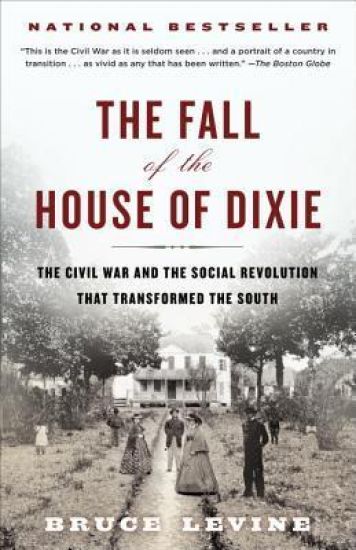
The Fall of the House of Dixie

The Fall of the House of Dixie

Bruce Levine

Random House Inc
2014
pokkari
In this major new history of the Civil War, Bruce Levine tells the riveting story of how that conflict upended the economic, political, and social life of the old South, utterly destroying the Confederacy and the society it represented and defended. Told through the words of the people who lived it, "The Fall of the House of Dixie "illuminates the way a war undertaken to preserve the status quo became a second American Revolution whose impact on the country was as strong and lasting as that of our first. In 1860 the American South was a vast, wealthy, imposing region where a small minority had amassed great political power and enormous fortunes through a system of forced labor. The South's large population of slaveless whites almost universally supported the basic interests of plantation owners, despite the huge wealth gap that separated them. By the end of 1865 these structures of wealth and power had been shattered. Millions of black people had gained their freedom, many poorer whites had ceased following their wealthy neighbors, and plantation owners were brought to their knees, losing not only their slaves but their political power, their worldview, their very way of life. This sea change was felt nationwide, as the balance of power in Congress, the judiciary, and the presidency shifted dramatically and lastingly toward the North, and the country embarked on a course toward equal rights. Levine""captures the many-sided human drama of this story using a huge trove of diaries, letters, newspaper articles, government documents, and more. In "The Fall of the House of Dixie, " the true stakes of the Civil War become clearer than ever before, as slaves battle for their freedom in the face of brutal reprisals; Abraham Lincoln and his party turn what began as a limited war for the Union into a crusade against slavery by issuing the Emancipation Proclamation; poor southern whites grow increasingly disillusioned with fighting what they have come to see as the plantation owners' war; and the slave owners grow ever more desperate as their beloved social order is destroyed, not just by the Union Army, but also from within. When the smoke clears, not only Dixie but all of American society is changed forever. Brilliantly argued and engrossing, "The Fall of the House of Dixie "is a sweeping account of the destruction of the old South during the Civil War, offering a fresh perspective on the most colossal struggle in our history and the new world it brought into being. Praise for "The Fall of the House of Dixie" "This is the Civil War as it is seldom seen. . . . A portrait of a country in transition . . . as vivid as any that has been written."--"The Boston Globe"" " "An absorbing social history . . . For readers whose Civil War bibliography runs to standard works by Bruce Catton and James McPherson, Bruce] Levine's book offers fresh insights."--"The Wall Street Journal"" " "More poignantly than any book before, "The Fall of the House of Dixie" shows how deeply intertwined the Confederacy was with slavery, and how the destruction of both made possible a 'second American revolution' as far-reaching as the first."--David W. Blight, author of "American Oracle"" " "Splendidly colorful . . . Levine recounts this tale of Southern institutional rot with the ease and authority born of decades of study."--"Kirkus Reviews "(starred review) "A deep, rich, and complex analysis of the period surrounding and including the American Civil War."--"Publishers Weekly "(starred review)
Commonsense Rebellion

Commonsense Rebellion

Bruce Levine

Continuum International Publishing Group Ltd.
2003
nidottu
In recent years the mental health industry has been attacked for the invalidity of its illnesses, the unreliability of its diagnoses, the dangers of its treatments, and its corruption by drug companies. "Commonsense Rebellion" integrates those critiques and goes further. Nearly one in four American adults are on psychiatric drugs, and Ritalin production has increased 800 percent since 1990, yet the mental health industry laments the fact that two-thirds of us with diagnosable mental disorders do not seek treatment. This title argues that "institutional mental health's" ever-increasing diseases, disorders, and drugs have diverted us from examining an important rebellion. This rebellion - mainly passive and too often self-destructive - is against an increasingly impersonal and coercive "institutional society." Institutional society's worship of speed, power, and technology has created fantastic wealth - at least for some of us - but its disregard for human autonomy, community, and diversity has come with a cost. Depression has reportedly increased tenfold since 1900, and suicide levels for teenage boys have tripled since 1960. Have human genetics and serotonin levels changed that much, or has society?
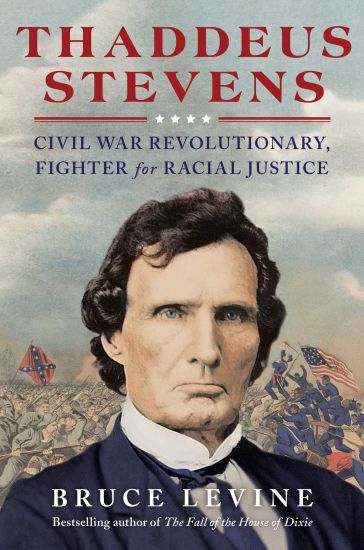
Thaddeus Stevens: Civil War Revolutionary, Fighter for Racial Justice
A "powerful" (The Wall Street Journal) biography of one of the 19th century's greatest statesmen, encompassing his decades-long fight against slavery and his postwar struggle to bring racial justice to America. Thaddeus Stevens was among the first to see the Civil War as an opportunity for a second American revolution--a chance to remake the country as a genuine multiracial democracy. As one of the foremost abolitionists in Congress in the years leading up to the war, he was a leader of the young Republican Party's radical wing, fighting for anti-slavery and anti-racist policies long before party colleagues like Abraham Lincoln endorsed them. These policies--including welcoming black men into the Union's armies--would prove crucial to the Union war effort. During the Reconstruction era that followed, Stevens demanded equal civil and political rights for Black Americans--rights eventually embodied in the 14th and 15th amendments. But while Stevens in many ways pushed his party--and America--towards equality, he also championed ideas too radical for his fellow Congressmen ever to support, such as confiscating large slaveholders' estates and dividing the land among those who had been enslaved. In Thaddeus Stevens, acclaimed historian Bruce Levine has written a "vital" (The Guardian), "compelling" (James McPherson) biography of one of the most visionary statesmen of the 19th century and a forgotten champion for racial justice in America.
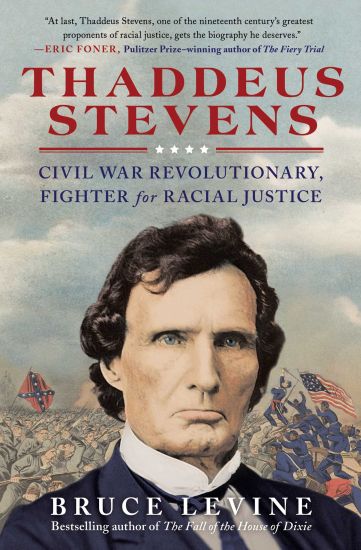
Thaddeus Stevens

Thaddeus Stevens

Bruce Levine

SIMON SCHUSTER
2022
pokkari
A “powerful” (The Wall Street Journal) biography of one of the 19th century’s greatest statesmen, encompassing his decades-long fight against slavery and his postwar struggle to bring racial justice to America.Thaddeus Stevens was among the first to see the Civil War as an opportunity for a second American revolution—a chance to remake the country as a genuine multiracial democracy. As one of the foremost abolitionists in Congress in the years leading up to the war, he was a leader of the young Republican Party’s radical wing, fighting for anti-slavery and anti-racist policies long before party colleagues like Abraham Lincoln endorsed them. These policies—including welcoming black men into the Union’s armies—would prove crucial to the Union war effort. During the Reconstruction era that followed, Stevens demanded equal civil and political rights for Black Americans—rights eventually embodied in the 14th and 15th amendments. But while Stevens in many ways pushed his party—and America—towards equality, he also championed ideas too radical for his fellow Congressmen ever to support, such as confiscating large slaveholders’ estates and dividing the land among those who had been enslaved. In Thaddeus Stevens, acclaimed historian Bruce Levine has written a “vital” (The Guardian), “compelling” (James McPherson) biography of one of the most visionary statesmen of the 19th century and a forgotten champion for racial justice in America.
Thaddeus Stevens: Civil War Revolutionary, Fighter for Racial Justice
The definitive biography of one of the 19th century's greatest statesmen, encompassing his decades-long fight against slavery, his key role in the Union war effort, and his postwar struggle to bring racial justice to America. Thaddeus Stevens was among the first to see the Civil War as an opportunity for a second American revolution--a chance to remake the country as a true multiracial democracy. One of the foremost abolitionists in Congress in the years leading up to the war, he was a leader of the young Republican Party's radical wing, fighting for anti-slavery and anti-racist policies long before party colleagues like Abraham Lincoln endorsed them. It was he, for instance, who urged Lincoln early on to free those enslaved throughout the US and to welcome black men into the Union's armies. During the Reconstruction era following the Civil War, Stevens demanded equal civil and political rights for black Americans, rights eventually embodied in the 14th and 15th amendments. But while Stevens in many ways pushed his party--and America--towards equality, he also championed ideas too radical for his fellow Congressmen ever to support, such as confiscating large slaveholders' estates and dividing the land among those who had been enslaved. In Thaddeus Stevens: Civil War Revolutionary, acclaimed historian Bruce Levine has written the definitive biography of one of the most visionary statesmen of the 19th century and a forgotten champion for racial justice in America.