Kirjojen hintavertailu. Mukana 12 083 983 kirjaa ja 12 kauppaa.

Kirjahaku

Etsi kirjoja tekijän nimen, kirjan nimen tai ISBN:n perusteella.

13 kirjaa tekijältä Bruce Robbins

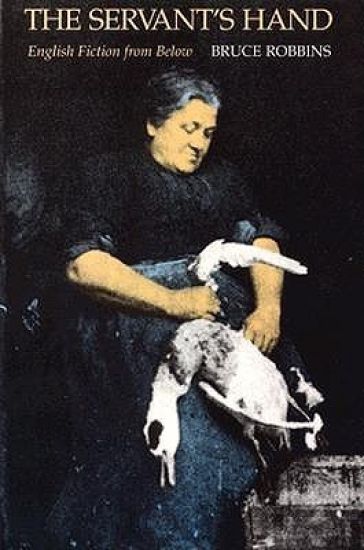
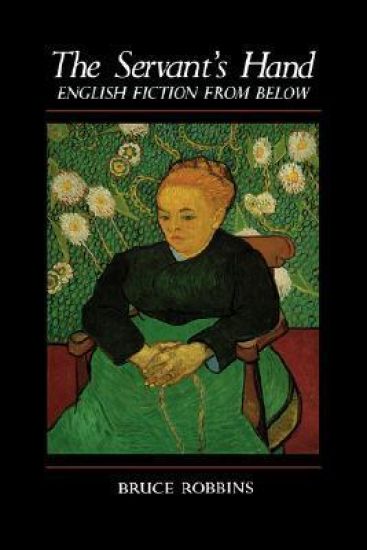
The Servant's Hand

The Servant's Hand

Bruce Robbins

Columbia University Press
1986
sidottu
A work of innovative literary and cultural history, The Servant's Hand examines the representation of servants in nineteenth-century British fiction. Wandering in the margins of these texts that are not about them, servants are visible only as anachronistic appendages to their masters and as functions of traditional narrative form. Yet their persistence, Robbins argues, signals more than the absence of the ordinary people they are taken to represent. Robbins's argument offers a new and distinctive approach to the literary analysis of class, while it also bodies forth a revisionist counterpolitics to the realist tradition from Homer to Virginia Woolf. Originally published in 1986 (Columbia University Press), The Servant's Hand is appearing for the first time in paperback.
Upward Mobility and the Common Good

Upward Mobility and the Common Good

Bruce Robbins

Princeton University Press
2007
sidottu
We think we know what upward mobility stories are about--virtuous striving justly rewarded, or unprincipled social climbing regrettably unpunished. Either way, these stories seem obviously concerned with the self-making of self-reliant individuals rather than with any collective interest. In Upward Mobility and the Common Good, Bruce Robbins completely overturns these assumptions to expose a hidden tradition of erotic social interdependence at the heart of the literary canon. Reinterpreting novels by figures such as Balzac, Stendhal, Charlotte Bront, Dickens, Dreiser, Wells, Doctorow, and Ishiguro, along with a number of films, Robbins shows how deeply the material and erotic desires of upwardly mobile characters are intertwined with the aid they receive from some sort of benefactor or mentor. In his view, Hannibal Lecter of The Silence of the Lambs becomes a key figure of social mobility in our time. Robbins argues that passionate and ambiguous relationships (like that between Lecter and Clarice Starling) carry the upward mobility story far from anyone's simple self-interest, whether the protagonist's or the mentor's. Robbins concludes that upward mobility stories have paradoxically helped American and European society make the transition from an ethic of individual responsibility to one of collective accountability, a shift that made the welfare state possible, but that also helps account for society's fascination with cases of sexual abuse and harassment by figures of authority.
Upward Mobility and the Common Good

Upward Mobility and the Common Good

Bruce Robbins

Princeton University Press
2010
pokkari
We think we know what upward mobility stories are about--virtuous striving justly rewarded, or unprincipled social climbing regrettably unpunished. Either way, these stories seem obviously concerned with the self-making of self-reliant individuals rather than with any collective interest. In Upward Mobility and the Common Good, Bruce Robbins completely overturns these assumptions to expose a hidden tradition of erotic social interdependence at the heart of the literary canon. Reinterpreting novels by figures such as Balzac, Stendhal, Charlotte Bronte, Dickens, Dreiser, Wells, Doctorow, and Ishiguro, along with a number of films, Robbins shows how deeply the material and erotic desires of upwardly mobile characters are intertwined with the aid they receive from some sort of benefactor or mentor. In his view, Hannibal Lecter of The Silence of the Lambs becomes a key figure of social mobility in our time. Robbins argues that passionate and ambiguous relationships (like that between Lecter and Clarice Starling) carry the upward mobility story far from anyone's simple self-interest, whether the protagonist's or the mentor's. Robbins concludes that upward mobility stories have paradoxically helped American and European society make the transition from an ethic of individual responsibility to one of collective accountability, a shift that made the welfare state possible, but that also helps account for society's fascination with cases of sexual abuse and harassment by figures of authority.
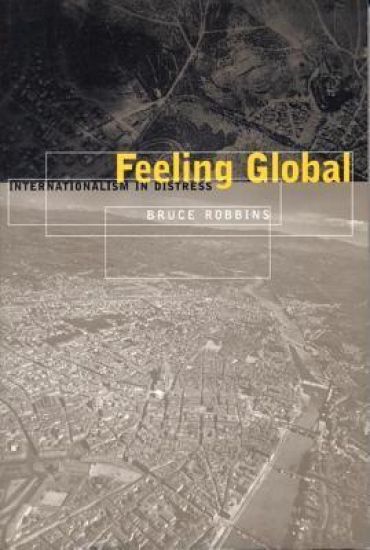
Feeling Global

Feeling Global

Bruce Robbins

New York University Press
1999
sidottu
Is global culture merely a pale and sinister reflection of capitalist globalization? Bruce Robbins responds to this and other questions in Feeling Global, a crucial document on nationalism, culturalism, and the role of intellectuals in the age of globalization. Building on his previous work, Robbins here takes up the question of the status of international human rights. Robbins' conception of internationalism is driven not only by the imperatives of global human rights policy, but by an understanding of transnational cultures, thus linking practical policymaking to cultural politics at the expense of neither. Robbins' cultural criticism, in other words, affords us much more than an understanding of how culture "shapes our lives." Instead, Robbins shows, particularly in his discussions of Martha Nussbaum, Richard Rorty, Susan Sontag, Michael Walzer and others, how "culture" itself has become a term that blocks—for commentators on both the right and the left—serious engagement with the contemporary cosmopolitan ideal of a nonuniversalist discourse of human rights. Rescuing "cosmopolitanism" itself from its connotations of leisured individuals loyal to no one and willing to sample all cultures at will, Feeling Global presents a compelling way to think about the ethical obligations of intellectuals at a time when their place in the new world order is profoundly uncertain.
The Servant's Hand

The Servant's Hand

Bruce Robbins

Duke University Press
1993
pokkari
A work of innovative literary and cultural history, The Servant's Hand examines the representation of servants in nineteenth-century British fiction. Wandering in the margins of these texts that are not about them, servants are visible only as anachronistic appendages to their masters and as functions of traditional narrative form. Yet their persistence, Robbins argues, signals more than the absence of the "ordinary people" they are taken to represent. Robbins's argument offers a new and distinctive approach to the literary analysis of class, while it also bodies forth a revisionist counterpolitics to the realist tradition from Homer to Virginia Woolf. Originally published in 1986 (Columbia University Press), The Servant's Hand is appearing for the first time in paperback.
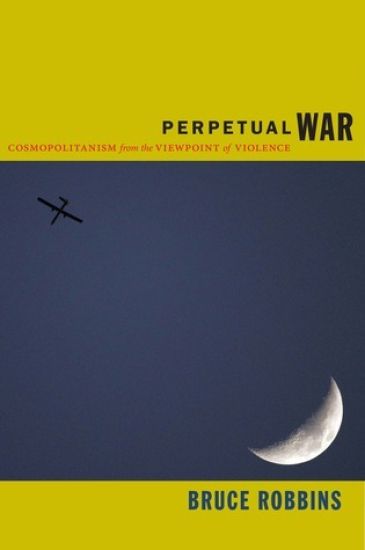
Perpetual War

Perpetual War

Bruce Robbins

Duke University Press
2012
sidottu
For two decades Bruce Robbins has been a theorist of and participant in the movement for a "new cosmopolitanism," an appreciation of the varieties of multiple belonging that emerge as peoples and cultures interact. In Perpetual War he takes stock of this movement, rethinking his own commitment and reflecting on the responsibilities of American intellectuals today. In this era of seemingly endless U.S. warfare, Robbins contends that the declining economic and political hegemony of the United States will tempt it into blaming other nations for its problems and lashing out against them.Under these conditions, cosmopolitanism in the traditional sense-primary loyalty to the good of humanity as a whole, even if it conflicts with loyalty to the interests of one's own nation-becomes a necessary resource in the struggle against military aggression. To what extent does the "new" cosmopolitanism also include or support this "old" cosmopolitanism? In an attempt to answer this question, Robbins engages with such thinkers as Noam Chomsky, Edward Said, Anthony Appiah, Immanuel Wallerstein, Louis Menand, W. G. Sebald, and Slavoj Zizek. The paradoxes of detachment and belonging they embody, he argues, can help define the tasks of American intellectuals in an era when the first duty of the cosmopolitan is to resist the military aggression perpetrated by his or her own country.
Perpetual War

Perpetual War

Bruce Robbins

Duke University Press
2012
pokkari
For two decades Bruce Robbins has been a theorist of and participant in the movement for a "new cosmopolitanism," an appreciation of the varieties of multiple belonging that emerge as peoples and cultures interact. In Perpetual War he takes stock of this movement, rethinking his own commitment and reflecting on the responsibilities of American intellectuals today. In this era of seemingly endless U.S. warfare, Robbins contends that the declining economic and political hegemony of the United States will tempt it into blaming other nations for its problems and lashing out against them.Under these conditions, cosmopolitanism in the traditional sense-primary loyalty to the good of humanity as a whole, even if it conflicts with loyalty to the interests of one's own nation-becomes a necessary resource in the struggle against military aggression. To what extent does the "new" cosmopolitanism also include or support this "old" cosmopolitanism? In an attempt to answer this question, Robbins engages with such thinkers as Noam Chomsky, Edward Said, Anthony Appiah, Immanuel Wallerstein, Louis Menand, W. G. Sebald, and Slavoj Zizek. The paradoxes of detachment and belonging they embody, he argues, can help define the tasks of American intellectuals in an era when the first duty of the cosmopolitan is to resist the military aggression perpetrated by his or her own country.
The Beneficiary

The Beneficiary

Bruce Robbins

Duke University Press
2017
sidottu
From iPhones and clothing to jewelry and food, the products those of us in the developed world consume and enjoy exist only through the labor and suffering of countless others. In his new book Bruce Robbins examines the implications of this dynamic for humanitarianism and social justice. He locates the figure of the "beneficiary" in the history of humanitarian thought, which asks the prosperous to help the poor without requiring them to recognize their causal role in the creation of the abhorrent conditions they seek to remedy. Tracing how the beneficiary has manifested itself in the work of George Orwell, Virginia Woolf, Jamaica Kincaid, Naomi Klein, and others, Robbins uncovers a hidden tradition of economic cosmopolitanism. There are no easy answers to the question of how to confront systematic inequality on a global scale. But the first step, Robbins suggests, is to acknowledge that we are, in fact, beneficiaries.
The Beneficiary

The Beneficiary

Bruce Robbins

Duke University Press
2017
pokkari
From iPhones and clothing to jewelry and food, the products those of us in the developed world consume and enjoy exist only through the labor and suffering of countless others. In his new book Bruce Robbins examines the implications of this dynamic for humanitarianism and social justice. He locates the figure of the "beneficiary" in the history of humanitarian thought, which asks the prosperous to help the poor without requiring them to recognize their causal role in the creation of the abhorrent conditions they seek to remedy. Tracing how the beneficiary has manifested itself in the work of George Orwell, Virginia Woolf, Jamaica Kincaid, Naomi Klein, and others, Robbins uncovers a hidden tradition of economic cosmopolitanism. There are no easy answers to the question of how to confront systematic inequality on a global scale. But the first step, Robbins suggests, is to acknowledge that we are, in fact, beneficiaries.
Criticism and Politics

Criticism and Politics

Bruce Robbins

STANFORD UNIVERSITY PRESS
2022
sidottu
An accessible introduction to cultural theory and an original polemic about the purpose of criticism. What is criticism for? Over the past few decades, impassioned disagreements over that question in the academy have burst into the news media. These conflicts have renewed the culture wars over the legacy of the 1960s, becoming entangled in national politics and leading to a new set of questions about critics and the power they do or don't wield. Re-examining theorists from Matthew Arnold to Walter Benjamin, to Fredric Jameson, Stuart Hall, and Hortense Spillers, Criticism and Politics explores the animating contradictions that have long propelled literary studies: between pronouncing judgment and engaging in philosophical critique, between democracy and expertise, between political commitment and aesthetic autonomy. Both a leftist critic and a critic of the left, Robbins unflinchingly defends criticism from those who might wish to de-politicize it, arguing that working for change is not optional for critics, but rather a core part of their job description.
Criticism and Politics

Criticism and Politics

Bruce Robbins

STANFORD UNIVERSITY PRESS
2022
pokkari
An accessible introduction to cultural theory and an original polemic about the purpose of criticism. What is criticism for? Over the past few decades, impassioned disagreements over that question in the academy have burst into the news media. These conflicts have renewed the culture wars over the legacy of the 1960s, becoming entangled in national politics and leading to a new set of questions about critics and the power they do or don't wield. Re-examining theorists from Matthew Arnold to Walter Benjamin, to Fredric Jameson, Stuart Hall, and Hortense Spillers, Criticism and Politics explores the animating contradictions that have long propelled literary studies: between pronouncing judgment and engaging in philosophical critique, between democracy and expertise, between political commitment and aesthetic autonomy. Both a leftist critic and a critic of the left, Robbins unflinchingly defends criticism from those who might wish to de-politicize it, arguing that working for change is not optional for critics, but rather a core part of their job description.
Atrocity

Atrocity

Bruce Robbins

STANFORD UNIVERSITY PRESS
2025
sidottu
Exploring literary representations of mass violence, Bruce Robbins traces the emergence of a cosmopolitan recognition of atrocity. Mass violence did not always have a name. Like conquest, what we think of now as atrocities have not always invited indignation or been seen to violate moral norms. Venturing from the Bible to Zadie Smith, Robbins explores the literature of suffering, to show how, over time, abhorrence of mass violence takes shape. With it comes the emergence of a necessary element of cosmopolitanism: the ability to look at one's own nation with the critical eyes of a stranger. Drawing on a vast written archive and with penetrating insight, Robbins takes up such literary representations of violence as Bartolomé de las Casas's account of his fellow Spaniards' atrocities, Kurt Vonnegut's Slaughterhouse-Five, Grimmelshausen's 1668 novel Simplicissimus, David Mitchell's Cloud Atlas, Gabriel García Márquez's One Hundred Years of Solitude, Homero Aridjis's short novel Smyrna in Flames, and Tolstoy's Hadji Murat. These essential texts do more than simply testify to atrocious acts. In their literariness, they take the risk of contextualizing and relativizing, thereby extending beyond the legal paradigm of accusation. They recognize atrocity as a moral scandal about which something should be done and can be done, while they also place that scandal within a larger and more uncertain history.
Who's Allowed to Protest?

Who's Allowed to Protest?

Bruce Robbins

Melville House Publishing
2026
nidottu
WHO'S ALLOWED TO PROTEST? is the essential guide for understanding why some political voices are amplified, others are silenced, and how the fight over "who's too elite" to dissent will determine our democratic fates. Why do charges of "privilege" haunt every new protest wave? In this electrifying blend of short history and manifesto, Columbia University professor Bruce Robbins picks apart the insult that demonstrators are merely elite status-seekers--and shows why the same complaints surfaced against Vietnam-era marchers, Iraq War protesters, and, most recently, the Gaza encampments that shook campuses nationwide. Robbins spars with contemporary critics, like David Brooks and Musa al-Gharbi, who insist that campus activists are secretly angling for elite credentials. Along the way, he recounts his own run-ins with university discipline boards and offers a reckoning with what it really costs--financially, socially, and personally--to stand against abuses of power.