Kirjojen hintavertailu. Mukana 11 244 527 kirjaa ja 12 kauppaa.

Kirjahaku

Etsi kirjoja tekijän nimen, kirjan nimen tai ISBN:n perusteella.

8 kirjaa tekijältä Bruce W. Longenecker

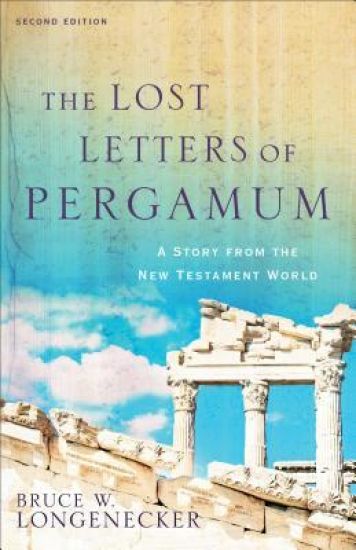
The Lost Letters of Pergamum – A Story from the New Testament World

The Lost Letters of Pergamum – A Story from the New Testament World

Bruce W. Longenecker

Baker Academic, Div of Baker Publishing Group
2016
nidottu
A Fascinating Glimpse into the World of the New TestamentTransported two thousand years into the past, readers are introduced to Antipas, a Roman civic leader who has encountered the writings of the biblical author Luke. Luke's history sparks Antipas's interest, and they begin corresponding. While the account is fictional, the author is a highly respected New Testament scholar who weaves reliable historical information into a fascinating story, offering a fresh, engaging, and creative way to learn about the New Testament world. The first edition has been widely used in the classroom (over 30,000 copies sold). This updated edition, now with improved readability and narrative flow, will bring the social and political world of Jesus and his first followers to life for many more students of the Bible.
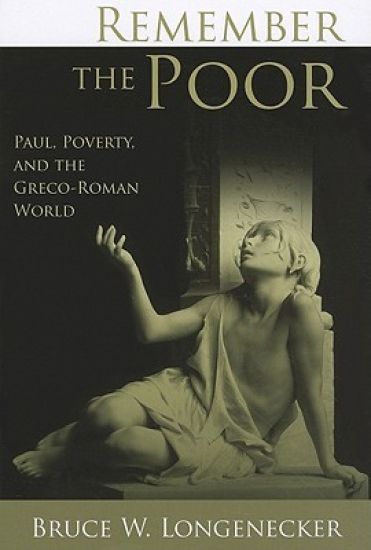
Remember the Poor

Remember the Poor

Bruce W. Longenecker

William B Eerdmans Publishing Co
2010
nidottu
Combining historical, exegetical, and theological interests, Bruce Longenecker here dispels the widespread notion that Paul had little or no concern for the poor. Longnecker's analysis of Greco-Roman poverty provides the backdrop for a compelling presentation of the importance of care for the poor within Paul's theology and the Jesus-groups he had established. Along the way, Longenecker calls into question a variety of interpretive paradigms -- such as Steven J. Friesen's 2004 poverty scale -- and offers a fresh vision in which Paul's theological resources are shown to be both historically significant and theologically challenging.
Engaging Economics

Engaging Economics

Bruce W. Longenecker

William B Eerdmans Publishing Co
2009
nidottu
Engaging Economics exposes economic dimensions of the theology of the early Jesus movement, as reflected both in the texts of the New Testament and in the reception of those texts within the patristic era. Under these two considerations, the contributors demonstrate that an economic dimension was an integral component of this early movement and indicate how, in later centuries, that economic dimension was either further developed or ignored altogether.
The Crosses of Pompeii

The Crosses of Pompeii

Bruce W. Longenecker

Fortress Press,U.S.
2016
pokkari
Through a twist of fate, the eruption that destroyed Pompeii in 79 CE also preserved a wealth of evidence about the town, buried for centuries in volcanic ash. Since the town's excavations in the eighteenth century, archaeologists have disputed the evidence that might attest the presence of Christians in Pompeii before the eruption. Now, Bruce W. Longenecker reviews that evidence, in comparison with other possible evidence of first-century Christian presence elsewhere, and reaches the conclusion that there were indeed Christians living in the doomed town. Illustrated with maps, charts, photographs, and line drawings depicting artefacts from the town, The Crosses of Pompeii presents an elegant case for their presence. Longenecker's arguments require dramatic changes to our understanding of the early history of Christianity.
The Cross before Constantine

The Cross before Constantine

Bruce W. Longenecker

Fortress Press,U.S.
2015
pokkari
This book brings together, for the first time, the relevant material evidence demonstrating Christian use of the cross prior to Constantine. Bruce W. Longenecker upends a longstanding consensus that the cross was not a Christian symbol until Constantine appropriated it to consolidate his power in the fourth century. Longenecker presents a wide variety of artifacts from across the Mediterranean basin that testify to the use of the cross as a visual symbol by some pre-Constantinian Christians. Those artifacts interlock with literary witnesses from the same period to provide a consistent and robust portrait of the cross as a pre-Constantinian symbol of Christian devotion. The material record of the pre-Constantinian period illustrates that Constantine did not invent the cross as a symbol of Christian faith,- for an impressive number of Christians before Constantine's reign, the cross served as a visual symbol of commitment to a living deity in a dangerous world.
The Materiality of Early Christ Devotion

The Materiality of Early Christ Devotion

Bruce W. Longenecker

Baylor University Press
2025
sidottu
In the fourth and fifth centuries CE, Christian artistry began to flourish, as elite patrons sponsored decorative initiatives for basilica churches throughout the Mediterranean basin. But what about the first three centuries? Living prior to the Constantinian age of tolerance, did Christ followers of that period engage in artistic expressions that externalized their theological hopes and convictions? The question can best be answered by consulting the ancient material record itself. The study of the Greco-Roman world has increasingly taken a "material turn" with the recognition that the archaeological record is integral in shaping our understanding of ancient cultures and civilizations. Foregrounding the material data reanimates the lived experience of people on the ground. To what extent did early Christ followers leave their mark on the material record of the Roman world? This is the question Bruce Longenecker explores in The Materiality of Early Christ Devotion. An array of evidence from around the Mediterranean basin testifies to some fascinating ways that Christ followers expressed themselves in artistic media—gravestones, rings and gemstones, amulets, wall plaster, and mosaics. In particular, four archaeological sites allow us to see Christ followers giving life to their theological convictions in ways shaped by their localized situations. In Ostia and the aftermath of persecution, we glimpse a cautious but hopeful Christ devotion, with Christ followers creating cryptic artistic symbols within a public space. In Dura-Europos and the context of international embattlement, we encounter an ambitious and impassioned Christ devotion, as Christ followers used art to enhance their experiences of empowerment, illumination, and union with the divine. In Smyrna where numerical mysticism was fashionable, we discover a savvy and sapiential Christ devotion, with Christ followers embedding their devotion in artistic puzzles that exhibited the mystical and mathematical dimensions of their beliefs. In Pompeii, we catch sight of an embryonic Christ devotion that, like countless artistic artifacts from the town, displayed a simple hope for protection from evil forces and the insecurities of life. Building on the findings of archaeologists and historians, Longenecker's innovative interpretations offer fresh opportunities to see the diversity of localized forms of Christ devotion through the artistic ingenuity of pre-Constantinian Christ followers.
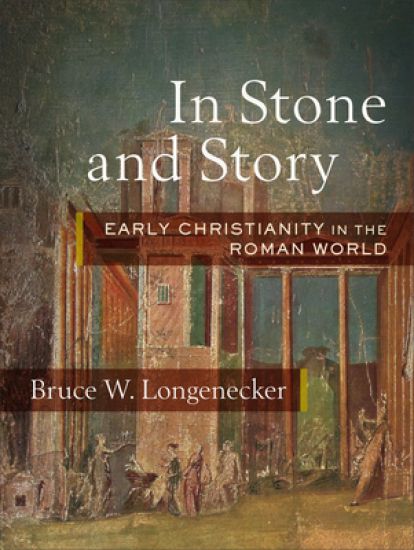
In Stone and Story

In Stone and Story

Bruce W. Longenecker

Baker Academic, Div of Baker Publishing Group
2020
sidottu
This beautifully designed, full-color textbook introduces the Roman background of the New Testament by immersing students in the life and culture of the thriving first-century towns of Pompeii and Herculaneum, which act as showpieces of the world into which the early Christian movement was spreading. Bruce Longenecker, a leading scholar of the ancient world of the New Testament, discusses first-century artifacts in relation to the life stories of people from the Roman world. The book includes discussion questions, maps, and 175 color photographs. Additional resources are available through Textbook eSources.
Rhetoric at the Boundaries

Rhetoric at the Boundaries

Bruce W. Longenecker

Baylor University Press
2005
sidottu
In Rhetoric at the Boundaries Bruce W. Longenecker explores the way in which New Testament authors used an ancient rhetorical device to effect smooth transitions, both large and small. His study demonstrates how recognition of this rhetorical technique proves decisive for New Testament interpretation. Longenecker accomplishes this by examining the evidence for chain-link interlocks in a variety of ancient sources, including the Hebrew scriptures, Jewish and Roman authors of the Graeco-Roman world, and the Graeco-Roman rhetoricians. He then applies the results of the survey to fifteen problematic passages of the New Testament. In each case, Longenecker establishes the presence of chain-link interlock and highlights the structural, literary, and theological significance of the rhetorical device for New Testament interpretation.