Kirjojen hintavertailu. Mukana 12 093 349 kirjaa ja 12 kauppaa.

Kirjahaku

Etsi kirjoja tekijän nimen, kirjan nimen tai ISBN:n perusteella.

4 kirjaa tekijältä Bruno Corà

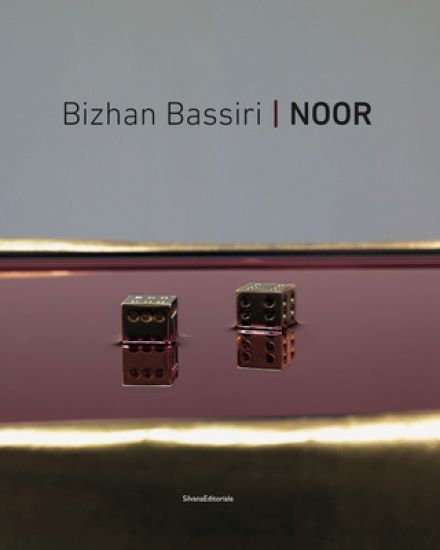
Bizhan Bassiri

Bizhan Bassiri

Bruno Corà

Silvana
2018
sidottu
The book documents the formal research of Italo-Persian artist Bizhan Bassiri, who in 1986 wrote the Manifesto of Magmatic Thought. Here he refers to the work of art as the effect of an intuition that arrives within from without but after acquiring substance and form is manifested externally again, in the hope that, ideally, it will last forever. The word 'Noor' clearly refers to the natural light which will put the sculpture Specchio Solare in touch with the space surrounding it, freeing it from its basic function as a reflecting surface to turn it into a place where light becomes shape. Text in English, Italian and Persian.
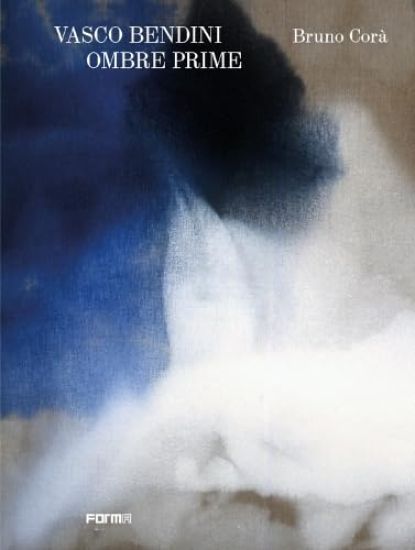
Vasco Bendini. Ombre prime

Vasco Bendini. Ombre prime

Bruno Corà

Forma Edizioni
2024
nidottu
Catalogue of the exhibition dedicated by La Galleria Nazionale di Roma to Vasco Bendini on the occasion of the 100th anniversary of his birth, which opened in March 2022. The volume accompanies the discovery of the career of one of the major artists of the second half of the Italian 20th century, from his early training with Giorgio Morandi, up to the great Roman solo exhibitions and the Biennales of his maturity. The work of Vasco Bendini, dear to critics such as Francesco Arcangeli and Maurizio Calvesi, opens in the immediate postwar period, following an informal language in search of the volto as a universal archetype, to then focus on gesture and matter, under the influence of, among others, Jean Fautrier. The 1960s are characterised by the inclusion in the paintings of heterogeneous objects and materials, in an approach to Arte Povera and then, with actions and installations, to the Neodada way of doing things. The central objective for Bendini remains in fact the involvement of the viewer, in a fruitful dialogue necessary for the development of his poetics. A large selection of archival photos, along with essays and alleri productions of the works, is flanked by a critical anthology and unpublished writings by the Master. Text in English and Italian.
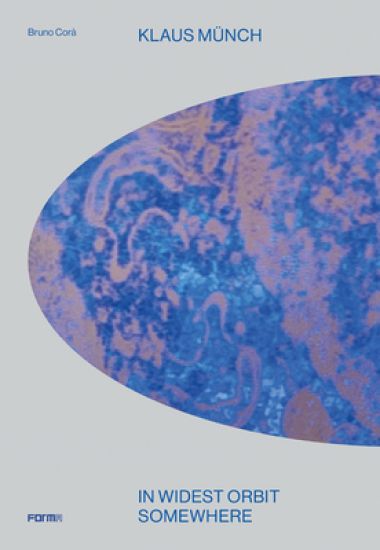
Klaus Münch

Klaus Münch

Bruno Corà

Forma Edizioni
2023
sidottu
This volume presents the artistic career of Klaus Münch through a selection of his work, ahead of an exhibition opening in Spoleto, Italy in October 2023. Born in Freiburg, Germany, after attending the Academy of Fine Arts in Carrara, where he graduated in sculpture, he studied in Munich, specialising in painting. Since then, he has chosen to live and work in Italy, where he pursues his personal artistic investigation of the world. His work moves in the fertile furrow between sculpture and painting. Starting from the examples of Mario and Marisa Merz, Gilberto Zorio, Giovanni Anselmo and comparing himself with artists of the same age such as Vittorio Messina and Eduard Winklhofer, Münch analyses the complex relationship between creation and space, between colour and shape. Includes essays by Marco Tonelli, Ivo Iori and the curator Bruno Corà himself. Text in English and Italian.
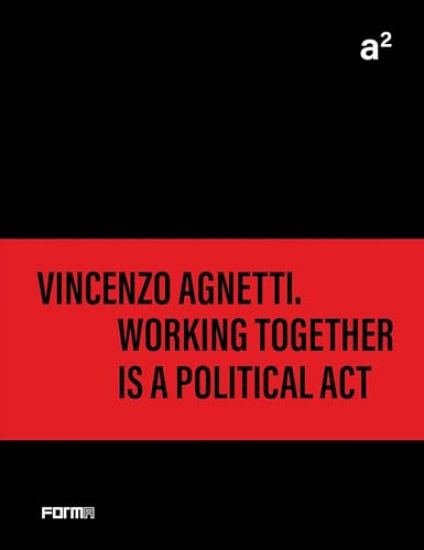
a² Vincenzo Agnetti. Working together is a political act
Working together for Agnetti, after all, had been the incipit, as he would tell Tommaso Trini a few years later: ‘a first step’, an initial phase of his work that he called ‘Spontaneous intervention with friends’. By the end of the 1950s, Agnetti had become very close to Manzoni and Castellani, an elective affinity that would endure over the years beyond individual biographical events, and which was built on shared interests and dreams. At the time, Manzoni and Castellani were artists, while he worked in the field of electronic automation. Apart from writing about Azimuth, which testifies to his involvement in the group, in those years he wrote exclusively about and for Manzoni, with whom he was united by a special affinity on certain themes dear to them, which formed the humus of endless late-night discussions, at home around the steaming risotto he had prepared, or around Brera. Agnetti thought then that one could make art without making art, however by saying or writing. He would later state that writing and saying were, like the paintbrush, new tools indispensable to the artist.