Kirjojen hintavertailu. Mukana 12 016 292 kirjaa ja 12 kauppaa.

Kirjahaku

Etsi kirjoja tekijän nimen, kirjan nimen tai ISBN:n perusteella.

9 kirjaa tekijältä Bryan Frances

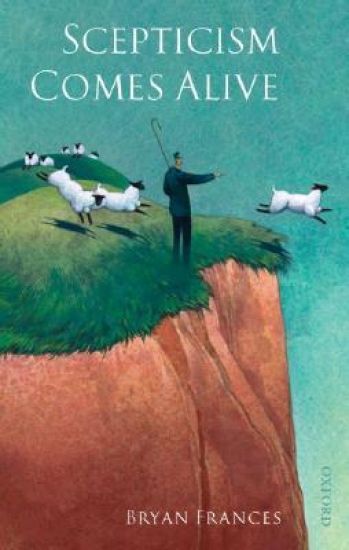
Scepticism Comes Alive

Scepticism Comes Alive

Bryan Frances

Clarendon Press
2005
sidottu
In epistemology the nagging voice of the sceptic has always been present. Over the last thirty years or so philosophers have thought of several promising ways to counter the radical sceptic: for instance, facts about the reliability of our cognitive processes, principles determining which possibilities must be ruled out in order to have knowledge, and principles regarding the context-sensitivity of knowledge attributions. In this entertaining and provocative book, Bryan Frances presents a new argument template for generating new kinds of radical scepticism, ones that hold even if all the clever anti-sceptical fixes defeat the traditional sceptic. Not only is the argument schema novel, but the sceptical consequences are entirely unexpected. Although the new sceptic concludes that we don't know that fire engines are red, that we sometimes have pains in our knees, or even that we believe that fire engines are red or that knees sometimes throb, he admits that we know millions of exotic truths such as the fact that black holes exist. You can know about the existence of black holes, but not about the colour of your shirt or even about what you believe regarding the colour of your shirt. The new sceptical arguments proceed in the usual way (here's a sceptical hypothesis; you can't neutralize it, you have to be able to neutralize it to know P; so you don't know P), but the sceptical hypotheses plugged into it are 'real live' scientific-philosophical hypotheses often thought to be actually true, such as error theories about belief, colour, pain location, and character traits. Frances investigates the questions, 'Under what conditions do we need to rule out these error theories in order to know things inconsistent with them?' and 'Can we rule them out?' Particular attention is paid to recent methods used to counter the traditional sceptic. Sharp, witty, and fun to read, Scepticism Comes Alive will be highly provocative for anyone interested in knowledge and its limits.
Scepticism Comes Alive

Scepticism Comes Alive

Bryan Frances

Oxford University Press
2008
nidottu
In epistemology the nagging voice of the sceptic has always been present. Over the last thirty years or so philosophers have thought of several promising ways to counter the radical sceptic: for instance, facts about the reliability of our cognitive processes, principles determining which possibilities must be ruled out in order to have knowledge, and principles regarding the context-sensitivity of knowledge attributions. In this entertaining and provocative book, Bryan Frances presents a new argument template for generating new kinds of radical scepticism, ones that hold even if all the clever anti-sceptical fixes defeat the traditional sceptic. Not only is the argument schema novel, but the sceptical consequences are entirely unexpected. Although the new sceptic concludes that we don't know that fire engines are red, that we sometimes have pains in our knees, or even that we believe that fire engines are red or that knees sometimes throb, she admits that we know millions of exotic truths such as the fact that black holes exist. You can know about the existence of black holes, but not about the colour of your shirt or even about what you believe regarding the colour of your shirt. The new sceptical arguments proceed in the usual way (here's a sceptical hypothesis; you can't neutralize it, you have to be able to neutralize it to know P; so you don't know P), but the sceptical hypotheses plugged into it are 'real live' scientific-philosophical hypotheses often thought to be actually true, such as error theories about belief, colour, pain location, and character traits. Frances investigates the questions, 'Under what conditions do we need to rule out these error theories in order to know things inconsistent with them?' and 'Can we rule them out?' Particular attention is paid to recent methods used to counter the traditional sceptic. Sharp, witty, and fun to read, Scepticism Comes Alive will be highly provocative for anyone interested in knowledge and its limits.
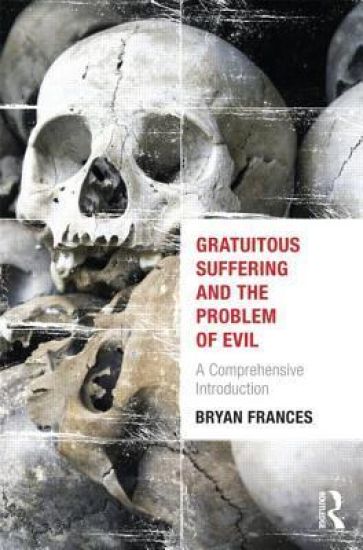
Gratuitous Suffering and the Problem of Evil
Suffering that is not coupled with any redeeming good is one of our world’s more troubling, apparent glitches. It is particularly vexing for any theist who believes that the world was created by a supremely morally good, knowledgeable, and powerful god. Gratuitous Suffering and the Problem of Evil: A Comprehensive Introduction is among the first book-length discussions of theistic approaches to this issue. Bryan Frances’s lucid and jargon-free analyses of a variety of possible responses to the problem of gratuitous suffering will provide serious students or general readers much material with which to begin an extended contemplation of this ancient and contemporary concern.The perfect size and scope for an introductory philosophy class’s discussion of the problem of evil and suffering, and deliberately crafted to be approachable by all interested readers, Gratuitous Suffering and the Problem of Evil is philosophy doing what it does best: serious, engaged, rigorous explorations of even the darkest truths.The book offers many useful pedagogical features, including chapter overviews and summaries, annotated suggested readings, and eight-eight discussion questions.
Gratuitous Suffering and the Problem of Evil
Suffering that is not coupled with any redeeming good is one of our world’s more troubling, apparent glitches. It is particularly vexing for any theist who believes that the world was created by a supremely morally good, knowledgeable, and powerful god. Gratuitous Suffering and the Problem of Evil: A Comprehensive Introduction is among the first book-length discussions of theistic approaches to this issue. Bryan Frances’s lucid and jargon-free analyses of a variety of possible responses to the problem of gratuitous suffering will provide serious students or general readers much material with which to begin an extended contemplation of this ancient and contemporary concern.The perfect size and scope for an introductory philosophy class’s discussion of the problem of evil and suffering, and deliberately crafted to be approachable by all interested readers, Gratuitous Suffering and the Problem of Evil is philosophy doing what it does best: serious, engaged, rigorous explorations of even the darkest truths.The book offers many useful pedagogical features, including chapter overviews and summaries, annotated suggested readings, and eight-eight discussion questions.
Disagreement

Disagreement

Bryan Frances

Polity Press
2014
sidottu
Regardless of who you are or how you live your life, you disagree with millions of people on an enormous number of topics from politics, religion and morality to sport, culture and art. Unless you are delusional, you are aware that a great many of the people who disagree with you are just as smart and thoughtful as you are - in fact, you know that often they are smarter and more informed. But believing someone to be cleverer or more knowledgeable about a particular topic usually won’t change your mind. Should it? This book is devoted to exploring this quandary - what should we do when we encounter disagreement, particularly when we believe someone is more of an authority on a subject than we are? The question is of enormous importance, both in the public arena and in our personal lives. Disagreement over marriages, beliefs, friendships and more causes immense personal strife. People with political power disagree about how to spend enormous amounts of money, about what laws to pass, or about wars to fight. If only we were better able to resolve our disagreements, we would probably save millions of lives and prevent millions of others from living in poverty. The first full-length text-book on this philosophical topic, Disagreement provides students with the tools they need to understand the burgeoning academic literature and its (often conflicting) perspectives. Including case studies, sample questions and chapter summaries, this engaging and accessible book is the perfect starting point for students and anyone interested in thinking about the possibilities and problems of this fundamental philosophical debate.
Disagreement

Disagreement

Bryan Frances

Polity Press
2014
nidottu
Regardless of who you are or how you live your life, you disagree with millions of people on an enormous number of topics from politics, religion and morality to sport, culture and art. Unless you are delusional, you are aware that a great many of the people who disagree with you are just as smart and thoughtful as you are - in fact, you know that often they are smarter and more informed. But believing someone to be cleverer or more knowledgeable about a particular topic usually won’t change your mind. Should it? This book is devoted to exploring this quandary - what should we do when we encounter disagreement, particularly when we believe someone is more of an authority on a subject than we are? The question is of enormous importance, both in the public arena and in our personal lives. Disagreement over marriages, beliefs, friendships and more causes immense personal strife. People with political power disagree about how to spend enormous amounts of money, about what laws to pass, or about wars to fight. If only we were better able to resolve our disagreements, we would probably save millions of lives and prevent millions of others from living in poverty. The first full-length text-book on this philosophical topic, Disagreement provides students with the tools they need to understand the burgeoning academic literature and its (often conflicting) perspectives. Including case studies, sample questions and chapter summaries, this engaging and accessible book is the perfect starting point for students and anyone interested in thinking about the possibilities and problems of this fundamental philosophical debate.
The Epistemic Consequences of Paradox

The Epistemic Consequences of Paradox

Bryan Frances

Cambridge University Press
2022
pokkari
By pooling together exhaustive analyses of certain philosophical paradoxes, we can prove a series of fascinating results regarding philosophical progress, agreement on substantive philosophical claims, knockdown arguments in philosophy, the wisdom of philosophical belief (quite rare, because the knockdown arguments show that we philosophers have been wildly wrong about language, logic, truth, or ordinary empirical matters), the epistemic status of metaphysics, and the power of philosophy to refute common sense. As examples, this Element examines the Sorites Paradox, the Liar Paradox, and the Problem of the Many – although many other paradoxes can do the trick too.
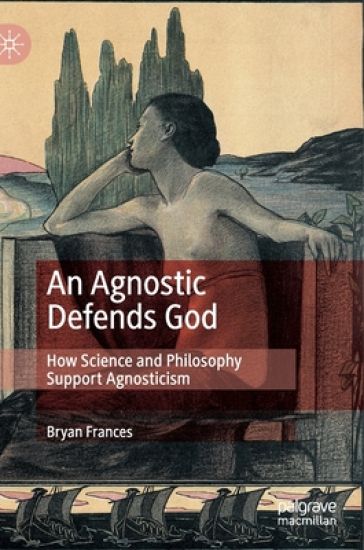
An Agnostic Defends God

An Agnostic Defends God

Bryan Frances

Springer Nature Switzerland AG
2021
sidottu
This book contains a unique perspective: that of a scientifically and philosophically educated agnostic who thinks there is impressive—if maddeningly hidden—evidence for the existence of God. Science and philosophy may have revealed the poverty of the familiar sources of evidence, but they generate their own partial defense of theism. Bryan Frances, a philosopher with a graduate degree in physics, judges the standard evidence for God’s existence to be awful. And yet, like many others with similar scientific and philosophical backgrounds, he argues that the usual reasons for atheism, such as the existence of suffering and success of science, are weak. In this book you will learn why so many people with scientific and philosophical credentials are agnostics (rather than atheists) despite judging all the usual evidence for theism to be fatally flawed.
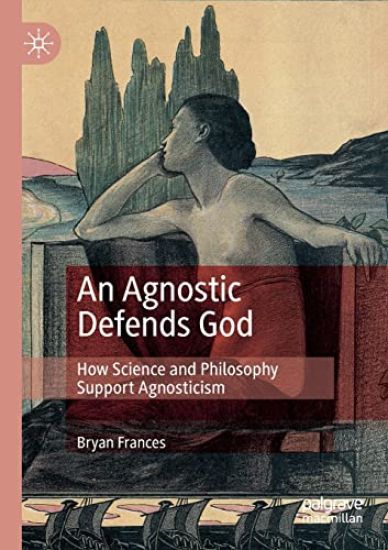
An Agnostic Defends God

An Agnostic Defends God

Bryan Frances

Springer Nature Switzerland AG
2022
nidottu
This book contains a unique perspective: that of a scientifically and philosophically educated agnostic who thinks there is impressive—if maddeningly hidden—evidence for the existence of God. Science and philosophy may have revealed the poverty of the familiar sources of evidence, but they generate their own partial defense of theism. Bryan Frances, a philosopher with a graduate degree in physics, judges the standard evidence for God’s existence to be awful. And yet, like many others with similar scientific and philosophical backgrounds, he argues that the usual reasons for atheism, such as the existence of suffering and success of science, are weak. In this book you will learn why so many people with scientific and philosophical credentials are agnostics (rather than atheists) despite judging all the usual evidence for theism to be fatally flawed.