Kirjojen hintavertailu. Mukana 11 244 527 kirjaa ja 12 kauppaa.

Kirjahaku

Etsi kirjoja tekijän nimen, kirjan nimen tai ISBN:n perusteella.

3 kirjaa tekijältä Bryan J. McCann

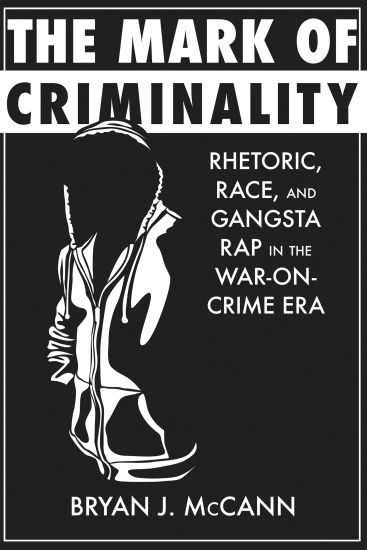
The Mark of Criminality

The Mark of Criminality

Bryan J. McCann

The University of Alabama Press
2019
nidottu
Illustrates the ways that the ""war on crime"" became conjoined—aesthetically, politically, and rhetorically—with the emergence of gangsta rap as a lucrative and deeply controversial subgenre of hip-hop.In The Mark of Criminality: Rhetoric, Race, and Gangsta Rap in the War-on-Crime Era, Bryan J. McCann argues that gangsta rap should be viewed as more than a damaging reinforcement of an era's worst racial stereotypes. Rather, he positions the works of key gangsta rap artists, as well as the controversies their work produced, squarely within the law-and-order politics and popular culture of the 1980s and 1990s to reveal a profoundly complex period in American history when the meanings of crime and criminality were incredibly unstable. At the center of this era—when politicians sought to prove their ""tough-on-crime"" credentials—was the mark of criminality, a set of discourses that labeled members of predominantly poor, urban, and minority communities as threats to the social order. Through their use of the mark of criminality, public figures implemented extremely harsh penal polices that have helped make the United States the world's leading jailer of its adult population. At the same time when politicians like Ronald Reagan, George H. W. Bush, and Bill Clinton and television shows such as COPS and America's Most Wanted perpetuated images of gang and drug-filled ghettos, gangsta rap burst out of the hip-hop nation, emanating mainly from the predominantly black neighborhoods of South Central Los Angeles. Groups like NWA and solo artists (including Dr. Dre, Snoop Dogg, and Tupac Shakur) became millionaires by marketing the very discourses political and cultural leaders used to justify their war on crime. For these artists, the mark of criminality was a source of power, credibility, and revenue. By understanding gangsta rap as a potent, if deeply imperfect, enactment of the mark of criminality, we can better understand how crime is always a site of struggle over meaning. Furthermore, by underscoring the nimble rhetorical character of criminality, we can learn lessons that may inform efforts to challenge our nation's failed policies of mass incarceration.
The Bundy Archive

The Bundy Archive

Bryan J. McCann

UNIVERSITY PRESS OF MISSISSIPPI
2026
sidottu
Since his first arrest in 1975, Ted Bundy has been the most ubiquitous serial killer in US popular culture. He is the subject of seven feature films or miniseries, several televised documentaries and podcasts, numerous true crime books, and myriad other texts trading in the saga of a man who kidnapped, raped, and murdered at least thirty white women and girls in the Pacific Northwest, Utah, Colorado, and Florida. The Bundy Archive: Genealogies of White Masculinity is the first scholarly study to investigate the deep, unsettling allure of Bundy within the public imagination. Working at the intersection of cultural criticism, true crime, and memoir, author Bryan J. McCann argues that Bundy’s ubiquity is not a function of his depravity and strangeness, but of his familiarity and resonance. McCann considers cultural artifacts, rhetoric, and popular texts surrounding Bundy—collectively constructing what he terms "the Bundy archive"—and demonstrates how these elements reveal public anxieties about and investments in white masculinity and gendered violence. The Bundy Archive maps the pervasive and disturbing ways that white masculinity is intertwined with sadistic violence, urging readers to confront the anxieties and societal investments that perpetuate this brutal legacy. McCann's work is a critical examination of how public culture grapples with the dark specter of white male violence, offering profound insights into the intersections of race, gender, and violence in modern America.
The Bundy Archive

The Bundy Archive

Bryan J. McCann

UNIVERSITY PRESS OF MISSISSIPPI
2026
pokkari
Since his first arrest in 1975, Ted Bundy has been the most ubiquitous serial killer in US popular culture. He is the subject of seven feature films or miniseries, several televised documentaries and podcasts, numerous true crime books, and myriad other texts trading in the saga of a man who kidnapped, raped, and murdered at least thirty white women and girls in the Pacific Northwest, Utah, Colorado, and Florida. The Bundy Archive: Genealogies of White Masculinity is the first scholarly study to investigate the deep, unsettling allure of Bundy within the public imagination. Working at the intersection of cultural criticism, true crime, and memoir, author Bryan J. McCann argues that Bundy’s ubiquity is not a function of his depravity and strangeness, but of his familiarity and resonance. McCann considers cultural artifacts, rhetoric, and popular texts surrounding Bundy—collectively constructing what he terms "the Bundy archive"—and demonstrates how these elements reveal public anxieties about and investments in white masculinity and gendered violence. The Bundy Archive maps the pervasive and disturbing ways that white masculinity is intertwined with sadistic violence, urging readers to confront the anxieties and societal investments that perpetuate this brutal legacy. McCann's work is a critical examination of how public culture grapples with the dark specter of white male violence, offering profound insights into the intersections of race, gender, and violence in modern America.