Kirjojen hintavertailu. Mukana 11 244 527 kirjaa ja 12 kauppaa.

Kirjahaku

Etsi kirjoja tekijän nimen, kirjan nimen tai ISBN:n perusteella.

6 kirjaa tekijältä Bryan McCann

Hello, Hello Brazil

Hello, Hello Brazil

Bryan McCann

Duke University Press
2004
pokkari
“Hello, hello Brazil” was the standard greeting Brazilian radio announcers of the 1930s used to welcome their audience into an expanding cultural marketplace. New genres like samba and repackaged older ones like choro served as the currency in this marketplace, minted in the capital in Rio de Janeiro and circulated nationally by the burgeoning recording and broadcasting industries. Bryan McCann chronicles the flourishing of Brazilian popular music between the 1920s and the 1950s. Through analysis of the competing projects of composers, producers, bureaucrats, and fans, he shows that Brazilians alternately envisioned popular music as the foundation for a unified national culture and used it as a tool to probe racial and regional divisions.McCann explores the links between the growth of the culture industry, rapid industrialization, and the rise and fall of Getúlio Vargas’s Estado Novo dictatorship. He argues that these processes opened a window of opportunity for the creation of enduring cultural patterns and demonstrates that the understandings of popular music cemented in the mid–twentieth century continue to structure Brazilian cultural life in the early twenty-first.
Hello, Hello Brazil

Hello, Hello Brazil

Bryan McCann

Duke University Press
2004
sidottu
“Hello, hello Brazil” was the standard greeting Brazilian radio announcers of the 1930s used to welcome their audience into an expanding cultural marketplace. New genres like samba and repackaged older ones like choro served as the currency in this marketplace, minted in the capital in Rio de Janeiro and circulated nationally by the burgeoning recording and broadcasting industries. Bryan McCann chronicles the flourishing of Brazilian popular music between the 1920s and the 1950s. Through analysis of the competing projects of composers, producers, bureaucrats, and fans, he shows that Brazilians alternately envisioned popular music as the foundation for a unified national culture and used it as a tool to probe racial and regional divisions.McCann explores the links between the growth of the culture industry, rapid industrialization, and the rise and fall of Getúlio Vargas’s Estado Novo dictatorship. He argues that these processes opened a window of opportunity for the creation of enduring cultural patterns and demonstrates that the understandings of popular music cemented in the mid–twentieth century continue to structure Brazilian cultural life in the early twenty-first.
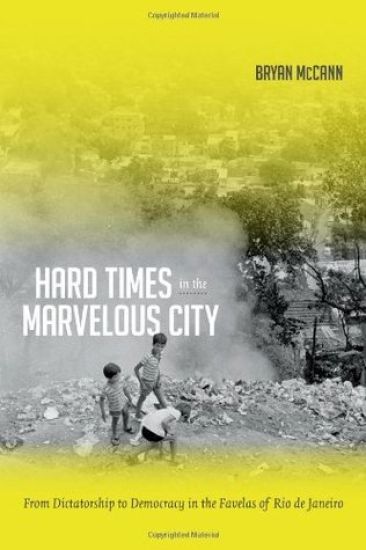
Hard Times in the Marvelous City

Hard Times in the Marvelous City

Bryan McCann

Duke University Press
2014
sidottu
Beginning in the late 1970s, activists from the favelas of Rio de Janeiro challenged the conditions-such as limited access to security, sanitation, public education, and formal employment-that separated favela residents from Rio's other citizens. The activists built a movement that helped to push the nation toward redemocratization. They joined with political allies in an effort to institute an ambitious slate of municipal reforms. Those measures ultimately fell short of aspirations, and soon the reformers were struggling to hold together a fraying coalition. Rio was bankrupted by natural disasters and hyperinflation and ravaged by drug wars. Well-armed drug traffickers had become the new lords of the favelas, protecting their turf through violence and patronage. By the early 1990s, the promise of the favela residents' mobilization of the late 1970s and early 1980s seemed out of reach. Yet the aspirations that fueled that mobilization have endured, and its legacy continues to shape favela politics in Rio de Janeiro.
Hard Times in the Marvelous City

Hard Times in the Marvelous City

Bryan McCann

Duke University Press
2014
pokkari
Beginning in the late 1970s, activists from the favelas of Rio de Janeiro challenged the conditions-such as limited access to security, sanitation, public education, and formal employment-that separated favela residents from Rio's other citizens. The activists built a movement that helped to push the nation toward redemocratization. They joined with political allies in an effort to institute an ambitious slate of municipal reforms. Those measures ultimately fell short of aspirations, and soon the reformers were struggling to hold together a fraying coalition. Rio was bankrupted by natural disasters and hyperinflation and ravaged by drug wars. Well-armed drug traffickers had become the new lords of the favelas, protecting their turf through violence and patronage. By the early 1990s, the promise of the favela residents' mobilization of the late 1970s and early 1980s seemed out of reach. Yet the aspirations that fueled that mobilization have endured, and its legacy continues to shape favela politics in Rio de Janeiro.
Rio de Janeiro

Rio de Janeiro

Bryan McCann

Cambridge University Press
2025
pokkari
What do nineteenth-century fiction, early twentieth-century popular music, 1930s soccer, 1950s film comedy, 1960s experimental art and 1970s soap operas have in common with one another? Each reveal the deep patterns structuring social and cultural life in Rio de Janeiro. Bringing a fresh perspective to one of the most visited cities in South America, Bryan McCann explores each manifestation in turn, mining their depths and drawing connections between artistic movements and political and economic transitions. The book explores the centrality of slavery to every aspect of life in nineteenth century Rio and its long legacy through to the current day, illuminating both the city's grinding inequality and violence, as well as its triumphant cultural expressions. Rio de Janeiro is a unique and fascinating city, and through ten pivotal moments, McCann reveals its boundless creativity and contradictions, and shows how it has been continually remade by newcomers, strivers, and tricksters.
Rio de Janeiro

Rio de Janeiro

Bryan McCann

Cambridge University Press
2025
sidottu
What do nineteenth-century fiction, early twentieth-century popular music, 1930s soccer, 1950s film comedy, 1960s experimental art and 1970s soap operas have in common with one another? Each reveal the deep patterns structuring social and cultural life in Rio de Janeiro. Bringing a fresh perspective to one of the most visited cities in South America, Bryan McCann explores each manifestation in turn, mining their depths and drawing connections between artistic movements and political and economic transitions. The book explores the centrality of slavery to every aspect of life in nineteenth century Rio and its long legacy through to the current day, illuminating both the city's grinding inequality and violence, as well as its triumphant cultural expressions. Rio de Janeiro is a unique and fascinating city, and through ten pivotal moments, McCann reveals its boundless creativity and contradictions, and shows how it has been continually remade by newcomers, strivers, and tricksters.