Kirjojen hintavertailu. Mukana 11 244 527 kirjaa ja 12 kauppaa.

Kirjahaku

Etsi kirjoja tekijän nimen, kirjan nimen tai ISBN:n perusteella.

2 kirjaa tekijältä Bryan R. Gibson

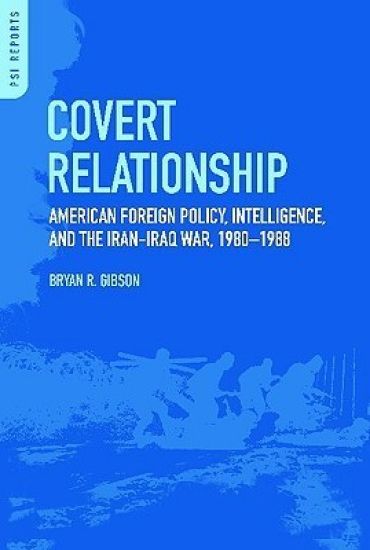
Covert Relationship

Covert Relationship

Bryan R. Gibson

Praeger Publishers Inc
2010
sidottu
This modern study of the Iran-Iraq War utilizes newly available primary materials to analyze American policy towards the war and question the veracity of the United States' claims of strict neutrality. The Iran-Iraq War lasted from September 1980 to August 1988, dominating the landscape of the Middle East and polarizing many of the world's nations for nearly a decade. This new work analyzes the United States' policy towards this vicious and extremely costly war, and questions the veracity of America's claims of strict neutrality. The contents of Covert Relationship: American Foreign Policy, Intelligence, and the Iran-Iraq War, 1980-1988 can be broken down into five sections: the conflict's origins, the Carter administration's response to the war, the Reagan administration's actions, changes to American policy during the Iran-Contra Affair, and the collapse of neutrality in the final two years of the war. The author boldly refutes the arguments of other authors about the war, and provides timely and relevant insights regarding American-Iraqi relations in light of the U.S. invasion of Iraq.
Sold Out? US Foreign Policy, Iraq, the Kurds, and the Cold War
This book analyzes the ways in which US policy toward Iraq was dictated by America's broader Cold War strategy between 1958 and 1975. While most historians have focused on “hot” Cold War conflicts such as Cuba, Vietnam, and Afghanistan, few have recognized Iraq's significance as a Cold War battleground. This book argues that US decisions and actions were designed to deny the Soviet Union influence over Iraq and to create a strategic base in the oil-rich Gulf region. Using newly available primary sources and interviews, this book reveals new details on America's decision-making toward and actions against Iraq during the height of the Cold War and shows where Iraq fits into the broader historiography of the Cold War in the Middle East. Further, it raises important questions about widely held misconceptions of US-Iraqi relations, such as the CIA's alleged involvement in the 1963 Ba'thist coup and the theory that the US sold out the Kurds in 1975.