

Kirjahaku
Etsi kirjoja tekijän nimen, kirjan nimen tai ISBN:n perusteella.
7 kirjaa tekijältä Burkhard Bilger
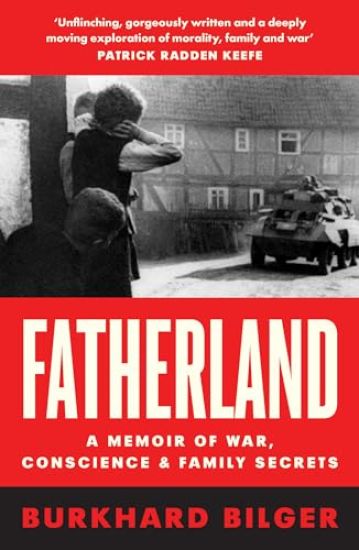
A New Yorker staff writer, investigates his grandfather, a Nazi Party Chief, in this "unflinching, gorgeously written, and deeply moving exploration of morality, family, and war” (Patrick Radden Keefe, author of Empire of Pain) ‘The book we need right now’ Atul Gawande, author of Being Mortal What do we owe the past? How to make peace with a dark family history? Burkhard Bilger hardly knew his grandfather growing up. His parents immigrated to Oklahoma from Germany after World War II, and though his mother was an historian, she rarely talked about her father or what he did during the war. Then one day a packet of letters arrived from Germany, yellowing with age, and a secret history began to unfold. Karl Gönner was a schoolteacher and Nazi party member from the Black Forest. In 1940, he was sent to a village in occupied France and tasked with turning its children into proper Germans. A fervent Nazi when the war began, he grew close to the villagers over the next four years, till he came to think of himself as their protector, shielding them from his own party’s brutality. Yet he was arrested in 1946 and accused of war crimes. Was he guilty or innocent? A vicious collaborator or just an ordinary man, struggling to atone for his country’s crimes? Bilger goes to Germany to find out. What follows is a literary suspense story: a tale of chance encounters and serendipitous discoveries in villages and dusty archives across Germany and France. Intimate and far-reaching, Fatherland is an extraordinary odyssey through the great upheavals of the past century, tracing one family’s path through history’s wreckage. For readers of Bart van Es’s The Cut Out Girl or Edmund de Waal’s The Hare with the Amber Eyes, this is a story of middle lands, torn allegiances and loaded family inheritance.
A New Yorker staff writer, investigates his grandfather, a Nazi Party Chief, in this "unflinching, gorgeously written, and deeply moving exploration of morality, family, and war" (Patrick Radden Keefe, author of Empire of Pain)'The book we need right now' Atul Gawande, author of Being Mortal
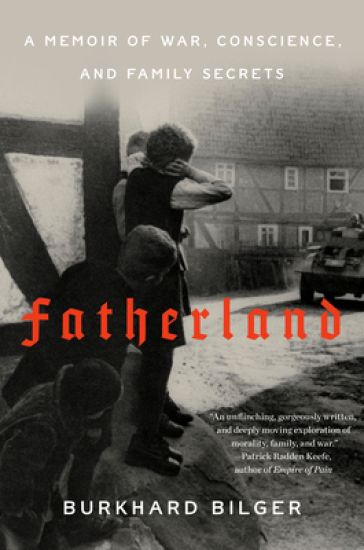
Fatherland: A Memoir of War, Conscience, and Family Secrets
Burkhard Bilger
Random House
2023
sidottu
A New Yorker staff writer investigates his grandfather, a Nazi Party Chief, in "a finely etched memoir with the powerful sweep of history" (David Grann, #1 bestselling author of Killers of the Flower Moon) "Fatherland maintains the momentum of the best mysteries and a commendable balance."--The New York Times "Unflinching and illuminating . . . Bilger's haunting memoir reminds us, the past is prologue to who we are, as well as who we choose to be."--The Wall Street Journal A BEST BOOK OF THE YEAR: The New Yorker, The Washington Post, Kirkus ReviewsOne spring day in northeastern France, Burkhard Bilger's mother went to the town of Bartenheim, where her father was posted during the Second World War. As a historian, she had spent years studying the German occupation of France, yet she had never dared to investigate her own family's role in it. She knew only that her father was a schoolteacher who was sent to Bartenheim in 1940 and ordered to reeducate its children--to turn them into proper Germans, as Hitler demanded. Two years later, he became the town's Nazi Party chief. There was little left from her father's era by the time she visited. But on her way back to her car, she noticed an old man walking nearby. He looked about the same age her father would have been if he was still alive. She hurried over to introduce herself and told him her father's name, Karl G nner. "Do you happen to remember him?" she said. The man stared at her, dumbstruck. "Well, of course " he said. "I saved his life, didn't I?" Fatherland is the story behind that story--the riveting account of Bilger's nearly ten-year quest to uncover the truth about his grandfather. Was he guilty or innocent, a war criminal or a man who risked his life to shield the villagers? Long admired for his profiles in The New Yorker, Bilger brings the same open-hearted curiosity to his family history and the questions it raises: What do we owe the past? How can we make peace with it without perpetuating its wrongs?
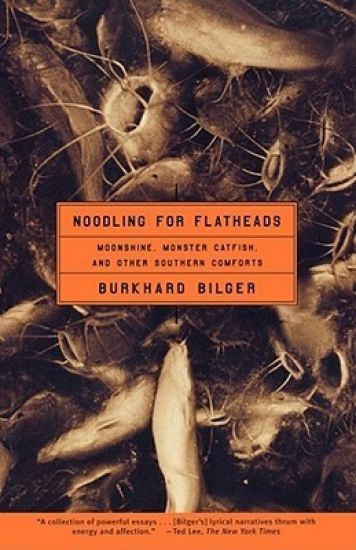
"Noodling for Flatheads: Moonshine, Monster Catfish, and Other Southern Comforts "
Burkhard Bilger
Simon Schuster
2002
pokkari
Burkhard Bilger vividly captures a world that lies outside the familiar images of life in the United States in the twenty-first century in eight superbly crafted essays about little-known corners of the South. It is a world in which grown men catch catfish with their bare hands, crowds of people cheer on chickens as they fight to the death, and a woman moves into a trailer home when her house burns down just so she can continue hunting 350 nights a year. Bilger records the eccentric and sometimes downright bizarre behavior he encounters with humor and wit but nary a whisper of mockery. In essays that combine history, anecdotes, and personal observations, he describes each activity, its origins, its dangers, and its pleasures. But Noodling for Flatheads is much more than a survey of unlikely pastimes. Through lively portraits of the participants, Bilger illuminates the obsessive individualism that is at the heart of the American spirit.
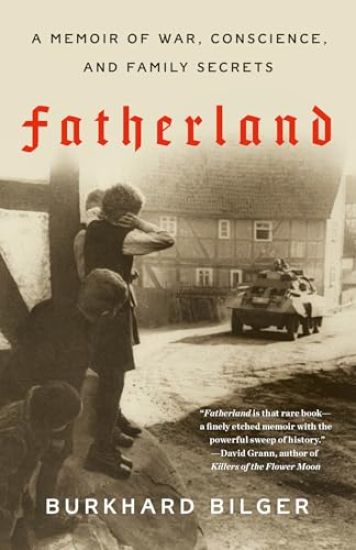
Fatherland: A Memoir of War, Conscience, and Family Secrets
Burkhard Bilger
Random House Trade
2024
nidottu
A New Yorker staff writer investigates his grandfather, a Nazi Party Chief, in "a finely etched memoir with the powerful sweep of history" (David Grann, #1 bestselling author of Killers of the Flower Moon) "Fatherland maintains the momentum of the best mysteries and a commendable balance."--The New York Times "Unflinching and illuminating . . . Bilger's haunting memoir reminds us, the past is prologue to who we are, as well as who we choose to be."--The Wall Street Journal A BEST BOOK OF THE YEAR: The New Yorker, The Washington Post, Kirkus ReviewsOne spring day in northeastern France, Burkhard Bilger's mother went to the town of Bartenheim, where her father was posted during the Second World War. As a historian, she had spent years studying the German occupation of France, yet she had never dared to investigate her own family's role in it. She knew only that her father was a schoolteacher who was sent to Bartenheim in 1940 and ordered to reeducate its children--to turn them into proper Germans, as Hitler demanded. Two years later, he became the town's Nazi Party chief. There was little left from her father's era by the time she visited. But on her way back to her car, she noticed an old man walking nearby. He looked about the same age her father would have been if he was still alive. She hurried over to introduce herself and told him her father's name, Karl G nner. "Do you happen to remember him?" she said. The man stared at her, dumbstruck. "Well, of course " he said. "I saved his life, didn't I?" Fatherland is the story behind that story--the riveting account of Bilger's nearly ten-year quest to uncover the truth about his grandfather. Was he guilty or innocent, a war criminal or a man who risked his life to shield the villagers? Long admired for his profiles in The New Yorker, Bilger brings the same open-hearted curiosity to his family history and the questions it raises: What do we owe the past? How can we make peace with it without perpetuating its wrongs?
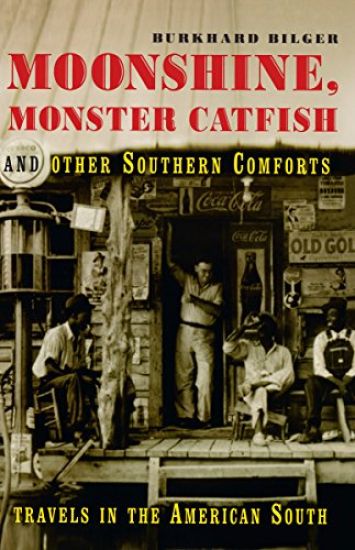
Burkhard Bilger's beautifully written, wonderfully funny and movingly nostalgic book explores the surviving (and often dying) folk traditions of the American South, from the eating of squirrel brains in Kentucky, cock-fighting in Oklahoma, frog-ranching in Georgia and coon-hunting all over, to the noodling for flatheads (fishing for catfish, using your fingers as bait and your arm as a hook) of the title. Caught between the possibility of survival through commercialisation or gradual decline (or in the case of squirrel-brain-eating, threatened by fears of Mad Squirrel Disease), many of these activities will be lucky to survive far into the new century. Burkhard Bilger's book is a wonderful elegy, hilarious, fascinating and touching, to a threatened tradition of American eccentricity and independence, but it is also a celebration of the survival of local folk culture in the era of the global triumph of Nike, Barbie and Coca-Cola, a survival that persists in America's own back yard. Narrative non-fiction at its best.