Kirjojen hintavertailu. Mukana 11 342 296 kirjaa ja 12 kauppaa.

Kirjahaku

Etsi kirjoja tekijän nimen, kirjan nimen tai ISBN:n perusteella.

12 kirjaa tekijältä Byron L. Sherwin

Sparks Amidst the Ashes

Sparks Amidst the Ashes

Byron L. Sherwin

Oxford University Press Inc
1997
sidottu
For hundreds of years, Poland served as the epicentre of Jewish life. As a result of the Holocaust, though, Poland has become a "Jewish Atlantis". Yet the majority of Jews in the world today have their genealogical roots in the historical lands of Poland. In this book, Sherwin demonstrates how the unprecedented works of intellect and spirit produced during the Jewish "Golden Age" in Poland can provide contemporary Jews with the spiritual and intellectual resources required to ensure Jewish continuity in the present and future. Sherwin introduces us to the vast range of mystical speculation, evocative stories, talmudic dialectics, theological ideas, and social realities that were muted by the destruction of Polish Jewry during the Holocaust. Sherwin critiques the tendency among contemporary Jews to disregard the precious legacy bequeathed by Polish Jewry, and presents a plan for re-creating Jewish life after the Holocaust that draws from the wisdom of the spiritual magnates and from the communal experience that characterized Jewish life in Poland. Sherwin concludes with a controversial proposal for the future of Polish-Jewish relations.
Faith Finding Meaning

Faith Finding Meaning

Byron L. Sherwin

Oxford University Press Inc
2009
sidottu
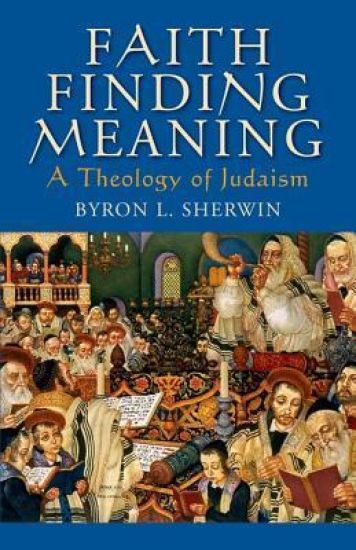
Popular books on various aspects of Jewish life and thought are published in substantial numbers. Yet there are few if any that offer a comprehensive, accessible, scholarly presentation of Jewish theology. Byron Sherwin fills this gap, utilizing a novel approach to the subject. The well-documented 'privatization' of American religion is characterized by the desire to identify one's religious faith with a quest for individual, personal meaning. In Judaism this takes the form of rejecting 'denominational' (Reform, Conservative, etc.) affiliation of 'ethnic identity' in favor of an understanding of Jewish identity as inextricably linked to an affirmation of Judaism as a faith. Those embracing this view are increasingly asking two questions: What is Judaism? How does Judaism address my quest for meaning? Available works on Jewish theology largely focus on abstract theological concepts such as the existence and nature of God and are consequently detached from the individual's engagement with existential issues such as the meaning of human existence. Sherwin demonstrates that Jewish theological thinking can be understood as a response to such visceral existential issues and argues that human meaning and fulfillment can be discovered in the application of an authentic Jewish way of thinking and living.
Faith Finding Meaning

Faith Finding Meaning

Byron L. Sherwin

Oxford University Press Inc
2013
nidottu
Over four decades ago, the pre-eminent Jewish theologian, Abraham Joshua Heschel, warned of a "second Holocaust" - a spiritual genocide against Judaism that American Jews were perpetrating on themselves. By engaging in assimilation and secularization, he argued, Jews were losing their religious identity and, through it, their identity as a people. In Faith Finding Meaning, Byron L. Sherwin makes the case for a return to Jewish theology as a foundation for restoring Jewish authenticity and for reversing self-destructive assimilationist trends. Rather than focusing on the abstract theological concepts presented by Judaism, such as the existence and nature of God, Sherwin shifts the center of the discussion to the quest for individual meaning. As more Jews seek to affirm Judaism as a faith, they are increasingly asking two questions: What is Judaism? How does Judaism address my quest for meaning? This volume constructs a portrait of the Jewish faith that is deeply rooted in both classical and modern sources of Jewish thought. Jewish theological thinking can be understood as a response to such visceral existential issues as living in a covenantal relationship, finding God in the world, approaching sacred scripture, and committing ethical deeds. Finding this sort of individual meaning through Jewish theology is, Sherwin argues, the viable path by which Jews in the contemporary world can maintain identity amid assimilation. Faith Finding Meaning will engage anyone seeking a refreshing new approach to interpreting Jewish theology and a guide for faithful living as the Jewish people move into the future.
Kabbalah

Kabbalah

Byron L. Sherwin

Rowman Littlefield Publishers
2006
sidottu
Kabbalah: An Introduction to Jewish Mysticism is a clear, accessible "primer" and introduction to the major teachings of the Jewish mystics, to various dominant forms of Jewish mystical experiences, as well as to many of the significant texts that constitute classical Jewish mystical literature, and to their authors. Rather than provide an historical approach, this introduction to Jewish mysticism delineates five "models" of Jewish mystical theology and experience: Normal Mysticism, Mystical Intimacy, Addressing God's Needs, Drawing Down Divine Grace, and Prophetic Kabbalah. Sherwin not only presents primary texts in translation, but also offers an explanation of each selection and provides a bibliography for further study.
Kabbalah

Kabbalah

Byron L. Sherwin

Rowman Littlefield Publishers
2006
nidottu
Kabbalah: An Introduction to Jewish Mysticism is a clear, accessible 'primer' and introduction to the major teachings of the Jewish mystics, to various dominant forms of Jewish mystical experiences, as well as to many of the significant texts that constitute classical Jewish mystical literature, and to their authors. Rather than provide an historical approach, this introduction to Jewish mysticism delineates five 'models' of Jewish mystical theology and experience: Normal Mysticism, Mystical Intimacy, Addressing God's Needs, Drawing Down Divine Grace, and Prophetic Kabbalah. Sherwin not only presents primary texts in translation, but also offers an explanation of each selection and provides a bibliography for further study.
The Life Worth Living

The Life Worth Living

Byron L. Sherwin

William B Eerdmans Publishing Co
2009
nidottu
Each of us is confronted in life with visceral, personal, human questions: Why am I here? What is my life's purpose? For the reflective person of faith, life is an ongoing quest to respond to still further questions: Where is wisdom? What does the Lord require of me? The Life Worth Living provides answers to such questions -- culled from Byron Sherwin's many years of religious wisdom and experience. Sherwin's rich and lovely book lays out the path to abundant, fulfilled living -- by cultivating religious virtues such as love, wisdom, gratitude, and humility. It demonstrates how living in partnership with God can provide all of us with the means to craft our lives into unique and "exquisite" works of art. Very accessibly written, The Life Worth Living will resonate with a wide spectrum of thoughtful readers -- believers and seekers alike.
In Partnership with God

In Partnership with God

Byron L. Sherwin

Syracuse University Press
1990
sidottu
According to Jewish scholar Byron Sherwin, while Jewish tradition always emphasized the nexus between thought and action, theory and practice, modern Jewish scholarship severed that relationship. Modern scholars seem prone to over-specialization in minute sub-areas of Jewish studies or limit their scholarly investigations to specific texts that are written in specific lands during specific periods, without surveying the breadth of classic Jewish sources. In contrast, Sherwin draws from the vast resources of classic Jewish texts in a quest for solutions to today's troubling concerns, offering a novel agenda and methodology for contemporary Jewish scholarship.
Jewish Ethics for the Twenty-First Century

Jewish Ethics for the Twenty-First Century

Byron L. Sherwin

Syracuse University Press
2000
sidottu
Demonstrates how the wisdom of the past - found in classical texts that comprise Jewish religious tradition - can forcefully address the moral perplexities of the present. The text delineates a methodology for Jewish ethics, which the author applies to a wide range of issues.
Studies in Jewish Theology

Studies in Jewish Theology

Byron L. Sherwin

Vallentine Mitchell Co Ltd
2007
sidottu
Studies in Jewish Theology invites the reader into the 'laboratory' of a Jewish theologian as he confronts visceral issues that have confronted classical Jewish theology and that continue to challenge contemporary Jewish theological inquiry. After offering an exposition of the nature of Jewish theology and demonstrating why and how it is crucial and relevant for understanding the nature and meaning of Judaism as a religious faith, the author proposes a creative and compelling methodology for 'doing' Jewish theology. This methodology is then applied to various perennial issues of Jewish theological concern, including: the problem of evil, the nature of God, love and awe of God, God's love and law, theological foundations of the Jewish holydays, philosophies of Jewish law, and the application of Jewish theology to matters of social ethics and spirituality. Attention then turns to a consideration of Jewish-Christian theological dialogue, where a Jewish theology of Christianity, an explication of John Paul II's theology of Judaism, and medieval Jewish and Christian views of 'original sin' are presented. Finally, new perspectives on the work of contemporary Jewish theologians such as Solomon Schechter, Abraham J. Heschel, Louis Jacobs, and a survey of American Jewish theology, are discussed. A combination of erudite and accessible exposition of a wide variety of theological issues, this volume collects seventeen studies, written over three decades, by an eminent American Jewish theologian.
Studies in Jewish Theology

Studies in Jewish Theology

Byron L. Sherwin

Vallentine Mitchell Co Ltd
2007
nidottu
Studies in Jewish Theology invites the reader into the 'laboratory' of a Jewish theologian as he confronts visceral issues that have confronted classical Jewish theology and that continue to challenge contemporary Jewish theological inquiry. After offering an exposition of the nature of Jewish theology and demonstrating why and how it is crucial and relevant for understanding the nature and meaning of Judaism as a religious faith, the author proposes a creative and compelling methodology for 'doing' Jewish theology. This methodology is then applied to various perennial issues of Jewish theological concern, including: the problem of evil, the nature of God, love and awe of God, God's love and law, theological foundations of the Jewish holydays, philosophies of Jewish law, and the application of Jewish theology to matters of social ethics and spirituality. Attention then turns to a consideration of Jewish-Christian theological dialogue, where a Jewish theology of Christianity, an explication of John Paul II's theology of Judaism, and medieval Jewish and Christian views of 'original sin' are presented. Finally, new perspectives on the work of contemporary Jewish theologians such as Solomon Schechter, Abraham J. Heschel, Louis Jacobs, and a survey of American Jewish theology, are discussed. A combination of erudite and accessible exposition of a wide variety of theological issues, this volume collects seventeen studies, written over three decades, by an eminent American Jewish theologian.
Golems Among Us

Golems Among Us

Byron L. Sherwin

Ivan R Dee, Inc
2004
sidottu
Imagine a world where the normal human life span is 150 years, where worn-out vital organs are routinely replaced by spares, where after death you will retain consciousness for eternity in cyberspace, where nanotechnology will enable you to transform a plastic bottle into a filet mignon for you to share with your android spouse. Scientists anticipate such a world within a century. Even now many signs of such biotech "progress" are with us. Accelerating developments in genomics, reproductive biotechnology, bionics, artificial life, genetic engineering, and related fields are compelling us to reexamine our most deeply held beliefs about ourselves and our world. As we do, the figure of Victor Frankenstein and the monster he created looms large: many people today see our predicament through the lens of the Frankenstein story, whose lesson is that humans should not "play God" or tinker with the toolbox of nature, at the risk of tragedy and catastrophe. Yet there is an available alternative both to the Frankenstein vision and to the ebullient enthusiasm of those who anticipate a riskless future. It is the most famous and influential post-biblical Jewish legend, the story of the golem—the creation of an anthropoid by mystical and magical means. Retold and embellished in twentieth-century literature, art, music, drama, film, science, technology, and popular culture, the golem legend has become a metaphor for our times, a resource for applying the wisdom of the past to the perplexities of the present and the challenges of the future. In Golems Among Us, Byron Sherwin briefly traces the fascinating history of the golem legend in Western culture, then shows what lessons it holds for us in navigating a safe journey—philosophically, theologically, ethically, and in public policy—through the minefield of social and biological engineering in which we now stand.
Mystical Theology and Social Dissent

Mystical Theology and Social Dissent

Byron L. Sherwin

The Littman Library of Jewish Civilization
2006
pokkari
Judah Loew, better known as the Maharal of Prague, was a pivotal personality in late medieval European Judaism. Best known from the popular legend that credited him with the creation of a golem - an artificial human with superhuman powers - his true importance lay in his comprehensive exposition of a unique expression of Jewish mystical theology, his call for a reformation of Jewish communal life, and his influence on subsequent Jewish life and thought. Byron Sherwin’s lucid exposition of the life, legend, works, and ideas developed in Loew’s massive writings ‘reveals the concealed’ by unravelling the often obscure nature of his mystical theology, his polemical jousts against past and contemporary Jewish scholars, and his innovative programme for social and educational reform.