Kirjojen hintavertailu. Mukana 11 342 296 kirjaa ja 12 kauppaa.

Kirjahaku

Etsi kirjoja tekijän nimen, kirjan nimen tai ISBN:n perusteella.

85 kirjaa tekijältä Byung-Chul Han

Estuche Byung Chul Han / Byung Chul Han Boxed Set
Tres obras fundamentales de Byng-Chul Han, el fil sofo m s le do de la Historia. No cosas es un ensayo que gira en torno a la transici n de la era de las cosas a la era de las no-cosas. Infocracia, un an lisis sagaz del r gimen de la informaci n, el nuevo gobierno al que estamos sometidos. Vida contemplativa es un poderoso llamamiento a abandonar la vida hiperactiva para recuperar el sentido de nuestras vidas, el equilibrio y la riqueza interior. Este estuche condensa tres de sus grandes reflexiones sobre lo s lido y lo tangible, la informaci n y la digitalizaci n, el silencio y la magia de la ociosidad. ENGLISH DESCRIPTION Three fundamental works by Byng-Chul Han, the most-read philosopher in history. Non-things is an essay that revolves around the transition from the age of things to the age of non-things. Infocracy is a cunning analysis of the information regime, the new government we are all subjected to. Vita Contemplativa is a powerful calling to abandon a hyperactive life in order to find meaning in our lives, balance, and inner wealth. This boxed set condenses three of his greatest reflections on the solid and the tangible, information and digitalization, silence and the magic of idleness.
In the Swarm

In the Swarm

Byung-Chul Han

MIT Press
2017
pokkari
A prominent German thinker argues that—contrary to “Twitter Revolution” cheerleading—digital communication is destroying political discourse and political action.The shitstorm represents an authentic phenomenon of digital communication.—from In the SwarmDigital communication and social media have taken over our lives. In this contrarian reflection on digitized life, Byung-Chul Han counters the cheerleaders for Twitter revolutions and Facebook activism by arguing that digital communication is in fact responsible for the disintegration of community and public space and is slowly eroding any possibility for real political action and meaningful political discourse. In the predigital, analog era, by the time an angry letter to the editor had been composed, mailed, and received, the immediate agitation had passed. Today, digital communication enables instantaneous, impulsive reaction, meant to express and stir up outrage on the spot. “The shitstorm,” writes Han, ”represents an authentic phenomenon of digital communication.”Meanwhile, the public, the senders and receivers of these communications have become a digital swarm—not a mass, or a crowd, or Negri and Hardt's antiquated notion of a “multitude,” but a set of isolated individuals incapable of forming a “we,” incapable of calling dominant power relations into question, incapable of formulating a future because of an obsession with the present. The digital swarm is a fragmented entity that can focus on individual persons only in order to make them an object of scandal. Han, one of the most widely read philosophers in Europe today, describes a society in which information has overrun thought, in which the same algorithms are employed by Facebook, the stock market, and the intelligence services. Democracy is under threat because digital communication has made freedom and control indistinguishable. Big Brother has been succeeded by Big Data.
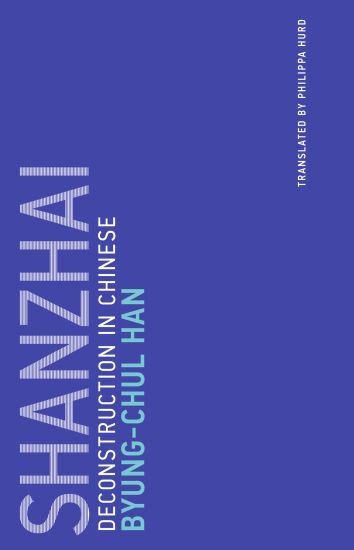
Shanzhai

Shanzhai

Byung-Chul Han

MIT Press
2017
pokkari
Tracing the thread of “decreation” in Chinese thought, from constantly changing classical masterpieces to fake cell phones that are better than the original.Shanzhai is a Chinese neologism that means “fake,” originally coined to describe knock-off cell phones marketed under such names as Nokir and Samsing. These cell phones were not crude forgeries but multifunctional, stylish, and as good as or better than the originals. Shanzhai has since spread into other parts of Chinese life, with shanzhai books, shanzhai politicians, shanzhai stars. There is a shanzhai Harry Potter: Harry Potter and the Porcelain Doll, in which Harry takes on his nemesis Yandomort. In the West, this would be seen as piracy, or even desecration, but in Chinese culture, originals are continually transformed—deconstructed. In this volume in the Untimely Meditations series, Byung-Chul Han traces the thread of deconstruction, or “decreation,” in Chinese thought, from ancient masterpieces that invite inscription and transcription to Maoism—“a kind a shanzhai Marxism,” Han writes.Han discusses the Chinese concepts of quan, or law, which literally means the weight that slides back and forth on a scale, radically different from Western notions of absoluteness; zhen ji, or original, determined not by an act of creation but by unending process; xian zhan, or seals of leisure, affixed by collectors and part of the picture's composition; fuzhi, or copy, a replica of equal value to the original; and shanzhai. The Far East, Han writes, is not familiar with such “pre-deconstructive” factors as original or identity. Far Eastern thought begins with deconstruction.
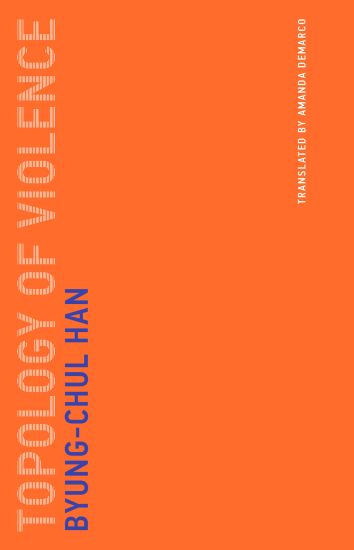
Topology of Violence

Topology of Violence

Byung-Chul Han

MIT Press
2018
pokkari
One of today's most widely read philosophers considers the shift in violence from visible to invisible, from negativity to excess of positivity.Some things never disappear—violence, for example. Violence is ubiquitous and incessant but protean, varying its outward form according to the social constellation at hand. In Topology of Violence, the philosopher Byung-Chul Han considers the shift in violence from the visible to the invisible, from the frontal to the viral to the self-inflicted, from brute force to mediated force, from the real to the virtual. Violence, Han tells us, has gone from the negative—explosive, massive, and martial—to the positive, wielded without enmity or domination. This, he says, creates the false impression that violence has disappeared. Anonymized, desubjectified, systemic, violence conceals itself because it has become one with society. Han first investigates the macro-physical manifestations of violence, which take the form of negativity—developing from the tension between self and other, interior and exterior, friend and enemy. These manifestations include the archaic violence of sacrifice and blood, the mythical violence of jealous and vengeful gods, the deadly violence of the sovereign, the merciless violence of torture, the bloodless violence of the gas chamber, the viral violence of terrorism, and the verbal violence of hurtful language. He then examines the violence of positivity—the expression of an excess of positivity—which manifests itself as over-achievement, over-production, over-communication, hyper-attention, and hyperactivity. The violence of positivity, Han warns, could be even more disastrous than that of negativity. Infection, invasion, and infiltration have given way to infarction.
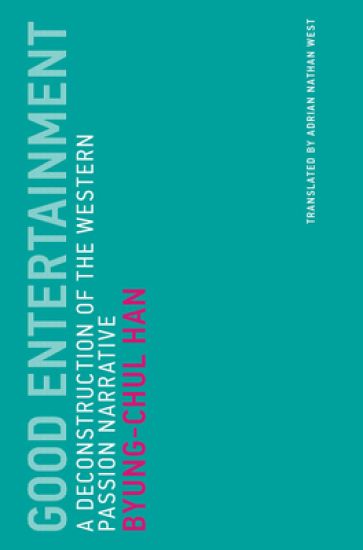
Good Entertainment

Good Entertainment

Byung-Chul Han

MIT Press
2019
pokkari
A philosopher considers entertainment, in all its totalizing variety—infotainment, edutainment, servotainment—and traces the notion through Kant, Zen Buddhism, Heidegger, Kafka, and Rauschenberg.In Good Entertainment, Byung-Chul Han examines the notion of entertainment—its contemporary ubiquity, and its philosophical genealogy. Entertainment today, in all its totalizing variety, has an apparently infinite capacity for incorporation: infotainment, edutainment, servotainment, confrontainment. Entertainment is held up as a new paradigm, even a new credo for being—and yet, in the West, it has had inescapably negative connotations. Han traces Western ideas of entertainment, considering, among other things, the scandal that arose from the first performance of Bach's Saint Matthew's Passion (deemed too beautiful, not serious enough); Kant's idea of morality as duty and the entertainment value of moralistic literature; Heidegger's idea of the thinker as a man of pain; Kafka's hunger artist and the art of negativity, which takes pleasure in annihilation; and Robert Rauschenberg's refusal of the transcendent. The history of the West, Han tells us, is a passion narrative, and passion appears as a killjoy. Achievement is the new formula for passion, and play is subordinated to production, gamified. And yet, he argues, at their core, passion and entertainment are not entirely different. The pure meaninglessness of entertainment is adjacent to the pure meaning of passion. The fool's smile resembles the pain-racked visage of Homo doloris. In Good Entertainment, Han explores this paradox.
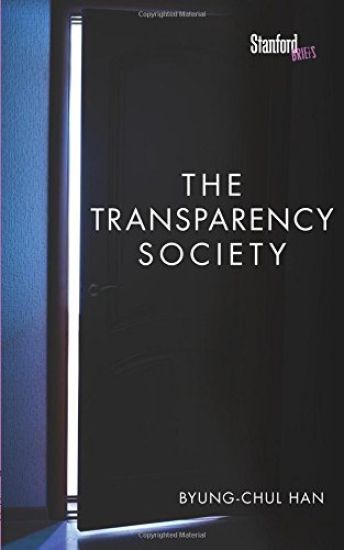
The Transparency Society

The Transparency Society

Byung-Chul Han

Stanford University Press
2015
pokkari
Transparency is the order of the day. It is a term, a slogan, that dominates public discourse about corruption and freedom of information. Considered crucial to democracy, it touches our political and economic lives as well as our private lives. Anyone can obtain information about anything. Everything—and everyone—has become transparent: unveiled or exposed by the apparatuses that exert a kind of collective control over the post-capitalist world. Yet, transparency has a dark side that, ironically, has everything to do with a lack of mystery, shadow, and nuance. Behind the apparent accessibility of knowledge lies the disappearance of privacy, homogenization, and the collapse of trust. The anxiety to accumulate ever more information does not necessarily produce more knowledge or faith. Technology creates the illusion of total containment and the constant monitoring of information, but what we lack is adequate interpretation of the information. In this manifesto, Byung-Chul Han denounces transparency as a false ideal, the strongest and most pernicious of our contemporary mythologies.
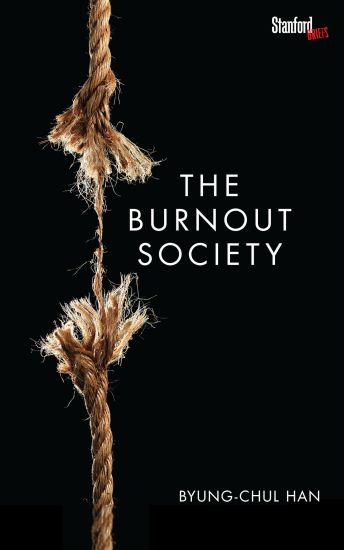
The Burnout Society

The Burnout Society

Byung-Chul Han

Stanford University Press
2015
pokkari
Our competitive, service-oriented societies are taking a toll on the late-modern individual. Rather than improving life, multitasking, "user-friendly" technology, and the culture of convenience are producing disorders that range from depression to attention deficit disorder to borderline personality disorder. Byung-Chul Han interprets the spreading malaise as an inability to manage negative experiences in an age characterized by excessive positivity and the universal availability of people and goods. Stress and exhaustion are not just personal experiences, but social and historical phenomena as well. Denouncing a world in which every against-the-grain response can lead to further disempowerment, he draws on literature, philosophy, and the social and natural sciences to explore the stakes of sacrificing intermittent intellectual reflection for constant neural connection.
Saving Beauty

Saving Beauty

Byung-Chul Han

Polity Press
2017
sidottu
Beauty today is a paradox. The cult of beauty is ubiquitous but it has lost its transcendence and become little more than an aspect of consumerism, the aesthetic dimension of capitalism. The sublime and unsettling aspects of beauty have given way to corporeal pleasures and 'likes', resulting in a kind of 'pornography' of beauty. In this book, cultural theorist Byung-Chul Han reinvigorates aesthetic theory for our digital age. He interrogates our preoccupation with all things slick and smooth, from Jeff Koon's sculptures and the iPhone to Brazilian waxing. Reaching far deeper than our superficial reactions to viral videos and memes, Han reclaims beauty, showing how it manifests itself as truth, temptation and even disaster. This wide-ranging and profound exploration of beauty, encompassing ethical and political considerations as well as aesthetic, will appeal to all those interested in cultural and aesthetic theory, philosophy and digital media.
Saving Beauty

Saving Beauty

Byung-Chul Han

Polity Press
2017
nidottu
Beauty today is a paradox. The cult of beauty is ubiquitous but it has lost its transcendence and become little more than an aspect of consumerism, the aesthetic dimension of capitalism. The sublime and unsettling aspects of beauty have given way to corporeal pleasures and 'likes', resulting in a kind of 'pornography' of beauty. In this book, cultural theorist Byung-Chul Han reinvigorates aesthetic theory for our digital age. He interrogates our preoccupation with all things slick and smooth, from Jeff Koon's sculptures and the iPhone to Brazilian waxing. Reaching far deeper than our superficial reactions to viral videos and memes, Han reclaims beauty, showing how it manifests itself as truth, temptation and even disaster. This wide-ranging and profound exploration of beauty, encompassing ethical and political considerations as well as aesthetic, will appeal to all those interested in cultural and aesthetic theory, philosophy and digital media.
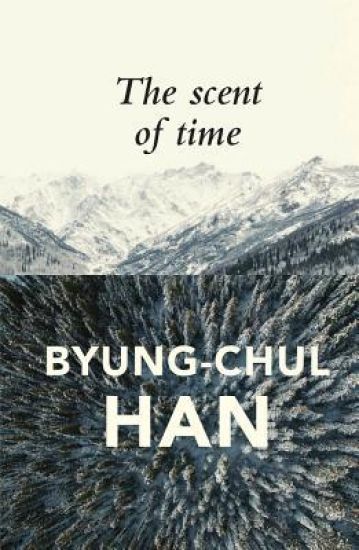
The Scent of Time

The Scent of Time

Byung-Chul Han

Polity Press
2017
sidottu
In his philosophical reflections on the art of lingering, acclaimed cultural theorist Byung-Chul Han argues that the value we attach today to the vita activa is producing a crisis in our sense of time. Our attachment to the vita activa creates an imperative to work which degrades the human being into a labouring animal, an animal laborans. At the same time, the hyperactivity which characterizes our daily routines robs human beings of the capacity to linger and the faculty of contemplation. It therefore becomes impossible to experience time as fulfilling. Drawing on a range of thinkers including Heidegger, Nietzsche and Arendt, Han argues that we can overcome this temporal crisis only by revitalizing the vita contemplativa and relearning the art of lingering. For what distinguishes humans from other animals is the capacity for reflection and contemplation, and when life regains this capacity, this art of lingering, it gains in time and space, in duration and vastness.
The Scent of Time

The Scent of Time

Byung-Chul Han

Polity Press
2017
nidottu
In his philosophical reflections on the art of lingering, acclaimed cultural theorist Byung-Chul Han argues that the value we attach today to the vita activa is producing a crisis in our sense of time. Our attachment to the vita activa creates an imperative to work which degrades the human being into a labouring animal, an animal laborans. At the same time, the hyperactivity which characterizes our daily routines robs human beings of the capacity to linger and the faculty of contemplation. It therefore becomes impossible to experience time as fulfilling. Drawing on a range of thinkers including Heidegger, Nietzsche and Arendt, Han argues that we can overcome this temporal crisis only by revitalizing the vita contemplativa and relearning the art of lingering. For what distinguishes humans from other animals is the capacity for reflection and contemplation, and when life regains this capacity, this art of lingering, it gains in time and space, in duration and vastness.
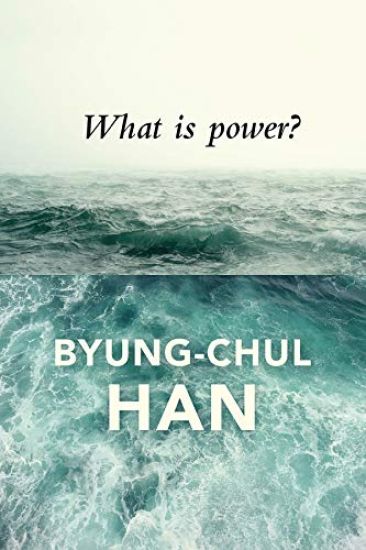
What is Power?

What is Power?

Byung-Chul Han

Polity Press
2018
sidottu
Power is a pervasive phenomenon yet there is little consensus on what it is and how it should be understood. In this book the cultural theorist Byung-Chul Han develops a fresh and original perspective on the nature of power, shedding new light on this key feature of social and political life. Power is commonly defined as a causal relation: an individual’s power is the cause that produces a change of behaviour in someone else against the latter’s will. Han rejects this view, arguing that power is better understood as a mediation between ego and alter which creates a complex array of reciprocal interdependencies. Power can also be exercised not only against the other but also within and through the other, and this involves a much higher degree of mediation. This perspective enables us to see that power and freedom are not opposed to one another but are manifestations of the same power, differing only in the degree of mediation. This highly original account of power will be of great interest to students and scholars of philosophy and of social, political and cultural theory, as well as to anyone seeking to understand the many ways in which power shapes our lives today.
What is Power?

What is Power?

Byung-Chul Han

Polity Press
2018
nidottu
Power is a pervasive phenomenon yet there is little consensus on what it is and how it should be understood. In this book the cultural theorist Byung-Chul Han develops a fresh and original perspective on the nature of power, shedding new light on this key feature of social and political life. Power is commonly defined as a causal relation: an individual’s power is the cause that produces a change of behaviour in someone else against the latter’s will. Han rejects this view, arguing that power is better understood as a mediation between ego and alter which creates a complex array of reciprocal interdependencies. Power can also be exercised not only against the other but also within and through the other, and this involves a much higher degree of mediation. This perspective enables us to see that power and freedom are not opposed to one another but are manifestations of the same power, differing only in the degree of mediation. This highly original account of power will be of great interest to students and scholars of philosophy and of social, political and cultural theory, as well as to anyone seeking to understand the many ways in which power shapes our lives today.
The Expulsion of the Other

The Expulsion of the Other

Byung-Chul Han

Polity Press
2018
sidottu
The days of the Other are over in this age of excessive communication, information and consumption. What used to be the Other, be it as friend, as Eros or as hell, is now indistinguishable from the self in our narcissistic desire to assimilate everything and everyone until there are no boundaries left. The result is a 'terror of the Same', lives in which we no longer pursue knowledge, insight and experience but are instead reduced to the echo chambers and illusory encounters offered by social media. In extreme cases, this feeling of disorientation and senselessness is compensated through self-harm, or even harming others through acts of terrorism. Byung-Chul Han argues that our times are characterized not by external repression but by an internal depression, whereby the destructive pressure comes not from the Other but from the self. It is only by returning to a society of listeners and lovers, by acknowledging and desiring the Other, that we can seek to overcome the isolation and suffering caused by this crushing process of total assimilation.
The Expulsion of the Other

The Expulsion of the Other

Byung-Chul Han

Polity Press
2018
nidottu
The days of the Other are over in this age of excessive communication, information and consumption. What used to be the Other, be it as friend, as Eros or as hell, is now indistinguishable from the self in our narcissistic desire to assimilate everything and everyone until there are no boundaries left. The result is a 'terror of the Same', lives in which we no longer pursue knowledge, insight and experience but are instead reduced to the echo chambers and illusory encounters offered by social media. In extreme cases, this feeling of disorientation and senselessness is compensated through self-harm, or even harming others through acts of terrorism. Byung-Chul Han argues that our times are characterized not by external repression but by an internal depression, whereby the destructive pressure comes not from the Other but from the self. It is only by returning to a society of listeners and lovers, by acknowledging and desiring the Other, that we can seek to overcome the isolation and suffering caused by this crushing process of total assimilation.
The Disappearance of Rituals

The Disappearance of Rituals

Byung-Chul Han

Polity Press
2020
sidottu
Untrammelled neoliberalism and the inexorable force of production have produced a 21st century crisis of community: a narcissistic cult of authenticity and mass turning-inward are among the pathologies engendered by it. We are individuals afloat in an atomised society, where the loss of the symbolic structures inherent in ritual behaviour has led to overdependence on the contingent to steer identity. Avoiding saccharine nostalgia for the rituals of the past, Han provides a genealogy of their disappearance as a means of diagnosing the pathologies of the present. He juxtaposes a community without communication – where the intensity of togetherness in silent recognition provides structure and meaning – to today’s communication without community, which does away with collective feelings and leaves individuals exposed to exploitation and manipulation by neoliberal psycho-politics. The community that is invoked everywhere today is an atrophied and commoditized community that lacks the symbolic power to bind people together. For Han, it is only the mutual praxis of recognition borne by the ritualistic sharing of the symbolic between members of a community which creates the footholds of objectivity allowing us to make sense of time. This new book by one of the most creative cultural theorists writing today will be of interest to a wide readership.
The Disappearance of Rituals

The Disappearance of Rituals

Byung-Chul Han

Polity Press
2020
nidottu
Untrammelled neoliberalism and the inexorable force of production have produced a 21st century crisis of community: a narcissistic cult of authenticity and mass turning-inward are among the pathologies engendered by it. We are individuals afloat in an atomised society, where the loss of the symbolic structures inherent in ritual behaviour has led to overdependence on the contingent to steer identity. Avoiding saccharine nostalgia for the rituals of the past, Han provides a genealogy of their disappearance as a means of diagnosing the pathologies of the present. He juxtaposes a community without communication – where the intensity of togetherness in silent recognition provides structure and meaning – to today’s communication without community, which does away with collective feelings and leaves individuals exposed to exploitation and manipulation by neoliberal psycho-politics. The community that is invoked everywhere today is an atrophied and commoditized community that lacks the symbolic power to bind people together. For Han, it is only the mutual praxis of recognition borne by the ritualistic sharing of the symbolic between members of a community which creates the footholds of objectivity allowing us to make sense of time. This new book by one of the most creative cultural theorists writing today will be of interest to a wide readership.
Capitalism and the Death Drive

Capitalism and the Death Drive

Byung-Chul Han

Polity Press
2021
nidottu
What we call growth today is in fact a tumorous growth, a cancerous proliferation which is disrupting the social organism. These tumours endlessly metastasize and grow with an inexplicable, deadly vitality. At a certain point this growth is no longer productive, but rather destructive. Capitalism passed this point long ago. Its destructive forces cause not only ecological and social catastrophes but also mental collapse. The destructive compulsion to perform combines self-affirmation and self-destruction in one. We optimize ourselves to death. Brutal competition ends in destruction. It produces an emotional coldness and indifference towards others as well as towards one’s own self. The devastating consequences of capitalism suggest that a death drive is at work. Freud initially introduced the death drive hesitantly, but later admitted that he ‘couldn’t think beyond it’ as the idea of the death drive became increasingly central to his thought. Today, it is impossible to think about capitalism without considering the death drive.
Capitalism and the Death Drive

Capitalism and the Death Drive

Byung-Chul Han

Polity Press
2021
sidottu
What we call growth today is in fact a tumorous growth, a cancerous proliferation which is disrupting the social organism. These tumours endlessly metastasize and grow with an inexplicable, deadly vitality. At a certain point this growth is no longer productive, but rather destructive. Capitalism passed this point long ago. Its destructive forces cause not only ecological and social catastrophes but also mental collapse. The destructive compulsion to perform combines self-affirmation and self-destruction in one. We optimize ourselves to death. Brutal competition ends in destruction. It produces an emotional coldness and indifference towards others as well as towards one’s own self. The devastating consequences of capitalism suggest that a death drive is at work. Freud initially introduced the death drive hesitantly, but later admitted that he ‘couldn’t think beyond it’ as the idea of the death drive became increasingly central to his thought. Today, it is impossible to think about capitalism without considering the death drive.
The Philosophy of Zen Buddhism

The Philosophy of Zen Buddhism

Byung-Chul Han

JOHN WILEY AND SONS LTD
2022
sidottu
Zen Buddhism is a form of Mahayana Buddhism that originated in China and is strongly focused on meditation. It is characteristically sceptical towards language and distrustful of conceptual thought, which explains why Zen Buddhist sayings are so enigmatic and succinct. But despite Zen Buddhism’s hostility towards theory and discourse, it is possible to reflect philosophically on Zen Buddhism and bring out its philosophical insights. In this short book, Byung-Chul Han seeks to unfold the philosophical force inherent in Zen Buddhism, delving into the foundations of Far Eastern thought to which Zen Buddhism is indebted. Han does this comparatively by confronting and contrasting the insights of Zen Buddhism with the philosophies of Plato, Leibniz, Fichte, Hegel, Schopenhauer, Nietzsche, Kierkegaard, Heidegger and others, showing that Zen Buddhism and Western philosophy have very different ways of understanding religion, subjectivity, emptiness, friendliness and death. This important work by one of the most widely read philosophers and cultural theorists of our time will be of great value to anyone interested in comparative philosophy and religion.