Kirjojen hintavertailu. Mukana 11 342 296 kirjaa ja 12 kauppaa.

Kirjahaku

Etsi kirjoja tekijän nimen, kirjan nimen tai ISBN:n perusteella.

3 kirjaa tekijältä C. Mackenzie Brown

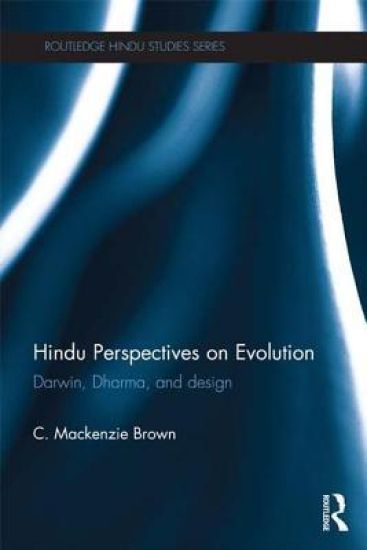
Hindu Perspectives on Evolution

Hindu Perspectives on Evolution

C. Mackenzie Brown

Routledge
2012
sidottu
Providing new insights into the contemporary creationist-evolution debates, this book looks at the Hindu cultural-religious traditions of India, the Hindu Dharma traditions. By focusing on the interaction of religion and science in a Hindu context, it offers a global context for understanding contemporary creationist-evolution conflicts and tensions utilizing a critical analysis of Hindu perspectives on these issues. The cultural and political as well as theological nature of these conflicts is illustrated by drawing attention to parallels with contemporary Islamic and Buddhist responses to modern science and Darwinism.The book explores various ancient and classical Hindu models to explain the origin of the universe encompassing creationist as well as evolutionary—but non-Darwinian—interpretations of how we came to be. Complex schemes of cosmic evolution were developed, alongside creationist proofs for the existence of God utilizing distinctly Hindu versions of the design argument. After examining diverse elements of the Hindu Dharmic traditions that laid the groundwork for an ambivalent response to Darwinism when it first became known in India, the book highlights the significance of the colonial context. Analysing critically the question of compatibility between traditional Dharmic theories of knowledge and the epistemological assumptions underlying contemporary scientific methodology, the book raises broad questions regarding the frequently alleged harmony of Hinduism, the eternal Dharma, with modern science, and with Darwinian evolution in particular.
The Devi Gita

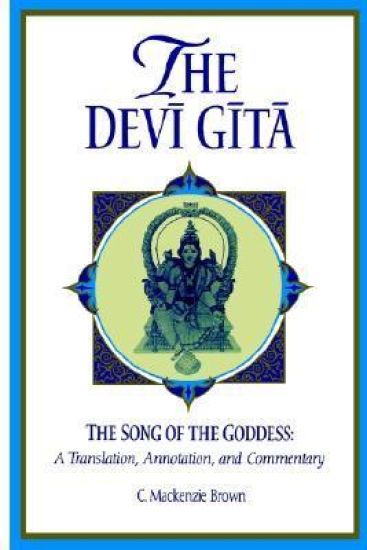
The Devi Gita

C. Mackenzie Brown

State University of New York Press
1998
pokkari
This translation and commentary on an important Hindu text on the Great Goddess envisions a universe created and protected by a compassionate female deity.This book provides a translation, with introduction, commentary, and annotation, of the medieval Hindu Sanskrit text the Devi Gita (Song of the Goddess). It is an important but not well-known text from the rich SAakta (Goddess) tradition of India. The Devi Gita was composed about the fifteenth century C.E., in partial imitation of the famous Bhagavad Gita (Song of the Lord), composed some fifteen centuries earlier. Around the sixth century C.E., following the rise of several male deities to prominence, a new theistic movement began in which the supreme being was envisioned as female, known as the Great Goddess (Maha-Devi). Appearing first as a violent and blood-loving deity, this Goddess gradually evolved into a more benign figure, a compassionate World-Mother and bestower of salvific wisdom. It is in this beneficent mode that the Goddess appears in the Devi Gita.This work makes available an up-to-date translation of the Devi Gita, along with a historical and theological analysis of the text. The book is divided into sections of verses, and each section is followed by a comment explaining key terms, concepts, ritual procedures, and mythic themes. The comments also offer comparisons with related schools of thought, indicate parallel texts and textual sources of verses in the Devi Gita, and briefly elucidate the historical and religious background, supplementing the remarks of the introduction.
Hindu Perspectives on Evolution

Hindu Perspectives on Evolution

C. Mackenzie Brown

Routledge
2015
nidottu
Providing new insights into the contemporary creationist-evolution debates, this book looks at the Hindu cultural-religious traditions of India, the Hindu Dharma traditions. By focusing on the interaction of religion and science in a Hindu context, it offers a global context for understanding contemporary creationist-evolution conflicts and tensions utilizing a critical analysis of Hindu perspectives on these issues. The cultural and political as well as theological nature of these conflicts is illustrated by drawing attention to parallels with contemporary Islamic and Buddhist responses to modern science and Darwinism.The book explores various ancient and classical Hindu models to explain the origin of the universe encompassing creationist as well as evolutionary—but non-Darwinian—interpretations of how we came to be. Complex schemes of cosmic evolution were developed, alongside creationist proofs for the existence of God utilizing distinctly Hindu versions of the design argument. After examining diverse elements of the Hindu Dharmic traditions that laid the groundwork for an ambivalent response to Darwinism when it first became known in India, the book highlights the significance of the colonial context. Analysing critically the question of compatibility between traditional Dharmic theories of knowledge and the epistemological assumptions underlying contemporary scientific methodology, the book raises broad questions regarding the frequently alleged harmony of Hinduism, the eternal Dharma, with modern science, and with Darwinian evolution in particular.